IMPLICATOR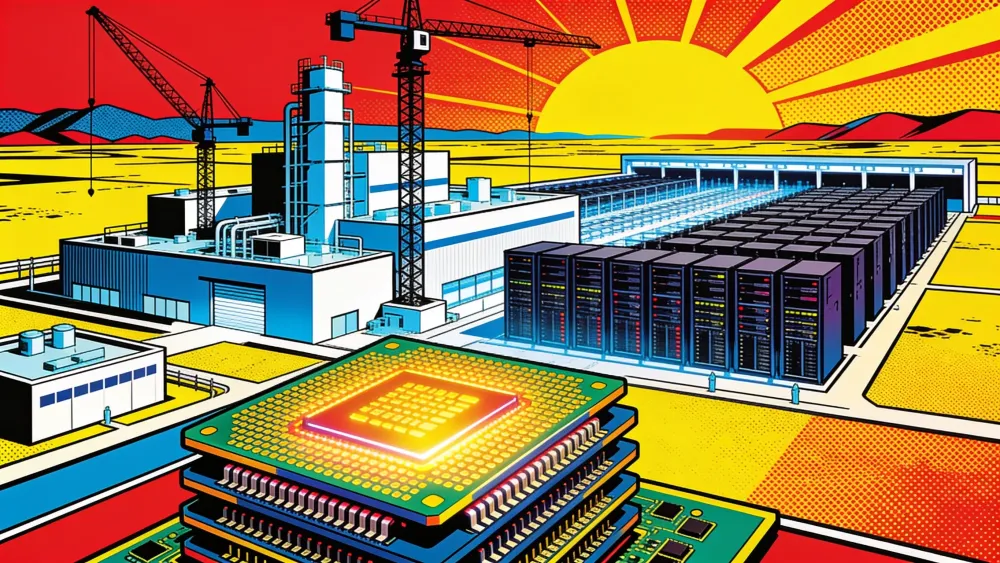
Samsung Electronics, SK Hynix and the South Korean government will invest a combined Won911tn, about $590 billion, to expand the country's chipmaking capacity, the government said Monday, a state-backed buildout aimed at the memory demand created by the global AI boom. About Won800tn will fund four new chip plants in the underdeveloped southwestern region, with Samsung and SK Hynix each building two memory fabs, while Won81tn goes to a chip-packaging cluster in the central region and Won30tn to next-generation chip research over 15 years. President Lee Jae Myung, who unveiled the plan in Seoul alongside the Samsung and SK chairmen, called it part of a "Three Mega Projects for the Great Leap Forward" initiative and said the results "will determine Korea's fate for the next 20 to 30 years."
The government is a co-investor here, putting state money into the combined Won911tn and dedicating its own Won30tn over 15 years to next-generation memory, on-device AI chips and semiconductors used in defense. It will also fund infrastructure to speed the chipmakers' existing clusters and double the country's memory output within five years. Direct state stakes in chip producers have become a policy tool elsewhere, an approach Washington weighed for Intel. In its statement, the government said its "competitors are aggressively building semiconductor fabs to meet rapidly growing demand" and that "we must respond swiftly to stay ahead."
Key Takeaways
- Samsung, SK Hynix and the South Korean government will invest a combined Won911tn (about $590 billion) to expand chipmaking, the centerpiece of a megaproject unveiled Monday.
- About Won800tn funds four new memory fabs in the southwest, Won81tn a central packaging cluster, and Won30tn next-generation chip research over 15 years.
- A separate Won550tn from SK Group, GS Group and Naver targets AI data centers reaching 18.4 gigawatts of capacity by 2035.
- Samsung and SK Hynix already hold nearly 80% of the high-bandwidth memory market; the buildout deepens that bet as the AI memory shortage strains buyers like Apple and Microsoft.
AI-generated summary, reviewed by an editor. More on our AI guidelines.
The geography is deliberate. Most of South Korea's chip plants sit in the capital region around Gyeonggi Province, in Icheon, Pyeongtaek and Yongin, and Lee has made balanced regional development a priority of his administration. Under the plan the new memory fabs go to the southwest, the packaging cluster to the central region, and a base for materials, parts and equipment to the southeast. Lee framed the contest in national terms, saying "today's AI race is not only a country-to-country competition but also a global battle across multiple fronts," and naming chips, data centers, physical AI and even electricity and water supply as those fronts.
Samsung's Lee Jae-yong named Gwangju, in the southwest, as the leading candidate for the company's next chip site, citing its electricity, water supply, available workforce and infrastructure incentives. "As investment in our existing semiconductor hubs has accelerated, we need to move up the timeline for preparing a new production base," he said. Samsung will concentrate its advanced packaging in the central region, in Cheonan and Onyang, where it plans to expand production of high-bandwidth memory, the chips that require the most sophisticated packaging.
That focus sits at the center of the AI memory trade. Samsung and SK Hynix together account for nearly 80 percent of the global market for high-bandwidth memory, the stacked chips that move data fast enough to feed AI accelerators, and the two now carry a combined market value of about $2 trillion. The new capacity concentrates on the one component the data-center boom needs most, at a time when demand is running well ahead of supply.
The push also answers a global build-out funded by other governments. The United States has used its CHIPS Act subsidies to pull production onshore, Taiwan's TSMC is adding plants abroad, and China is running a state-backed drive to triple its AI chip output. South Korea's two firms lead high-bandwidth memory today, and the new money is meant to hold that position as rivals expand capacity behind state balance sheets.
Get Implicator.ai in your inbox
Strategic AI news from San Francisco. No hype, no "AI will change everything" throat clearing. Just what moved, who won, and why it matters. Daily at 6am PST.
No spam. Unsubscribe anytime.
The bet rests on AI demand holding. The world's five largest AI companies are expected to spend more than $1 trillion across 2025 and 2026 on data centers, and the memory makers are the suppliers feeling it first. Micron, the largest US memory maker, said last week its quarterly revenue more than quadrupled from a year earlier and its gross margin reached almost 85 percent, up from 39 percent, with the average selling price of its DRAM up more than 260 percent. Its shares have risen about 800 percent over the past year, tracking SK Hynix and Samsung higher.
Know someone who'd find this useful? ✉️ Email it to a friend in one click, or they can subscribe free here.
The chip fabs are one of three pillars. SK Group, GS Group and Naver will spend a separate Won550tn, around $355 billion, on AI data centers, aiming for 8.4 gigawatts of capacity in a first phase and 18.4 gigawatts by 2035. Counting its memory and data-center commitments together, SK Chairman Chey Tae-won put his group's total at Won1,100tn. The third pillar is physical AI: South Korea wants to rank among the world's top three AI robot powers and to treat the field as a national strategic industry by 2030, and Samsung said it would base its humanoid-robot and internal data-center work in Gumi, in the southeast.
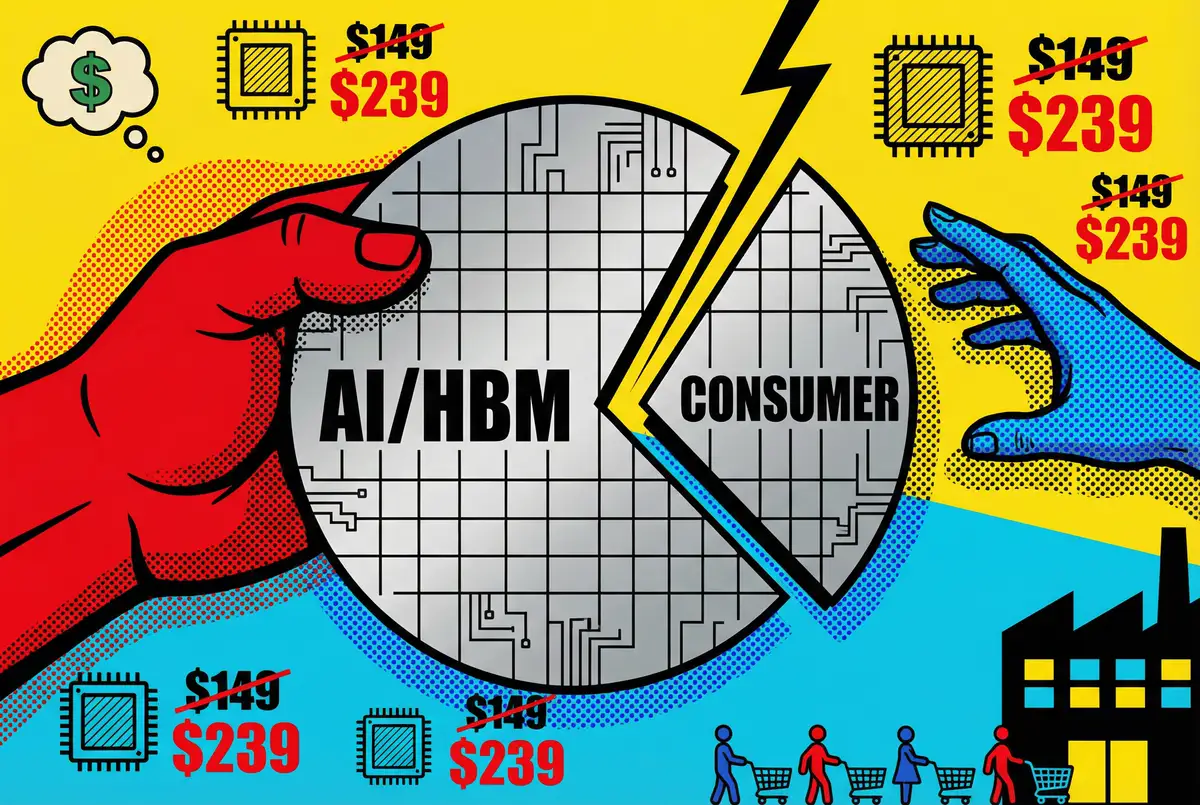
Memory remains a cyclical business, and the spending lands as the current shortage is already straining buyers. Apple raised prices on a range of iPads and Macs last week, with chief executive Tim Cook calling the memory situation a "hundred-year flood," and Microsoft lifted the price of its Xbox Series S by $100. Nabila Popal, an analyst at IDC, described the squeeze as an "absolute existential crisis" for smaller device makers that cannot command supply because suppliers answer the largest customers first. A new fab typically takes several years from groundbreaking to volume production.
The timelines stretch out from there. Samsung said it needs to move up the schedule for its next base, with Gwangju the leading site. The government said it would help the two companies double memory output within five years and spend the Won30tn research fund over 15. The data-center pillar is dated furthest out, at 18.4 gigawatts of capacity by 2035.
Frequently Asked Questions
How much are Samsung, SK Hynix and South Korea investing in chips?
A combined Won911tn, about $590 billion, in chipmaking capacity. Roughly Won800tn funds four new memory fabs in the southwest, Won81tn a central packaging cluster, and Won30tn next-generation chip research over 15 years.
What is the "Three Mega Projects for the Great Leap Forward"?
A South Korean initiative announced Monday covering semiconductors, AI data centers and robotics. President Lee Jae Myung said the results "will determine Korea's fate for the next 20 to 30 years."
How big is the AI data-center part of the plan?
SK Group, GS Group and Naver will spend a separate Won550tn on AI data centers, aiming for 8.4 gigawatts in a first phase and 18.4 gigawatts by 2035. SK Chairman Chey Tae-won put his group's total commitment at Won1,100tn.
Why does high-bandwidth memory matter here?
HBM is the stacked memory that feeds AI accelerators with data, and Samsung and SK Hynix together hold nearly 80% of that market. The buildout concentrates new capacity on the component the data-center boom needs most.
Is the memory shortage reaching consumers?
Yes. Apple raised iPad and Mac prices last week, with CEO Tim Cook calling memory a "hundred-year flood," and Microsoft lifted Xbox Series S pricing by $100. An IDC analyst called the squeeze an "existential crisis" for smaller device makers.
AI-generated summary, reviewed by an editor. More on our AI guidelines.


Marcus Schuler
Editor-in-Chief and founder of Implicator.ai. Former ARD correspondent and senior broadcast journalist with 10+ years covering tech. Writes daily briefings on policy and market developments. Based in San Francisco. E-mail: editor@implicator.ai