


San Francisco | December 10
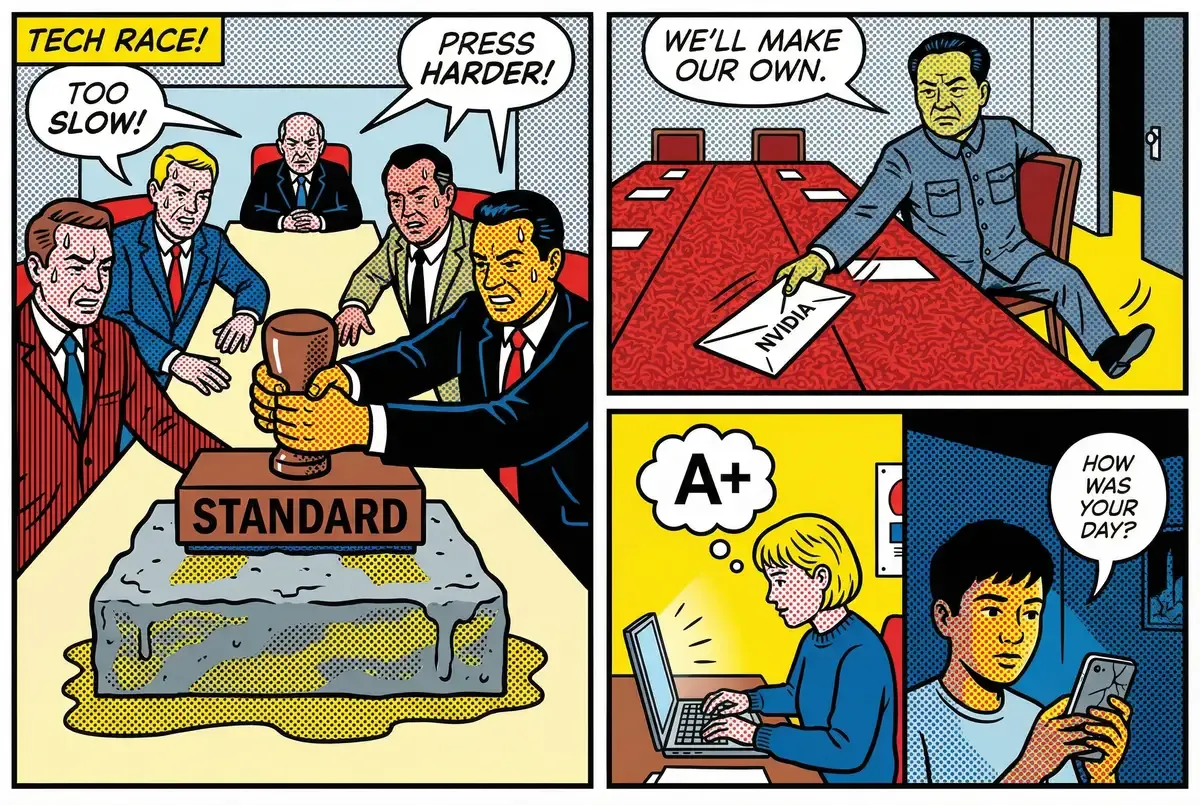
Anthropic, OpenAI, and Block just handed their agent protocols to a new Linux Foundation entity. MCP is twelve months old with OAuth issues unresolved. Kubernetes spent a decade inside Google before foundation governance. This isn't about technical maturity. Chinese labs have no equivalent standards. Yet. The concrete dries fast when 40-plus companies sign the treaty before anyone announces it.
Beijing isn't waiting for an invitation. Days before Trump offered Nvidia legal exports with a 25% cut, regulators added Huawei chips to mandatory procurement lists. Jensen Huang's olive branch landed on an empty table.
And in American bedrooms, a quieter sorting. Rich kids use ChatGPT to polish college apps. Poor kids use Character.ai to simulate someone asking about their day.
Stay curious,
Marcus Schuler
Teen AI Divides by Class: Productivity Tools Flow Up, Companion Bots Flow Down

Two-thirds of American teenagers use AI chatbots, but Pew Research Center's December 2025 survey reveals a stark sorting mechanism beneath that headline number.
ChatGPT captures 62% of teens in households earning $75,000 or more, dropping to 52% below that threshold. Character.ai, the companion chatbot facing wrongful death lawsuits, runs inverse: 14% of lower-income teens versus 7% of higher-income teens.
The pattern exposes what AI "democratization" actually looks like. Kids with resources use chatbots to optimize college applications and homework. Kids without resources use them to simulate having someone who asks about their day. OpenAI disclosed that 0.15% of users discuss suicide weekly, a small percentage that translates to 1.2 million people given 800 million weekly actives.
Racial disparities mirror the income gap. Black and Hispanic teens report being online "almost constantly" at roughly twice the rate of White teens, a pattern Pew documented without interpreting. The phone has become the babysitter in households where parents work double shifts and after-school programs cost more than families can afford.
Why This Matters
- Character.ai's concentrated lower-income user base creates liability exposure when vulnerable teens lack alternatives to synthetic companionship.
- Safety-focused Claude holds just 3% teen market share, suggesting responsible AI development loses the users who matter most.
 Marcus Schuler
AI Image of the Day

Prompt:
a cute bunny peeking out from behind the corner, holding up an 'x' sign with its paw and a heart symbol drawn on it in simple lines, as if by a child's sketchbook. the background is a white paper.
Trump's Nvidia Deal Meets Beijing's Rejection: The Chip Sale Nobody Wants

The Justice Department indicted two men for smuggling Nvidia H200 chips on Monday; on Tuesday, Trump announced legal exports of those same processors to China with a 25% government cut.
Jensen Huang lobbied hard for this reversal, arguing export controls only accelerate Huawei's rise. Beijing's response was swift and dismissive.
Days before Trump's announcement, China added domestic AI chips from Huawei and Cambricon to official procurement lists for the first time, signaling mandatory import substitution. Regulators are now discussing approval requirements forcing companies to justify why local alternatives won't suffice. At one state-owned bank, $14 million in Huawei processors sit idle because engineers won't learn unfamiliar programming frameworks.
The White House justified the decision by claiming Huawei's CloudMatrix 384 matches Nvidia's performance. If true, the rationale collapses entirely. Why pay premium prices for chips offering no advantage? DeepSeek already proved algorithmic efficiency substitutes for raw compute, building frontier models with fewer, weaker chips. The hardware war may be targeting depreciating assets while the real competition unfolds in code.
Why This Matters:
- Nvidia's $50 billion China opportunity stays at zero guidance until regulatory, legal, and Beijing cooperation align
- Both governments are subsidizing preferred champions while pretending strategic calculation drives policy
 Marcus Schuler
US AI Labs Rush Agent Protocols to Linux Foundation Before Chinese Alternatives Emerge

Anthropic, OpenAI, and Block donated their competing agent protocols to the newly formed Agentic AI Foundation on December 9th, consolidating American control over agentic infrastructure standards.
The timing is telling. One day earlier, Linux Foundation chief Jim Zemlin stood in Tokyo warning that Chinese open-weight models like DeepSeek now trail US frontier labs by just three to six months, while $24.8 billion bleeds annually into overpriced proprietary systems.
Model Context Protocol is twelve months old with unresolved OAuth issues. Kubernetes spent a decade inside Google before foundation governance. PyTorch waited six years. MCP skipped that maturation entirely. The platinum membership roster—AWS, Google, Microsoft, Bloomberg, Cloudflare—reads like a defensive treaty, with 40-plus companies signing before the announcement. Foundation governance trades velocity for consensus, calcifying decisions through steering committees and election cycles. For a protocol still discovering its core architecture, that tradeoff looks premature. Unless the goal isn't technical maturity but territorial control. Chinese labs have no equivalent agent standards. Yet. The concrete dries fast.
Why This Matters:
- Protocol standards entrench faster than products. The 18-month window for Chinese alternatives narrows with each new AAIF member.
- Foundation governance gives platinum members commit access and voting rights over which features ship.
 Maria Garcia
🧰 AI Toolbox
How to Automate Browser Tasks with AI Using Natural Language

Browser Use is an open-source platform that enables AI agents to control web browsers autonomously. Simply describe what you need in plain text, and the AI navigates websites, fills forms, extracts data, and completes multi-step workflows, just like a human would. It supports multiple LLM providers and offers both a free library and scalable cloud infrastructure.
Tutorial:
- Go to the Browser Use website
- Describe your automation task in plain English
- The AI converts website elements into readable formats and navigates autonomously
- Watch as it handles clicks, form submissions, and page interactions automatically
- Bypass captchas and anti-bot systems with built-in stealth capabilities
- Scale from local development to cloud deployment for enterprise workflows
- Build intelligent web agents that work 24/7 without constant maintenance
AI & Tech News
Scale AI Founder Alexandr Wang Clashes with Top Meta Executives Over AI Strategy
Alexandr Wang, the Scale AI founder recruited by Mark Zuckerberg to lead Meta's revamped artificial intelligence operations, has reportedly expressed disagreements with senior Meta executives including Chief Product Officer Chris Cox and Chief Technology Officer Andrew Bosworth over key AI strategy decisions. According to sources cited by the New York Times, the disputes this fall included differences over the use of Instagram data for AI development, highlighting internal friction as the tech giant pushes forward with its AI ambitions.
Meta Reportedly Planning Major Shift Away from Open-Source AI Strategy
According to Bloomberg sources, Meta Platforms is developing a new AI model codenamed "Avocado" that may be released in 2026 as a closed, proprietary system rather than following the company's established open-source approach. The strategic pivot, reportedly supported by Scale AI CEO Alexandr Wang, signals Meta's potential move toward monetizing its AI technology after Mark Zuckerberg's significant investment in building one of the most expensive AI teams in the technology industry.
US Startups Race to Break China's Grip on Critical Minerals
American startups, including Oakland-based Brimstone, are accelerating efforts to develop domestic sources of critical minerals and raw materials essential for the technology sector, an industry that China has dominated for years. The push represents a growing collaboration between Silicon Valley entrepreneurs and venture capital investors who are joining a nationwide initiative to reduce US dependence on foreign suppliers for metals crucial to technological manufacturing and national security.
Chinese AI Startup DeepSeek Allegedly Using Smuggled Nvidia Blackwell Chips for New Model
According to The Information, Chinese AI startup DeepSeek is reportedly developing its next-generation AI model using several thousand Nvidia Blackwell chips that were allegedly smuggled into China through third-party countries, circumventing US export restrictions. The report raises significant concerns about the effectiveness of American export controls designed to limit China's access to advanced semiconductor technology critical for artificial intelligence development.
Tech Giants Remove Apps Linked to US-Sanctioned Entities After Watchdog Investigation
A Tech Transparency Project investigation has revealed that both Apple's App Store and Google's Play Store were hosting dozens of applications connected to US-sanctioned foreign companies and organizations. Following the watchdog report, Google removed 17 apps and Apple removed 35 apps that were linked to entities banned over concerns including human rights abuses in China and facilitating the war in Ukraine.
Trump Tariffs Shift Video Game Console Manufacturing from China to Vietnam
President Trump's tariffs on Chinese goods have effectively ended China's dominance in manufacturing video game consoles for the US market, triggering a dramatic shift in production to Vietnam. Vietnamese exports of game consoles to the United States skyrocketed from approximately $30 million per month in 2024 to $400 million in May 2025, representing a more than thirteen-fold increase as American consumers purchase holiday gaming products now largely made in Southeast Asia rather than China.
Intel CEO Lip-Bu Tan's Venture Capital Ties Spark Internal Turmoil
Intel CEO Lip-Bu Tan, who took the helm of the semiconductor giant in March 2025, is facing growing criticism from both industry observers and company insiders over his continued role as a technology venture capitalist. Four former Intel executives have revealed that concerns about potential conflicts of interest stemming from Tan's dual positions directly contributed to their decisions to leave the company.
Intel Secures €140 Million Reduction in EU Antitrust Fine
The European Union's General Court has reduced an antitrust fine against Intel Corporation from €376.36 million to €237.1 million, cutting approximately €140 million ($163 million) from the 2023 penalty. This ruling marks the latest development in a prolonged legal battle that began in 2009 when the EU imposed a then-record €1.06 billion fine against the chipmaker, which was subsequently overturned.
UK Adults Now Spend 4.5 Hours Daily Online, Ofcom Report Reveals
A new survey from UK communications regulator Ofcom shows that British adults are spending an average of 4.5 hours per day online in 2025, marking a 10-minute increase from the previous year. The report also found that more than half of this online time is concentrated on services owned by just two tech giants: Google and Meta.
TikTok-Owned Lemon8 and Photo App Yope Climb App Store Charts as Under-16s Seek Unrestricted Platforms
Australia's landmark ban on social media for users under 16 years old has triggered an immediate surge in downloads of alternative platforms not covered by the restrictions. Apps including ByteDance's video platform Lemon8 and friends-only photo sharing app Yope have climbed Apple's App Store charts as young Australians migrate to non-restricted services, raising questions about the effectiveness of the nation's pioneering legislation.
Google Launches Budget AI Subscription in India to Challenge OpenAI
Google has launched a more affordable AI Plus subscription plan in India, priced at approximately $2.21 per month for the first six months before increasing to around $4.44 per month thereafter. The move represents Google's strategic effort to compete directly with OpenAI's budget-friendly ChatGPT Go subscription in the price-sensitive Indian market.
🚀 AI Profiles: The Companies Defining Tomorrow
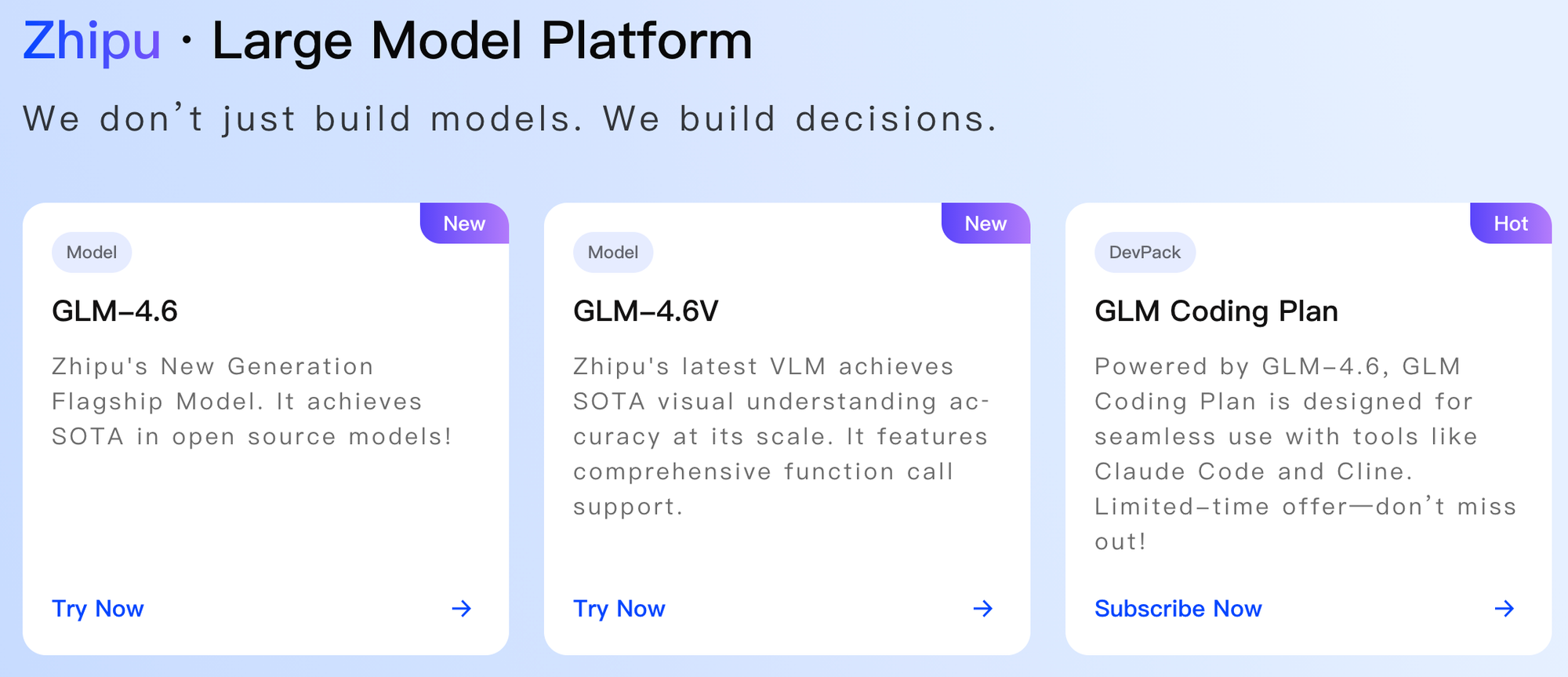
Zhipu AI is Beijing's Tsinghua-born challenger to Western AI giants, building open-source large language and vision models that let enterprises run frontier AI on their own terms. Think of it as China's answer to OpenAI, but with an MIT license and aggressive pricing. 🇨🇳
• Founders:
Tsinghua University professors Tang Jie and Li Juanzi spun the company out in 2019. CEO Zhang Peng runs operations. The academic DNA shows, GLM architecture emerged from the university's Computer Science Department.
• Product:
GLM-4.6V is the headline act. A 106B-parameter vision-language model with 128k context and native tool calling on visual inputs. Upload a 300-page PDF, a dashboard screenshot, or an hour of video. The model processes it directly. Pricing hits $1.20 per million tokens. The 9B Flash variant runs free. MIT license means you can deploy anywhere, air-gapped or sovereign cloud.
• Competition:
OpenAI and Anthropic dominate the premium tier. Qwen fights on price. Zhipu carves a middle lane, open-source with enterprise muscle. Their ChatGLM models have 30M+ downloads and 150k GitHub stars. Platform bigmodel.cn serves 700,000 enterprise users.
• Financing:
$1.5B raised across 12 rounds. Backers include Alibaba, Tencent, Meituan, Xiaomi, Saudi Aramco's Prosperity7, and state investors. Valuation reportedly exceeds $20B. IPO pre-filed in April 2025.
• Future:
Zhipu is betting on agentic AI and multimodal workflows while Western rivals face export controls and geopolitical headwinds. Strong enterprise traction, open licensing, and Chinese government backing create real tailwinds. But global expansion remains unproven. ⭐⭐⭐⭐


