Implicator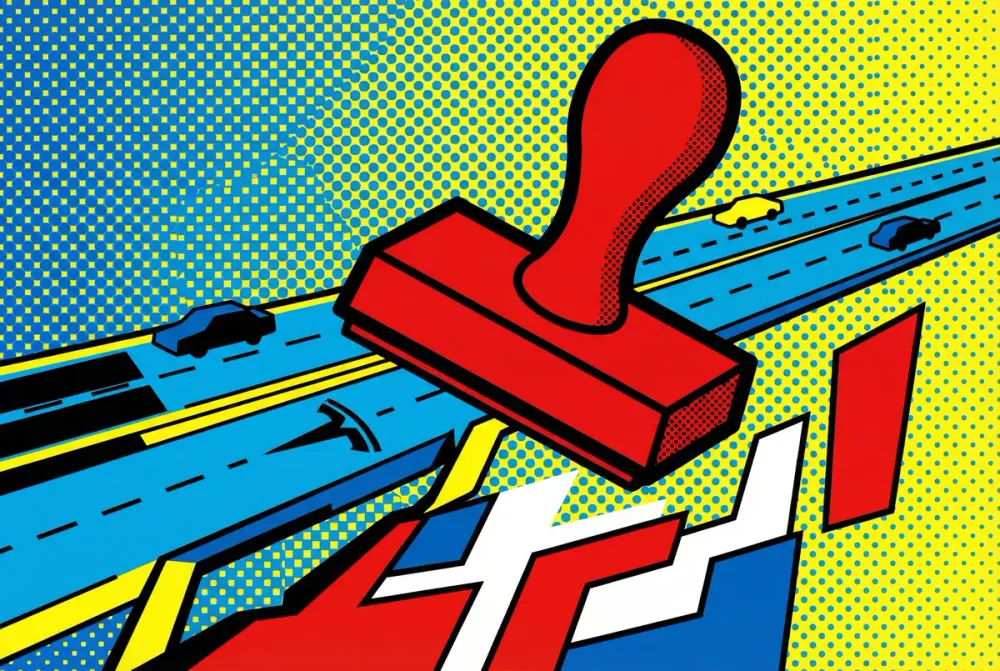
Tesla will avoid a 30-day suspension of its California sales and manufacturing licenses after the company removed "Autopilot" from its state marketing materials, the California Department of Motor Vehicles announced on Tuesday. It settles a case Sacramento has been building since 2022, when the DMV accused Tesla of selling cars under names that made them sound autonomous. California buys close to a third of all Teslas sold in the U.S.
"The department is pleased that Tesla took the required action to remain in compliance with the State of California's consumer protections," said DMV Director Steve Gordon in the announcement.
The word "corrective" appears in the DMV's statement three times. The state found a violation, gave the company 60 days to fix it, and confirmed on Tuesday that the fix arrived. Tesla gets to keep selling cars. The case numbers, per Reuters, are 21-02188 and 21-02189. Filed in 2021. Four and a half years to close.
Key Takeaways
- Tesla removed "Autopilot" from California marketing, avoiding a 30-day dealer and manufacturer license suspension ordered by the state DMV.
- The case opened in 2021; a judge found the term violated state law after five days of testimony in July 2025.
- Tesla discontinued Autopilot as standard equipment in the U.S. and Canada in January, pushing buyers toward its $99/month FSD subscription.
- California accounts for nearly a third of Tesla's U.S. sales, giving Sacramento real leverage in a demand-weakened market.
How a word became a legal liability
The DMV's complaint traces back to language that appeared on Tesla's website starting in May 2021. The site used two labels for its driver assistance features. "Autopilot." "Full Self-Driving Capability." Neither had just appeared. What drew the DMV's attention was marketing copy stating the system was designed "to conduct short and long-distance trips with no action required by the person in the driver's seat."
That phrase was the case. Vehicles equipped with those features could not operate as autonomous vehicles when the advertisements ran. They still cannot. Formal accusations followed in November 2023, targeting Tesla's manufacturer and dealer licenses.
Tesla moved quickly on one word. It dropped "Full Self-Driving Capability" and added "Supervised" in parentheses. That one word was the concession. An admission that a human has to stay in the loop. That satisfied the DMV on FSD. Autopilot stayed on the website, in the marketing materials, in the product manuals.
The agency was not satisfied. It referred the Autopilot question to an administrative law judge at the California Office of Administrative Hearings. Five days of testimony followed in July 2025. A proposed decision came in November: the judge found that "Autopilot" violated state law and recommended a 30-day suspension of both the manufacturing and dealer licenses.
Last December, the DMV adopted the finding and issued its formal decision. The manufacturing license suspension was stayed permanently. The dealer license suspension would also be stayed, the agency said, if Tesla removed "Autopilot" from its California marketing within 60 days. California gave Tesla a specific path out. The state had a judge's ruling behind it. Still, a word change beat a shutdown. Tesla updated the website.
What the features actually do
The names were always doing too much.
Consumer Reports ranked Tesla's driver assistance eighth last year. Ford was ahead of it. So was every other major manufacturer they tested. "Not nearly as good as what you might think it is," Kelly Funkhouser told CNBC. Eighth out of eight. That's what Autopilot was.
The system does real things. On a highway it matches the car ahead's speed and holds a lane. Brakes for traffic too. Read the Autopilot manual sometime. Hands on the wheel. Eyes on the road. Always has been. The problem was the website, which promised trips with "no action required by the person in the driver's seat." That's not driver assistance. That's autonomy. The cars couldn't deliver it when the ads ran. They still can't.
Full Self-Driving adds city driving. Intersections, signals, lane changes on surface roads. But the driver still monitors it the whole time. That's what the "(Supervised)" is doing in the name. Five years of California proceedings came down to one gap. "Autopilot" made no such concession. Buyers were making real decisions based on a word that promised more than the car could do.
The exit had already started
Tesla did not wait for California's 60-day clock to expire before making the change, and it did not limit the change to California.
Get Implicator.ai in your inbox
Strategic AI news from San Francisco. No hype, no "AI will change everything" throat clearing. Just what moved, who won, and why it matters. Daily at 6am PST.
No spam. Unsubscribe anytime.
In January, the company discontinued Autopilot as standard equipment across the U.S. and Canada, pulling it from new Model 3, Model Y, and base Cybertruck purchases. New buyers in those vehicles no longer receive Autopilot. They get a different menu of choices, all of which cost money.
That move was partly legal compliance. It was also a product strategy decision.
Autopilot had always shipped free with every Tesla. Full Self-Driving cost extra, sitting at $8,000 for a one-time purchase until last week. On February 14, Tesla converted FSD to a $99-per-month subscription only, eliminating the one-time purchase option entirely. Elon Musk has said the monthly price will increase as the system's capabilities improve.
Free Autopilot competed with paid FSD. Buyers satisfied with the basic feature had no incentive to pay for the upgrade. Discontinuing Autopilot removed that option. Regulatory compliance and revenue logic were pointing the same direction.
There's also the Fremont factory. Tesla shut down Model S and X production there to clear the floor for Optimus, its humanoid robot program. It wants the robot shipping to consumers by end of 2027. Running a factory retool that size while fighting Sacramento over a product label was not a scheduling conflict the company needed.
Why California held the power
A 30-day suspension of Tesla's dealer license in California was never a symbolic threat. The state accounts for close to a third of Tesla's U.S. registrations, a concentration that gives Sacramento real negotiating weight. That share slipped last year, with registrations falling 15 percent in early 2025, as federal EV tax credits expired and pulled demand down across the industry. The withdrawal of those credits created pressure on Tesla and its competitors at the same time. Even a diminished California market is Tesla's biggest by a large margin.
A month locked out of selling in your most important market, during a demand downturn, is not an abstraction. It's a revenue problem with a specific number attached.
California's reach goes beyond the sales numbers. The state has run its own vehicle emissions and safety standards for decades. A dozen states copy its rules. A consumer protection finding out of California doesn't stay in California. Plaintiffs' attorneys read the same opinions. Deleting a word from a website is cheap. Letting the ruling travel is not.
The scrutiny continues
The DMV's decision formally closes cases 21-02188 and 21-02189. The agency's announcement included a specific note. The ruling, it said, "does not preclude further investigation or action regarding Tesla's marketing practices or the safety of its ADAS features." That door stays open.
Federal regulators are running a parallel file. NHTSA filings submitted by Tesla covering December and January reported five crashes among Tesla's small deployed robotaxi fleet. At the driving distances involved, that amounts to roughly four times the crash rate of the average human driver over the same period.
Tesla's robotaxi operation is still small. The crash numbers are not a verdict on FSD or on Tesla's long-term autonomous vehicle ambitions. But they arrived in the same week Tesla resolved a multi-year California case about whether it had been honest with buyers about what its driver assistance systems can actually do. The two data points sit in the same regulatory week now, visible together.
The word "Autopilot" is gone from Tesla's California marketing. Full Self-Driving (Supervised) remains on the website and in the sales conversations at Tesla stores across the state. Drivers who activate it sit at the same wheel, on the same road. The system hasn't changed. The parentheses are doing the work the old name refused to do. Whether a driver on the 405, hands loose on the wheel at 70 miles per hour, understands what "(Supervised)" means is still an open question. Still, as of this week, nobody's assigned it a case number.
Frequently Asked Questions
What exactly did Tesla have to do to avoid the suspension?
Tesla removed "Autopilot" from all its California marketing materials within a 60-day window the DMV set in December 2025. The manufacturer license suspension was already stayed permanently; only the dealer license was conditioned on the marketing change.
What is Autopilot, and how does it differ from Full Self-Driving?
Autopilot handles highway driving — matching speed, holding lanes, braking for traffic. Full Self-Driving (Supervised) extends to city streets, including intersections, lane changes, and signals. Both require an attentive driver. Autopilot shipped free with every Tesla; FSD now costs $99/month.
Why did California have so much leverage over Tesla?
California accounts for nearly a third of Tesla's U.S. registrations. A 30-day sales ban during a demand downturn — registrations fell 15 percent in early 2025 after EV tax credits expired — would have been a measurable revenue hit in its biggest market.
Did Tesla change anything beyond California marketing?
In January, Tesla discontinued Autopilot as standard equipment across the U.S. and Canada for new Model 3, Model Y, and base Cybertruck buyers. It also converted Full Self-Driving from an $8,000 one-time purchase to a $99/month subscription on February 14.
Is the DMV investigation fully over?
The DMV formally closed cases 21-02188 and 21-02189, but its statement noted the ruling "does not preclude further investigation or action." Federal regulators at NHTSA are also tracking Tesla's robotaxi performance — five crashes reported in December and January, roughly four times the human driver rate.
Maria Garcia
Bilingual tech journalist slicing through AI noise at implicator.ai. Decodes digital culture with a ruthless Gen Z lens—fast, sharp, relentlessly curious. Bridges Silicon Valley's marble boardrooms, hunting who tech really serves.