Implicator
San Francisco | April 8, 2026
Anthropic built a model that cracks software for under $50 a run. Mythos Preview found zero-day vulnerabilities in every major OS and browser, including a TCP flaw hidden inside OpenBSD for 27 years. Project Glasswing gives 12 partners and 40 organizations early access to scan their code before similar capabilities reach other labs.
Z.ai's GLM-5.1 briefly topped the SWE-Bench Pro coding benchmark before Mythos crushed it the same afternoon. The real story: eight hours of autonomous coding, shipped open source under MIT, trained on zero American chips.
Most AI teams still cannot tell you where the token bill goes. Gartner puts observability adoption at 15 percent. The tools exist. The sequencing is wrong.
Stay curious,
Marcus Schuler
Anthropic Launches $100M Glasswing Coalition as Mythos Finds Decades-Old Zero-Days

Anthropic's unreleased Mythos Preview model found and exploited zero-day vulnerabilities across every major operating system and browser in red team testing. A 27-year-old TCP bug in OpenBSD. A 16-year-old FFmpeg flaw missed by five million automated scans. Working Firefox exploits 181 times where the current flagship managed twice.
Project Glasswing puts $100 million in credits on the table for 12 launch partners including Amazon, Apple, Google, Microsoft, and CrowdStrike, plus 40 additional organizations. The goal: defensive scanning before similar capabilities reach other labs within 6 to 18 months. Each successful exploit run cost under $50. After the preview period, pricing sits at $25 per million input tokens and $125 per million output.
The same company that left a draft blog post in a publicly searchable data store last month now positions itself as the cybersecurity industry's gatekeeper. The capability is real. The trust question remains open.
Why This Matters:
- Security through friction, the assumption that bugs stay hidden because finding them is hard, is dead at $50 per run
- Defenders get months of head start before similar tools reach adversaries and open-weight models
Reality Check
What's confirmed: Mythos found zero-days in every major OS and browser tested. 181 Firefox exploits versus 2 for Opus 4.6. Coalition includes Amazon, Apple, Google, Microsoft, CrowdStrike, and seven others.
What's implied (not proven): That Anthropic can responsibly gatekeep access while facing a Pentagon supply-chain risk label and two security lapses in two weeks.
What could go wrong: Defensive tools get flipped by adversaries. Hexstrike-AI collapsed zero-day timelines from weeks to minutes after release earlier this year.
What to watch next: Whether the 90-day coordinated disclosure window keeps pace with the 6-to-18-month capability proliferation timeline.

The One Number
181 — Working Firefox exploits developed by Anthropic's unreleased Mythos Preview model in cybersecurity testing, compared to 2 by Opus 4.6 across several hundred attempts. The model also found 10 full control-flow hijack vulnerabilities in open-source software where previous models found one each, including a 27-year-old OpenBSD TCP flaw. Over 99% of the thousands of vulnerabilities Mythos discovered remain unpatched. Anthropic published the results before releasing the model.
85% of GenAI Deployments Fly Blind on Token Costs, Gartner Estimates

A customer support bot running 10,000 conversations daily burns 400 million tokens before lunch. Gartner estimates only 15 percent of GenAI deployments have any cost observability. The rest discover the bill at the end of the quarter.
The tools exist but the sequencing trips teams up. Most grab budget caps before they know where the money goes. Langfuse and Helicone handle visibility. Portkey and LiteLLM enforce limits. ccusage, with 12,500 GitHub stars in weeks, gives Claude Code subscribers the usage dashboard Anthropic refuses to provide. Observe first, cap second.
Why This Matters:
- AI workloads generate 10-50x more telemetry than traditional APIs, and monitoring itself can double your observability bill
- The GenAI market hits $25 billion this year; teams that instrument early control the narrative when the board asks

AI Image of the Day

Prompt: A highly detailed closeup portrait of a fierce female warrior in steampunk cyberpunk style with layered mechanical details
Z.ai's GLM-5.1 Tops SWE-Bench Pro, Then Runs Eight Hours Without Human Help

Z.ai's GLM-5.1 briefly claimed the top spot on SWE-Bench Pro at 58.4, edging past GPT-5.4 and Claude Opus 4.6. Hours later, Anthropic's Mythos Preview posted 77.8 on the same test. The crown lasted half a day.
The benchmark moment matters less than what followed. GLM-5.1 ran 655 iterations and 6,000 tool calls optimizing a vector database over eight continuous hours, restructuring its approach six times without human guidance. Trained on Huawei Ascend chips under US sanctions, shipped open source under MIT, priced at one-fifth of Claude Opus 4.6.
Why This Matters:
- The AI coding race shifts from intelligence to endurance, and no benchmark measures sustained autonomous execution
- Export controls aimed to slow Chinese AI; GLM-5.1 matches Opus on coding at 80% less cost

🧰 AI Toolbox
How to Turn a Google Sheet into a Live App Backend with Sheet Ninja
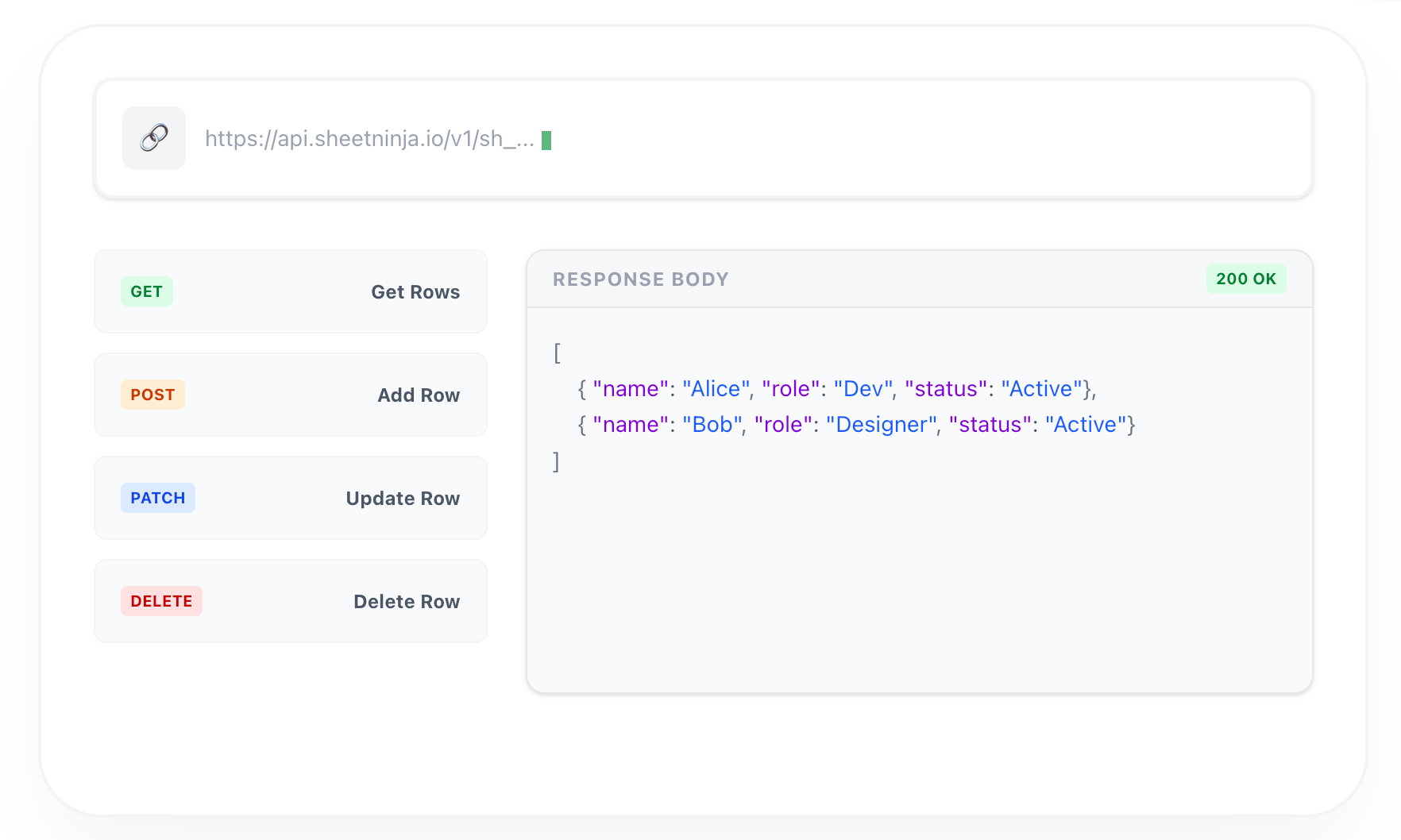
Sheet Ninja converts any Google Sheet into a working REST API in seconds. Paste a spreadsheet link and it generates read, write, update, and delete endpoints automatically. The sheet stays your database, so changes in either direction sync instantly. Pre-built prompts let you paste the API into AI coding tools like Cursor, Bolt.new, or Lovable and get a working app without writing backend code. Free tier includes 250 API requests per month.
Tutorial:
- Go to sheetninja.io and sign in with your Google account
- Create a Google Sheet with column headers in row 1 and sample data in rows below
- Paste the sheet URL into Sheet Ninja and click "Deploy" to generate your API endpoints
- Copy the GET endpoint and open it in a browser to confirm your data appears as JSON
- Use the pre-built prompt for your AI coding tool of choice (Cursor, Lovable, Bolt.new, Replit) to wire up a frontend automatically
- Enable bearer token authentication per operation to control who can read versus write
- Rename a column header in your sheet and watch the API schema update in real time with no redeployment
What To Watch Next (24-72 hours)
- TSMC: Enters its earnings quiet period this week ahead of Q1 results on April 16. The company guided $34.6-35.8 billion in revenue, roughly 38% year-over-year growth. After Samsung projected an eightfold profit jump yesterday, TSMC's numbers will confirm whether AI chip demand is sustaining or showing early signs of a plateau. Wall Street consensus expects a beat.
- USTR Section 301: Tech companies have until April 15 to submit written comments on the semiconductor overcapacity investigation covering 16 economies including China, Taiwan, and South Korea. Public hearings start May 5 in Washington. The filings will reveal which companies want tariff protection on chips and which are lobbying against further supply chain disruption.
- HumanX: The enterprise AI conference wraps its final day Wednesday in San Francisco with more than 6,500 attendees at VP level or above. Product launches and partnership deals from the closing sessions typically land after the opening keynotes dominate coverage. Watch for enterprise AI vendor announcements that move procurement decisions for H2 2026.
🛠️ 5-Minute Skill: Turn a Week of Activity Into a Progress Report
It is Friday at 4 PM. Your manager wants a weekly update. You did a lot this week but cannot remember what, because it is scattered across tasks, emails, and calendar entries.
Your raw input:
Calendar: 14 meetings including a client demo and two interviews.
Tasks completed: shipped auth fix, reviewed 3 PRs, finalized Q2
roadmap. Sent 38 emails. Missed deadline on vendor evaluation.
The prompt:
From this week's activity, produce: (1) top three accomplishments
with impact, (2) one thing that slipped and why, (3) top priority
for next week. Under 80 words. No filler.
What you get back:
Done:
1. Shipped auth fix, unblocks mobile release next Tuesday.
2. Finalized Q2 roadmap, shared with leadership for sign-off.
3. Client demo went well, follow-up proposal sent same day.
Slipped: Vendor evaluation, blocked by missing pricing data from two of three vendors. Following up Monday.
Next week: Close vendor evaluation and prep board deck for Thursday.
Why this works
Weekly updates fail when you list tasks instead of outcomes. The prompt forces you to connect each item to its downstream impact, which is what managers actually read for.
What to use
Claude: Better at identifying which accomplishments carry the most weight.
ChatGPT: Faster at pulling clean structure from messy inputs.
AI & Tech News
Iran-Linked Hackers Target US Energy and Water Systems, Federal Agencies Warn
A coalition including the FBI, NSA, and CISA issued a joint advisory warning that Iranian threat actors have conducted cyberattacks on industrial control systems within US energy and water infrastructure. The campaigns aim to establish persistent access amid heightened geopolitical tensions, including recent threats by Trump against Iranian assets.
Pro-Iranian Cyber Group Claims DDoS Attacks on Chime and Pinterest
A pro-Iranian cybercrime group took credit for attacks that temporarily knocked Chime Financial and Pinterest offline this month. The distributed denial-of-service campaign adds to a pattern of state-aligned disruption targeting US consumer-facing platforms.
ICE Confirms Use of Graphite Spyware to Bypass Encrypted Messaging
US Immigration and Customs Enforcement acknowledged deploying the Graphite spyware tool to intercept end-to-end encrypted communications, citing fentanyl trafficking investigations. Privacy advocates warn the capability lacks transparent oversight and undermines digital security for all users.
Anthropic Hires Microsoft's Eric Boyd to Lead Infrastructure
Anthropic appointed Eric Boyd, a 16-year Microsoft veteran who previously led the company's AI platform infrastructure, as its new head of infrastructure. The hire signals Anthropic's push to scale compute and cloud operations as demand for Claude surges.
OpenAI's Brockman Outlines Strategy Pivot Away from Sora Toward Text Models
OpenAI President Greg Brockman told Big Technology the company is prioritizing text-based models over world models, pausing Sora development and expanding Codex. The shift reflects a bet that scalable text systems offer the most viable near-term path to general AI.
Musk Amends OpenAI Lawsuit, Seeks Altman's Removal from Nonprofit Board
Elon Musk amended his lawsuit against OpenAI, requesting any damages go to the nonprofit arm and that Sam Altman be removed from its board. The filing centers on Musk's objections to OpenAI's for-profit restructuring ahead of a potential IPO.
Super Micro Launches Independent Probe After Co-Founder Indictment
Super Micro Computer initiated an independent investigation after federal prosecutors indicted three individuals, including a co-founder, for alleged export control violations involving China. The company also launched an internal review of its trade compliance program.
FDIC Proposes First Federal Regulatory Framework for Stablecoin Issuers
The FDIC proposed rules under the new GENIUS Act establishing federal oversight of stablecoin issuers, including 1:1 backing requirements with high-quality liquid assets. The framework subjects issuers to FDIC supervision and deposit insurance eligibility standards.
Google Photos Rolls Out AI Enhance to All Android Users Globally
Google expanded its AI Enhance feature to Google Photos on all Android devices, enabling automated lighting and contrast improvements alongside new video playback speed controls. The update brings AI-assisted editing to the broader Android user base.
Google Chrome Adds Vertical Tabs and Enhanced Reading Mode
Google began rolling out vertical tabs in Chrome, a feature long available in Firefox and Microsoft Edge. The update also introduces a full-screen reading mode designed to improve focus during long-form content consumption.
🚀 AI Profiles: The Companies Defining Tomorrow
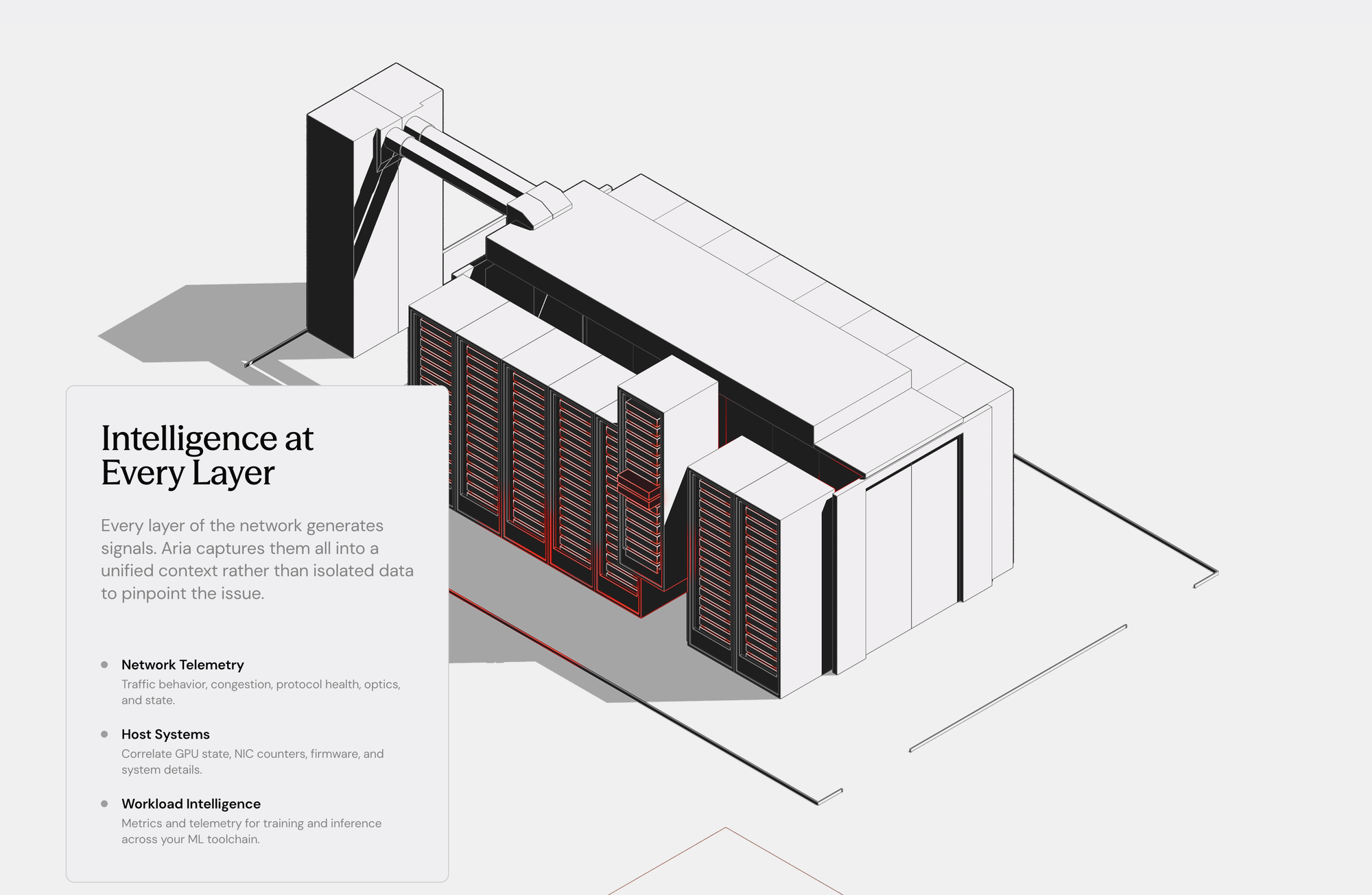
Aria Networks wants to replace the dumb pipes inside AI data centers with infrastructure that actively optimizes how models run.
Founders
Mansour Karam serves as CEO. He previously built Apstra, a network automation company that Juniper acquired for roughly $190 million in 2021. After spending time inside Juniper working across the full hardware and software stack, he left to start Aria in 2025. Co-founder and CTO Subhachandra Chandra came from Arista, one of the dominant players in data center switching. The company is headquartered in Palo Alto and went from incorporation to live customer deployments in under 15 months.
Product
Aria sells Ethernet switches rated at 800G and 1.6T speeds, powered by a hardened version of the open-source SONiC operating system. The core differentiator is what the company calls Deep Networking: a telemetry engine that collects performance data at up to 10,000 times the resolution of conventional monitoring tools, paired with AI agents that handle load balancing and congestion management in real time. The system works across chips from Nvidia, Google, and AMD, so operators can swap hardware without rebuilding the network.
Competition
Arista dominates AI cluster networking with a $120 billion market cap. Cisco looms at $250 billion. Juniper (now part of HPE) and a growing field of whitebox vendors also compete for neocloud contracts. Aria bets that purpose-built AI networking, rather than retrofitted enterprise gear, gives it an opening.
Financing 💰
$125 million Series A from Sutter Hill Ventures, Atreides Management, Valor Equity Partners, and Eclipse Ventures. Atreides managing partner Gavin Baker joined the board.
Future ⭐⭐⭐⭐
Strong founding team with a prior exit, real customer orders on day one, and a chip-agnostic approach in a market projected to hit $30 billion by 2035. Executing against Arista at scale is the test.
🔥 Yeah, But...
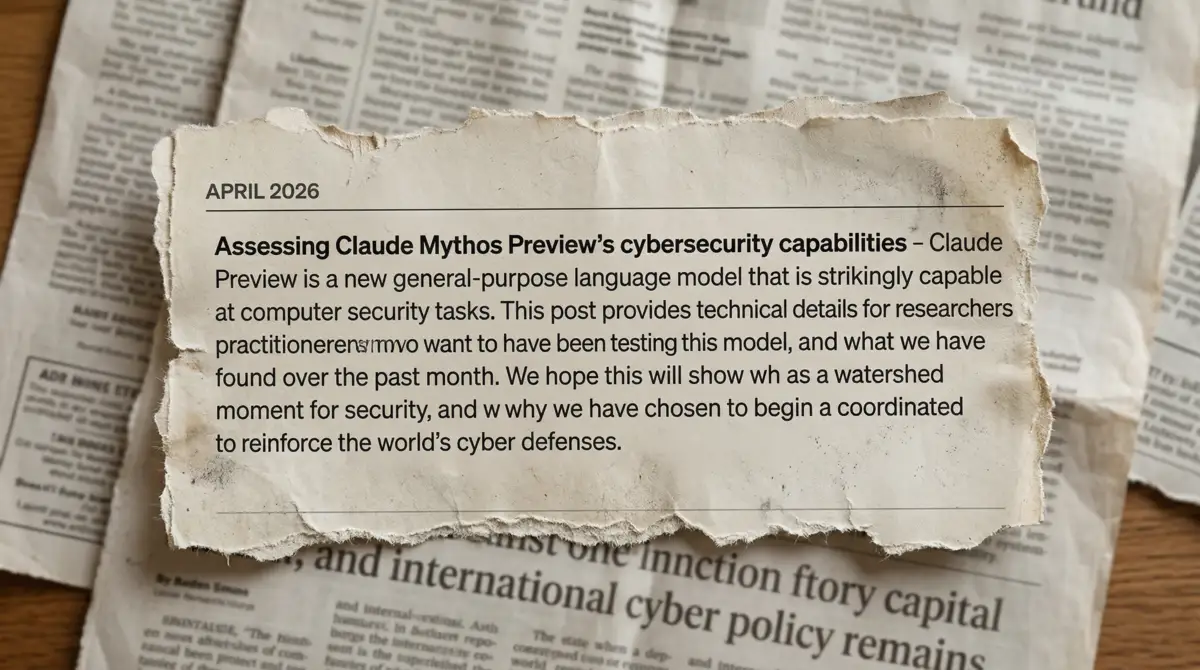
Anthropic published a red team report showing its unreleased Mythos Preview model discovered 181 working Firefox exploits in testing, compared to two by its current flagship. Over 99% of the thousands of vulnerabilities the model found remain unpatched. Anthropic released the report before shipping the model. (Anthropic Red Team Report, April 2026)
Our take: Anthropic built a model so good at breaking software that it casually unearthed a TCP flaw OpenBSD missed for 27 years. Then it wrote a paper about it. The move is genuinely responsible, publishing before release so defenders get a head start. But read the fine print: over 99% of the vulnerabilities remain unpatched. The head start is more of a gentle wave from across the parking lot while someone else sprints. Anthropic gets credit for transparency. The rest of us get to wonder how many other labs found the same bugs and said nothing.

Marcus Schuler
Senior broadcast journalist and former ARD correspondent for Europe's largest public broadcaster. Covering the tech industry from San Francisco for 10+ years. Founded implicator.ai for independent, rigorous AI reporting. E-mail: [email protected]