Implicator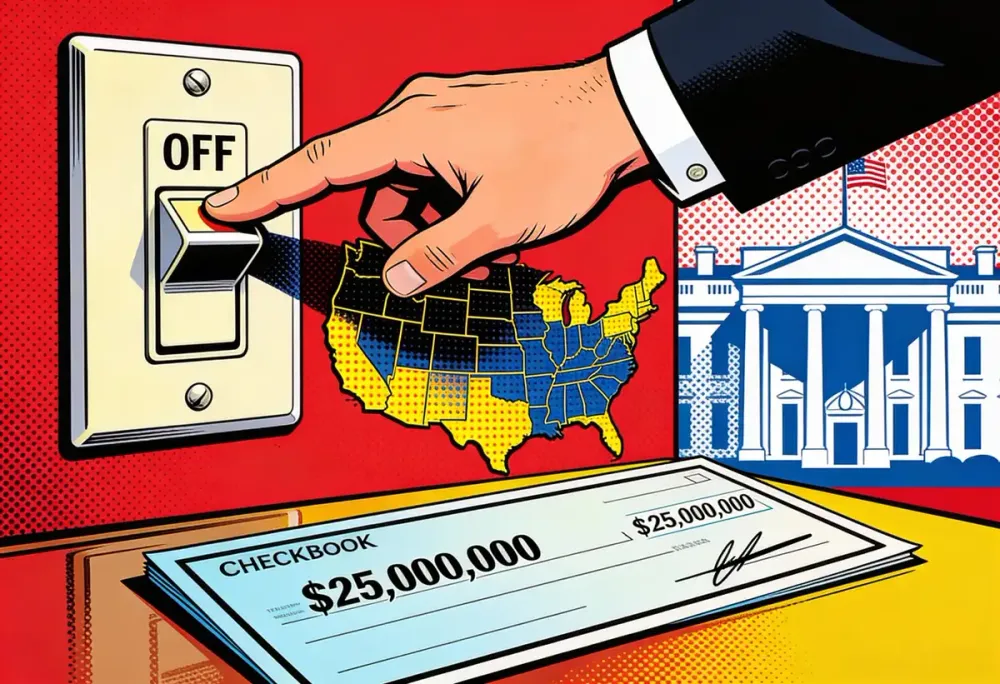
On September 4, 2025, Greg Brockman secured a seat at a White House dinner table alongside other artificial intelligence executives. The OpenAI president shook hands with Donald Trump and Melania Trump in the State Dining Room, one of several tech leaders invited to demonstrate the administration's engagement with the industry. Eight days later, Brockman wrote a check for $25 million to MAGA Inc., the super PAC controlled by Trump's political allies.
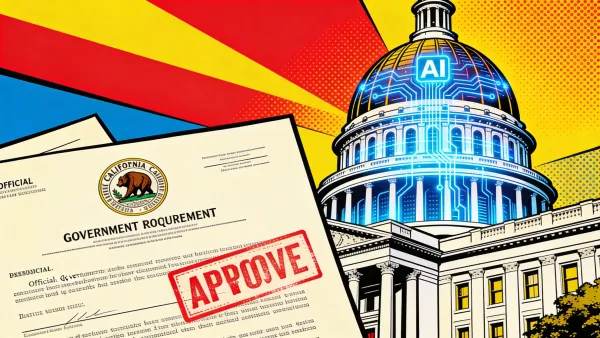
Three months after that donation cleared, Trump signed an executive order designed to do exactly what OpenAI had been lobbying for: block states from enforcing their own AI regulations. The December 11 order declared state-level AI rules an obstruction to national policy, preempting California's efforts to regulate the technology and giving companies like OpenAI a unified federal framework—which is to say, no framework at all.
If you trace the timeline, the mechanics become obvious. Dinner. Donation. Deregulation. The president faces constitutional term limits. He cannot run again. His operation pulled in $102 million between July and December. Add that to earlier hauls, and the war chest topped $300 million by New Year's. The scale is absurd. Brockman's contribution accounted for nearly a quarter of that haul, making him the single largest donor in the six-month period ending December 22.
Key Takeaways
• OpenAI president Greg Brockman donated $25 million to Trump's MAGA Inc. in September, three months before Trump blocked all state AI regulation.
• The donation bought a "federal off-switch" killing fifty state laws, saving OpenAI hundreds of millions in compliance costs over the next decade.
• Crypto.com ($20M), cannabis groups ($1.05M), and Juul ($1M) followed similar patterns: donate, then watch favorable policy arrive within months.
• MAGA Inc. enters 2026 with $300 million cash, positioning Trump to control midterm races despite being term-limited and unable to run again.
Money flows from industries with direct stakes in federal policy. Cryptocurrency platforms, cannabis advocacy groups, e-cigarette manufacturers, and AI companies poured eight-figure sums into MAGA Inc. during this period. Executives write checks. Stand in receiving lines at the White House. Wait for the regulatory environment to clear. Trump's team calls this supporting the America First agenda. Critics see a transactional system where access and policy shift in proportion to check size.
Federal Election Commission filings released January 2 reveal the mechanics of this operation in granular detail. The donor list reads like a catalog of regulatory arbitrage. Industries facing potential restrictions—or seeking relief from existing ones—dominate the contribution records. OpenAI's Brockman leads, but the cryptocurrency exchange Crypto.com contributed $20 million through its U.S. entity Foris DAX Inc., with another $10 million arriving earlier in 2025. Private equity investor Konstantin Sokolov gave $11 million. Blackstone CEO Stephen Schwarzman added $5 million in December.
None of this violates federal law. Super PACs can accept unlimited donations provided they do not coordinate directly with candidates. But the donations arrive in a context where the administration has demonstrated willingness to reward financial supporters and punish critics. Industries that fund Trump's political operation consistently receive favorable treatment. Those that do not face public attacks and regulatory hostility.
The Timing Problem
Brockman posted on X this week about his political involvement, framing it as support for "policies that advance American innovation and constructive dialogue between government and the technology sector." He wrote that the administration showed "willingness to engage directly with the AI community and approach emerging technology with a growth-focused mindset." The statement did not mention MAGA Inc. by name or acknowledge the $25 million contribution.
Sign up for Implicator.ai
Strategic AI news from San Francisco. Clear reporting on power, money, and policy. Delivered daily at 6am PST.
No spam. Unsubscribe anytime.
Anna Brockman, his wife, contributed an additional $12.5 million on the same September date, according to New York Times reporting. Other outlets attributed the full $25 million to Greg Brockman alone. The $25 million showed up one week post-dinner. The executive order followed three months later, wiping out the state regulation problem OpenAI had been fighting.
OpenAI didn't respond to questions about the money or when it moved. White House spokeswoman Liz Huston rejected suggestions that Trump's decisions reflect donor influence. "President Trump is grateful for the support he receives, but unlike politicians of the past, he isn't bought by anyone," Huston said in a statement. "President Trump makes decisions based solely on what's best for the country."
Trump has emerged as the AI industry's most prominent champion, pushing what he describes as permissive policies that accelerate development. In practice, this means blocking regulatory constraints. His December executive order specifically targeted state-level rules, which OpenAI CEO Sam Altman had previously called a "patchwork of competing regulations" that would impede progress.
California attempted to pass legislation requiring AI companies to implement safety protocols and accept liability for harms caused by their systems. Silicon Valley wasn't just annoyed—it was panic-stricken. The prospect of fifty competing liability standards looked like an existential threat. Industry groups mobilized against these efforts, arguing that premature regulation would handicap American companies in their competition with Chinese AI development. Trump's executive order resolved this debate by declaring federal supremacy and instructing agencies to preempt conflicting state laws.
The Economics of Deregulation
Financial stakes justify Brockman's contribution. OpenAI operates ChatGPT, the consumer-facing chatbot that made the company a household name. Behind that product sits a massive infrastructure buildout requiring billions in capital expenditure. Data centers under construction. Power purchase agreements in negotiation. Thousands of engineers on payroll. Every regulatory requirement adds cost and delay.
State-level regulation creates the worst-case scenario for companies operating at OpenAI's scale. Compliance teams must track dozens of different state frameworks, each with unique requirements. Products approved in one jurisdiction face restrictions in another. Legal exposure multiplies across fifty state courts with varying standards for liability and evidence.
Think of the $25 million not as a donation, but as the price of a federal off-switch. For the cost of a seed round, OpenAI didn't just buy a favorable rule—they bought a preemptive blackout on fifty state legislatures. A unified federal approach eliminates these costs. OpenAI can design products for a single standard rather than accommodating state-by-state variations. Legal risk becomes more predictable. Compliance overhead shrinks.
Viewed through this lens, $25 million represents a minor expense. The executive order Brockman's donation preceded likely saves OpenAI hundreds of millions in compliance costs over the next decade. It removes the threat of state-level liability regimes that could have exposed the company to California's consumer protection laws and litigation framework. That protection alone justifies the political investment.
Other donors follow similar logic. Crypto.com operates a cryptocurrency exchange that benefits from the stablecoin legislation Trump signed in July. The bill created the first federal regulatory framework for digital currencies, replacing the uncertain patchwork of state money transmission laws that had constrained the industry. Crypto.com's $30 million in total contributions to MAGA Inc. in 2025 positioned the company to influence this framework's development.
The cannabis lobby ran the same play. American Rights and Reform PAC cut a check for $1.05 million. December brought Trump's executive order bumping marijuana down from Schedule I, opening research pathways and commercial opportunities. Years of lobbying, one signature.
Juul kicked in $1 million that November. The FDA had greenlighted their vapes four months earlier, ending a brutal fight over youth vaping rates. The company's donation arrived after securing this favorable outcome, suggesting either gratitude or an investment in maintaining regulatory goodwill.
Presidential Fundraising Without a Race
No second-term president fundraises like this. Term limits block a third run. Most presidents at this stage shut down their money operations, pivot to libraries and party work. Trump's running a permanent campaign.
MAGA Inc. banked more heading into 2026 than the Congressional Leadership Fund raised through all of 2024. And that's the main House Republican super PAC. Trump's advantage extends beyond this single committee. The super PAC represents one piece of a broader fundraising empire that includes multiple leadership PACs, the Republican National Committee, and nonprofit organizations funding everything from a new White House ballroom to 250th anniversary celebrations.
His inaugural committee alone raised nearly $240 million, breaking previous records. Donors who contributed to that effort frequently appear on MAGA Inc.'s disclosure forms as well. Benjamin Landa gave the super PAC $5 million in August. The New York nursing home operator's facilities have faced fines and legal issues related to fraud and resident abuse. Trump nominated Landa in October to serve as ambassador to Hungary. The Senate hasn't confirmed him yet.
Isaacman put $2 million into MAGA Inc. last year, with $1 million landing in September. Trump nominated him for NASA in May, yanked the nomination, then renominated him in November. The president picked him again, and Isaacman won Senate confirmation in December. The donation timeline suggests Isaacman understood that supporting Trump's political operation would not hurt his chances of securing the appointment he sought.
Elizabeth Brodie gave $1 million in December, bringing her total MAGA Inc. contributions since Trump's reelection to $1.5 million. She and her husband Stefan Brodie also donated $1 million to the inaugural committee. Stefan threw undisclosed money at the White House ballroom. Both Brodies got seats at the November Saudi dinner. Their son Howard Brodie serves as U.S. ambassador to Finland, nominated by Trump in February.
Some Republicans have expressed private concerns that Trump's fundraising siphons money from party campaign committees and gives his personal allies too much control over resource allocation. MAGA Inc. burned through $1.7 million for all of 2025, backing Matt Van Epps in a Tennessee special. Van Epps won by 9 points in a district Trump took by 22. Narrow margin for all that firepower.
Electoral effectiveness may not be the point. War chests serve multiple functions. This one provides leverage over Republican candidates who need financial support in competitive races. It signals to potential donors which issues the Trump orbit considers priorities. Most importantly, it creates a mechanism for industries and individuals to demonstrate loyalty and purchase access.
Access and Ambassadorships
Isabela Herrera moved $2.5 million to MAGA Inc. in late 2024. Her father, Venezuelan-Italian banker Julio Herrera Velutini, faced federal charges for bribing Puerto Rico's governor in 2020. May brought a Trump Justice Department appointee who cut a deal: misdemeanor plea. Career prosecutors wanted harder penalties. They got overruled. Herrera donated another $1 million to MAGA Inc. in July. The Justice Department maintains the plea agreement had no connection to political contributions. The timeline contradicts this.
Crypto.com CEO Kris Marszalek attended the November White House dinner for the Saudi crown prince. That invitation came weeks after his company's parent entity made two separate $10 million donations to MAGA Inc. High-level diplomatic engagement with a major U.S. trade partner, and Marszalek sat at the table. Substantial political contributions buy entry to events that would typically include only senior government officials and foreign dignitaries.
Greg and Anna Brockman attended the September gathering of AI executives that preceded the $25 million contribution. White House framing: engagement with the technology sector, bringing together company leaders to discuss AI development and policy. In practice, an access opportunity for an industry seeking to shape regulatory frameworks worth billions.
These interactions do not constitute explicit corruption. No evidence suggests Trump or his associates offered specific policy commitments in exchange for contributions. But the pattern creates a de facto system where money determines proximity to power. Donors get the invites. Face time with Trump. Relationships with the people writing rules.
The 2026 Problem
MAGA Inc.'s $300 million puts Trump in control of November's races. Incumbent presidents lose House seats in midterms. Pattern holds across decades. Republicans barely control either chamber right now. Losing either would significantly constrain Trump's agenda during his final two years.
That stockpile means Trump decides who gets money and who doesn't. Republican candidates read the room: back Trump, avoid fights, get funded. Potential 2028 presidential candidates cannot distance themselves from Trump's record without risking the cash they need for competitive races.
For the AI industry, Brockman's investment already paid dividends. The December executive order blocking state regulation gives companies like OpenAI the federal framework they sought. But regulatory battles continue. Congress could still pass legislation imposing safety requirements or liability standards. The European Union has already implemented comprehensive AI regulation. Pressure builds for the United States to develop its own approach.
Brockman's $25 million doesn't guarantee wins. It guarantees OpenAI gets in the room when agencies implement the executive order or draft new rules.
This represents the opening phase, not the conclusion. Industries that successfully navigate the Trump administration's regulatory approach will continue funding his political operation as insurance against future policy shifts. Those contributions fund efforts to maintain Republican control of Congress, where legislative threats to industry-friendly frameworks could emerge.
Trump has occasionally mentioned seeking a third term, despite constitutional prohibitions. Last fall Trump seemed to accept he couldn't run again. The money machine hasn't slowed. Industries keep writing checks because they know what aligned federal policy costs.
Write checks. Attend dinners. Watch regulatory obstacles disappear. For $25 million, OpenAI secured an executive order preempting state regulation across all fifty jurisdictions. The company will spend more than that on a single data center. Brockman's contribution looks less like a political donation and more like what it actually is: a business expense with a measurable return.
❓ Frequently Asked Questions
Q: Are these super PAC donations legal?
A: Yes. Super PACs can accept unlimited donations from individuals and corporations, unlike candidate campaigns which have contribution limits. The only restriction is that super PACs cannot coordinate directly with candidates. Federal Election Commission filings show all donations publicly. These rules were established by the Supreme Court's 2010 Citizens United decision.
Q: What specific California AI laws was OpenAI trying to block?
A: California's proposed SB 1047 would have required AI companies to implement safety protocols, accept liability for harms caused by their systems, and allow state regulators to audit models. The bill failed in 2025, but similar legislation was expected in multiple states. Trump's executive order now blocks any state from passing comparable rules.
Q: How does MAGA Inc.'s $300 million compare to typical midterm spending?
A: It's unprecedented. The Congressional Leadership Fund, the main super PAC backing House Republicans, raised $243 million for the entire 2024 election cycle. MAGA Inc. has more cash on hand entering 2026 than that total. Most second-term presidents wind down fundraising entirely, focusing on their party committees instead.
Q: Did other OpenAI executives donate to Trump's super PAC?
A: Public records show only Greg Brockman and his wife Anna from OpenAI's leadership. Anna contributed $12.5 million on the same September date as Greg's $12.5 million (together totaling $25 million). OpenAI CEO Sam Altman does not appear in MAGA Inc.'s donor records for 2025, though he attended White House meetings on AI policy.
Q: Can Congress still pass federal AI safety laws despite Trump's executive order?
A: Yes. Trump's order blocks state laws but doesn't prevent Congress from passing federal legislation. The European Union already implemented comprehensive AI regulation in 2024. If Democrats win House or Senate majorities in November 2026, they could advance federal safety requirements and liability standards that would apply nationwide.
Robert Brown
Tech journalist. Lives in Marin County, north of San Francisco. Got his start writing for his high school newspaper. When not covering tech trends, he's swimming laps, gaming on PS4, or vibe coding through the night.