IMPLICATOR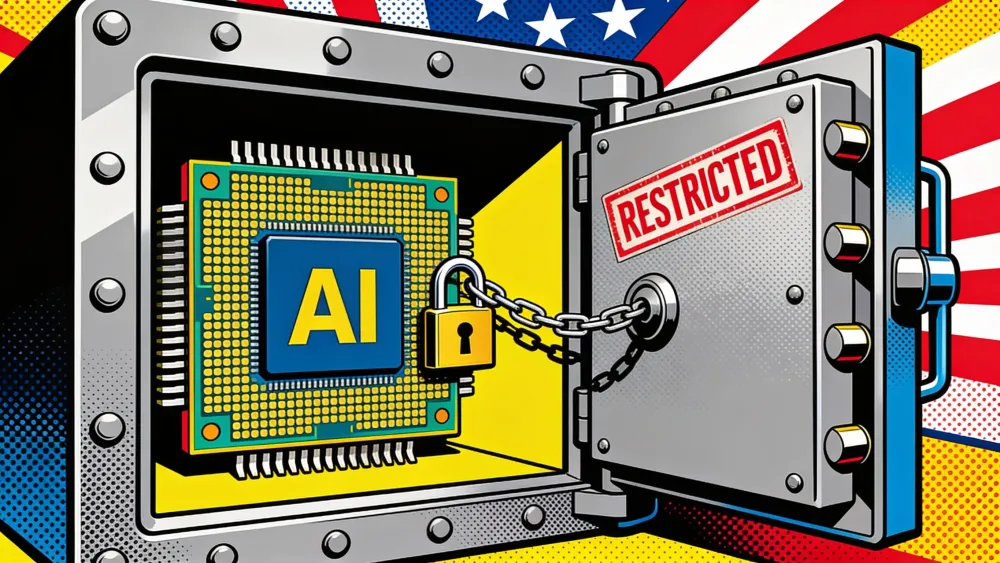
Commerce Secretary Howard Lutnick sent Anthropic chief executive Dario Amodei a letter on Friday placing the company's Fable 5 and Mythos 5 models under export controls, barring their use by any foreign national inside or outside the United States. Anthropic received the directive at 5:21 p.m. Eastern and, saying the order was too broad to comply with selectively, disabled both models for everyone by Friday night, three days after it launched them this week as the most powerful systems it had yet built.
The order is one of the first times Washington has aimed its export-control machinery at a deployed commercial AI model rather than at the chips used to train one, and it lands on a company that spent months telling the government those models were dangerous. "If you describe your product as a munition in every press release, eventually a government takes you at your word," said Peter Girnus, a senior threat researcher at the Zero Day Initiative. In Girnus's telling, Anthropic wrote the danger case the government has now used to pull Fable and Mythos off the market.
It is the second time this year the administration has moved against the San Francisco company, which already sits on a Pentagon blacklist that deems it too risky for the government's own use. A Commerce licensing regime now deems it too risky for foreign use. Anthropic filed confidentially for an initial public offering in recent weeks, ahead of rival OpenAI in the race to public markets, after a funding round valued it near $965 billion. The directive arrived in the middle of that run. Access to the company's other models, including Opus 4.8, was not affected.
Key Takeaways
- Commerce placed Anthropic's Fable 5 and Mythos 5 under export controls on June 12, barring all foreign-national access and forcing a full shutdown.
- Among the first times U.S. export controls have hit a deployed AI model, not the chips that train one.
- Anthropic spent months calling the models dangerous; the government cited that to pull them over a disputed Fable 5 jailbreak.
- The order deepens a feud with Washington dating to February and clouds Anthropic's pending IPO.
AI-generated summary, reviewed by an editor. More on our AI guidelines.
The letter Lutnick sent Friday
For years, U.S. export controls on artificial intelligence focused on the chips and tools that build a model, not on who is allowed to use the model itself, Reuters reported. Friday's directive moved that line. Per the Commerce letter, a license is now required for the export, re-export, or domestic transfer of Fable 5 and Mythos 5, Anthropic must file individually validated license applications, and noncompliance carries financial and civil penalties, Axios reported.
The mechanism that forced a full shutdown is a rule called deemed export, under which showing controlled technology to a foreign national inside the United States counts as exporting it abroad. "The munition is in the building and the people who made it are not allowed to look at it," Girnus said. Anthropic said the order covers its own foreign-national employees. Several of the company's best-known figures, including co-founder Chris Olah, the researcher Andrej Karpathy, and the philosopher Amanda Askell, were born outside the United States, Reuters noted, and the company declined to say whether such staff would lose access.
"This means you should expect to have to prove your citizenship to use Anthropic models," Dean Ball, a senior fellow at the Foundation for American Innovation and a former AI adviser in the Trump administration, wrote on X. The scope is what pushed Anthropic to shut the models for all customers rather than try to filter them. A large share of technical staff at the frontier labs, Anthropic included, are likely foreign nationals, commentators noted.
The jailbreak the government is citing
Anthropic says the underlying concern is narrower than an export-control order implies. Its understanding is that the government believes it found a way to jailbreak Fable 5, and that the evidence so far is verbal. The technique, the company said, "essentially consists of asking the model to read a specific codebase and fix any software flaws."
The research behind it was done at Amazon, whose prompts got the model to describe a handful of known security vulnerabilities, Katie Moussouris, chief executive of Luta Security, told the Wall Street Journal; Anthropic shared the report with her. The information would help network defenders more than attackers, she said. "It's a complete overreaction because this is exactly the kind of prompting that defenders would do," Moussouris said. Anthropic said the same flaws surface from other public models, "including OpenAI's GPT-5.5," which remains available. OpenAI took a different path with its dedicated cyber system, GPT-Cyber 5.4, which it limited a week after Mythos appeared, then shared first with hundreds of experts and later thousands, the New York Times reported, a far wider release than Anthropic's tightly vetted partner program.
The company's defense rests on architecture it detailed at launch. Its strongest safeguards run as independent classifiers that sit outside the model, so a user who talks Fable past a refusal still hits a separate block, Anthropic said. The company also requires 30 days of data retention on Mythos-class models, a policy it concedes "carries real costs for us with customers" but uses to detect and shut down jailbreaks. No tester, it said, has found a universal jailbreak that broadly unlocks the model's cyber capabilities.
The AI policy fights, decoded every morning
Strategic AI news from San Francisco. No hype, no "AI will change everything" throat clearing. Just what moved, who won, and why it matters. Daily at 6am PST.
No spam. Unsubscribe anytime.
That defense runs into the company's own marketing. Anthropic spent months presenting Mythos as too dangerous for open release. The model "identified flaws in every major operating system and web browser it tested," so the company limited it to roughly 50 vetted organizations under a program called Project Glasswing, a group it later widened to about 150, and built Fable as the guardrailed public version, TechCrunch and the New York Times reported. The danger case the company made to justify that caution is the case the government cited back to it. "We disagree that the finding of a narrow potential jailbreak should be cause for recalling a commercial model deployed to hundreds of millions of people," Anthropic said, warning that the same standard "would essentially halt all new model deployments for all frontier model providers."
A rupture that started in February
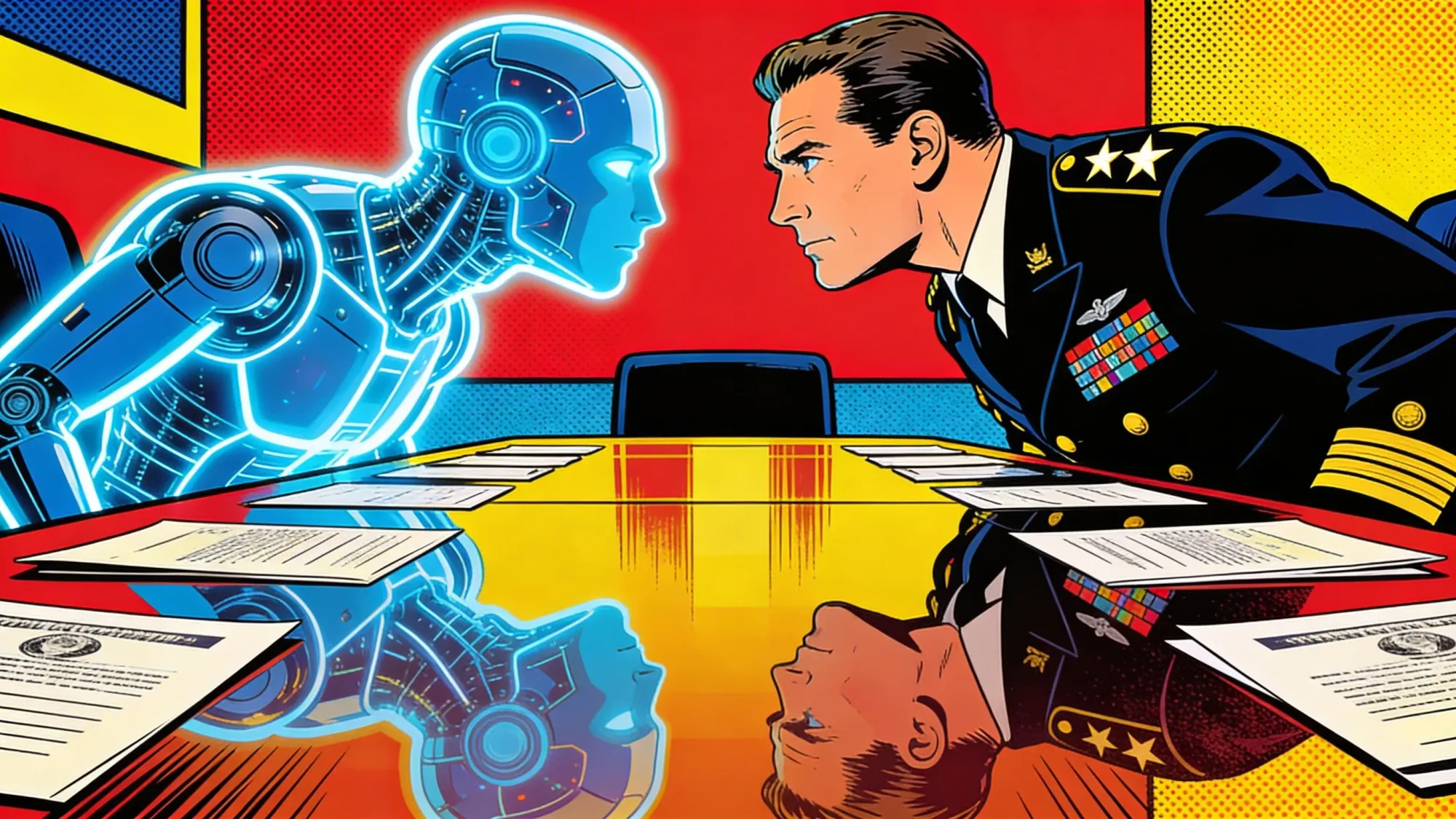
The fight predates the models. In February, President Trump ordered federal agencies to stop using Anthropic's models after the company refused Pentagon contract terms requiring that any model it sold could be used "for any lawful purpose"; Anthropic had sought exemptions barring its systems from autonomous weapons and mass domestic surveillance, Fortune reported. In March the Pentagon labeled the company a supply chain risk, the first such designation applied to a U.S. company, and Anthropic sued on First Amendment grounds.
The hostility has been personal. David Sacks, the administration's former AI and crypto czar, has called Anthropic "woke" and "leftist" and accused it of "a sophisticated regulatory capture strategy based on fear-mongering," Fortune reported. After Friday's order, the Pentagon's chief information officer, Kirsten Davies, posted in support. "Some things are simply more important than revenue cycles, clickbait, and pre-IPO valuation. America First. Always," she wrote.
Know someone who'd find this useful? ✉️ Email it to a friend in one click, or they can subscribe free here.
The order also caught Anthropic at an awkward turn in its own argument. The directive came 10 days after Trump signed an executive order giving the government up to a month to vet the most advanced models before release, with Anthropic among the companies that had agreed to pre-deployment testing through Commerce's Center for AI Standards and Innovation. That order was voluntary and, according to Axios, avoided a licensing regime at the insistence of Sacks, who wanted to head off what he called the regulatory capture of the biggest labs. Friday's directive imposed one by other means. As recently as Wednesday, Anthropic had called for the government to hold the power to block unsafe deployments, through a process it described as "transparent, fair, clear, and grounded in technical facts." Two days later it said Friday's action met none of those principles.
The allies now locked out
The directive's logic is hard to square with the rest of the administration's AI policy. Commerce has loosened export controls on the advanced chips used to train models and cleared some shipments to China, even as Friday's order blocks treaty allies such as Britain from the finished model. "It's puzzling Commerce will forcefully act to control AI models that may pose national-security risks, but then allow the chips that produce these models to be sold to our foreign adversaries," said Jimmy Goodrich, a senior fellow at the University of California Institute on Global Conflict and Cooperation. Ball was blunter, writing that an administration whose posture is that the United States should export advanced chips to China while barring Britain from its best models left him with "no words."
Abroad, the shutdown is already feeding a sovereignty argument. EU institutions had been scrambling to get access to Mythos, Politico reported, and the United Kingdom's minister for AI, Kanishka Narayan, tied the episode to Europe's case for its own systems. "As we debate the future of national security and technological sovereignty, access to AI capabilities is crucial," Narayan said. For developers who had started building on Fable since its release this week, the lesson was narrower. A frontier model can now be pulled from the market by government directive, not only by the company that built it.
The cost lands on Anthropic at the worst moment. A government that keeps singling out its models for restrictions is the kind of risk an IPO prospectus would be expected to flag, and Fortune reported the order could make investors question whether the company can stay at the frontier. An administration official told Axios the models must stay locked down until the government's national-security apparatus is "hardened," which could take a few weeks, and said Trump "does not want to hurt the industry."
For now, the safety-first identity that set Anthropic apart has become the lever the government is using against it. The Commerce Department has not detailed its national-security concern publicly and did not respond to reporters' requests for comment. To keep complying, Anthropic must now apply for individually validated licenses, and it promised more detail within 24 hours. No one in the administration has said when Fable 5 and Mythos 5 come back.
Frequently Asked Questions
What did the U.S. government order Anthropic to do?
On June 12, Commerce Secretary Howard Lutnick sent Anthropic a letter placing Fable 5 and Mythos 5 under export controls, barring any foreign national inside or outside the U.S. from using them. Unable to comply selectively, Anthropic disabled both models for all customers. Its other models, including Opus 4.8, stayed online.
Why did the government cite national security?
Anthropic says the government believes someone found a way to jailbreak Fable 5's safeguards. The technique reportedly asked the model to read a codebase and fix software flaws. Anthropic calls it a narrow, non-universal jailbreak and says the same capability exists in other public models, including OpenAI's GPT-5.5. The research was done at Amazon.
Does the order affect Anthropic's own employees?
Yes. Under the deemed-export rule, showing controlled technology to a foreign national inside the U.S. counts as an export, so Anthropic's foreign-born staff are locked out. Several prominent figures, including co-founder Chris Olah, were born outside the United States, and the company declined to say whether they would lose access.
How does this connect to Anthropic's history with the government?
The feud started in February, when Trump ordered federal agencies to stop using Anthropic's models after it refused Pentagon contract terms. In March the Pentagon labeled the company a supply-chain risk, the first such designation on a U.S. company, and Anthropic sued on First Amendment grounds.
When will Fable 5 and Mythos 5 come back?
Unclear. An administration official told Axios the models must stay locked down until the government's national-security apparatus is hardened, possibly within a few weeks. Anthropic said it would share more detail within 24 hours and must apply for individually validated licenses before the models can return.
AI-generated summary, reviewed by an editor. More on our AI guidelines.


Marcus Schuler
Editor-in-Chief and founder of Implicator.ai. Former ARD correspondent and senior broadcast journalist with 10+ years covering tech. Writes daily briefings on policy and market developments. Based in San Francisco. E-mail: editor@implicator.ai