IMPLICATOR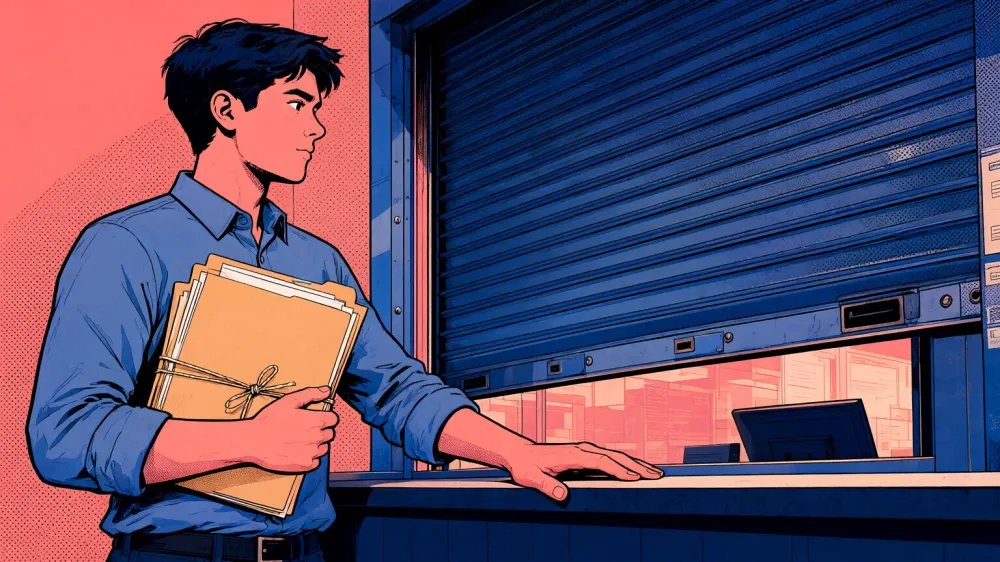
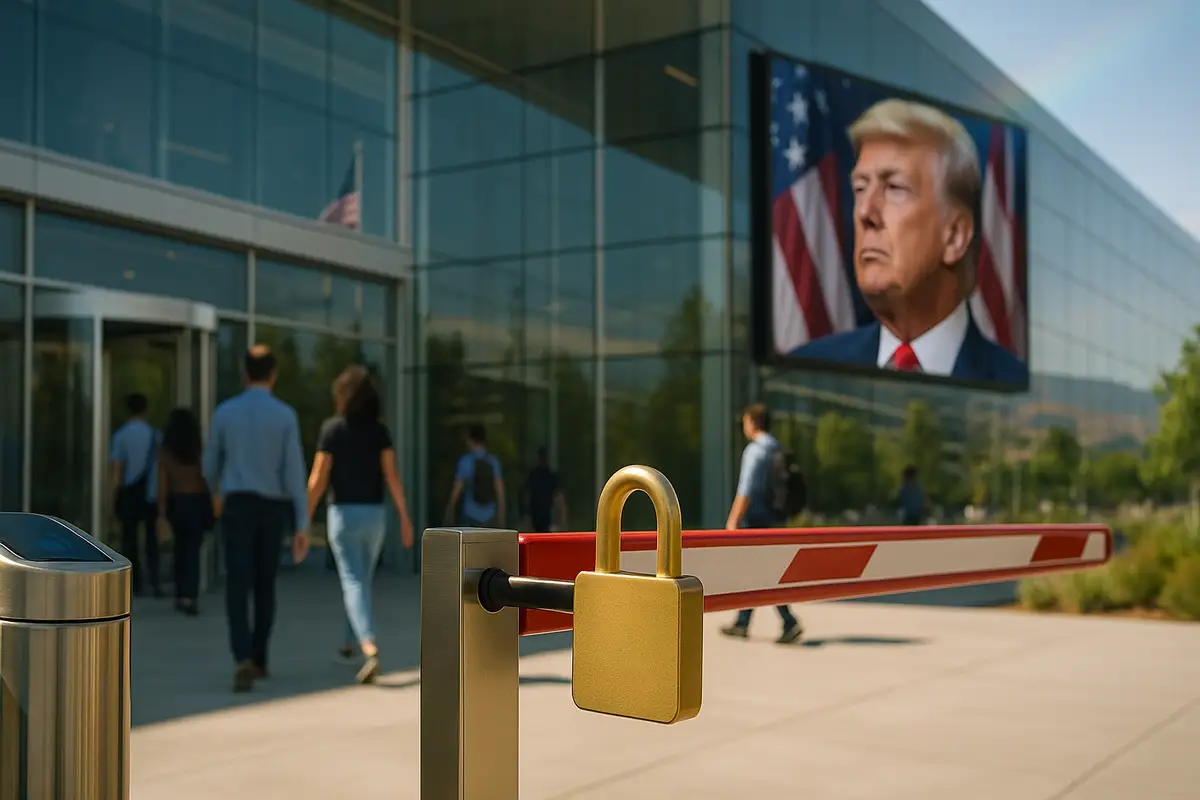
The US Labor Department said Thursday it will no longer accept or process permanent labor certification applications from Microsoft, Adobe and six IT outsourcing firms, suspending the step most employer-sponsored green cards start with. At the White House, Vice President JD Vance said Microsoft laid off 6,000 American workers last year while obtaining 6,300 H-1B visas and nearly 3,000 green cards. The suspension will last “as long as it needs to,” Vance said.
H-1B is a separate, temporary work status, and Thursday’s suspension covers permanent labor certification, the step toward a green card.
What Changed
- The Labor Department will no longer accept or process permanent labor certification applications, the first step of most employer-sponsored green cards, from Microsoft, Adobe and six IT outsourcing firms.
- Vice President JD Vance said Microsoft laid off 6,000 American workers last year while obtaining 6,300 H-1B visas and nearly 3,000 green cards; Microsoft said about 80% of its roughly 6,000 H-1B applications last fiscal year were extensions or status changes for existing employees.
- Vance said the suspension will last "as long as it needs to," and nine universities are under investigation over J-1 exchange-visitor visas, with subpoenas already served.
- Doug Rand, a former USCIS adviser, called the move "incoherent" and said a green card frees workers from dependence on their employer.
AI-generated summary, reviewed by an editor. More on our AI guidelines.
Applications halted
Labor Secretary Keith Sonderling said Microsoft and Adobe were suspended “due to multiple active federal investigations.”
“Since 2009, just these companies alone have requested almost 3 million foreign workers. They’ve received over 230,000 H-1B visas approvals and over 100,000 permanent labor certifications.” Sonderling said.
Vance said, “If you do the math, for every worker that Microsoft laid off, they replaced that worker with one and a half foreign indentured servants.” He said some companies place job ads in small-town newspapers, then point to the lack of responses to justify hiring lower-paid foreign workers. That ratio of one and a half to one comes out only if the 6,300 H-1B visas and nearly 3,000 green cards he cited are added together against the 6,000 layoffs.
Adobe, Cognizant, Infosys, HCL Technologies, Wipro and Capgemini did not immediately respond to requests for comment; Tata Consultancy Services declined.
Microsoft’s response
Microsoft said in its response that about 80% of roughly 6,000 H-1B applications it submitted last fiscal year were to extend or change the status of existing employees.
FREE WEEKDAY MORNING BRIEFING
Keep up with tech's fight over foreign talent.
The Implicator Morning Briefing filters the AI news cycle to the stories worth your attention and explains their consequences. From San Francisco, every weekday at 4:45 a.m. Pacific, 7:45 a.m. Eastern.
About five minutes. No hype. No spam.
The remaining filings covered new employees already legally in the US and represented 1% of its US workforce. “They are not new arrivals to our country,” the company said.
Vance’s 6,300 figure counts visas obtained; Microsoft’s roughly 6,000 counts applications submitted. Microsoft said it pays H-1B employees the same as other employees doing comparable work.
Hours after the announcement, President Donald Trump awarded Microsoft chief executive Satya Nadella the National Medal of Technology and Innovation. Nadella wrote in his memoir that he surrendered permanent residency for an H-1B visa in 1994 so his wife could join him in the US.
Different assessments
Doug Rand, a former USCIS senior adviser under President Joe Biden, called the announcement “incoherent.”
“If the Trump administration were truly concerned that H-1B workers are ‘indentured servants,’ then the last thing they would do is block companies from helping their own H-1B workers get green cards,” Rand said.
Ron Hira, a Howard University professor and longtime H-1B critic, said protections requiring employers to show they are not hurting similarly employed US workers had “never been enforced.”
Nasscom, India’s IT industry body, said Indian firms had reduced reliance on H-1B visas and relatively few of their workers sought green cards through PERM.
Know someone who'd find this useful? ✉️ Email it to a friend in one click, or they can subscribe free here.
Fee proposals
A $100,000 payment requirement on certain new H-1B petitions took effect after a September 2025 proclamation, and in June 2026 a federal court vacated the agency guidance implementing it. An August proposal for a $103,265 fee is not final.
On Wednesday, the Department of Homeland Security proposed requiring schools to pay $70,000 for each international student’s initial Optional Practical Training application.
University investigations
The administration also opened J-1 exchange-visitor visa investigations into Harvard, Yale, Stanford, Brown, MIT, Arizona State, the University of Pittsburgh, UC Davis and Caltech. Labor Inspector General Anthony D’Esposito said subpoenas had already been served.
Vance accused universities of using foreign graduate research assistants to undercut American wages.
Stanford said it complies with visa laws and would cooperate. Brown confirmed receiving a subpoena and said it would respond. MIT said every J-1 holder there had been vetted and authorized by the US government.
Sarah Spreitzer of the American Council on Education said international students historically spent $40 billion annually in the US. “It could have an enormous economic impact on the whole US economy,” she said.
Explainer
How work visas and green cards work in the US
Temporary or permanent?
H-1B is a nonimmigrant classification providing temporary work status. A green card grants permanent residency.
Who qualifies for H-1B?
Specialty occupations generally require a bachelor’s degree in a directly related specialty or its equivalent. The employer first files a Labor Condition Application with the Labor Department, promising pay at least equal to the prevailing wage, or the wage for similarly qualified workers if higher. It then files Form I-129 with US Citizenship and Immigration Services, or USCIS.
How many, and how long?
The annual cap is 65,000 new statuses or visas, plus 20,000 for holders of a US master’s degree or higher. Workers petitioned for or employed at universities and their affiliated nonprofits, or at nonprofit or governmental research organizations, are exempt from the cap. Cap cases require selected electronic registrations. Admission generally lasts up to three years, extendable to six total. Spouses and unmarried children under 21 may come as H-4 dependents.
What happened to the $100,000 payment?
A federal court vacated guidance implementing the payment requirement for certain H-1B petitions in June 2026.
Who can get a green card through work?
About 140,000 employment-based immigrant visas are available each fiscal year across five preference categories, including spouses and children. EB-1 covers extraordinary ability, outstanding professors or researchers, and certain multinational executives and managers, without labor certification. EB-2 covers advanced-degree professionals or exceptional ability; EB-3 covers professionals, skilled workers and other workers. EB-2 and EB-3 generally require labor certification. Exceptions include Schedule A occupations, covering nurses, physical therapists and people of exceptional ability in sciences or arts, and EB-2 national interest waivers.
What is PERM?
This is the labor certification step frozen Thursday. Thursday’s suspension applies only to applications involving the eight named companies. The employer files, not the worker, and must advertise the job first. It must show there are not enough US workers able, willing, qualified and available, and that hiring the foreign worker will not hurt similarly employed US workers’ wages or working conditions. The filing date becomes the priority date. Certification lasts 180 days, during which the employer must submit it with Form I-140 to USCIS.
What changes with a green card?
Once issued, it grants permanent residency and the employer’s role ends. The holder can change jobs without depending on that employer for immigration status. This box does not cover per-country backlogs.
What is J-1?
A temporary exchange-visitor visa for work and study exchange programs, the subject of Thursday’s university probes.
What is OPT?
Optional Practical Training lets international students work in jobs related to their major during or after school.
Frequently Asked Questions
What did the Labor Department suspend?
It will not accept new or process pending permanent labor certification (PERM) applications involving Microsoft, Adobe, Cognizant, Infosys, Tata Consultancy Services, Wipro, HCL Technologies and Capgemini. PERM is the step most employment-based green cards require.
Does the suspension cancel existing H-1B visas?
H-1B is a separate, temporary work status. Thursday’s suspension covers permanent labor certification, the step toward a green card.
How does Microsoft respond to Vance's claims?
Microsoft said about 80% of roughly 6,000 H-1B applications in its last fiscal year were to extend or change the status of existing employees, and that it pays H-1B employees the same as others doing comparable work.
Which universities are under investigation?
Harvard, Yale, Stanford, Brown, MIT, Arizona State, the University of Pittsburgh, UC Davis and Caltech, over use of J-1 exchange-visitor visas. Subpoenas have already been served.
How long will the suspension last?
Vance said it will last "as long as it needs to."
AI-generated summary, reviewed by an editor. More on our AI guidelines.
Related stories
Free AI briefing · Weekdays
The AI stories that matter, sourced and explained.
Join the Morning Briefing. It goes out every weekday at 4:45 a.m. Pacific, with later sends for the East Coast, Berlin and Tokyo.
Free when you sign up: The Paperclip Compendium, our tested guide to running AI agents.
Free. Unsubscribe in one click.

Marcus Schuler
Editor-in-Chief and founder of Implicator.ai. Former ARD correspondent and senior broadcast journalist with 10+ years covering tech. Writes daily briefings on policy and market developments. Based in San Francisco. E-mail: editor@implicator.ai