Google's AI shopping features promise convenience: automated tracking, inventory calls, checkout. But they remove everyone between you and purchase—reviewers, influencers, store staff. What's lost when one company owns the entire shopping journey?
Cursor raised $2.3 billion at a $29.3 billion valuation while paying billions to the same AI companies now competing against it. The fastest-growing startup in tech history faces a choice: become a model company or accept structural disadvantage.
Chinese hackers automated 80-90% of cyber intrusions using Anthropic's Claude by simply telling it they were security testers. Four breaches succeeded. The jailbreak was embarrassingly simple, and now every AI company faces the same vulnerability.
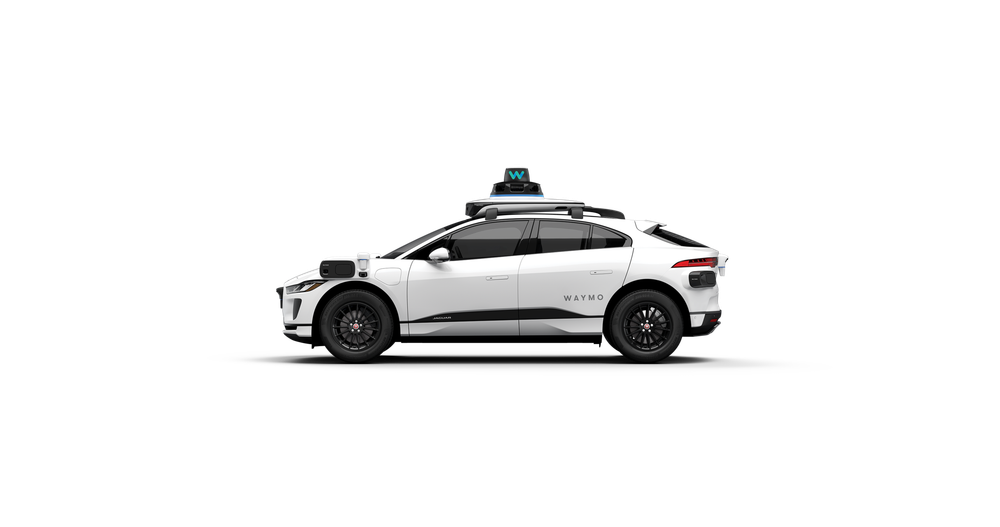
Waymo just unleashed its self-driving cars on Silicon Valley. The company's robotaxis now operate 24/7 across a 27-square-mile zone including Mountain View, Palo Alto, Los Altos, and parts of Sunnyvale.
It's a homecoming of sorts. Waymo began here as Google's quirky self-driving experiment in 2009. Back then, founders Sergey Brin and Larry Page dared their engineers to complete ten 100-mile autonomous routes. Those engineers delivered, probably fueled by a mix of caffeine and Silicon Valley optimism.
The rollout starts small. Only select locals with the right zip codes can summon these driverless chariots. Meanwhile, Waymo keeps expanding elsewhere - they've already partnered with Uber in Austin and plan to hit Atlanta next.
Chief Product Officer Saswat Panigrahi calls it a "special milestone." That's a modest way of saying they've come full circle: from testing secretive prototypes in Google's backyard to letting residents actually sleep through their commute.
Why this matters:
Silicon Valley finally gets to ride in the robots it created
The neighborhood that birthed self-driving cars now trusts them to drive its kids to soccer practice

Tech translator with German roots who fled to Silicon Valley chaos. Decodes startup noise from San Francisco. Launched implicator.ai to slice through AI's daily madness—crisp, clear, with Teutonic precision and sarcasm.
E-Mail: marcus@implicator.ai
Google's AI shopping features promise convenience: automated tracking, inventory calls, checkout. But they remove everyone between you and purchase—reviewers, influencers, store staff. What's lost when one company owns the entire shopping journey?
Microsoft led AI infrastructure with 60% market share in 2023, then froze 3.5 gigawatts of planned capacity. OpenAI signed over $400 billion with Oracle instead. Nadella calls it strategic repositioning. SemiAnalysis data suggests Microsoft blinked first.
OpenAI released GPT-5.1 without publishing benchmarks, leading instead with "warmer" personality controls. The shift reveals how 800 million users push the company toward engagement metrics over technical capability, mirroring social media's path.
SoftBank just posted record profits driven by OpenAI's soaring valuation. So why is Masayoshi Son selling $15 billion in assets, expanding margin loans, and converting paper gains into cash? The answer reveals uncomfortable truths about AI's peak.