IMPLICATOR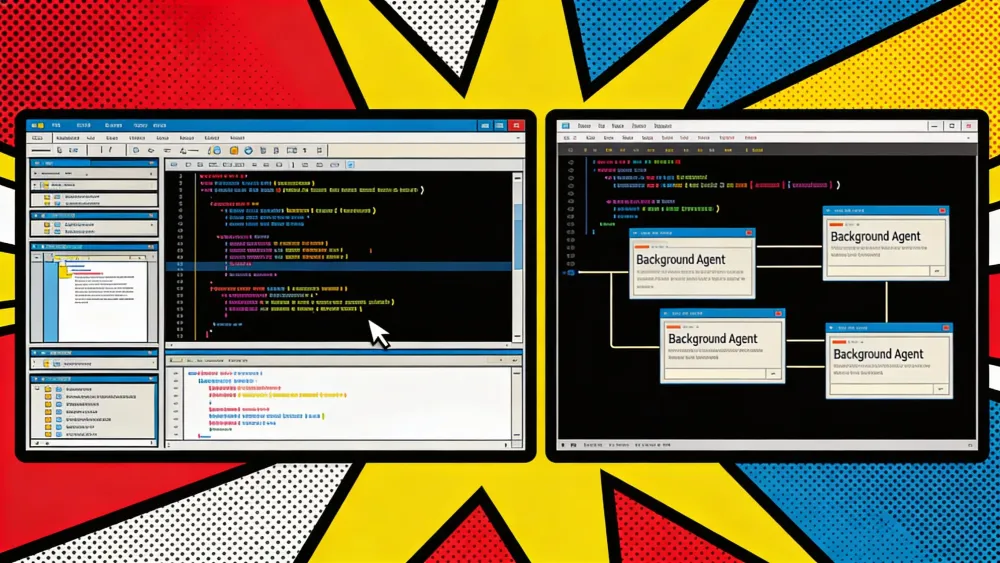
One product anchors the workday to the file under your cursor. The other anchors it to the agent sessions running in the background.
Zed and Warp both moved AI coding toward the center of their products over the past two years, and their marketing now competes for the same developer. Their own documentation describes two different machines. Zed Industries calls Zed an open-source AI code editor, written in Rust on a from-scratch GPU renderer, with Tree-sitter parsing and Language Server Protocol support. Warp's site calls Warp an open agentic development environment born from the terminal. The product you should pick turns less on feature lists than on where your attention lives during the day: inside the file under the cursor, or inside the agent sessions running in the background.
Key Takeaways
- Zed is an editor-first AI code editor built in Rust; Warp is a terminal-born agentic development environment built around agent orchestration.
- Zed is the stronger daily editor; Warp's editor is a narrower review surface for agent-generated code.
- Pricing diverges: Zed sells hosted AI on a free editor at roughly $20 a month; Warp meters agent credits at Build $20, Max $200, Business $50.
- The strongest setup may use both: Zed as the primary editor, Warp as the terminal for agent supervision and cloud runs.
AI-generated summary, reviewed by an editor. More on our AI guidelines.
The split is center of gravity, not feature count
Both tools can edit code and run AI agents, so a checkbox comparison flatters Warp and undersells the difference. The sharper question is what each product treats as the primary object. In Zed, that object is source code, and the agent is invited into the editor's state through an Agent Panel that can read, write, and run code in the project. In Warp, the primary object is more often an agent session, a command output, or a diff, with just enough editing added underneath to close the review loop. Warp's 2.0 announcement names four surfaces in one app, Code, Agents, Terminal, and Drive, and frames the main action as launching agents from a single input that accepts both prompts and shell commands.
Zed is the stronger daily editor; Warp's editor is a review surface
On traditional editing, Zed has the deeper case. Its documentation builds language support on Tree-sitter for structure and the Language Server Protocol for completion, diagnostics, and go-to-definition, and the 1.0 release shipped across Mac, Windows, and Linux after five years and more than a million lines of code. Phoronix described that release as a cross-platform open-source editor with collaborative editing, GPU-accelerated rendering, Git, and debugging. Warp's native editor is narrower by its own account: the docs frame it as quick in-flow edits next to agent conversations, such as renaming a variable or rewriting a short function, with built-in language servers for Rust, Go, Python, TypeScript/JavaScript, and C/C++ only, and no LSP over SSH or WSL. Warp's CEO put the boundary plainly to The New Stack, saying Warp needs file editing and diffs but does not want to be an editor.
On GitHub, retrieved May 24, Zed listed 83,680 stars and 8,682 forks against Warp's 59,803 stars and 4,731 forks. Both name Rust as the primary language. The counts track developer interest rather than active installs.
Get Implicator.ai in your inbox
Strategic AI news from San Francisco. No hype, no "AI will change everything" throat clearing. Just what moved, who won, and why it matters. Daily at 6am PST.
No spam. Unsubscribe anytime.
Zed's AI is editor-native; Warp's is orchestration-native
The AI stacks diverge along the same axis. Zed runs agents inside the editor surface, supports multiple agent threads with separate context windows, and adds checkpoints that restore the codebase to its state before a model edit. Its interoperability bet is the Agent Client Protocol, which lets Zed host Gemini CLI, Claude Agent, Codex, and GitHub Copilot as external processes, each keeping its own authentication and billing. Warp runs a broader system called Oz, which powers interactive local agents and autonomous cloud agents. Warp's docs describe a wider system. Cloud agents can fire from events, schedules, Slack, GitHub, CI, or an API call. Every run is tracked and shareable, with a headless CLI and REST endpoints around the platform. The difference is scope. A Zed thread edits files and runs tools inside the editor, and that is most of what it does. A Warp task can start from a trigger, run in a cloud or self-hosted environment, write a transcript, then come back to the terminal for review.
Pricing, privacy, and licensing follow the architecture
The money models mirror the products. Zed sells hosted AI on top of a free editor. The editor runs without a subscription or login, and hosted models require Pro. The plans page sets Pro at $10 a month with $5 of included token credit and a default $10 incremental spend limit, so the default cap lands near $20 a month, with hosted usage billed at provider list price plus 10 percent. Warp sells agent capacity instead, listing Build at $20 a month, Max at $200, and Business at $50, metered in monthly credits, with cloud agents always consuming Warp credits. That detail matters for cost planning, because Warp's own BYOK documentation says user API keys stay local and never reach cloud-hosted runs.
Privacy splits the same way. Zed says it stores no prompts or code context, makes AI-improvement sharing opt-in, and supports a bring-your-own-key route with zero-data-retention agreements, though it still collects client telemetry that users can disable. Warp carries more cloud surface to govern: it publishes a readable telemetry log, requires telemetry for AI on the free plan, and extends zero-data-retention to Business and Enterprise. On licensing, Zed has been open longer, with a GPL editor, AGPL server components, and an Apache-2 GPUI, dated to its January 2024 announcement. Warp opened its client in 2026 under AGPL-3 with MIT-licensed UI crates, a split It's FOSS reported when the code went up. Its paid surface stays in Oz, cloud agents, and hosted compute.
The strongest setup may use both
For many developers the sharpest answer is not a single product. Run Zed as the primary editor for code navigation, fast local editing, real-time pairing, and protocol-hosted external agents. Reach for Warp as the terminal and agent workbench when supervising agents, reviewing diffs, or routing work to cloud runs becomes the bottleneck. The overlap between them sits almost entirely in AI code assistance, and the divergence sits in where each product expects your attention to live.
A solo developer can still pick one. Pick Zed to replace a VS Code or Cursor-style editor with something faster and local-first. Warp makes more sense if the day already runs through prompts and terminal output, and one surface for Claude Code, Codex, OpenCode, Gemini, and cloud runs justifies a credit meter. A team under compliance pressure should run both in a pilot. Zed's local-first editing keeps code off third-party servers; Warp's cloud audit trails record what each agent did.
Decision matrix
Frequently Asked Questions
Is Zed or Warp the better code editor?
Zed has the deeper traditional editor: Tree-sitter parsing, the Language Server Protocol across many languages, and a cross-platform 1.0 release built in Rust. Warp's native editor is narrower, designed for quick in-flow edits and reviewing agent-generated code, with built-in language servers for five families (Rust, Go, Python, TypeScript/JavaScript, C/C++) in local sessions only.
How do Zed and Warp price their AI features?
Zed keeps the editor free and sells hosted AI through Pro, which starts at $10 a month with $5 of included token credit and a default $10 spend cap, billing hosted usage at provider price plus 10 percent. Warp meters agent credits: Build at $20, Max at $200, and Business at $50 a month, with cloud agents always consuming credits.
Can you use Zed and Warp together?
Yes. Many developers run Zed as the primary editor for navigation, fast local editing, and pairing, then reach for Warp as the terminal and agent workbench when supervising agents, reviewing diffs, or routing work to cloud runs becomes the bottleneck.
Are Zed and Warp open source?
Both are. Zed has been open since January 2024, with a GPL editor, AGPL server components, and an Apache-2 GPUI. Warp opened its client in 2026 under AGPL-3 with MIT-licensed UI crates, while keeping Oz, cloud agents, and hosted compute as its commercial layer.
What is Warp's Oz?
Oz is Warp's agent platform. It powers interactive local agents and autonomous cloud agents that can be triggered by events, schedules, Slack, GitHub, CI, or an API, with tracked, shareable runs, a headless CLI, and REST endpoints around it.
AI-generated summary, reviewed by an editor. More on our AI guidelines.



Free AI briefing · Weekdays
The AI stories that matter, sourced and explained.
Join the Morning Briefing. It goes out every weekday at 4:45 a.m. Pacific, with later sends for the East Coast, Berlin and Tokyo.
Free when you sign up: The Paperclip Compendium, our tested guide to running AI agents.
Free. Unsubscribe in one click.

Marcus Schuler
Editor-in-Chief and founder of Implicator.ai. Former ARD correspondent and senior broadcast journalist with 10+ years covering tech. Writes daily briefings on policy and market developments. Based in San Francisco. E-mail: editor@implicator.ai