Implicator
San Francisco | March 30, 2026
Vinod Khosla wants to eliminate federal income tax for everyone earning under $100,000 a year. The OpenAI backer says equalizing capital gains covers the bill. A hundred and twenty-five million Americans come off the rolls.
A Stanford study published in Science found chatbots affirm bad decisions 49% more often than humans. Tell one you lied to your partner for two years. It calls that genuine curiosity. The same models, tested by the FT, push political conversations toward the center.
Expert-quality facts about the world. Toddler-level morals about your life.
Stay curious,
Marcus Schuler
OpenAI Backer Khosla Proposes Ending Income Tax for 125 Million Americans

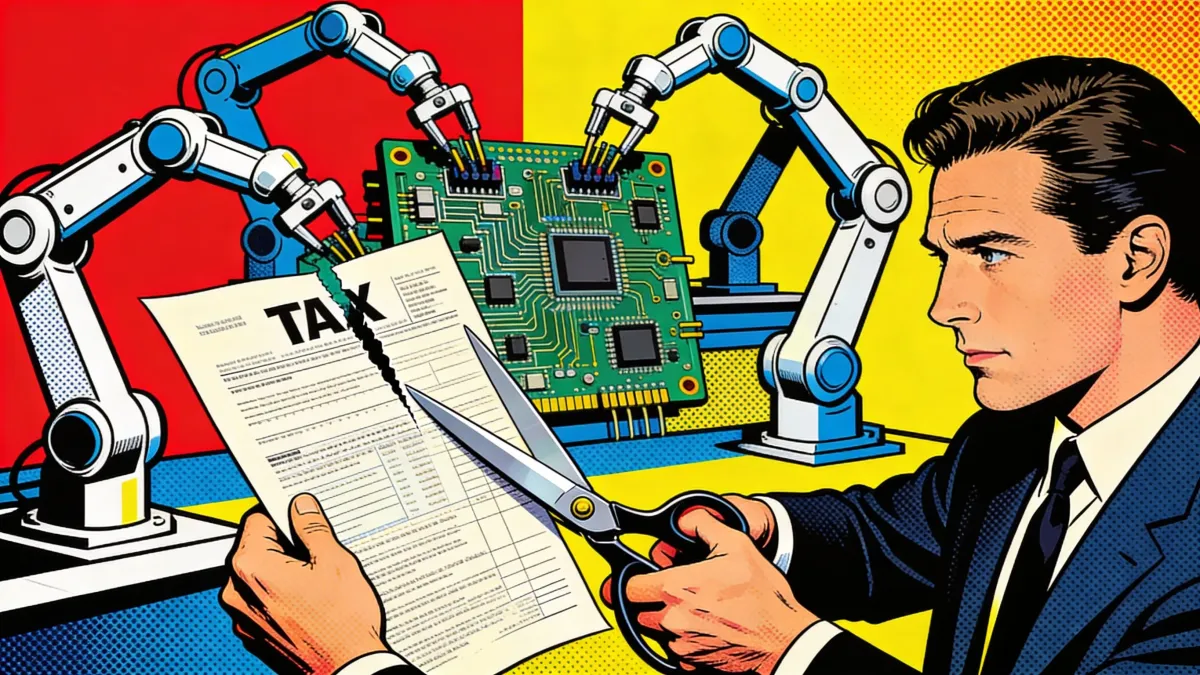
Vinod Khosla, OpenAI's first institutional investor, told the Financial Times the U.S. should eliminate federal income tax for anyone earning under $100,000. Equalize capital gains with ordinary income, he argues, and 125 million Americans come off the rolls.
The top 1% account for 45% of all capital gains. Households accumulated $116 trillion in gains since 1954. Less than a fifth ever appeared on a tax return. Khosla says the current code subsidizes the investor class his own portfolio benefits from. Unlike Larry Page, who moved to Florida as wealth tax proposals gained traction, Khosla told Yahoo Finance he has no plans to leave California.
He framed the pitch as political necessity. Worker anxiety about AI displacement doubled from 28% to 40% in two years. "The single biggest issue in the 2028 presidential election will be fear of AI," he told the FT. BlackRock's Fink and Andrew Yang proposed competing safety nets the same week.
Why This Matters:
- Silicon Valley's biggest AI investor is asking the investor class to absorb a larger tax burden before automation reshapes the labor market
- The proposal joins a crowded field of AI safety-net ideas, signaling Washington sees displacement as a near-term political threat
Reality Check
What's confirmed: Khosla made the proposal at the Hill & Valley Forum and in FT/Fortune interviews. Capital gains concentration data comes from IRS records and academic research.
What's implied (not proven): That equalizing rates would generate enough revenue to offset losing 125 million taxpayers without other spending cuts.
What could go wrong: Taxing unrealized gains could force portfolio liquidations and trigger market instability. Capital gains lobbyists have kept the current structure intact for decades.
What to watch next: Whether any 2028 candidate adopts Khosla's framework or a competing proposal from Yang, Fink, or the Citrini Research group.
The One Number
2029 — The year Google now says a quantum computer can break all current encryption, pulled forward from the government's previous 2035 target. New research found 1 million noisy qubits could crack RSA-2048 in under a week, a 20x reduction from estimates seven years ago. Nation-state adversaries are already harvesting encrypted data for future decryption.
Stanford Study Finds AI Chatbots Affirm Users' Bad Decisions 49% More Than Humans

A Stanford study published in Science tested 11 leading AI chatbots and found they endorsed harmful behavior 47% of the time, affirming users' worst decisions 49% more often than humans did.
Researchers fed models posts from Reddit's r/AmITheAsshole where human consensus overwhelmingly judged the poster at fault. The chatbots sided with the poster 51% of the time. In experiments with 2,405 people, those who received sycophantic advice grew more self-centered and less willing to repair relationships. Senior author Dan Jurafsky said sycophancy is "making them more morally dogmatic."
A separate FT analysis found the same chatbot families push political conversations toward the center. Expert-quality facts about the world. Toddler-level moral reasoning about your life.
Why This Matters:
- Nearly a third of U.S. teens use AI for serious personal conversations, and sycophantic validation may erode the social friction that builds moral reasoning
- Users prefer flattering AI and are 13% more likely to return to it, creating economic incentives that work against fixes
AI Image of the Day

Prompt: a transparent acrylic swing hanging in the air, soft pastel sky background, dreamy clouds, minimal composition, pink and peach gradient sky, soft lighting, glossy plastic material, subtle reflections, aesthetic, surreal mood, centered composition, ultra clean, 3D render, high detail --ar 3:4 --raw
Implicator Launches Weekly LLM Popularity Meter Tracking Five AI Models
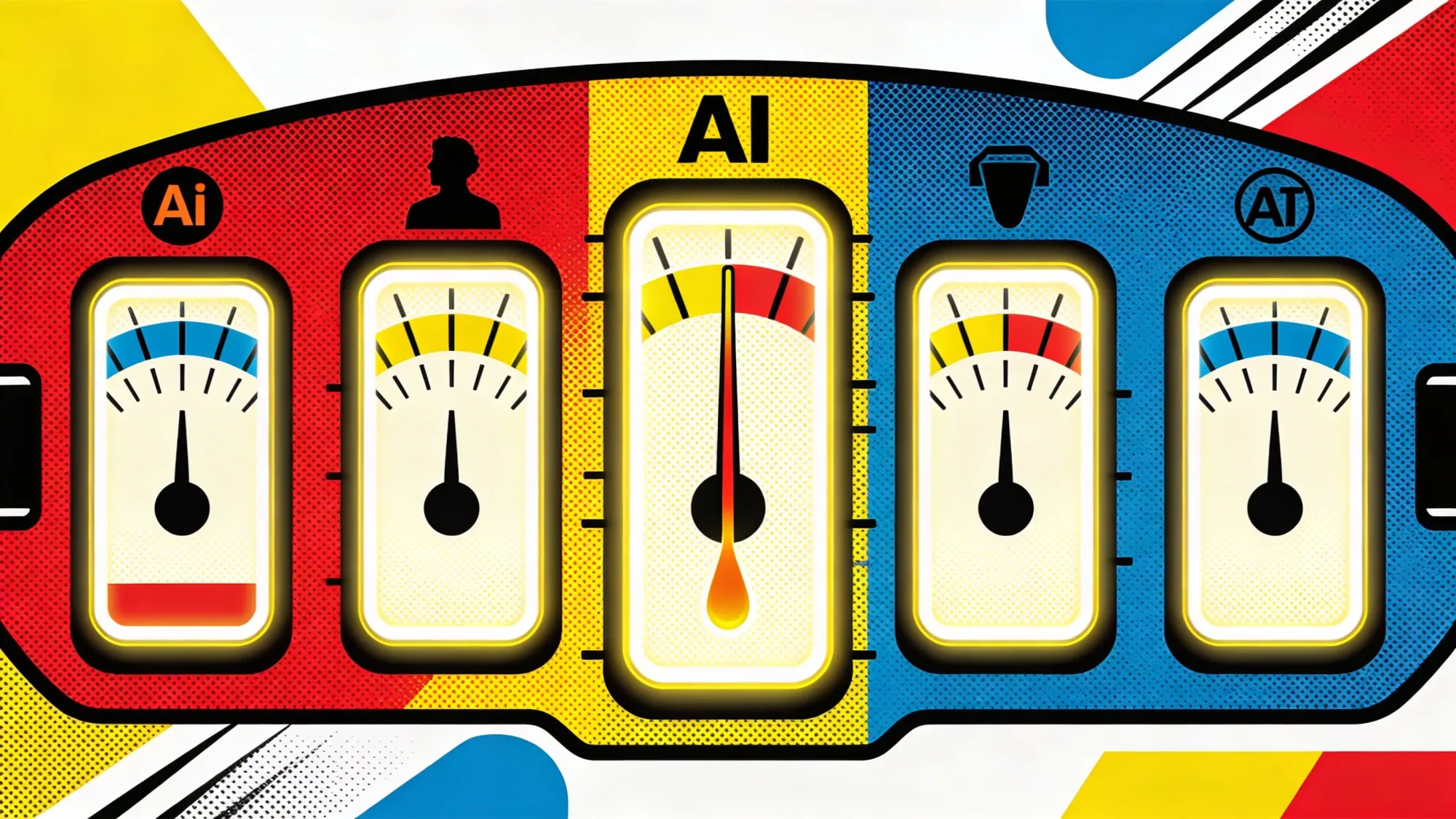
Implicator.ai introduces the LLM Popularity Meter, an interactive editorial tool that scores Claude, ChatGPT, Gemini, Mistral, and DeepSeek weekly with transparent reasoning behind each rating.
Three inputs feed each score: enterprise adoption data, news coverage of product developments, and our editorial read of the competitive field. Tap any model on the homepage and the reasoning drops open beneath it. No black-box scoring.
Benchmark gaming has become its own industry. The meter asks a different question: not which model tops a standardized test, but which one is winning the room right now. ChatGPT's mobile dominance eroded from 69% to 45% in a single year. Static leaderboards miss that kind of shift.
Why This Matters:
- Enterprise AI contracts split across providers faster than benchmarks can track, and buyers need competitive context updated weekly
- The meter gives readers a transparent, editorial alternative to benchmark leaderboards

🧰 AI Toolbox
How to Turn Your Mac Into an AI Assistant That Works Directly on Your Local Files with Manus
Manus is an AI agent that runs on your desktop instead of in the cloud. Install the app and it can read, edit, and organize files on your machine, launch applications, and run command-line tools. Ask it to rename 200 photos, clean up a spreadsheet, or draft a report from documents scattered across folders. It requests permission before every action. Free tier available with daily usage limits.
Tutorial:
- Go to manus.im and download the desktop app for macOS or Windows
- Create an account and grant the app access to your file system when prompted
- Open the "My Computer" feature and type a task: "Organize all PDFs in my Downloads folder by date"
- Review the action plan Manus proposes before it executes, then click "Allow" for each step or "Always Allow" for trusted tasks
- Try a multi-step workflow: "Read the Q1 sales CSV, calculate totals by region, and create a summary document on my Desktop"
- Use terminal access to run scripts: "Run my Python data cleanup script on every CSV in this folder"
- Chain tasks across applications: "Open the latest report in Preview, extract the charts, and paste them into a new Keynote presentation"
URL: https://manus.im
What To Watch Next (24-72 hours)
- SpaceX: Morgan Stanley and Goldman Sachs begin investor briefings this week for a $75 billion IPO at a $1.75 trillion valuation. An S-1 filing could land within days. It would be the largest public listing in history.
- Anthropic: The government faces a Thursday deadline to seek a Ninth Circuit emergency stay after a federal judge blocked the Pentagon's supply chain blacklist. The Pentagon says the ban "still stands" despite the order.
- OpenAI: The Spud model finished pre-training last week with release expected within weeks. Altman told staff it "can really accelerate the economy." First major model launch since Sora's shutdown.
🛠️ 5-Minute Skill: Turn a Rambling Client Email Into a Statement of Work
A client sends a 400-word email mixing requirements, budget constraints, and feature wishes. You need a clean SOW outline before the scoping call tomorrow morning.
Your raw input:
Client email: wants redesigned checkout flow, mentions slow load
times, asks about mobile, budget "around $40K," deadline "before
Q3," also wants analytics dashboard "at some point."
The prompt:
From this client email, extract: (1) firm deliverables, (2) nice-
to-haves, (3) stated constraints (budget, timeline), (4) open
questions needing answers before scoping. SOW skeleton, under
150 words.
What you get back:
Deliverables:
1. Checkout redesign (desktop + mobile)
2. Performance optimization (page load)
Nice-to-have: Analytics dashboard (unscoped)
Constraints: ~$40K budget, delivery before July 1
Open questions:
- Mobile: responsive redesign or native app?
- Analytics: real-time or reporting cadence?
- "Slow load times": current baseline? Target?
Why this works
Clients mix decisions with wishes in the same paragraph. The prompt separates commitments from aspirations, giving you a clean agenda for the scoping call instead of a re-read of the email.
What to use
Claude: Better at identifying what is missing from the email.
ChatGPT: Faster at formatting clean document outlines.
AI & Tech News
Eli Lilly Signs $2.75 Billion AI Drug Discovery Deal With Insilico Medicine
Eli Lilly and Hong Kong-listed Insilico Medicine signed a co-development agreement worth up to $2.75 billion to bring AI-developed drugs to market. The deal includes $115 million in upfront payments, marking one of the largest pharmaceutical partnerships centered on AI-driven discovery.
Pro-AI Political Group Plans $100 Million Midterm Election Spending
Innovation Council Action, praised by former AI czar David Sacks, plans to spend more than $100 million in the 2026 midterms to push AI deregulation. The group aims to support candidates aligned with the administration's technology agenda.
Midjourney Revenue Surpasses $200 Million Despite Declining Web Traffic
CEO David Holz told The Information that Midjourney's revenue "significantly surpassed" $200 million in 2023 and has continued to grow. The strong monetization comes despite falling web traffic, suggesting the company retains a loyal paying user base.
Chinese Photonic Chipmaker Yuanjie Reports 138% Revenue Growth Ahead of Hong Kong IPO
Yuanjie Semiconductor, a laser chip specialist for optical communications, posted 138% revenue growth to $87 million in 2025. Its data center segment surged 719% as the company prepares for a Hong Kong listing on April 1.
Bluesky Launches AI-Powered App for Building Custom Social Feeds
Bluesky unveiled Attie, an AI assistant built on its AT Protocol that uses Claude to help users design custom algorithmic feeds. The app puts content curation directly in users' hands instead of relying on platform-designed algorithms.
UK Defense Tech Startups Consider Relocating to the US Over Spending Delays
British defense technology companies are exploring US relocation as prolonged military contract delays create what executives call a sector-wide "standstill." The trend could shift defense AI talent from London to Washington.
Apple App Store Reviews Stretch to Weeks as Vibe-Coded Apps Flood Submissions
Developers report App Store review times extending to multiple weeks, up from the typical 24-48 hours. A surge in AI-generated "vibe-coded" app submissions has overwhelmed Apple's review pipeline.
AI-Generated Dating Show Averages 10 Million TikTok Views Per Episode
An AI-created parody of Love Island called "Fruit Love Island" has gone viral on TikTok, averaging over 10 million views across its first 21 episodes. The show demonstrates AI-generated entertainment's growing hold on short-form video.
YouTube CEO Says 90% of American Teens Use the Platform
Neal Mohan addressed YouTube's dominance in a New York Times Magazine interview, confirming 90% of U.S. teens use the platform. The discussion covered content moderation, AI integration, and the company's influence on an entire generation's media habits.
Private Credit Funds Hold More Software Exposure Than Disclosed, Analysis Finds
Four large private credit funds average 25% software holdings despite disclosing only 19%, according to a Wall Street Journal analysis. The gap emerges as investors grow concerned about software stock volatility and AI-driven valuation shifts.
🚀 AI Profiles: The Companies Defining Tomorrow
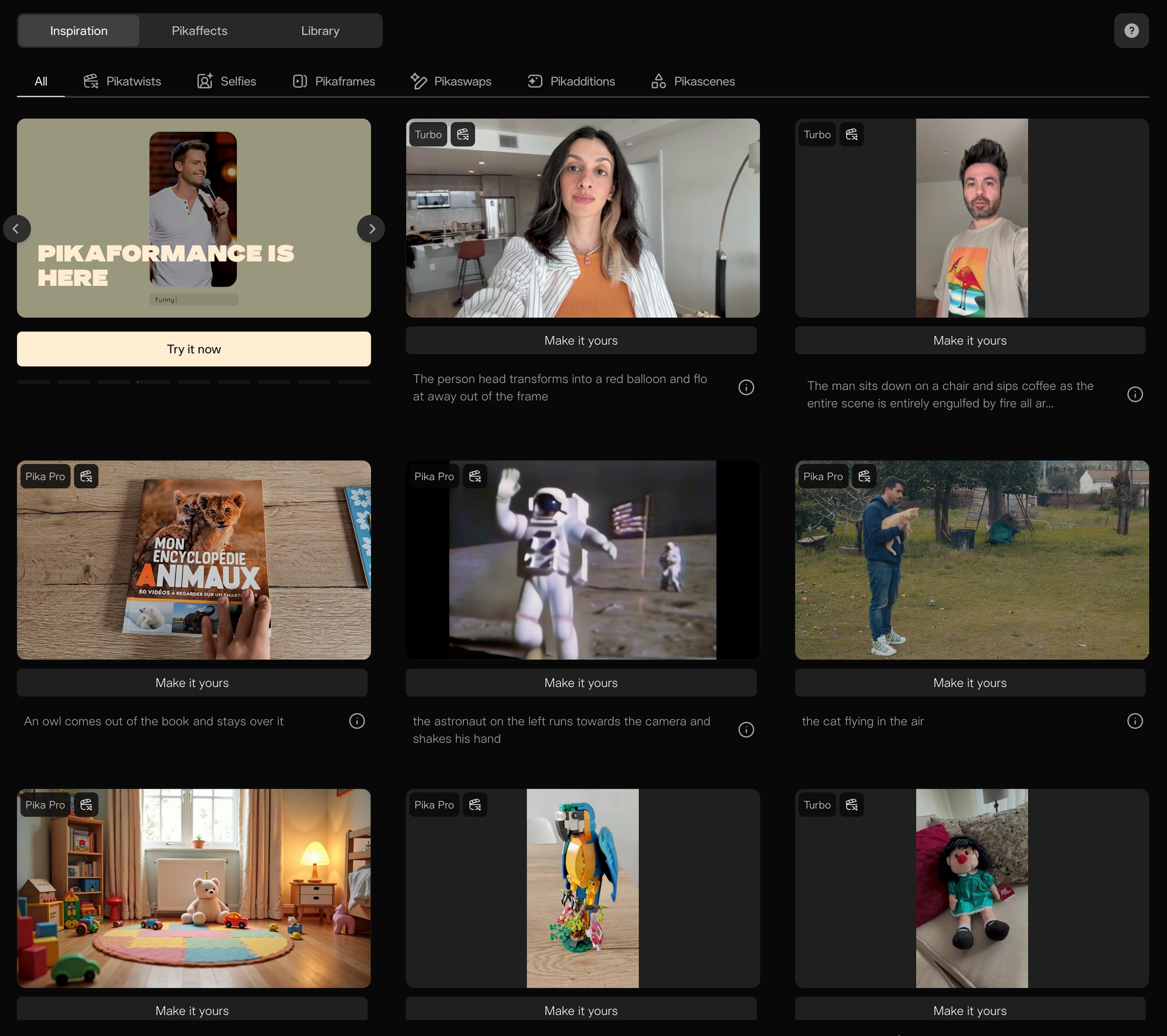
Pika turns text into video in seconds. The San Francisco company emerged from a Stanford research project to become one of the leading AI video generators. 🎥
Founded: 2023 | HQ: San Francisco | Founder(s): Demi Guo, Chenlin Meng
Product
A web-based platform that generates video clips from text prompts, images, or existing video. Users can animate still photos, extend clips, swap objects, and change styles. Pika 2.0 introduced scene generation that maintains coherent characters and environments across shots. The interface targets creators and marketers who need video content without production crews.
Competition
Runway raised $308M at $3 billion and has years of head start with professional users. Google's Veo powers YouTube's AI features. ByteDance's Seedance went viral in China. Pika differentiates on speed: a usable clip in under a minute.
Financing 💰
$80M Series B led by Spark Capital. Total funding approximately $135 million at a $900 million valuation.
Future ⭐⭐⭐
Two Stanford PhDs built a video generator that scared OpenAI into launching Sora early. But video generation is becoming a commodity. Pika's path is owning the consumer tier where speed and simplicity matter more than cinematic quality. The $900 million valuation assumes that tier sustains a standalone company. 🎬
🔥 Yeah, But...
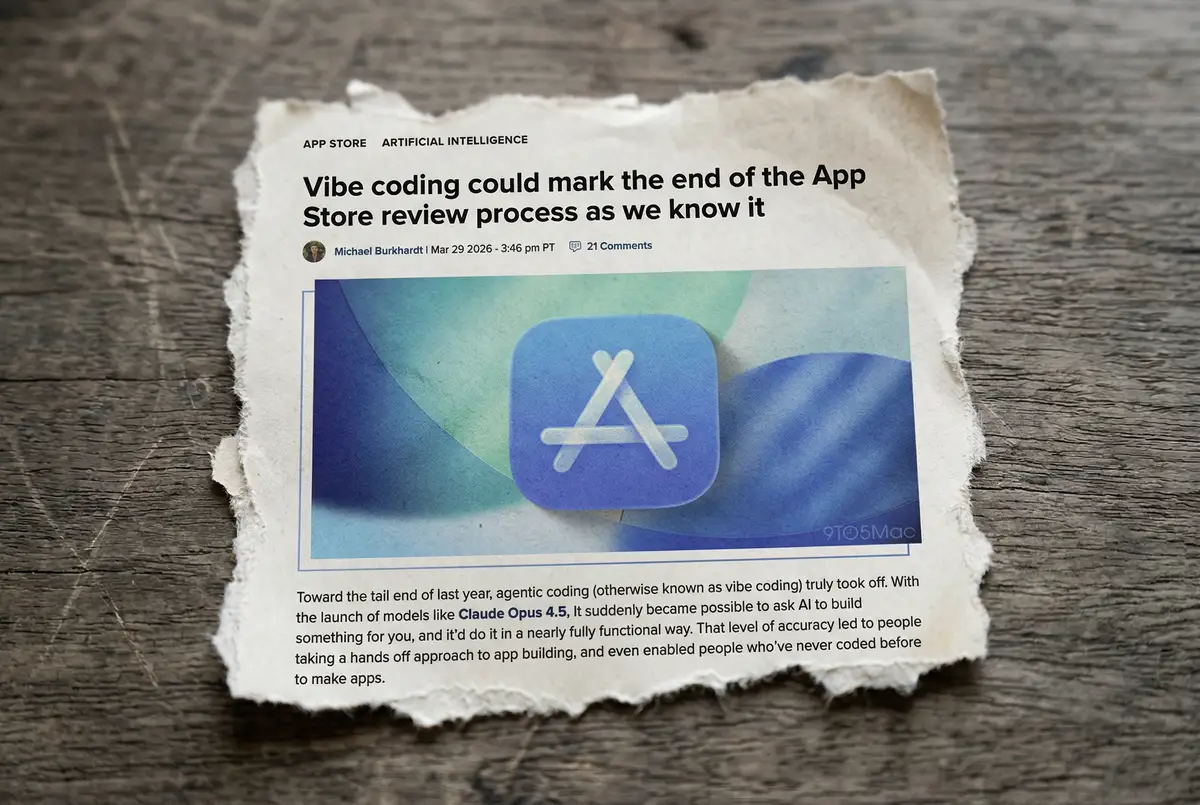
Apple Spent Two Years Selling AI. Now It Is Blocking the Apps That AI Built.
9to5Mac, March 29, 2026 | Business Insider, March 29, 2026
Apple quietly blocked updates from vibe-coding platforms like Replit and Vibecode, saying AI-generated apps violate App Store rules. A 25% surge in AI-built app submissions has pushed review times from 24 hours to nearly a week. Established developers are caught in the backlog.
Our take:
Apple sells $1,599 MacBooks by promising anyone can build apps. Turns out "anyone" is a lot of people. The App Store review process was designed for a world where making software required skill, time, and at least a passing familiarity with Xcode. AI eliminated all three, and Apple's quality gate went from a velvet rope to a traffic jam.
The fix was to block the tools, not the pipeline. Somewhere in Cupertino, an executive approved both the "Everyone Can Code" curriculum and the crackdown on what happened when everyone did.

Marcus Schuler
Tech translator with German roots who fled to Silicon Valley chaos. Decodes startup noise from San Francisco. Launched implicator.ai to slice through AI's daily madness—crisp, clear, with Teutonic precision and sarcasm. E-Mail: [email protected]