Implicator
San Francisco | February 24, 2026
ASML doubled the tin droplet rate inside its EUV machines to 100,000 per second and hit 1,000 watts. That means 50% more chips per machine by 2030, no new cleanrooms required. The competitors racing to break ASML's monopoly now have a moving target.
Anthropic named DeepSeek, Moonshot, and MiniMax in a distillation disclosure timed perfectly to the export control debate. Sixteen million extraction prompts. Twenty-four thousand fake accounts. The attacks are real. So is the choreography.
And a $400 mini PC running Proxmox now replaces $900 a year in SaaS. AI coding agents killed the last excuse not to self-host.
Stay curious,
Marcus Schuler
ASML Pushes EUV Light Source to 1,000 Watts, Targets 50% More Chip Output by 2030
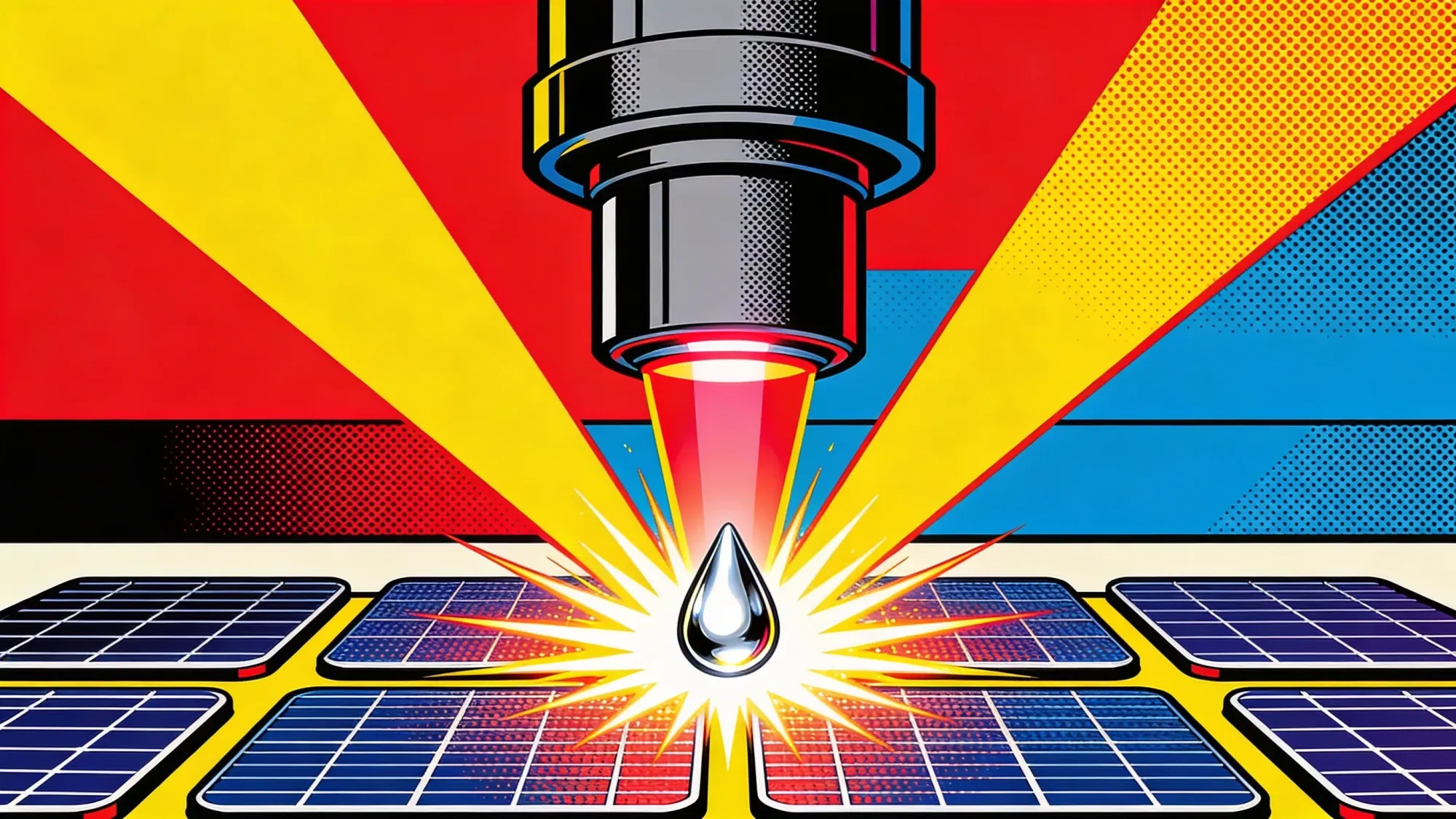
ASML doubled the tin droplet rate inside its EUV machines to 100,000 per second, hitting 1,000 watts from a current 600. The company told Reuters the upgrade should deliver 330 wafers per hour by 2030, up from 220 today. Fifty percent more chips, no new cleanrooms.
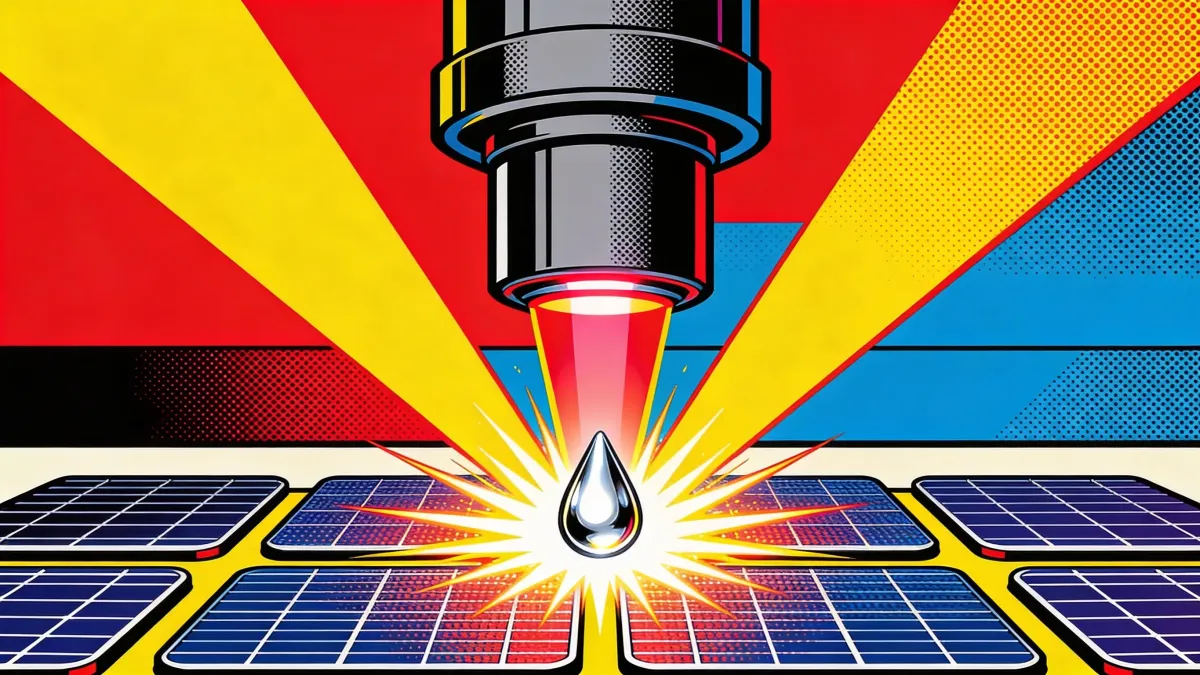
The physics are absurd by design. Molten tin drops through a vacuum. A CO2 laser blasts each one past the surface temperature of the sun until it becomes plasma, emitting light at 13.5 nanometers. Short enough to etch features a few dozen atoms wide. The new system adds a second laser shaping burst per droplet, squeezing more photons from each explosion.
Michael Purvis, ASML's lead EUV light source technologist, told Reuters from San Diego that the system holds 1,000 watts under full production conditions. "It's not a parlor trick," he said. The company sees a clear path to 1,500 watts, and no fundamental barrier to 2,000.
The upgrade matters for an industry straining under AI demand. ASML closed 2025 with $39.16 billion in sales and a $46.47 billion backlog. Just Q4 accounted for $16.77 billion in new orders, more than half from EUV.
A 50% throughput increase per machine gives chipmakers like TSMC and Intel more output without building new fab lines. Each costs north of $10 billion and takes years. US startups Substrate and xLight have raised hundreds of millions to build alternatives. China is developing its own lithography equipment after being blocked from buying ASML machines. None have shipped a production-ready system. ASML's response: move the target faster.
Why This Matters:
- Every watt gained cuts exposure time and chip cost. Fabs booking machines years in advance care about throughput per dollar, and 50% more output per machine changes the economics of new fab construction.
- Competitors chasing ASML's monopoly now face a target that keeps accelerating. By the time alternatives match current EUV performance, ASML plans to be at a different level.
Reality Check
What's confirmed: ASML hit 1,000 watts under production conditions at its San Diego facility. Dual-burst laser technique and 100,000 droplets/second are verified.
What's implied (not proven): That 330 wafers/hour by 2030 translates cleanly from lab demo to five-year factory floor reliability.
What could go wrong: Older NXE:3400 machines may face thermal limits that prevent retrofitting, splitting the installed base into haves and have-nots.
What to watch next: Whether TSMC or Intel commits to the upgrade timeline in their next earnings calls.
The One Number
-18% — Drop in worker confidence in AI's utility over the past year, even as regular AI use rose 13% over the same period, according to ManpowerGroup's 2026 Global Talent Barometer covering 14,000 workers in 19 countries. People are using AI more and trusting it less. The adoption curve and the confidence curve are moving in opposite directions.
Source: Fortune / ManpowerGroup
Anthropic Names Three Chinese Labs in Distillation Disclosure Timed to Export Debate
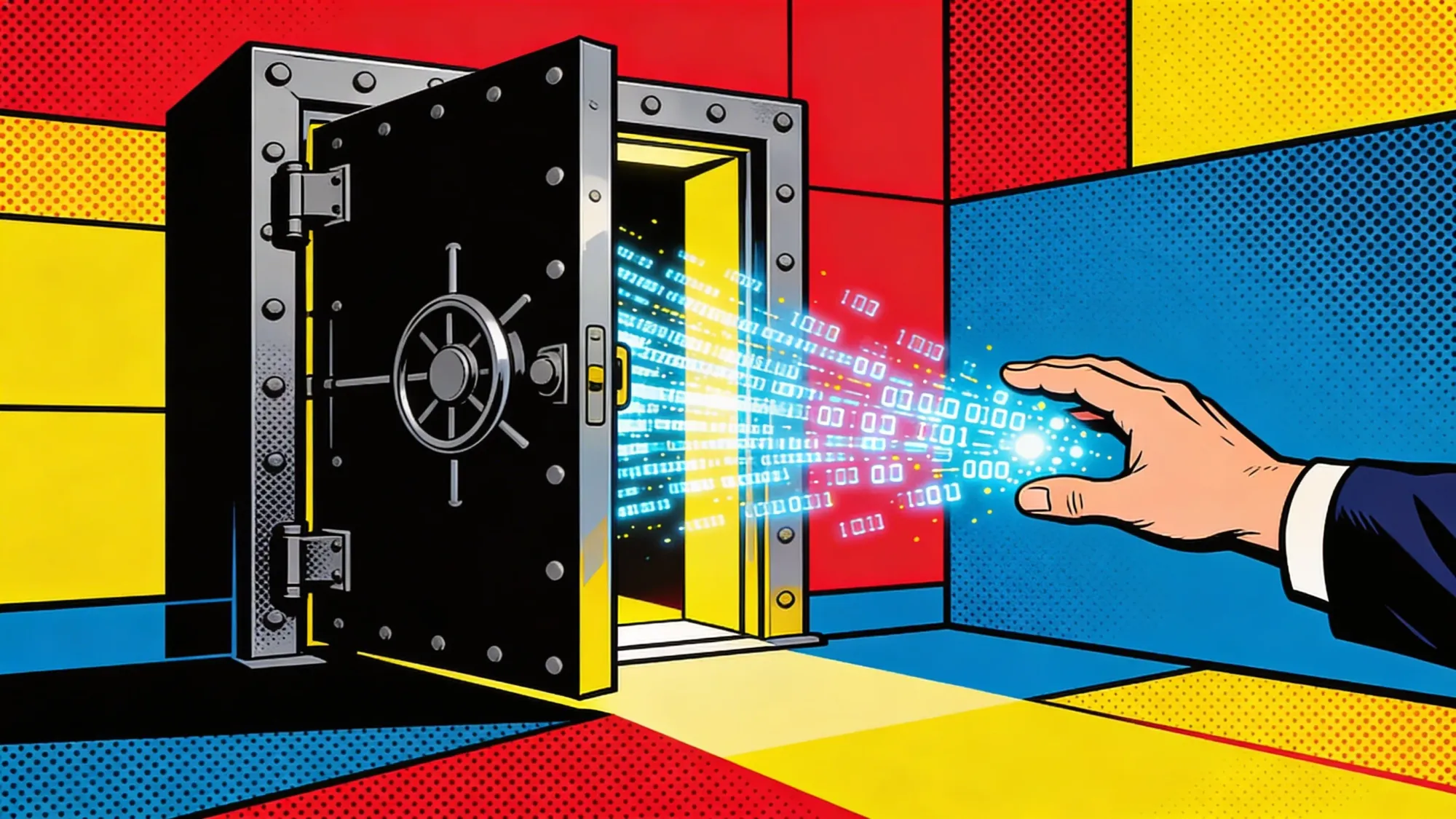
Anthropic publicly named DeepSeek, Moonshot AI, and MiniMax as sources of 16 million extraction prompts run through 24,000 fake accounts. MiniMax alone generated 13 million exchanges targeting agentic coding. When Anthropic released a new Claude model, MiniMax redirected half its distillation traffic within 24 hours.
The disclosure landed February 23, eleven days after OpenAI sent its own distillation memo to the House Select Committee on China. Google's Threat Intelligence Group published a parallel report the same day, documenting 100,000+ prompts targeting Gemini. Three American AI companies disclosed distillation campaigns across eleven days. The choreography is hard to miss.
Jacob Klein, Anthropic's threat intelligence lead, told Fox News Digital that distillation allows adversaries to "extract those capabilities" that reinforcement learning produces. He suggested the report could prompt "thoughtful government action." Less security briefing, more policy pitch.
The credibility problem: distillation is one of machine learning's most common techniques. OpenAI built GPT-4o Mini by distilling GPT-4o. Google's Bard team reportedly used ChatGPT outputs scraped from ShareGPT. DeepSeek published six distilled R1 models in the open. The legal line rests on terms of service agreements no court has tested.
Anthropic found no evidence the Chinese government coordinated the campaigns. The labs acted as commercial competitors, not state agents. Proxy services that resell API access operate openly in China, mixing distillation traffic with legitimate customer requests. That distinction matters legally. It will barely register in Washington.
Why This Matters:
- The disclosure positions distillation as a national security vector alongside chip exports, potentially triggering API restrictions and mandatory usage monitoring for designated regions.
- Anthropic's $380 billion valuation and Pentagon contracts give it a policy megaphone. The company shapes the export control debate as much as it responds to it.
AI Image of the Day

Prompt: A painterly stylized illustration of a young steve jobs wearing a black turtleneck, holding a fully eaten apple core upright in one hand. He has medium-length dark hair, neutral expression, and is posed against a solid dark brown background. Soft, even lighting highlights the contours of his face and the texture of the apple core, creating a dramatic and thoughtful atmosphere.
A $400 Mini PC and an AI Coding Agent Replace $900 a Year in SaaS
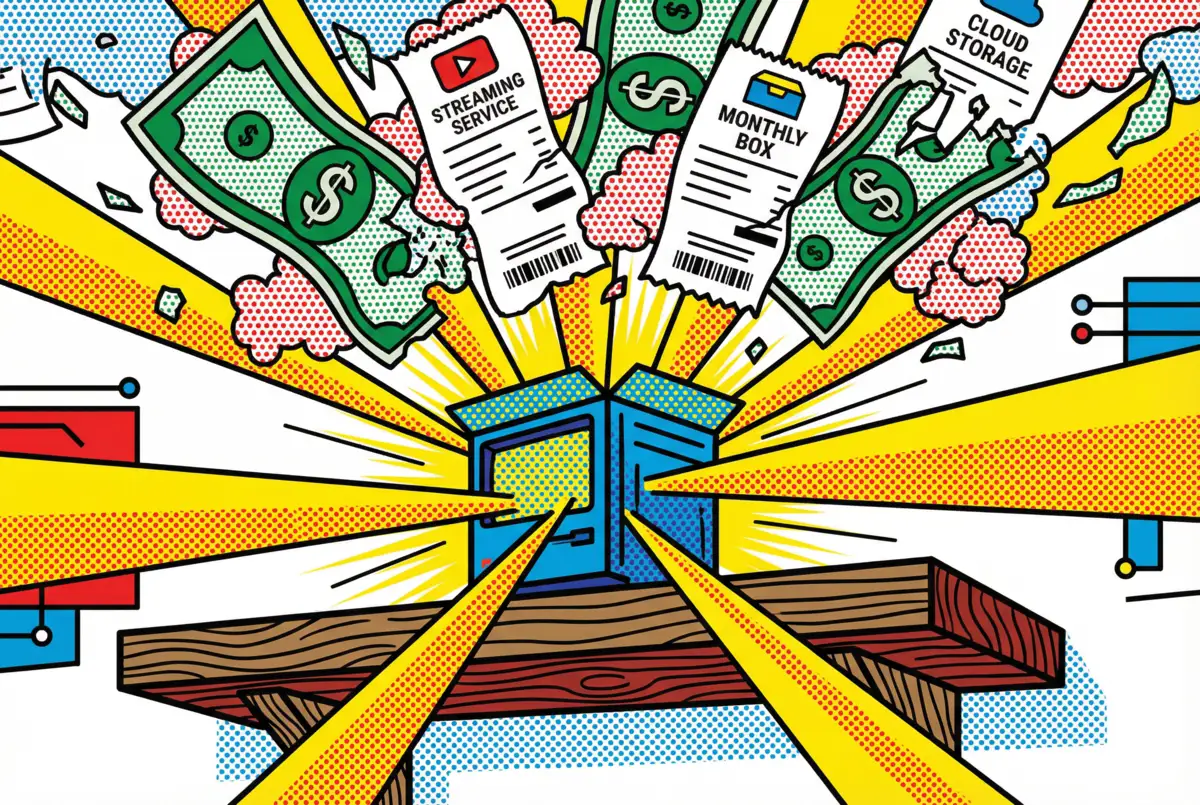
Google Workspace rose 17-22% in 2025. Microsoft 365 climbs another 5-33% in July. Bitwarden doubled its pricing for the first time in a decade. A freelancer running commodity SaaS spends roughly $887 per year, and that figure keeps rising. A $400 mini PC running Proxmox replaces nearly all of it.
The barrier was never the software. Open-source alternatives to password managers, cloud storage, invoicing, and VPNs have been adequate or superior for years. The barrier was configuration. Docker Compose files, DNS debugging, firewall hardening. That required specific knowledge most people did not have.
AI coding agents eliminated it. Claude Code generates roughly 135,000 GitHub commits per day. These same tools function as conversational sysadmins. Paste a Proxmox error log, get a working fix in thirty seconds. OpenAI's Codex CLI, OpenClaw, and Google's Gemini CLI run the same play from different angles.
Proxmox VE 9.1 manages VMs and containers from a browser. Community helper scripts offer 400+ one-command deployments. Vaultwarden replaces Bitwarden. Nextcloud replaces Google Workspace. Invoice Ninja replaces FreshBooks. WireGuard replaces NordVPN. Each deploys in minutes with an AI assistant handling configuration.
The hardware draws 8-15 watts idle, less than a desk lamp. The payback period runs 8-10 months including a backup drive and UPS. After that, the savings compound every year while SaaS prices keep climbing.
Why This Matters:
- SaaS pricing power depends on switching costs. AI coding agents collapse those costs by making self-hosted alternatives trivially easy to deploy and maintain.
- The same AI tools disrupting software development now disrupt software consumption. The $400 box is the proof of concept.
🧰 AI Toolbox

How to Make Professional Videos Without a Production Crew Using Captions
Captions is an AI video editor that fixes eye contact, generates captions, removes filler words, and adds B-roll automatically. Record on your phone or webcam, and the app handles the editing that normally requires a professional setup. Used for sales videos, social content, and internal presentations. Free tier available on iOS and web.
Tutorial:
- Download Captions from the App Store or go to captions.ai and sign up
- Record a video using your phone or upload an existing clip
- Turn on AI Eye Contact to correct your gaze so it appears you are looking directly at the camera, even when reading notes
- Enable Auto Captions to generate animated subtitles synced to your speech in 100+ languages
- Use the "Remove Filler Words" feature to automatically cut every "um," "uh," and awkward pause without manual editing
- Add AI-generated B-roll: describe what you want ("office environment," "data dashboard") and Captions inserts relevant visuals
- Export in the right format for your platform: vertical for TikTok/Reels, horizontal for YouTube, square for LinkedIn
URL: https://captions.ai
What To Watch Next (24-72 hours)
- Nvidia Earnings Tomorrow: Jensen Huang reports Q4 results Wednesday at 5 PM PT. Consensus expects $38 billion in data center revenue. Anything below that, and the AI infrastructure thesis takes its first real hit. Anything above, and the spending debate is over.
- Samsung Galaxy Unpacked: Samsung holds its media event Tuesday in San Francisco. On-device AI is the headline theme. With the software sector down nearly 30 percent in 2026, hardware makers pitching local inference have a receptive audience.
- Salesforce, Snowflake Earnings: Both report Wednesday alongside Nvidia. Salesforce is the closest thing to an enterprise AI adoption meter on the public markets. If Agentforce numbers disappoint, expect the "AI spending without AI revenue" narrative to harden fast.
🛠️ 5-Minute Skill: Turn Raw Survey Responses Into a Stakeholder Presentation
You just closed a customer survey with 500 responses. The raw export is a spreadsheet of Likert scales, open-text comments, and demographic splits. Marketing wants highlights by Thursday. Product wants themes. The CEO wants one slide. You have a CSV and two hours.
Your raw input:
[Paste the raw survey data. If it's too large, paste a
representative sample of 50-100 responses including the
column headers. Include both quantitative ratings and
open-text responses. The messier and more realistic, the
better.]

Example:
respondent_id, role, company_size, satisfaction_score, nps,
feature_request, open_feedback
001, PM, 500-1000, 4, 8, "better reporting", "Love the
product but the dashboard takes forever to load. Had to
switch to exporting CSVs."
002, Engineer, 50-200, 2, 3, "API stability", "Third outage
this quarter. Starting to evaluate alternatives."
003, VP Sales, 1000+, 5, 10, "CRM integration", "Best tool
we've adopted this year. Team adoption was instant."
004, PM, 200-500, 3, 5, "", "Fine. Not great. Fine."
The prompt:
You are a customer insights analyst preparing a stakeholder
presentation from raw survey data.

From these survey responses, produce:
1. **Executive headline** (one sentence): The single finding
   that should drive the next quarter's roadmap.
2. **Quantitative snapshot** (table): Metric | Score | Benchmark
   Context | Trend Signal — for the 4 most important metrics.
3. **Theme analysis**: Group the open-text responses into 3-5
   themes. For each theme: name it, give the count/percentage,
   quote the 2 strongest verbatim responses, and rate urgency
   (high/medium/low).
4. **Segment splits**: Which groups (by role, company size, or
   other demographic) are significantly happier or unhappier
   than average? Show the delta.
5. **The story** (5-7 sentences): Connect the quant and qual
   into a narrative. What is going well, what is at risk, and
   what should change.
6. **Three recommendations**: Each with a specific action, owner
   suggestion, and expected impact.

Survey data:
[paste here]

Rules:
- If sample size is small for a segment, flag it. Do not present
  n=12 with the same confidence as n=200.
- Quote verbatim responses exactly. Do not clean up grammar or
  tone.
- The recommendations must be actionable this quarter, not
  aspirational.
- If the data contradicts itself, say so rather than averaging
  away the conflict.
What you get back:
Executive headline: Product satisfaction is strong (4.1/5) but infrastructure reliability is eroding trust among your most technical users, the same segment most likely to evaluate competitors.
Quantitative snapshot:
Theme analysis:
1. Performance / Speed (34% of responses) — Urgency: HIGH
- "Dashboard takes forever to load. Had to switch to exporting CSVs."
- "Page load times have gotten worse since the October update."
- Concentrated among power users (daily active). This group also has the lowest NPS.
2. Reliability / Uptime (22% of responses) — Urgency: HIGH
- "Third outage this quarter. Starting to evaluate alternatives."
- "We lost a client demo because the API was down for 40 minutes on a Tuesday morning."
- Engineers are 3x more likely to mention reliability than any other role.
3. Integration Gaps (19% of responses) — Urgency: MEDIUM
- "CRM integration would save my team 5 hours a week."
- "We need Salesforce sync. Non-negotiable for next renewal."
- Highest-value accounts (1000+ employees) mention this most.
Segment splits:
- Engineers: satisfaction 2.8/5 (vs. 4.1 average). Delta: -1.3. This is your risk segment.
- VP/Director level: satisfaction 4.6/5. Delta: +0.5. Executives love the product; ICs do not.
- Company size 1000+: NPS 44. Company size 50-200: NPS 21. Larger companies are significantly happier.
The story: The product has strong executive-level satisfaction and above-benchmark overall scores, which will look good in a board deck. But the data underneath tells a different story. Engineers, who use the product daily and influence renewal decisions, are deeply frustrated with performance and reliability. Three outages in one quarter pushed the detractor rate to 18%. The gap between executive perception (4.6/5) and engineer experience (2.8/5) is the biggest risk in this data. However, the integration requests from large accounts suggest a clear growth opportunity if the reliability foundation holds.
Three recommendations:
1. Fix dashboard load times — Owner: Engineering. Impact: Addresses the #1 complaint from the highest-usage segment. Target: sub-2-second loads by end of Q1.
2. Publish a public uptime SLA with credits — Owner: Product/Ops. Impact: Gives engineers a concrete reliability commitment. Reduces "evaluating alternatives" churn signal.
3. Ship Salesforce integration as a beta — Owner: Integrations team. Impact: Directly addresses renewal risk from 1000+ segment. Two verbatim responses tied it to renewal decisions.
Why this works
The prompt separates executive-friendly numbers from the ground-truth signal hiding in open-text responses. Most survey analysis stops at the averages. This prompt forces the model to find the segments where the average is wrong, which is where churn lives. The "verbatim quotes" rule prevents the model from sanitizing angry feedback into polite summaries. And the recommendations are tied to specific data points, not generic best practices.
Where people get it wrong: Pasting survey data and asking for "key findings." You get a list of averages with no narrative, no segments, and no urgency ranking. This prompt treats the survey as a decision-making input, not a summary exercise.
What to use
Claude (Claude Opus 4.6): Best for combining quantitative and qualitative analysis in one pass. Strongest at the segment splits because it tracks patterns across the full dataset. Watch out for: Can overqualify findings ("while the sample size suggests...").
ChatGPT (GPT-5.2): Excellent table formatting. Clean theme groupings. Watch out for: Tends to smooth over conflicts between segments rather than highlighting the delta.
Gemini (Gemini 3 Pro): Strong at handling large CSV pastes. Good at counting theme frequency. Watch out for: Recommendations can be generic unless you push for specificity in the prompt.
Bottom line: Use Claude when you need the narrative to land with executives. Use Gemini when the raw data volume is large. The segment splits section is the most important output, because the averages will lie to you and the segments will tell you the truth.
AI & Tech News
Meta Agrees to Buy More Than $100 Billion in AMD AI Chips, May Take 10% Stake
Meta signed a deal for up to 6 gigawatts of AMD Instinct GPUs, with deployment starting at 1 gigawatt in 2026. The agreement could give Meta a 10% ownership stake in AMD, the largest single AI chip procurement on record and a direct challenge to Nvidia's dominance.
AI Chip Startup MatX Raises Over $500 Million to Challenge Nvidia
MatX, founded by two former members of Google's semiconductor division, raised more than $500 million in a round led by Jane Street and Situational Awareness. The company joins a growing list of startups betting that Nvidia's grip on AI hardware leaves room for alternatives.
Stripe Valuation Jumps 70% to $159 Billion in Employee Share Sale
Stripe sold employee shares to Thrive Capital, Coatue, and Andreessen Horowitz at a $159 billion valuation, up from $92 billion a year ago. The deal provides employee liquidity while signaling that an IPO remains years away.
Dutch AI Chipmaker Axelera Raises Over $250 Million With BlackRock Backing
Axelera AI, a Netherlands-based startup building power-efficient AI inference chips, secured over $250 million in a round led by Innovation Industries with BlackRock participating. The investment comes as global demand for energy-efficient AI processors continues to outpace supply.
Anthropic Publishes "Persona Selection Model" Theory for AI Behavior
Anthropic released research introducing what it calls the "persona selection model," a framework explaining why AI systems exhibit human-like behavior such as expressing joy after completing tasks. The theory traces persona formation across pre-training and post-training phases, offering a structured lens for understanding how AI assistants develop personality traits.
NYT Investigation: Silicon Valley Ignored Years of Warnings on Taiwan Chip Dependence
A New York Times investigation reveals that federal officials spent years warning Apple, AMD, and Qualcomm about China's plans regarding Taiwan and the risk to advanced chip supply. Despite repeated warnings, the technology industry has largely failed to diversify away from TSMC, leaving the global semiconductor supply chain critically exposed.
IRS Demands $16 Billion From Meta Over Unreported Overseas Profits
The IRS is seeking approximately $16 billion in back taxes and penalties from Meta, alleging the company failed to properly report roughly $54 billion in overseas profits. Meta filed a lawsuit against the IRS in December in what could become a landmark corporate tax case.
Russia Opens Criminal Investigation Into Telegram Founder Pavel Durov
Russia opened a criminal case against Telegram founder Pavel Durov on charges of abetting terrorist activities, escalating the Kremlin's crackdown on the messaging platform. The investigation comes as Russian authorities promote their state-run rival app Max, signaling a broader push to bring digital communications under government control.
European Military Leaders Warn Tech Sovereignty Push Could Undermine Defense
Senior European defense officials are warning that political efforts to decouple from US technology could leave dangerous gaps in military infrastructure. The pushback highlights the tension between sovereignty ambitions and the deep integration of American software across European defense systems.
Reddit Fined £14.5 Million by UK Data Watchdog Over Children's Data
The UK Information Commissioner's Office fined Reddit £14.47 million for unlawfully using children's personal information. Reddit had begun implementing age verification in July 2025, but the penalty highlights prior failures to protect minors' data under the Online Safety Act.
🚀 AI Profiles: The Companies Defining Tomorrow
Basis
Basis just hit unicorn status by building AI agents that do what no one wants to do: partnership tax returns. The accounting industry is bleeding talent, and this startup thinks automation is the fix. 🧮
Founded: 2023 | HQ: New York | Employees: 51-100 | Founders: Mitchell Troyanovsky, Matt Harpe
Founders
Mitchell Troyanovsky and Matt Harpe co-founded Basis in 2023. Harpe serves as CEO. Troyanovsky handles the technical architecture, comparing the company's trajectory to AI coding startups like Cursor and Lovable. His pitch to Bloomberg: "Coding agents can write a lot of code now. That doesn't mean we're hiring fewer engineers." The same logic applied to accountants is either structurally sound or conveniently self-serving.
Product
Basis builds long-horizon AI agents that work on complex accounting tasks for hours or days at a time, powered by OpenAI's models. The platform handles financial statement preparation, tax filing, and expense tracking. The company recently built the first AI agent that can autonomously complete a partnership tax return, a filing that requires individualized documents for every partner, custom profit-sharing calculations, and multi-state submissions. About 30% of the top 25 accounting firms and 20% of the top 150 now use the platform.
Competition
The accounting-AI space is crowding fast. General Catalyst backed Accrual with $65 million earlier this month. French startup Pennylane raised €175 million in January at a $4.25 billion valuation. Thrive Holdings targets accounting as a core AI vertical. The larger question: Anthropic and OpenAI keep releasing models that perform more financial analysis out of the box. Basis bets that domain-specific agents built for accountants beat general-purpose models used by accountants.
Financing 💰
Raised $100 million at a $1.15 billion valuation, led by Accel with GV and former Goldman Sachs CEO Lloyd Blankfein. Khosla Ventures is an existing backer. Total raised to date: $138 million.
Future ⭐⭐⭐⭐
The US has a real accountant shortage. The Bureau of Labor Statistics projects rising demand while fewer students enter the profession and more practitioners retire. That is a structural tailwind independent of AI hype cycles. The partnership tax return demo is the kind of concrete, verifiable capability that sells to skeptical managing partners. The risk: Basis builds on OpenAI's models, which means its moat is the workflow layer, not the intelligence underneath. If OpenAI ships accounting-specific agents directly, margin pressure arrives fast. For now, 30% penetration among top-25 firms at a unicorn valuation looks earned, not inflated. 📊
🔥 Yeah, But...
A National Bureau of Economic Research study of 6,000 executives found that AI adoption had no statistically significant impact on productivity or employment at the firm level. Separately, ManpowerGroup's 2026 survey of 14,000 workers across 19 countries found that regular AI use rose 13% while confidence in the technology dropped 18%. Economists are calling it the new Solow problem, echoing the 1987 observation about computers.
Sources: Fortune, February 17, 2026 | The Register, February 18, 2026
Our take: In 1987, Robert Solow said you could see the computer age everywhere except in the productivity statistics. In 2026, you can see the AI age everywhere except in the productivity statistics, the CEO surveys, and the worker confidence polls. The industry raised $76 billion in mega-rounds last year. OpenAI is closing $100 billion more this month. And 6,000 executives just said: nothing happened. The workers agree, sort of. They are using AI 13% more often and trusting it 18% less. That is the corporate equivalent of eating at a restaurant more frequently while lowering your Yelp review each time. Solow would have loved this.

Marcus Schuler
Senior broadcast journalist and former ARD correspondent for Europe's largest public broadcaster. Covering the tech industry from San Francisco for 10+ years. Founded implicator.ai for independent, rigorous AI reporting. E-mail: [email protected]