



San Francisco | Monday, March 16, 2026
The war in Iran and the fight for Wall Street's approval run on the same fuel: fabricated images. Trump calls Iran's AI content a "disinformation weapon." The New York Times counted 110 fakes in two weeks. The White House posted its own, mixing Call of Duty footage with real strikes. Nobody is winning the information war because nobody is fighting it honestly.
Meta plans to cut up to 16,000 workers, a fifth of the company, to fund a $600 billion AI bet. The models meant to justify the swap keep missing deadlines. Behemoth is dead. Avocado is late.
Jensen Huang keynotes GTC today in San Jose. Thirty thousand people, one chip nobody has seen.
Stay curious,
Marcus Schuler
Trump Accuses Iran of AI War Fakes as NYT Counts 110 in Two Weeks

Trump called Iran's AI content a "disinformation weapon" on Sunday. The New York Times, working independently, documented 110 unique AI-generated images and videos about the war in two weeks, a pace researchers say far exceeds any prior conflict.
Iran's state media has pushed fabricated satellite imagery and inflated casualty figures since fighting began February 28. Tehran Times posted a manipulated Google Earth image claiming destroyed US radar in Qatar. Open-source researchers traced it to a doctored image of a base in Bahrain. AFP detected a SynthID watermark, Google's invisible tag for AI-generated content. Iran's IRGC news agency claimed 650 US casualties in the first 48 hours. The Pentagon count stood at six.
The White House posted its own fabrications. On March 4, the official X account merged real missile footage with Call of Duty game clips. The next day, another post spliced scenes from Braveheart, Breaking Bad, and Gladiator.
The volume of fakes corrodes trust in authentic images. The New York Times defended one of its own photographs after an organization accused the paper of digital manipulation. BBC journalists geolocated a funeral photo that critics called AI-generated, matching satellite imagery of freshly dug graves.
X's new policy, 90-day demonetization for unlabeled AI war content, has seen thin enforcement. More than 90% of Community Notes never get published. X's chatbot Grok repeatedly misidentified AI fakes as real footage.
Why This Matters:
- Civilians in Iran trying to verify strike reports face a feed where real and fabricated content sit side by side, indistinguishable at a glance
- The information fog benefits both governments; each points to the other's fakes while avoiding accountability for its own
Reality Check
What's confirmed: NYT documented 110+ AI-generated war fakes in two weeks. The White House posted videos mixing real strikes with Call of Duty clips. AFP detected SynthID watermarks on Iranian fabrications.
What's implied (not proven): Iran's AI disinformation campaign is centrally coordinated by the IRGC rather than emerging organically from state-aligned outlets.
What could go wrong: Legitimate civilian casualty documentation gets dismissed as AI-generated, leaving real deaths unverified.
What to watch next: Whether X's 90-day demonetization policy produces measurable enforcement within its first month, or premium accounts keep spreading unlabeled AI content without consequence.

The One Number
23% — Year-over-year jump in San Francisco single-family home prices, driven by AI money flooding the city. The median hit $1.96 million, while the national average rose 0.3%. Sixteen homes sold above $5 million last month, up 220% from a year ago. Buyers say they cannot compete with all-cash offers from AI workers sitting on pre-IPO windfalls.
Meta Weighs Cutting 16,000 Jobs to Fund $600 Billion AI Bet as Flagship Models Slip

Meta is weighing layoffs that could reach 20% of its 78,865-person workforce, roughly 16,000 jobs, while committing over $600 billion to AI infrastructure by 2028. The models meant to justify the spending keep missing deadlines.
Reuters reported Thursday that senior leaders have been told to draw up cost-cutting plans. Spokesperson Andy Stone called the reporting "speculative" and about "theoretical approaches." Not a denial. More like a company controlling the clock on news it knows is coming.
The company committed $135 billion in capital expenditure this year, nearly double last year's $72 billion. It acquired Chinese startup Manus for roughly $2 billion, hired Alexandr Wang to lead a superintelligence team, and pays individual AI researchers compensation packages worth hundreds of millions.
The AI these investments fund hasn't delivered. Llama 4 drew benchmark criticism. Behemoth, the frontier model meant to compete with Google and OpenAI, was abandoned. Follow-up model Avocado slipped to at least May.
Block, Atlassian, and Amazon ran similar layoffs at profitable companies, several explicitly citing AI. Sam Altman accused companies of "AI washing" their layoffs, dressing traditional cost cuts in language investors reward. The reported 1:50 manager-to-employee ratios in Meta's new AI org announce that an entire layer of management is being priced against GPU hours. The GPUs don't handle the work better. They promise to handle it cheaper. Right now, the promise is enough.
Why This Matters:
- Once Meta commits $600 billion and cuts thousands of workers, reversing the bet becomes structurally impossible regardless of whether the AI catches up
- The 1:50 manager-to-employee ratio signals that middle management is being priced against compute costs across the industry

AI Image of the Day

Prompt: Ultra realistic studio fashion portrait of a stylish young woman with sleek black bob haircut wearing oversized crystal-rimmed red sunglasses, playfully biting a giant golden corn cob, glossy red lips, flawless natural skin texture, elegant dangling earrings, wearing a textured bright yellow knit sweater, bold minimal fashion styling, vibrant solid red background, centered composition, high fashion editorial photography, soft studio lighting, vibrant contrasting colors, playful surreal aesthetic, ultra detailed, sharp focus, 8k
15 CLI Tools Close the Gap Between AI Coding Agents and the Developers Watching Them
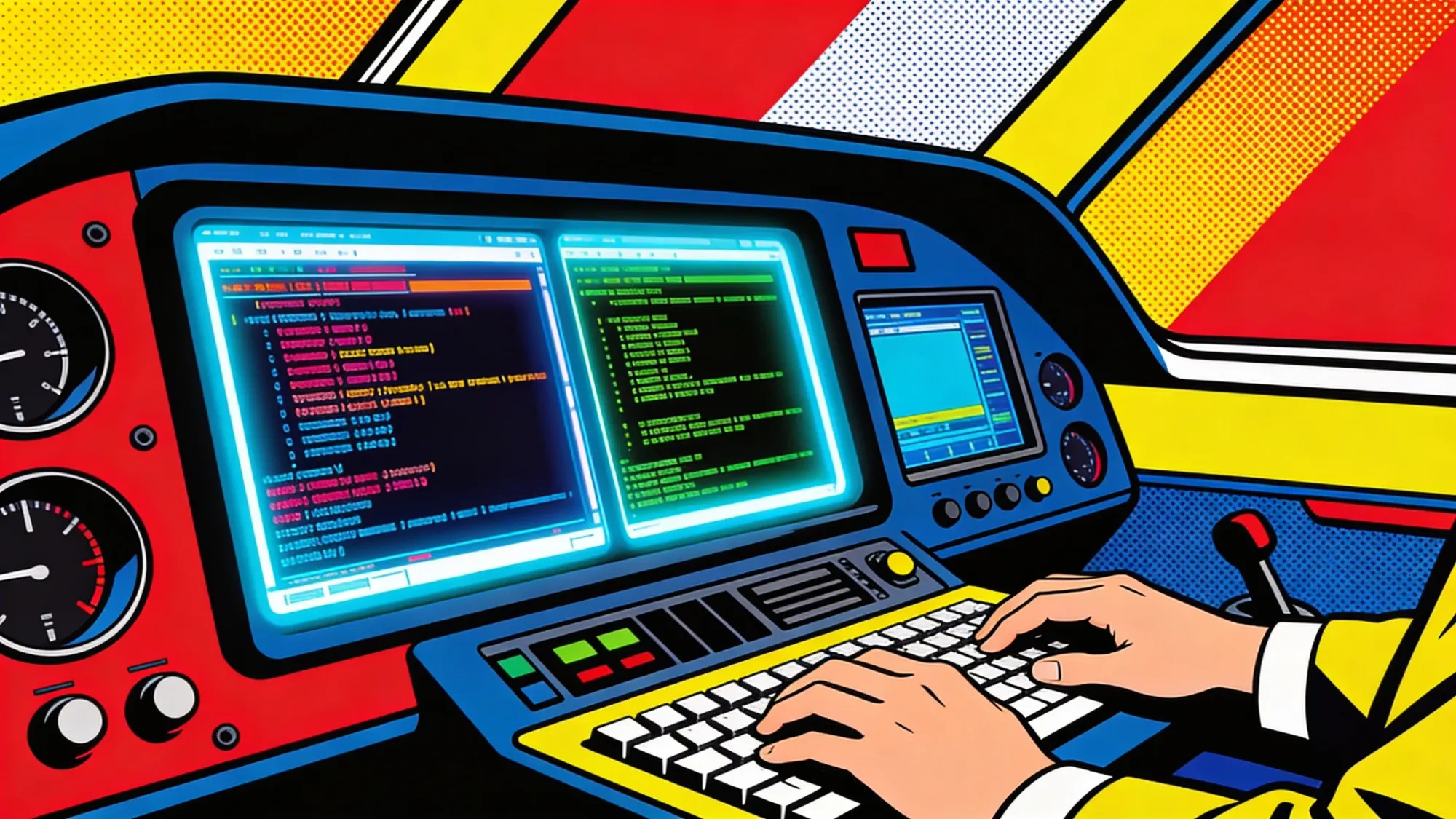
AI coding agents run in the terminal, rewrite 30 files in 90 seconds, and commit code before the developer reviews it. Standard terminal setups were built for humans typing one command at a time. These 15 tools close the monitoring gap.
The tools break into four categories. Orientation: LazyGit splits each diff individually when an agent changes 12 files at once, so you review changes one at a time instead of a merged wall of green and red. Eza replaces ls with color-coded output and Git status indicators. Zoxide learns which directories you visit and jumps there with fuzzy matching.
System monitoring: Btop graphs CPU cores, memory, and network in real time when local models run alongside coding agents. LLM Fit analyzes your hardware and ranks which models your machine can actually load before you download a 70-billion-parameter model that won't fit.
Output readability: Bat adds syntax highlighting to cat. Nushell passes structured data between commands instead of raw text. csvlens turns CSV files into navigable, column-aligned tables.
The recommended starting point: LazyGit, Zoxide, Eza. Three installs, one week. The bottleneck is not the agent. It is the pilot's instruments.
Why This Matters:
- The bottleneck in AI-assisted development has shifted from the agent's capability to the developer's ability to monitor and verify what the agent produces
- Terminal-native tooling is becoming the control layer for AI coding workflows, displacing traditional IDEs for many developers
🧰 AI Toolbox
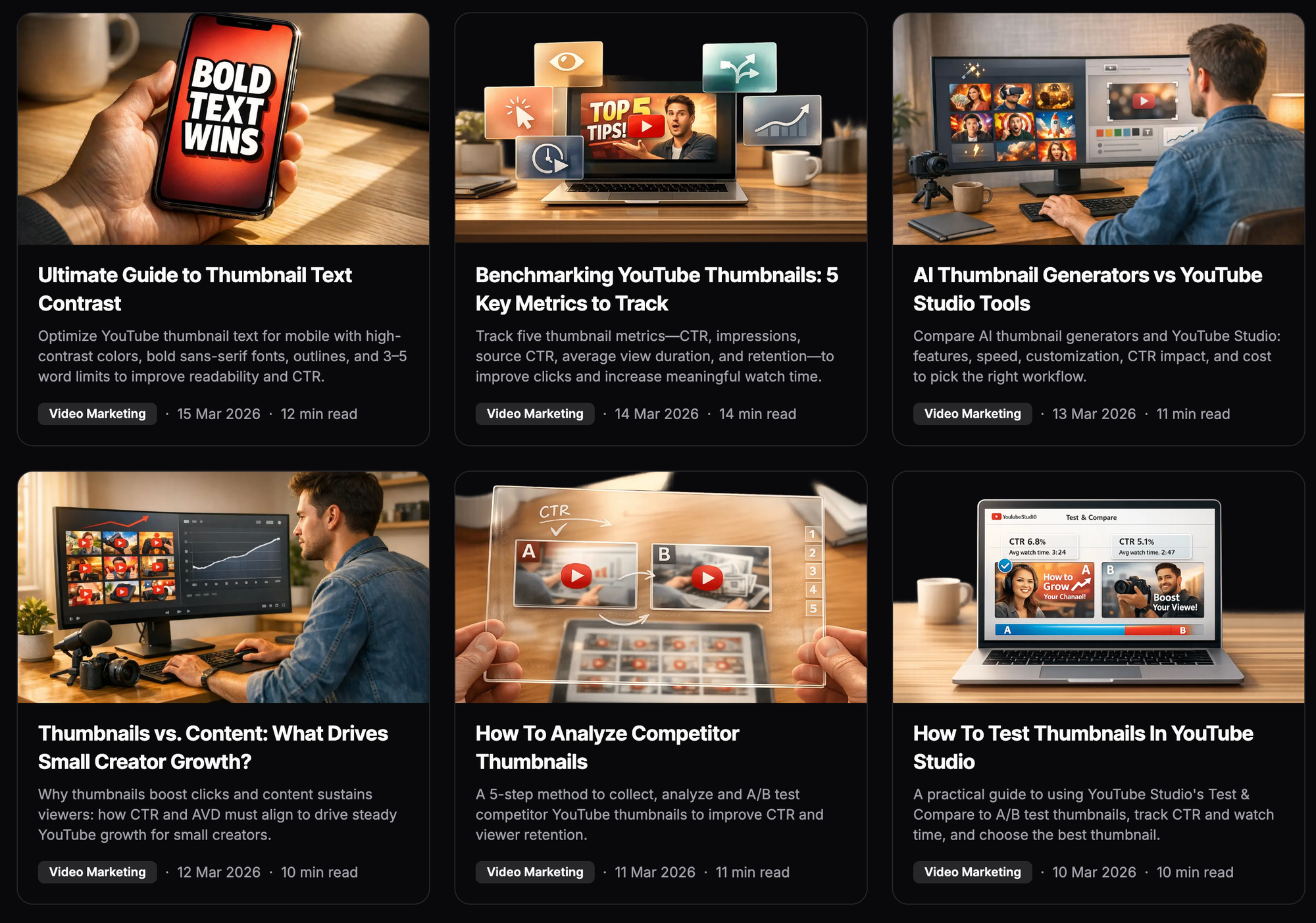
How to Generate Click-Optimized YouTube Thumbnails in Seconds with ThumbnailCreator
ThumbnailCreator generates YouTube thumbnails from a video link or text description. Paste a URL and the AI produces multiple thumbnail options in about 30 seconds, trained on millions of high-performing thumbnails. It detects faces and adjusts expression, lighting, and composition for maximum click-through. You can clone the style of thumbnails you like, swap faces, add text, and upload directly to YouTube without opening Photoshop. Free trial available.
Tutorial:
- Go to thumbnailcreator.com and start a free trial
- Paste a YouTube video URL or type a description of your video's topic and tone
- The AI generates multiple thumbnail variations in about 30 seconds
- Browse the options and pick the one that fits your channel's style
- Use the built-in editor to adjust text, swap faces, or tweak colors and layout
- Run the thumbnail analyzer to compare your pick against high-performing benchmarks
- Upload directly to YouTube from the platform or download the file for manual upload
URL: https://www.thumbnailcreator.com
What To Watch Next (24-72 hours)
- Nvidia GTC: Jensen Huang keynotes today at 11 AM PT from SAP Center in San Jose. He promised to unveil a chip "the world has never seen." Expect an inference-only accelerator, next-generation co-packaged optical interconnects, and a robotics platform update. More than 30,000 attendees from 190 countries. Every AI infrastructure stock trades on what he shows.
- Nvidia Financial Analyst Q&A: Tomorrow at 1 PM PT. This is where analysts push Huang on Blackwell margins, custom silicon competition from Google and Amazon, and whether the inference market justifies a dedicated chip line. Guidance language will move the stock more than the keynote.
- Federal Reserve: FOMC rate decision Wednesday at 2 PM ET. Markets expect a hold, but the dot plot and Powell's commentary on AI-driven capital spending will signal whether the infrastructure buildout gets cheaper or harder to finance this year.
🛠️ 5-Minute Skill: Turn a Competitor's Press Release Into Three Questions for Your Team
Your competitor just shipped a product aimed at your market. The CEO wants to know if it matters. You have the press release and 10 minutes.
Your raw input:
[Competitor] launched [Product] today. AI-powered [category].
"Replaces the need for [what you sell]," per CEO quote.
$50M funding. Ships Q2. Integrates with Salesforce, Slack, HubSpot.
No named beta customers. Pricing 40% below ours.
The prompt:
From this press release, produce exactly three questions our
leadership team should answer this week. Not reactions. Not
analysis. Questions that force a decision.

If the announcement might be vaporware, one question should test that.

Press release: [paste]
What you get back:
Do we accelerate our Salesforce integration from Q3 to ship before their Q2 launch, or hold and let them validate the market first?They priced 40% below us with no named customers. Do we call three of their listed design partners this week to test adoption?Do we match their mid-tier pricing or protect margins and compete on implementation depth?
Why this works
Press release summaries tell you what happened. Questions tell you what to do about it. The prompt forces decisions, not research.
What to use
Claude: Best at spotting what's missing from the announcement.
ChatGPT: Tighter phrasing on competitive urgency.
AI & Tech News
Hua Hong Prepares 7nm Chip Production in Shanghai With Huawei Collaboration
China's second-largest chipmaker is preparing to produce chips at the advanced 7nm node at its Shanghai facility, with Huawei providing technical collaboration. The milestone would make Hua Hong the second Chinese company capable of manufacturing at 7nm after SMIC, accelerating Beijing's semiconductor self-sufficiency drive amid US export restrictions.
Microsoft Quietly Scales Back Copilot Integration in Windows 11
Microsoft has scrapped plans to embed Copilot across Windows 11 notifications and settings, shipping some AI tools without the Copilot branding. The retreat from its own 2024 announcements signals a shift toward restraint after what Windows Central characterized as AI bloat across the operating system.
Alibaba Prepares Qwen-Based AI Agent for Enterprise With Alipay Integration
Alibaba is building an agentic AI service on its Qwen model for enterprise customers, with plans to integrate it across services including Alipay. An announcement could come as soon as this week as the company moves to capitalize on China's growing AI agent market.
Google-Accel Accelerator Rejects 70% of 4,000 AI Startup Pitches as Wrappers
The joint Google-Accel AI accelerator Atoms selected five Indian startups from over 4,000 applications, with organizers dismissing roughly 70% of rejected pitches as superficial wrappers built on existing models. The selection rate highlights a growing investor concern that most new AI ventures lack genuine technical depth.
Micron Completes $1.8 Billion Taiwan Fab Acquisition, Plans Second Facility
Micron finalized its $1.8 billion acquisition of Powerchip's DRAM fabrication facility in Taiwan and announced a second fab at the same site, with construction starting by the end of fiscal year 2026. The expansion doubles down on Taiwan-based DRAM production as AI-driven memory demand surges.
Intellexa Founder Links Greek Government to Surveillance Scandal After Conviction
The founder of commercial spyware firm Intellexa asserted the company sells surveillance technology exclusively to governments, directly implicating Greek state agencies as clients following his landmark wiretapping conviction. The statement revives a political scandal over allegations that Greek authorities used commercial hacking tools to spy on citizens, journalists, and political figures.
Scanner Raises $22 Million From Sequoia for AI-Powered Threat Hunting
Cybersecurity startup Scanner raised a $22 million Series A led by Sequoia for its cloud-native security data lake platform that connects AI agents to detection and response workflows. The round sits at the intersection of two enterprise trends: security data lake adoption and AI-driven automation for cyber defense.
JD.com Launches Joybuy Marketplace Across Six European Countries
Chinese e-commerce giant JD.com launched its Joybuy marketplace in the UK, Germany, France, the Netherlands, Belgium, and Luxembourg, taking direct aim at Amazon's European dominance. The expansion uses JD.com's supply chain infrastructure and competitive pricing to target some of Europe's largest consumer markets.
Waymo Co-CEO Addresses Safety Record, Says Robotaxis Won't Eliminate Jobs
Waymo co-CEO Tekedra Mawakana told the New York Times that self-driving vehicles will not lead to significant job losses and outlined plans to license Waymo's autonomous driving technology to other companies. Earning public trust remains the central challenge as the Alphabet-owned robotaxi service expands operations.
Standard Kernel Raises $20 Million Seed for AI-Driven GPU Optimization
Standard Kernel secured $20 million in seed funding led by Jump Capital with General Catalyst participating, building AI software that automates GPU performance and management. The company addresses a growing bottleneck as demand for efficient GPU utilization outpaces manual tuning capacity.
🚀 AI Profiles: The Companies Defining Tomorrow
Physical Intelligence

Physical Intelligence builds foundation models that teach robots to fold laundry, pack boxes, and bus tables, the physical tasks that decades of conventional robotics programming could never reliably handle. The San Francisco company raised one of the largest first rounds in robotics history.
Founders
Karol Hausman co-founded Physical Intelligence after leading robotics research at Google DeepMind. Co-founders include Sergey Levine, a UC Berkeley professor who pioneered reinforcement learning for robot control, Chelsea Finn, a Stanford professor who developed meta-learning methods that let robots adapt to new tasks from minimal examples, and Lachy Groom, a former Stripe executive. The team has collectively published more robot learning papers than most university departments.
Product
pi-zero is a vision-language-action model that controls robot hardware directly from visual input and natural language commands. Rather than coding each motion, the model learns manipulation skills from video demonstrations and transfers them across different robot bodies. Demos showed robots folding laundry, clearing plates, and assembling packages in unstructured environments, tasks that require adapting to deformable objects and unpredictable physics. The company stays hardware-agnostic so the model runs on any robot arm or mobile platform.
Competition
Figure AI raised $675 million to build its own humanoid. 1X Technologies, backed by OpenAI, ships a bipedal security robot. Toyota Research Institute and Nvidia's Isaac platform pursue similar foundation model approaches with far larger compute budgets. Amazon acquired Covariant's technology. Physical Intelligence differentiates by separating intelligence from hardware: the model runs on any robot, so it does not need to win a manufacturing race against companies that build bodies.
Financing 💰
$400 million Series A in November 2024 from Jeff Bezos, Thrive Capital, Lux Capital, and Bond. Valued at $2.4 billion. One of the largest debut rounds in robotics history.
Future ⭐⭐⭐⭐
The founding team wrote many of the papers that other robotics companies cite in their pitch decks. Hausman, Levine, and Finn have collectively trained more robot learning systems than most countries have robotics labs. The hardware-agnostic strategy is the right bet: the world does not need another robot body, it needs software that makes existing robots useful. Jensen Huang dedicated a segment of last year's GTC keynote to robot foundation models. Physical Intelligence is building what he was selling. The $2.4 billion valuation on a Series A prices in execution that started in the lab. If pi-zero can reliably fold a towel, the factory floor is the easy part.
🔥 Yeah, But...
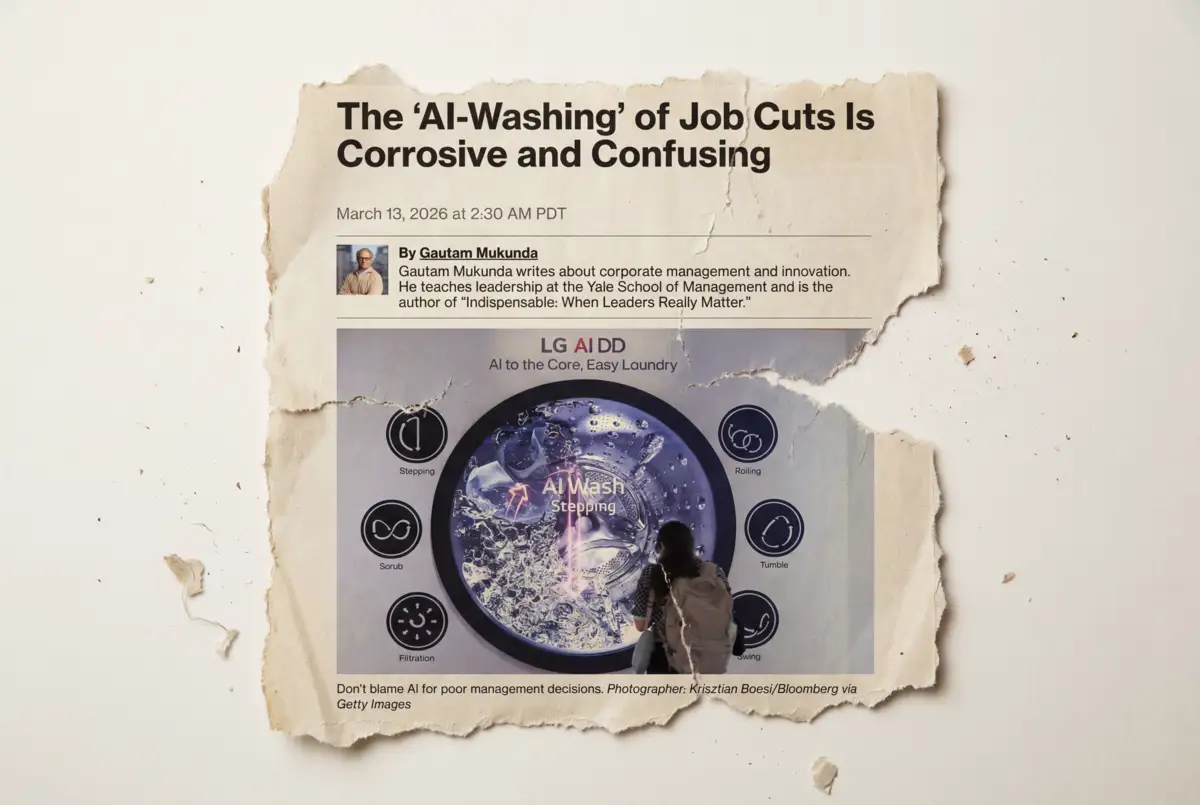
A Resume.org survey of 1,000 hiring managers found that 59% say they emphasize AI's role in layoffs because it "is viewed more favorably by stakeholders than saying layoffs or hiring freezes are driven by financial constraints." Only 9% said AI had fully replaced any roles. Block cut 40% of its workforce, blamed AI, and saw its stock rise 22%. An NBER study of thousands of C-suite executives found almost 90% said AI had zero impact on employment over the past three years.
Sources: Bloomberg, March 13, 2026 | Resume.org, 2026
Our take: Six out of ten hiring managers admit, in a survey, that they blame AI for layoffs because it polls better with investors. Not privately.
In a survey someone will publish. Nine percent said AI actually replaced anyone. The other 91% said it with a straight face anyway. Block fired 40% of its people, Jack Dorsey said "intelligence tools," and the stock jumped 22%. Sam Altman, the man selling the technology, told a conference that companies are making it up.
Even the dealer is saying the product isn't doing what the customers claim. Challenger tracked 1.2 million layoffs last year. AI was cited in 4.5% of them. "Market conditions" was four times higher but has never trended on LinkedIn.


