IMPLICATOR
In January, Mark Zuckerberg stood before investors and described a future where "projects that used to require big teams now be accomplished by a single very talented person." He sounded certain. Almost relaxed. His company just rolled out a new AI engineering organization. Managers oversee up to 50 direct reports. That ratio would have been absurd at any point in Meta's 22-year history, but Zuckerberg wasn't blinking.
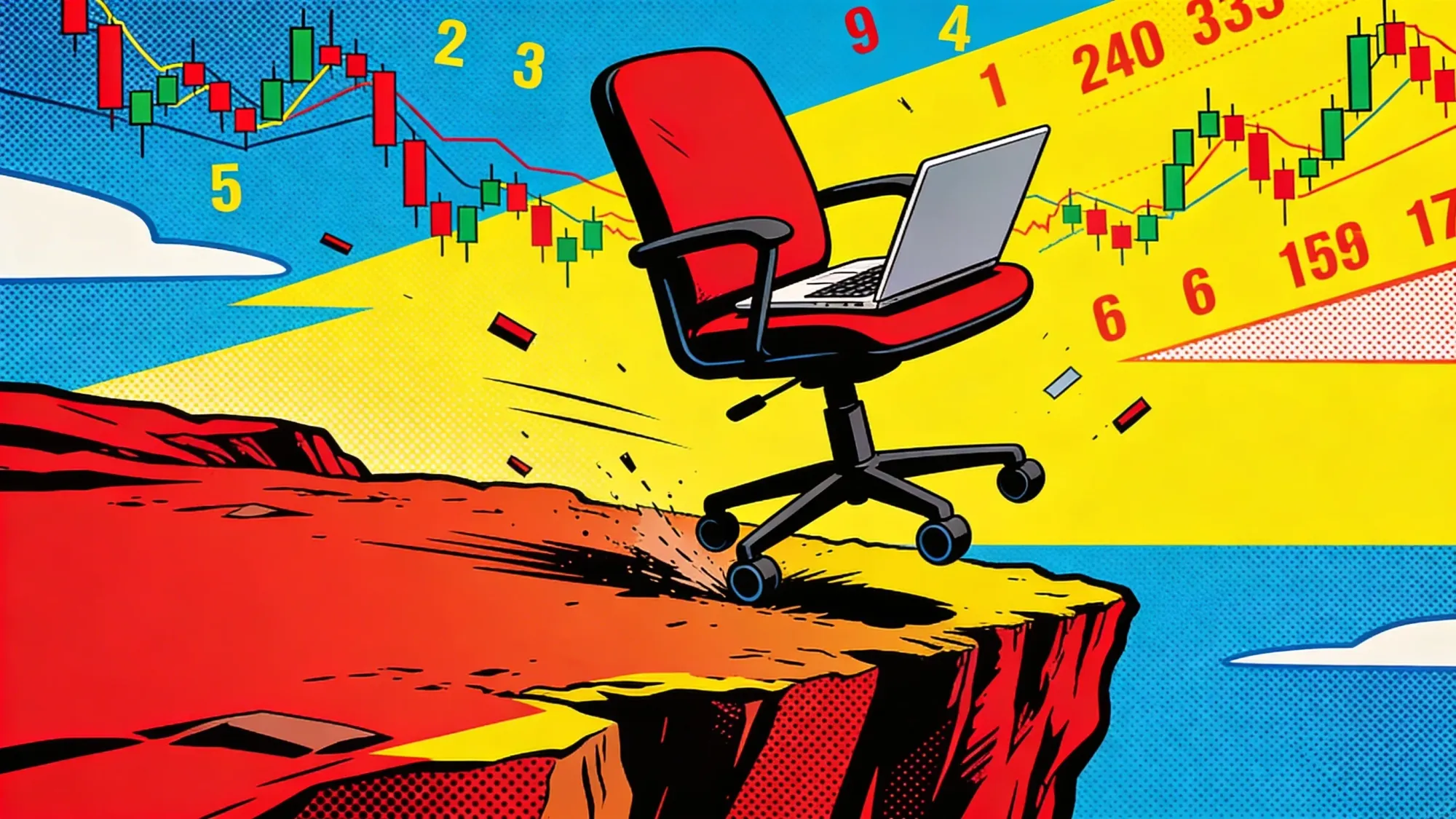
Reuters reported Thursday that Meta is weighing layoffs that could reach 20% or more of its workforce. Run the numbers on 78,865 year-end employees. Roughly 16,000. No date set, no final scope. But the company selling Wall Street on AI-powered productivity is drawing lines through its own headcount.
Not a trim around the edges. A fifth of the company.
Meta's rhetoric and its actions tell two contradictory stories at once. Start with the money. The company has committed over $600 billion in U.S. spending by 2028 to support AI technology and infrastructure. Capital expenditure this year could hit $135 billion, nearly double the $72 billion it spent last year. It's paying individual AI researchers compensation packages worth hundreds of millions over four years, reportedly paid around $2 billion for Chinese startup Manus, and just acquired Moltbook, a social network built for AI agents. Alexandr Wang came over from Scale AI to lead a new superintelligence team. Few companies are spending at this scale.
Then there's the cutting. Meta moved in January to cut around 10% of Reality Labs. Now comes the directive that dwarfs everything before it. How fast? Business Insider says within a month, citing two senior employees. Managers were told to draw up cost-cutting plans but given no scope and no timeline. Spokesperson Andy Stone called the reporting "speculative" and about "theoretical approaches." Not a denial. More like a company controlling the clock on news it knows is coming.
The AI meant to justify all of this keeps stumbling. Llama 4 drew criticism over its benchmark presentation and performance. Behemoth, the biggest model in the family, was delayed and eventually abandoned. Avocado, the next frontier model, has been pushed to at least May. Meta could cut thousands of workers to pay for machines that don't work yet. That tension, the gap between the spending and the capability, is the story.
The Argument
- Meta is weighing cuts of up to 16,000 jobs, roughly 20% of its workforce, while committing over $600 billion to AI by 2028
- Key AI models keep failing: Llama 4 drew benchmark criticism, Behemoth abandoned, Avocado pushed to at least May
- Block and Atlassian ran similar layoffs at profitable companies, explicitly citing AI; Amazon's rationale was more mixed
- Once the capital is committed and workers are gone, Meta has no clean path to reverse the bet
The swap nobody calls a swap
Here's what Meta is doing, stripped of the efficiency branding. It is converting one kind of cost into another. Up to sixteen thousand salaries, benefits packages, and office leases become GPU clusters, cooling infrastructure, and electricity contracts. The money doesn't leave the balance sheet. It changes form. From humans to silicon.
This isn't a layoff driven by revenue decline or a failed product. Meta's advertising business prints cash. The company is choosing to replace one input, labor, with another, compute, wagering that machines will generate more value per dollar than the employees they displace.
If you've watched this industry over the past twelve months, the swap is hard to miss. Amazon cut 16,000 corporate jobs in January, nearly 10% of its corporate workforce, while accelerating its AI infrastructure buildout. Block, Jack Dorsey's fintech company, slashed nearly half its employees last month. Dorsey was more explicit than any other CEO about why. He told remaining staff that AI tools meant Block could run leaner, and that every company in the industry would eventually reach the same conclusion. Atlassian went next. 1,600 positions, 10% of the company, explicitly to fund AI.
Each of those companies was profitable when it made the cuts. Block and Atlassian tied their reductions explicitly to AI. Amazon's rationale was more organizational, but the pattern held. And in every case, the AI being cited hadn't replaced the workers walking out.
What made Dorsey's version unusual was the candor. Most executives wrap layoffs in regret and restructuring language. Dorsey skipped the performance and said the quiet part. AI tools make humans optional. Every company in the industry will reach the same conclusion. He was selling the layoffs as a feature, not a cost. The framing landed. Block's stock moved up.
The firings were concrete. The efficiency was projection.
The models that haven't earned any of this
Meta's generative AI program looks, by its own internal metrics, exposed. The Llama 4 family drew criticism for benchmark presentation that many developers called misleading, the kind of controversy that erodes trust with the community Meta needs on its side. Meta later abandoned plans to release Behemoth, its flagship meant to compete with Google and OpenAI, which had been due in the summer. The superintelligence team moved on to two follow-ups, Avocado and Mango, both targeting the first half of 2026. Avocado has already slipped to at least May, Reuters reports.
Stay ahead of the curve
Strategic AI news from San Francisco. No hype, no "AI will change everything" throat clearing. Just what moved, who won, and why it matters. Daily at 6am PST.
No spam. Unsubscribe anytime.
Sit with that. Meta could cut up to 16,000 positions to fund AI systems its own engineers can't deliver on schedule. The technology invoked to justify the headcount reduction doesn't yet do what the company says it will.
Sam Altman flagged this pattern three weeks ago. He accused companies of "AI washing" their layoffs, arguing that many use AI as a label for traditional cost cuts dressed in the language investors reward. Coming from the CEO of the company that kicked off the generative AI boom, the charge landed with a specific sting. When the man selling the product says buyers are using it as a label for cost-cutting, the label is exactly that.
And yet the label keeps working. Wall Street rewards the narrative. Boards repeat it. The word "efficiency" has become a permission slip to fire people while reporting record profits, and AI is the justification nobody in a boardroom challenges because nobody wants to sound like they don't get the future.
Zuckerberg's own framing supports the AI-washing reading, perhaps accidentally. His vision of one talented person replacing a team sounds sharp on an earnings call. But the new engineering org with 1:50 manager-to-employee ratios only functions if the tooling is reliable. Meta's tooling isn't. Not yet. That gap between the pitch and the engineering reality is the space where thousands of careers vanish.
The trap at the center
What separates Meta's move from the usual AI-washing layoff is the capital commitment on the other side. A company trimming headcount while piloting a few AI copilots can reverse course. Meta can't. It has wagered $600 billion, a sum sitting between the GDP of Sweden and Poland, on the assumption that AI infrastructure will produce returns large enough to cover both the investment and the workforce it replaced.
That wager creates a trap with no clean exit. Once you've cut thousands of people and committed hundreds of billions to hardware, reversal isn't an option. The cost is sunk. The institutional exposure is total. You have to make the AI work, or construct a narrative where it appears to, because the alternative is explaining to shareholders why you eliminated a fifth of the company for machines that couldn't perform. Zuckerberg is too experienced to let that scenario materialize. Which means the next twelve months will feature a steady stream of announcements designed to prove the bet was right, regardless of whether the AI has actually caught up.
Microsoft entered a smaller version of this trap last year, cutting 9,000 jobs during record revenue quarters and framing the move as AI repositioning. Nine months on, most AI products shipped alongside those cuts remain supplements to existing workflows. Useful tools. Not replacements for the people who left. Microsoft can absorb the gap because Azure's cloud business was already growing independently. Meta doesn't have an equivalent cushion. Its AI bet needs to produce direct returns, or the math collapses.
If you work in mid-level management at a major technology company right now, the arithmetic is personal. The reported 1:50 ratios in Meta's new AI engineering org don't merely flatten org charts. They announce that an entire layer of management is being priced against GPU hours. The GPUs are winning that budget comparison. They don't handle the work better. They promise to handle it cheaper. And right now, the promise is enough.
And the promise is self-reinforcing. Every quarter that passes without a reversal makes the bet harder to unwind. New hires arrive expecting an AI-first org. The old institutional knowledge walks out the door with each severance check. Within a year, the company won't have the option of rebuilding what it cut, even if the AI falls short. The swap becomes permanent by default.
Who pays for the conversion
The conversion happening at Meta is genuine, even if the stated rationale outruns the evidence. If 20% is the actual number, roughly 16,000 workers walk. Some will land at competitors still paying a premium for AI talent and infrastructure engineers. Many will join a swelling pool of experienced tech workers chasing fewer openings. The math compounds fast. Every major employer in the sector is running the same playbook in the same quarter. More workers out. Fewer jobs waiting.
Who benefits? AI researchers pulling nine-figure compensation packages. Nvidia and AMD, selling the silicon. Construction crews and energy companies building and powering the data centers. The swap is real. But the workers walking out aren't the ones it rewards.
Wall Street will almost certainly applaud. Layoffs at profitable companies lift share prices, especially wrapped in an AI narrative. Meta's original "year of efficiency" in 2022 kicked off one of the more dramatic stock recoveries in recent history. Zuckerberg watched his personal wealth surge in the two years that followed. He looked emboldened by the outcome. The current playbook reads like a sequel from a CEO who learned that cutting headcount is good for the stock and decided to run it again, bigger.
But the uncomfortable question underneath all of it is whether this connects to production reality. Meta's models trail competitors at the frontier. Avocado is delayed. Behemoth is dead. The efficiency gains Zuckerberg sells on earnings calls haven't materialized in products that users or developers can point to. The company is building the factory before it has a working prototype. And it's clearing out the old workforce to pay for the construction materials.
Stone called the layoff reporting "speculative" and "theoretical." Precise language from a spokesperson who understands the difference between "false" and "not yet decided." That's the tell.
Reuters and Business Insider both report that senior leaders have been told to begin planning reductions. The AI models meant to fill the gaps those cuts would leave haven't shipped. Some may never ship at all.
Zuckerberg wants a company where one very talented person does the work of a team. He's wagering over $600 billion and potentially 16,000 careers on it. Whether that person actually exists is a question nobody at Meta seems ready to answer.
Frequently Asked Questions
Why is Meta weighing job cuts when its advertising business is still profitable?
The cuts aren't driven by revenue decline. Meta is converting payroll spending into AI infrastructure, redirecting salary costs toward over $600 billion in U.S. AI investment by 2028. The company is choosing to replace labor with compute.
What happened to Meta's flagship AI models?
Llama 4 drew criticism over benchmark presentation. Behemoth, the frontier model meant to compete with Google and OpenAI, was due in the summer but Meta later abandoned plans to release it. Follow-on models Avocado and Mango are targeted for the first half of 2026, with Avocado pushed to at least May.
Which other tech companies have made similar AI-justified layoffs?
Amazon cut 16,000 corporate jobs in January (nearly 10% of its corporate workforce), Block slashed nearly half its employees, and Atlassian trimmed 1,600 positions (10%). All were profitable. Block and Atlassian explicitly cited AI; Amazon's rationale was more organizational.
What does AI washing mean in the context of layoffs?
A term Sam Altman used for companies dressing traditional cost cuts in AI language. He argued many companies use AI as a label to justify headcount reductions that investors reward, rather than cutting because AI actually replaced the work.
What is Meta's reported 1-to-50 manager-to-employee ratio?
According to Business Insider, Meta has reportedly structured its new AI engineering organization so each manager oversees up to 50 direct reports. If accurate, it signals that middle management is being priced against compute costs.


Marcus Schuler
Editor-in-Chief and founder of Implicator.ai. Former ARD correspondent and senior broadcast journalist with 10+ years covering tech. Writes daily briefings on policy and market developments. Based in San Francisco. E-mail: editor@implicator.ai