


Good Morning from Las Vegas,
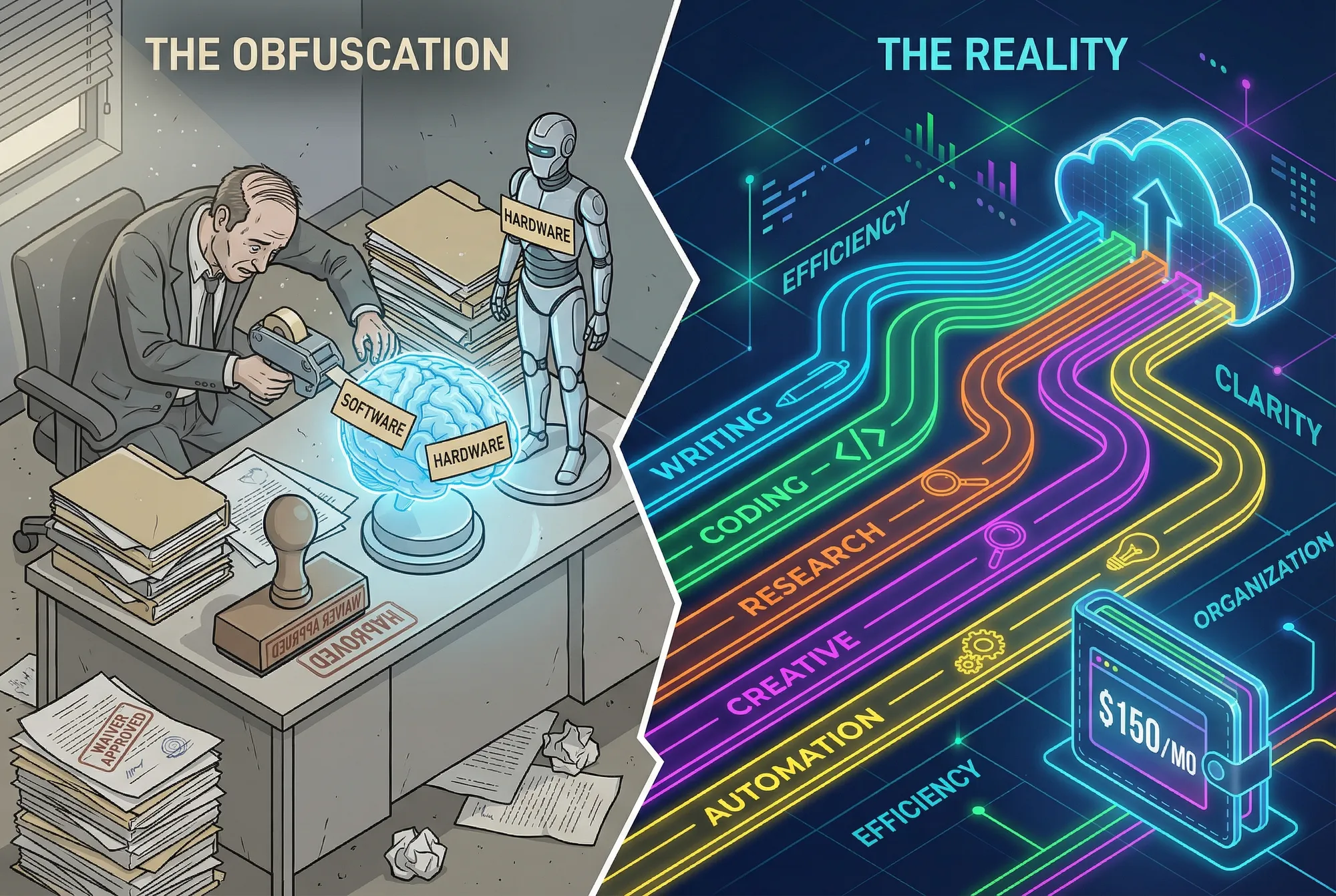
Labels matter. Or they don't. Depends who's applying them.
David Sacks holds 449 AI investments while serving as AI czar. Federal ethics rules let him keep every one. The trick? Classification games. His waivers designate 438 tech holdings as "software" or "hardware," not AI. Even companies with "AI" literally in their names pass through. The system performed exactly as designed.
In the actual AI tools market, categorization works differently. Clear lanes emerged: writing, coding, research, creative, automation. Winners dominate each. Most professionals combine 2-4 tools for $50-150 monthly. More than that and you're managing subscriptions, not working.
One classification system obscures reality. The other reveals it.
Stay curious,
Marcus Schuler
Federal Ethics Rules Made David Sacks' Dual Role Perfectly Legal

David Sacks holds 449 AI investments while serving as Trump's AI and crypto czar.
A New York Times investigation published November 30 reveals how federal ethics architecture made this arrangement legal. The math works through classification games: his waivers designate 438 tech holdings as "software" or "hardware" rather than AI, even though 41 companies have "AI" in their names. Palantir, classified as "software as a service," markets itself as providing "AI-powered automation."
The conflicts extend beyond paperwork.
Sacks helped broker a UAE chip deal worth up to $200 billion to Nvidia, pushed to reverse China export bans, and championed stablecoin legislation while Craft Ventures holds a $130 million stake in BitGo, now pursuing an IPO. Steve Bannon's verdict: "The tech bros are out of control." Ethics professor Kathleen Clark was blunter: "This is graft."
The special government employee designation, combined with self-reported classifications and no enforcement mechanism, created a system that performed exactly as designed. That's the real scandal.
Why This Matters:
- Future administrations will cite this precedent when officials seek to maintain investment portfolios alongside policy roles
- The MAGA coalition faces a real test: populist nationalists and tech libertarians want fundamentally different things from power
 Maria Garcia
AI Image of the Day

Prompt:
a realistic photo of an iv bag filled with coffee, the word "coffee" is written on it in white letters. the iv line winds around and into the front bottom corner of the iv bag, against a solid light background. the image is titled "intricately remade gradient", "jack angeline", and "in limbo". the overall color scheme should be dark brown with a solid white background, in a minimalist style, resembling advertising photography and product posters.
30 AI Tools That Actually Deliver in 2025
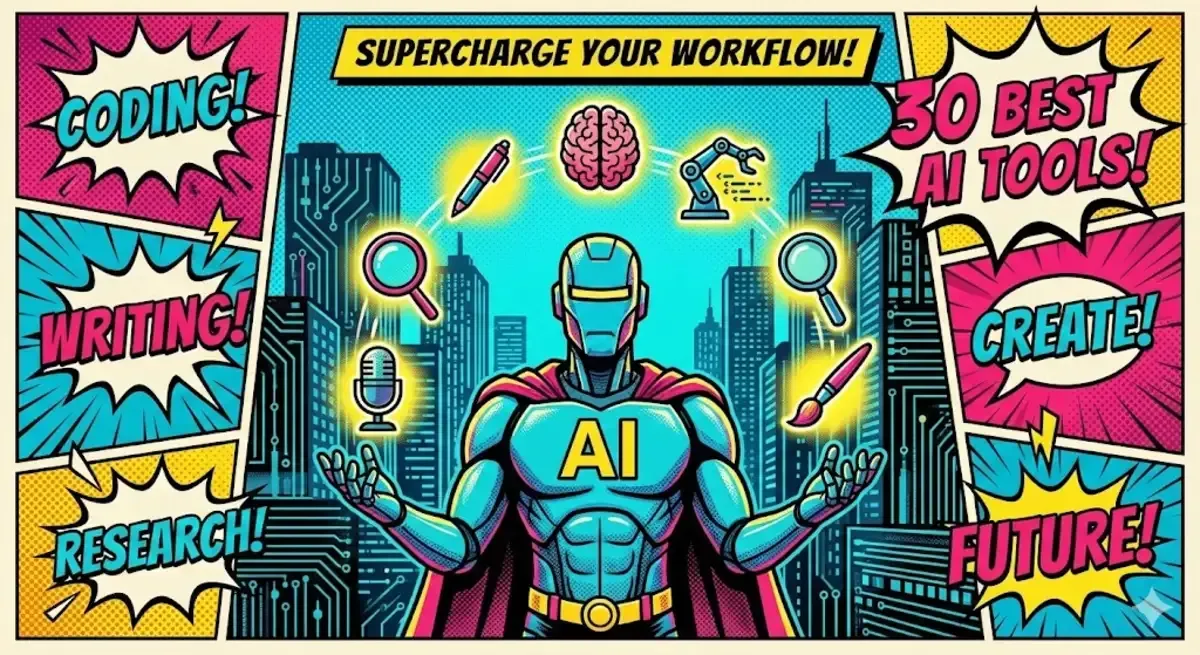
The chatbot era ended. Specialized AI applications now dominate every professional workflow, from $10/month coding assistants to $99/month voice synthesizers that worry audiobook narrators.
GitHub Copilot owns developer keyboards with millions of users and a free tier offering 2,000 monthly completions.
ElevenLabs produces voices so natural that publishers already use them for production work. Runway's video tools appeared in Oscar-nominated films.
Perplexity replaced Google for researchers who want answers, not links. The market fragmented into clear categories: writing, coding, research, creative, automation. Each has winners.
Most professionals combine 2-4 tools effectively, spending $50-150 monthly. More than that and you're managing subscriptions instead of working. Free tiers exist for nearly everything listed. Test before committing cash. Today's dominant tool faces displacement tomorrow.
Why This Matters:
- Tool selection now shapes competitive positioning as productivity gaps between AI-assisted and unassisted workers widen quarterly
- Building workflows that survive provider switches matters more than optimizing for any single vendor's ecosystem
 Marcus Schuler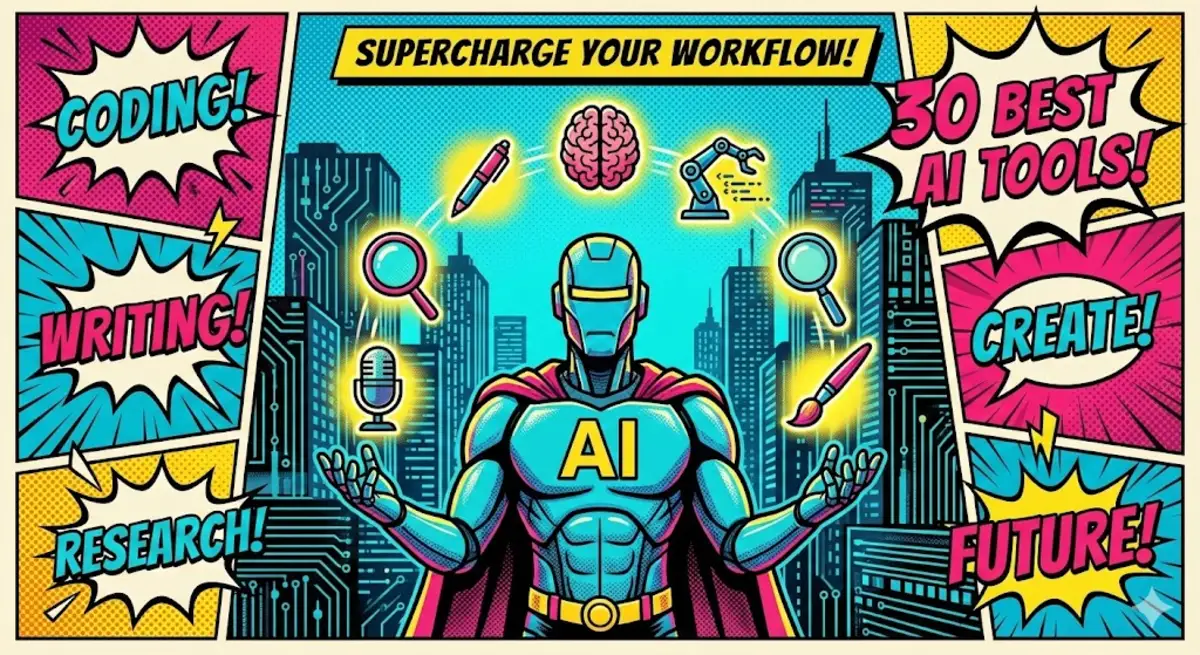
🧰 AI Toolbox
How to Automate Your Academic Literature Review with AI
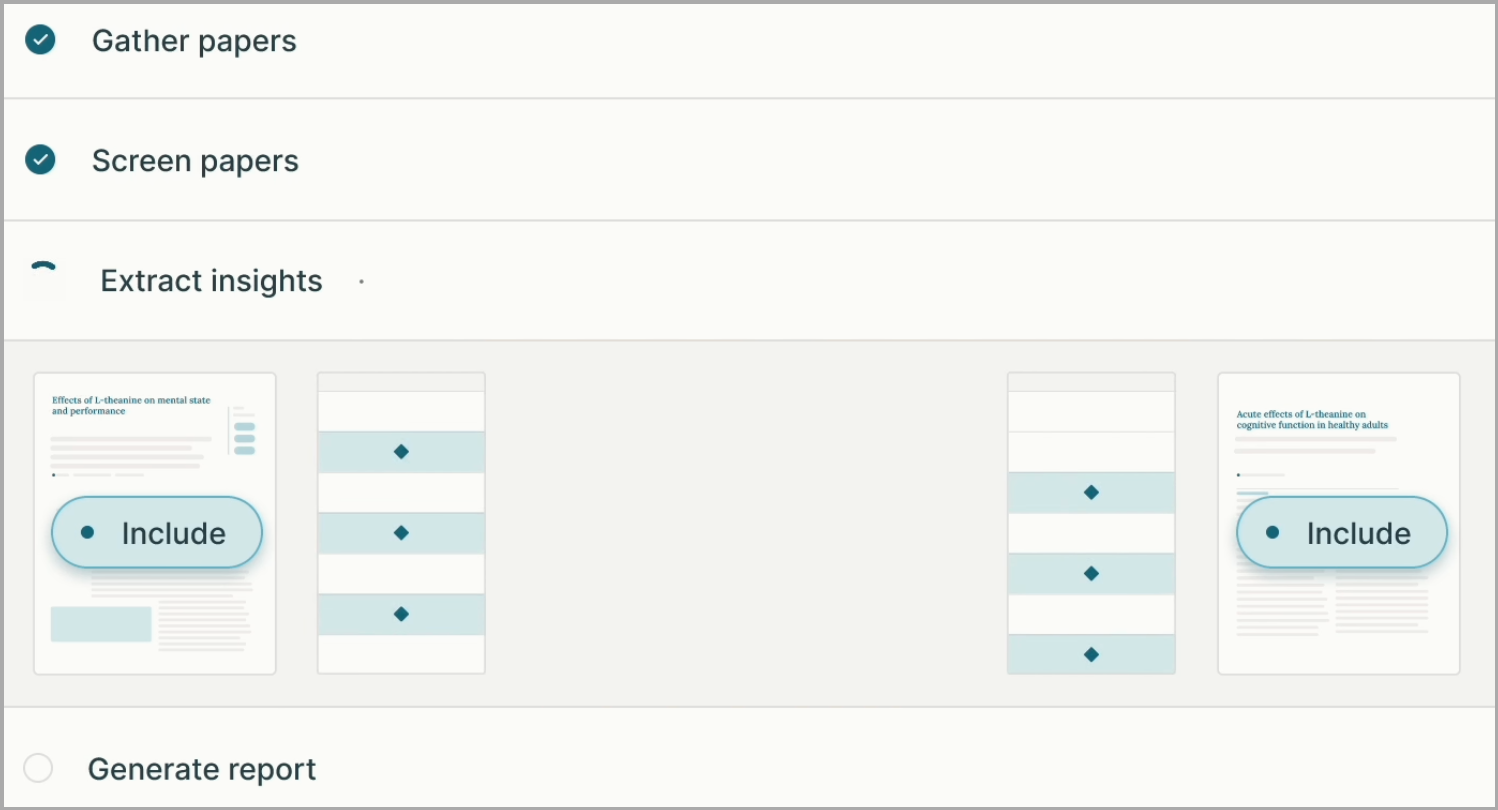
Elicit is an AI research assistant that searches over 138 million academic papers and clinical trials to help you find, summarize, and extract key information from scholarly sources. It uses semantic search so you don't need perfect keywords, and it can automate time-consuming tasks like screening papers and extracting data for systematic reviews.
Tutorial:
- Go to the Elicit website
- Enter your research question in natural language, such as "How does sleep affect memory consolidation?"
- The AI searches academic databases and returns relevant papers with summaries tailored to your question
- Add custom columns to extract specific data points like sample size, methodology, or key findings
- Filter results by publication year, study type, PDF availability, or keywords
- Export your organized findings to CSV or citation managers like Zotero
- Save up to 80% of your literature review time with automated data extraction
URL: https://elicit.com/
AI & Tech News
OpenAI Invests in Thrive Capital's Holdings Company
OpenAI has taken a stake in Thrive Holdings, a company owned by venture capital firm Thrive Capital, with plans to integrate AI agents into its portfolio of businesses, which currently includes accounting and IT services firms. The strategic move by the ChatGPT parent company aims to embed artificial intelligence tools throughout Thrive Holdings' service companies, signaling a new approach to deploying AI technology directly into business operations.
NVIDIA Takes $2 Billion Stake in Synopsys in Major AI Partnership
NVIDIA announced Monday that it has acquired $2 billion worth of Synopsys common stock as part of a new strategic partnership aimed at accelerating the development of computing and AI engineering products. The collaboration will include the deployment of NVIDIA's CUDA parallel computing platform, signaling a significant investment in advancing chip design and artificial intelligence capabilities.
Former Intel CEO Pat Gelsinger Criticizes "Decay" at Chipmaker and "Hideous" CHIPS Act Implementation
Former Intel CEO Pat Gelsinger has given a candid interview to the Financial Times discussing what he describes as the "decay" at Intel and criticizing the "hideous" implementation of the 2022 CHIPS Act. Gelsinger also noted the irony that his successor Lip-Bu Tan is broadly continuing the strategy he had championed, while revealing his new role leading a Christian AI platform.
New York Becomes First State to Mandate Disclosure of AI-Powered Personalized Pricing
New York has enacted groundbreaking legislation requiring retailers to disclose when they use algorithmic pricing systems that leverage consumers' personal data to set individualized prices, making it the first U.S. state to implement such consumer protections. The law aims to prevent businesses from using artificial intelligence to charge customers higher prices based on their personal information, with more than 10 other states now considering similar legislative measures.
HSBC Partners with French AI Startup Mistral in Major Banking AI Deal
HSBC has signed a partnership agreement with French artificial intelligence company Mistral to gain access to Mistral's AI models and collaborate on developing custom models for the bank's internal use. The deal reflects the broader trend of major financial institutions rapidly moving to integrate generative AI technology into their operations, with HSBC planning to deploy the technology for tasks including translation and document analysis.
AI Data Center Construction Boom Creates Worker Shortage and Six-Figure Salaries
The artificial intelligence boom is driving unprecedented demand for data center construction, resulting in significant pay increases and enhanced benefits for construction workers in the sector. According to a trade group cited by the Wall Street Journal, the industry currently faces a shortage of approximately 439,000 workers, with many positions now offering six-figure salaries and additional perks to attract talent.
Disney-Backed Startup Animaj Uses AI to Generate 300,000 Animated Poses Instantly
Animaj, a startup selected for Disney's Accelerator Program after the entertainment giant evaluated thousands of AI companies, has developed technology that can dramatically accelerate the animation process by generating hundreds of thousands of animated poses almost instantaneously. The company emphasizes that its AI tools are designed to keep human animators in creative control, positioning the technology as an assistant rather than a replacement for artistic talent.
China's Central Bank Reinforces Crypto Ban, Raises Stablecoin Concerns
China's central bank has reaffirmed that all virtual currency activities remain illegal in the country, while specifically highlighting concerns that stablecoins fail to meet know-your-customer and anti-money-laundering requirements. The People's Bank of China issued the warning amid concerns about a resurgence in cryptocurrency speculation, signaling continued enforcement of the nation's strict prohibition on digital currency trading and related activities.
AI Deepfake Scandal Forces Ad Agency to Return Prestigious Cannes Awards
Omnicom-owned advertising agency DM9 has returned three Cannes Lions awards after North Carolina State Senator DeAndrea Salvador and CNN Brazil discovered the company had used artificial intelligence to manipulate their content without permission for a Whirlpool advertising campaign in Brazil. Senator Salvador, whose 2018 TED Talk was altered using AI technology, has filed a lawsuit against the agency, marking a significant legal challenge over the unauthorized use of deepfake technology in commercial advertising.
ByteDance Unveils AI Voice Assistant Powered by Doubao Language Model
Chinese tech giant ByteDance has announced the launch of a new artificial intelligence voice assistant built on its Doubao large language model, with the technology set to debut on ZTE's Nubia M153 smartphone prototype. The Doubao platform, which powers the new voice control tool, has already amassed an estimated 159 million monthly active users, positioning ByteDance as a significant player in China's competitive AI landscape.
Top Consulting Firms Freeze Graduate Pay for Third Consecutive Year
McKinsey and other leading consulting firms are freezing graduate pay offers in 2026 for the third consecutive year as artificial intelligence continues to reshape the industry and challenge the traditional pyramid business model. The productivity gains enabled by AI technology are prompting major consultancies to reconsider their long-standing reliance on large teams of junior advisers, signaling a potential structural shift in how elite firms operate and recruit talent.
Black Forest Labs Raises $300M, Triples Valuation to $3.25B
German artificial intelligence startup Black Forest Labs has raised $300 million in Series B funding, bringing its valuation to $3.25 billion, more than tripling its $1 billion valuation from September 2024. The company, which develops the open-source Flux image generation models, has rapidly established itself as a leading player in AI image generation technology despite maintaining a relatively low profile in the industry.
🚀 AI Profiles: The Companies Defining Tomorrow
Black Forest Labs
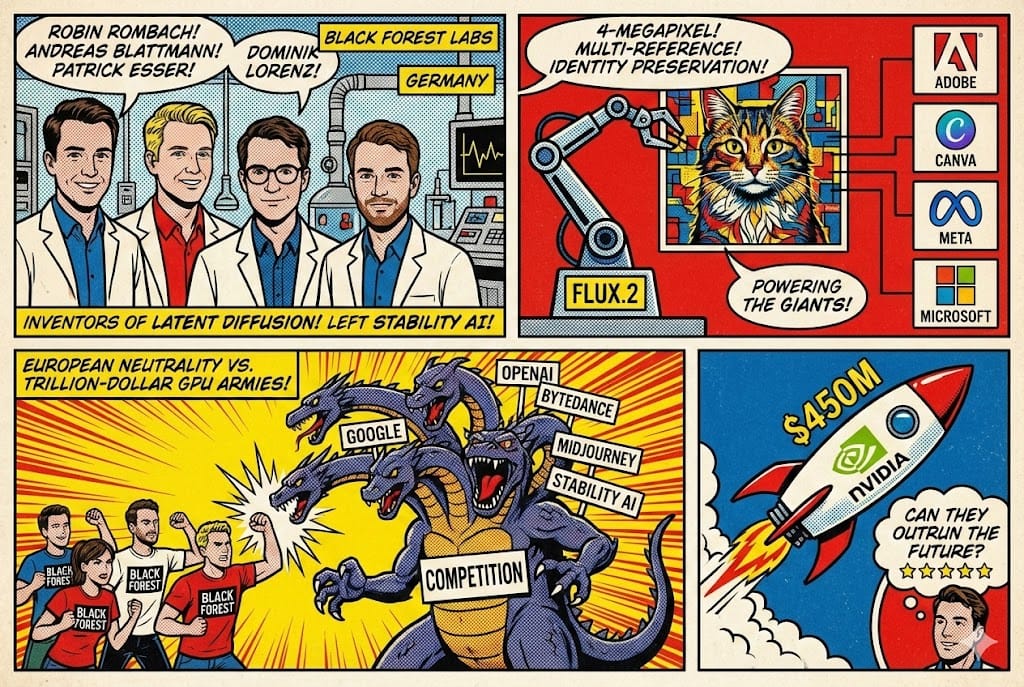
The inventors of latent diffusion left Stability AI and started their own shop in Germany's Black Forest. Now they power image generation at Adobe, Canva, Meta, and Microsoft.
👥 Founders Robin Rombach (CEO), Andreas Blattmann, Patrick Esser, and Dominik Lorenz founded Black Forest Labs in August 2024. All four built latent diffusion at LMU Munich, the research that made Stable Diffusion possible. ~50 employees work from Freiburg, far from San Francisco's poaching wars.
🛠️ Product The FLUX model family dominates. FLUX.2 generates 4-megapixel images with multi-reference control, identity preservation, and strong prompt adherence. Clever licensing splits the audience: Apache-licensed models for hobbyists, non-commercial weights for developers, proprietary APIs for enterprises. FLUX.1 Kontext handles context-aware editing for advertising and publishing workflows. Benchmarks put FLUX ahead of Midjourney on layout complexity.
⚔️ Competition Google (Nano Banana Pro), OpenAI (DALL-E/Sora), ByteDance (Seedream), Midjourney, and former employer Stability AI all crowd the field. Black Forest Labs competes on efficiency, clear licensing, and European neutrality. It sells through partners rather than building consumer apps. That trades brand recognition for reach.
💰 Financing $31M seed in August 2024, led by Andreessen Horowitz. Series B closed December 2025: $300M at $3.25B valuation. AMP and Salesforce Ventures co-led. Total raised exceeds $450M. Nvidia sits on the cap table. 🚀
🔮 Future ⭐⭐⭐⭐ Can 50 researchers in a medieval German town outrun trillion-dollar GPU armies? The founders wrote modern image generation's playbook. That buys credibility, but Adobe and Canva can swap suppliers with a config change. Still, if small labs matter anywhere, it's here.


