IMPLICATOR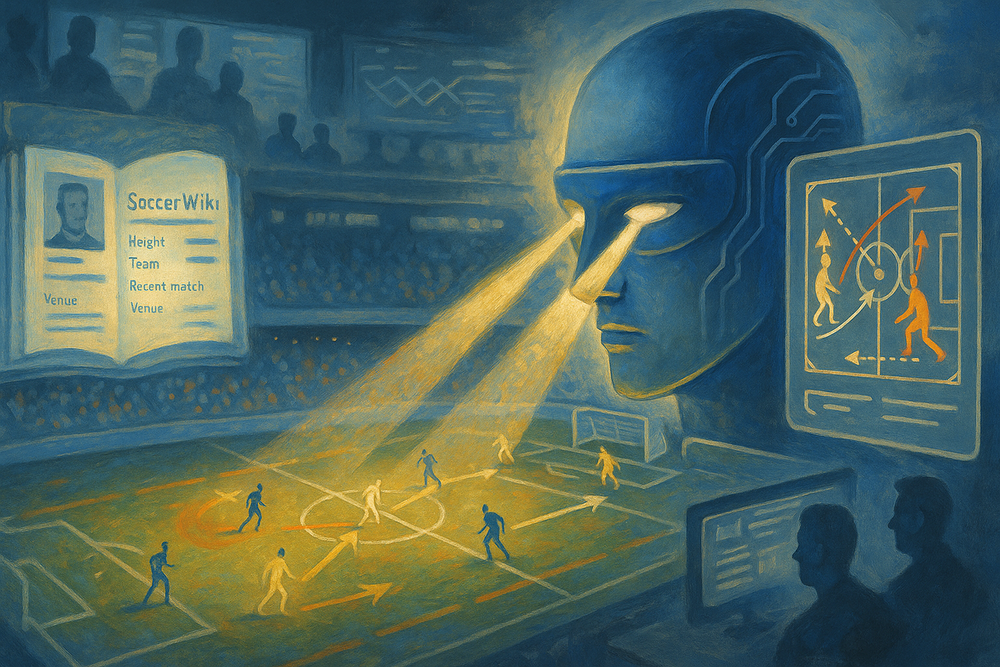
A new AI spots soccer moves that even veterans miss. SoccerAgent catches every fake dive, tracks jersey numbers through a crowd, and calls plays like a seasoned commentator. A research team at Shanghai Jiao Tong University's SAI lab, led by Jiayuan Rao and Zifeng Li, cracked the code on AI soccer analysis
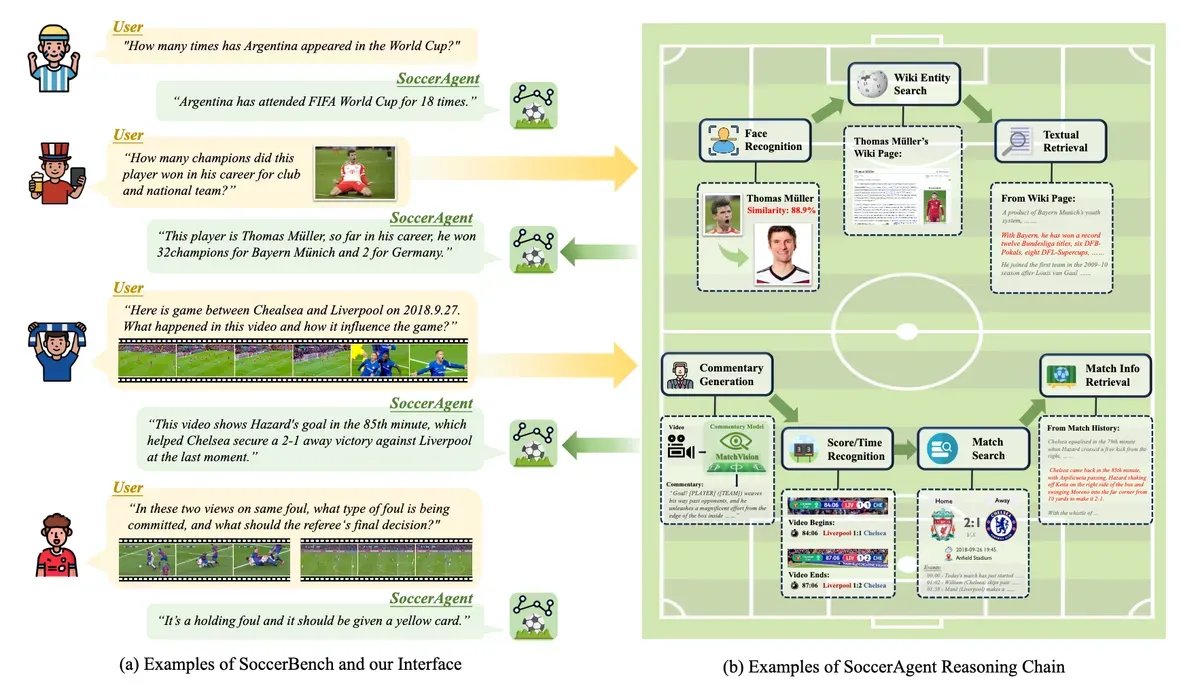
This digital brain packs 18 specialized tools into one sharp-eyed system. It spots the tiniest details - from a goalkeeper's slight head turn to a striker's sneaky offside trap.
"We built it to watch soccer like a lifelong fan," says the Shanghai Jiao Tong University team. And boy, does it deliver. This AI doesn't just follow the ball - it reads the whole game.
The Encyclopedia That Never Sleeps
SoccerAgent comes equipped with SoccerWiki, a massive knowledge base covering 9,471 players, 266 teams, 202 referees, and 235 venues. It's like having a soccer encyclopedia that updates itself.
The system breaks down complex plays with surprising sophistication. When shown a video clip, it identifies players, analyzes their movements, and explains tactical decisions. It even catches things human viewers might miss.
Take corner kicks. SoccerAgent doesn't just see a player kicking the ball. It tracks player positions, recognizes defensive formations, and understands how the play develops. It's like having a former pro explaining the game in real-time.
Beating The Big Players
The researchers tested SoccerAgent against other AI systems, including heavy hitters like GPT-4 and Claude. Their creation outperformed them all, especially on tasks requiring deep soccer knowledge.
But SoccerAgent isn't perfect. Sometimes it struggles with rapid player movements or complex tactical situations. And occasionally, like a rookie referee, it makes questionable calls.
The system excels at tasks that would exhaust human analysts. It can process thousands of game scenarios, track player statistics, and generate instant replays – all while maintaining razor-sharp focus.
SoccerAgent represents a new breed of AI that doesn't just process data – it understands context. It knows the difference between a tactical foul and a clumsy challenge. It recognizes when a goalkeeper's positioning forces a striker to reconsider their shot.
The technology could revolutionize soccer broadcasting. Imagine real-time analysis that explains why a defender stepped up at exactly the right moment, or how a midfielder's subtle movement created space for an attack.
For coaches, SoccerAgent offers unprecedented analytical power. It can break down opponent tactics, identify patterns in player movement, and suggest strategic adjustments. It's like having an entire analytics department packed into one system.
Under The Hood
The researchers built their system using a mix of existing tools and custom algorithms. They trained it on thousands of hours of match footage, teaching it to recognize everything from jersey numbers to referee gestures.
But perhaps most impressively, SoccerAgent can explain its decisions. When it identifies a foul, it doesn't just make the call – it shows you why. It highlights player positions, analyzes momentum, and considers the game context.
Human Touch Stays in The Game
Critics might worry that AI will replace human expertise in soccer analysis. But the researchers see SoccerAgent as a tool to enhance human understanding, not replace it. Think of it as the ultimate assistant referee – always watching, never tiring, but still working in service of the human officials.
The system's success points to a future where AI enhances our enjoyment of sports rather than diminishing it. SoccerAgent doesn't remove the human element from soccer – it helps us appreciate the game's subtleties even more.
Why this matters:
- AI has reached a level where it can understand not just the rules of soccer, but the nuances of how the game is played
- This technology could transform how we watch, analyze, and understand the world's most popular sport
Read on, my dear:

Marcus Schuler
Editor-in-Chief and founder of Implicator.ai. Former ARD correspondent and senior broadcast journalist with 10+ years covering tech. Writes daily briefings on policy and market developments. Based in San Francisco. E-mail: editor@implicator.ai