Implicator
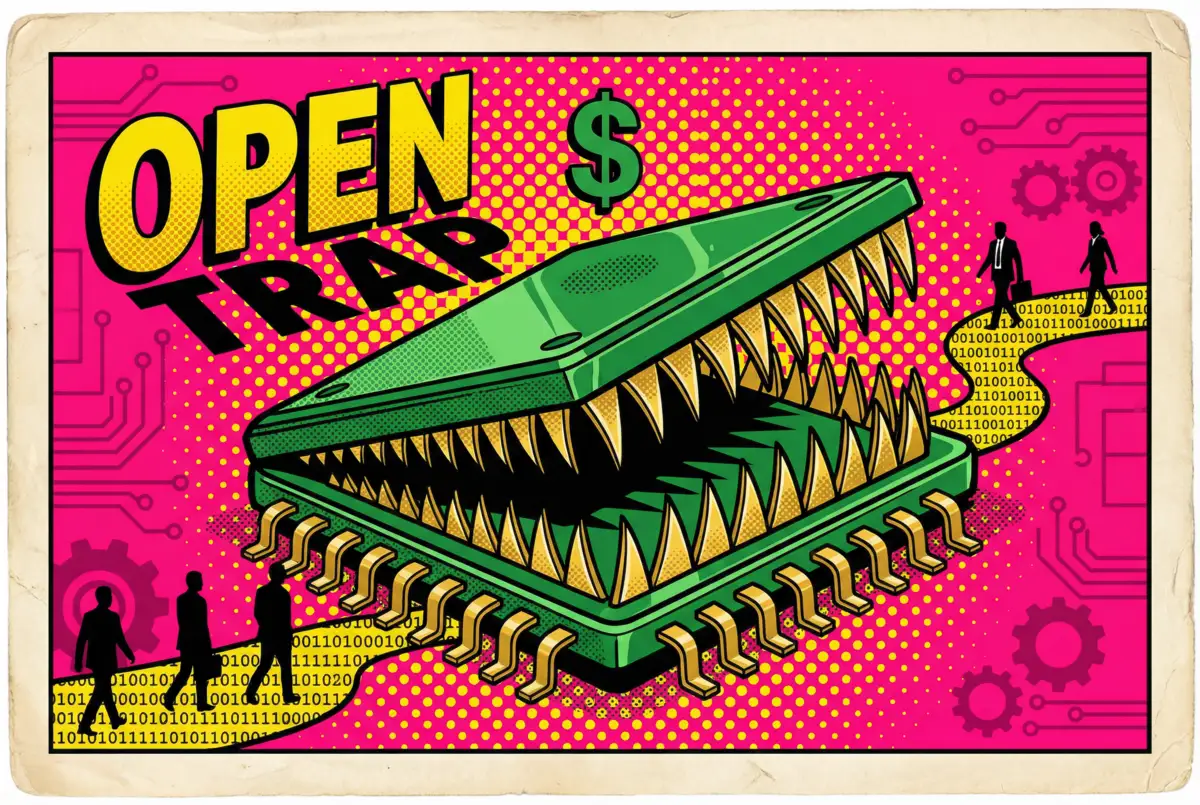
Three proprietary AI models in three days. That's what Alibaba shipped this week, with Qwen3.6-Plus landing Thursday as the third, Bloomberg reported. This one handles agentic coding and multimodal reasoning on a 1-million-token context window, aimed squarely at enterprise buyers. No downloadable weights. No open code. Just an API endpoint and a price tag. The approach breaks from the open-weight strategy that made Alibaba's Qwen family the most downloaded AI model ecosystem on Hugging Face.
Key Takeaways
- Alibaba released Qwen3.6-Plus, its third closed-source model in three days, breaking from its open-weight tradition
- Technical lead Lin Junyang, who built Qwen to 300M+ downloads, departed in March amid a corporate restructuring
- The company targets $100 billion in cloud revenue within five years while hiking prices up to 34%
- Qwen3.6-Plus benchmarks near Claude Opus 4.5 on coding tasks but Alibaba avoids comparisons with Chinese rivals
AI-generated summary, reviewed by an editor. More on our AI guidelines.
Three models, zero open weights
An image-generation upgrade came first. Then a closed multimodal model, Qwen3.5-Omni, on March 30. Now Qwen3.6-Plus. All proprietary. That matters because the Qwen ecosystem grew to over 290,000 developers and 113,000 community model variations specifically because earlier releases shipped under the permissive Apache 2.0 license. Airbnb uses Qwen for its AI customer service chatbot. Pinterest experiments with it alongside in-house models.
Alibaba says it will continue releasing open-source models in "developer-friendly sizes," but the company's flagship releases are moving behind paid APIs. The pattern started in September 2025 with Qwen3-Max and has only accelerated.
The team that built it isn't there anymore
This strategic shift didn't happen quietly. In early March, Qwen's technical lead Lin Junyang resigned along with staff research scientist Binyuan Hui and intern Kaixin Li. Lin steered Qwen from a lab project to a global ecosystem with more than 300 million downloads. His departure message was five words: "me stepping down. bye my beloved qwen." A Qwen contributor, Chen Cheng, suggested the exit was not voluntary, writing on X: "I know leaving wasn't your choice."
Alibaba replaced Lin with Hao Zhou, a veteran of Google DeepMind's Gemini team. DeepSeek researcher Xinyu Yang captured the community's reaction on X: "Replace the excellent leader with a non-core people from Google Gemini, driven by DAU metrics. If you judge foundation model teams like consumer apps, don't be surprised when the innovation curve flattens."
CEO Eddie Wu established a Foundation Model Task Force and told staff that Qwen remains his "highest priority." But according to accounts of the same internal meeting reported by VentureBeat, leadership argued the project's scale, now involving hundreds of people, could no longer be governed by "one person's brain."
Follow the money
The pivot to closed-source maps directly onto Alibaba's financial anxiety. E-commerce revenue faces fierce domestic competition from Pinduoduo and Douyin. The company has set a target of $100 billion in cloud revenue within five years, a compound annual growth rate above 40%.
In March, Alibaba launched Wukong, an agentic AI platform for enterprise clients sitting inside Alibaba Cloud's server racks in Hangzhou, and hiked cloud storage prices by up to 34%. Qwen3.6-Plus will plug directly into Wukong, the consumer Qwen app, and the broader agent ecosystem. Input pricing starts at 2 yuan per million tokens. Roughly $0.28.
Get Implicator.ai in your inbox
Strategic AI news from San Francisco. No hype, no "AI will change everything" throat clearing. Just what moved, who won, and why it matters. Daily at 6am PST.
No spam. Unsubscribe anytime.
An HSBC report published the same day called the market's skepticism misplaced, arguing that AI monetization potential at Alibaba and Tencent has been "systematically underestimated." HSBC set a price target of $200 for Alibaba shares, currently trading around $124.
The benchmarks tell a narrower story
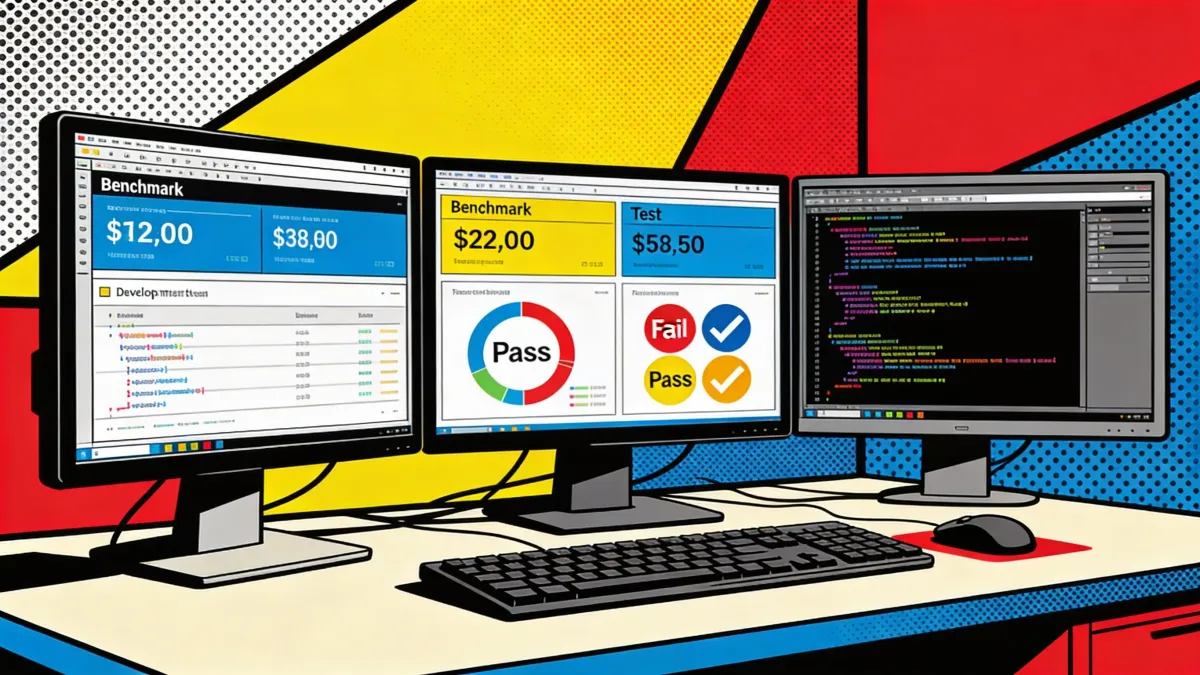
Alibaba's own numbers position Qwen3.6-Plus as the strongest coding model built in China. On SWE-bench Verified, the standard test for real-world code repair, it scores 78.8, trailing only Claude Opus 4.5 at 80.9. On Terminal-Bench 2.0, which measures complex terminal operations, Qwen3.6-Plus actually leads at 61.6, beating Claude's 59.3.
But the benchmark comparisons stop at the border. Alibaba did not reference domestic competitor DeepSeek in any materials, comparing performance only against prior Qwen versions and models from Anthropic, OpenAI, and Google. The omission appears deliberate. DeepSeek and MiniMax, two prominent Chinese AI labs still releasing open-weight models, represent the path Alibaba chose to leave behind.
What the shift costs
You can measure the trade-off in two currencies. Alibaba gains direct revenue from API access and tighter control over how its models get deployed in production. It loses the developer community that made Qwen the most popular open-source model family in the world. Open-source built the moat. Now Alibaba is draining it to irrigate a different field.
Pinterest CTO Matt Madrigal put the tension plainly: "Recent advances in open source had significantly narrowed the performance gap with leading closed models."
Alibaba is betting that gap will widen again, and that enterprise customers will pay for the distance. The company has committed over $53 billion to AI infrastructure and now has more than 80% of open positions tagged as AI-related, up from 60% a year ago. A stronger flagship model, Qwen3.6-Max, is expected soon.
Whether this buys Alibaba a viable cloud business or simply alienates the community that built its AI reputation is the question the next twelve months will answer.
Frequently Asked Questions
What is Qwen3.6-Plus?
Alibaba's latest large language model, focused on agentic coding and multimodal reasoning. It features a 1-million-token context window and is available only through Alibaba's API, not as downloadable open-source code.
Why did Alibaba make Qwen3.6-Plus closed-source?
Alibaba is restructuring to generate revenue from its AI models. The company has set a $100 billion cloud revenue target over five years and is shifting flagship models behind paid APIs while continuing to offer smaller models as open-source.
How does Qwen3.6-Plus perform compared to competitors?
On SWE-bench Verified, it scores 78.8, trailing Claude Opus 4.5 at 80.9. On Terminal-Bench 2.0, it leads at 61.6 versus Claude's 59.3. Alibaba did not include Chinese competitors like DeepSeek in its benchmarks.
What happened to the Qwen team leadership?
Technical lead Lin Junyang and two colleagues departed in early March 2026 after an internal restructuring. Alibaba replaced Lin with Hao Zhou, a former Google DeepMind Gemini team member.
What is Wukong?
Alibaba's agentic AI platform for enterprise clients, currently in invitation-only beta. It connects with DingTalk, Alibaba's enterprise collaboration service used by over 20 million people, and will integrate Qwen3.6-Plus.
AI-generated summary, reviewed by an editor. More on our AI guidelines.

Harkaram Grewal
Maps the India–Germany–U.S. AI triangle from New Delhi. Background in cross-market operations and business development. Writes about supply chains, enterprise adoption, and talent—the unsexy forces that actually move global AI.