IMPLICATOR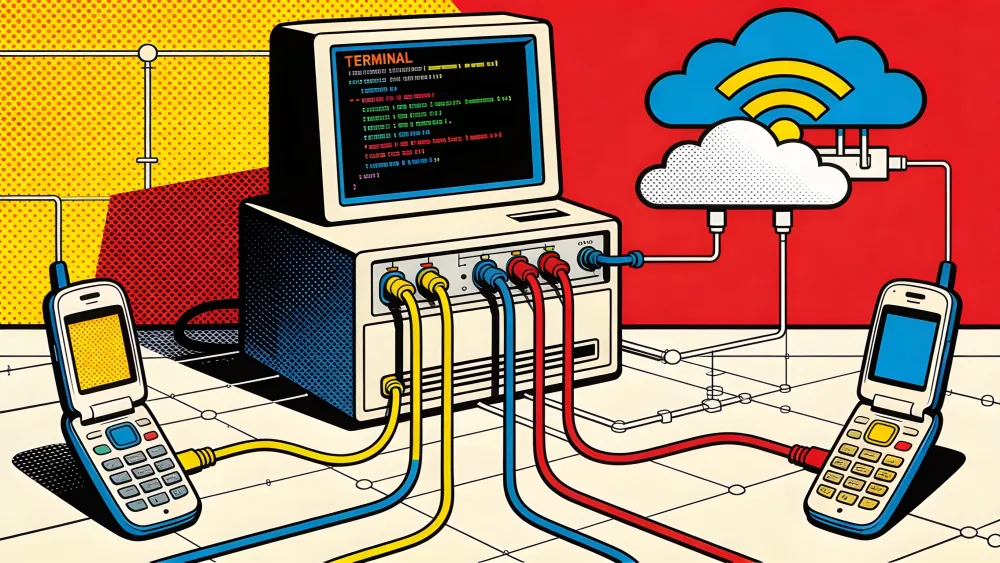
Open a terminal on Friday, March 20. Type claude. By the following Tuesday, the tool you launched has changed in three ways that never touched the model underneath. Channels connected the coding agent to Telegram and Discord, letting developers message it from their phones. A command-by-command comparison showed that Claude Code, Codex CLI, and Gemini CLI now share patterns like /clear, /model, and @ file references, while hiding radically different strategies underneath. And Auto Dream arrived as a background sub-agent that consolidates memory files between sessions, fixing the decay problem that made auto-memory worse than useless after 20 sessions.
A new feature, a competitive analysis, and a stealth rollout. Five days. Anthropic barely acknowledged any of it.
Look at what they have in common. Not one of these features makes the model smarter. Not one improves code generation quality, benchmark scores, or reasoning depth. Every single one solves the same problem: what happens when you close the terminal?
Key Takeaways
- Channels, Auto Dream, and CLI convergence shipped in five days, none touching the model itself
- Anthropic is building platform lock-in through the .claude directory, not model superiority
- Three CLI agents share commands but diverge on strategy: depth vs. safety vs. distribution
- Auto Dream consolidates memory between sessions, fixing decay that degraded performance after 20 uses
The wiring behind the walls
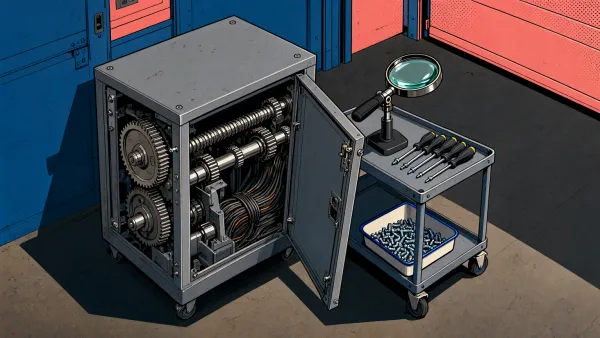
Think of Claude Code as a house. The model is the appliance, the thing that does the visible work. Opus 4.6 generates code. Sonnet handles quick questions. Haiku knocks out lightweight tasks. That's the kitchen, the living room, the parts you show off to guests.
Channels, Auto Dream, and CLI convergence are the wiring. The electrical system nobody thinks about until it stops working. You don't choose a house for its wiring. But you absolutely leave a house where the wiring fails.
Anthropic spent March 2026 rewiring Claude Code. That tells you where the company thinks the competition actually is.
Channels: the agent leaves the desk
When MacStories editor John Voorhees tested Claude Code Channels over Telegram, he found it could compile iOS projects, run CLI tools, and kick off podcast transcriptions from an iPhone. One glaring gap: no voice messaging. Hold the mic button on Telegram, talk, let go. Everyone does this. Channels could not handle it.
The fix turned out to be 120 lines of code. A Python transcription endpoint backed by faster-whisper, a TypeScript voice handler patched into the Telegram plugin, about 20 minutes of setup time. Throw a 15-second voice clip at an RTX 3080 Ti. The whole pipeline, transcription to response, finishes in under two seconds. No GPU? Groq's free tier handles it in under a second.
That voice was missing at launch matters less than why it was missing. Anthropic built Channels as an MCP server, a plugin architecture with a clean contract: accept events, push them into a running session. The company designed the plumbing. Community developers added the fixtures.
This is the platform play. Channels requires Bun as a runtime, a claude.ai login (API keys do not work), and the --channels flag at every session start. Three deliberate constraints. Each one ties you closer to Anthropic's infrastructure rather than letting you route around it.
A setup guide from Low Code Agency documented what most developers hit immediately: being in .mcp.json alone does not activate a channel. You need the explicit flag. Permission prompts stall sessions silently when you walk away. The solution is running inside tmux or screen, which means your Claude Code session becomes a persistent background process. Not a tool you open and close. A service that runs.
That shift, from tool to service, is the quiet revolution.
CLI convergence: same cockpit, different autopilot
Claude Code, Codex CLI, and Gemini CLI now share a core vocabulary. /clear resets the conversation. /model switches models. /plan enters read-only exploration mode. @ loads a file into context. ! runs a shell command. Nobody coordinated this. Three companies built the same cockpit because terminal-based coding agents face the same constraints.
The sameness is a mirage.
/clear wipes conversation history in Claude Code. Starts a fresh chat in Codex. Clears the terminal display in Gemini. Same word. Different scope. /compact summarizes the conversation in Claude Code and Codex. Gemini calls its version /compress. Claude Code accepts a focus parameter, /compact authentication logic, that preserves auth-related context while discarding the rest. Codex does not.
Context windows range from 192K tokens for Codex to 200K for Claude Code to 1M for Gemini CLI. Raw numbers grab attention. Management matters more. A single file read can eat a thousand tokens or fifty thousand. Verbose build logs eat even more. Once compression kicks in, fine-grained details from earlier turns vanish without warning.
The real divergence is strategic. Claude Code invested in orchestration. Agent Teams spin up coordinated sub-agents across isolated git worktrees with dependency tracking and inter-agent messaging. Codex invested in safety. Commands run inside OS-native sandboxes by default, Seatbelt on macOS, Bubblewrap on Linux. Gemini invested in reach. Free tier, 1,000 requests per day, Google Search grounding pulling live web information into conversations.
Three companies, three theories about what makes a coding agent stick. Anthropic bet on depth. OpenAI bet on guardrails. Google bet on distribution. Each bet suggests what each company feels most exposed about.
The pricing gap explains Anthropic's approach. Claude Code has no free tier, while Gemini gives away 1,000 requests per day. So Anthropic made Claude Code irreplaceable through configuration depth, the .claude directory with its rules, commands, skills, agents, hooks, and memory system. ComputingForGeeks documented the full structure, and the sheer breadth tells the story: CLAUDE.md for team instructions, .claude/rules/ for path-scoped modular guidelines, .claude/commands/ for custom slash commands, .claude/skills/ for auto-invoked workflows, .claude/agents/ for specialized sub-agent personas, .claude/hooks/ for event-driven automation. That is not a tool's configuration. That is a platform's surface area.
OpenAI's sandbox-first design signals a different concern. The company built Codex for environments where agents operate with minimal human oversight, including cloud workflows where containers run asynchronously. Containment first, capability second. A company still anxious about what autonomy looks like when it goes wrong. Google took the opposite route. Free tier plus 1M context window reads as a land grab: get developers in the door, figure out monetization later.
Get Implicator.ai in your inbox
Analysis of the forces reshaping AI, delivered when it matters. No fluff, no hype cycle.
Auto Dream: the agent that sleeps
The most revealing feature from the March sprint is also the strangest. Auto Dream runs a background sub-agent that consolidates Claude Code's memory files between sessions. It merges duplicates and kills contradictions. Relative dates get swapped for absolute ones. The memory index gets pruned to fit under its 200-line startup limit.
Anthropic borrowed the name from neuroscience, and the analogy is closer than it sounds. During REM sleep, your brain replays the day's events. Useful connections get reinforced. The rest fades. Auto Dream does the same thing with markdown files. A UC Berkeley and Letta research paper on "sleep-time compute" found that offline processing can reduce test-time compute by approximately 5x at equal accuracy, with gains up to 18% on mathematical reasoning tasks. Anthropic applied a narrow version of that principle: consolidate memory when nobody is looking, so the next session starts cleaner.
The problem it solves is real. After 20 sessions, auto-memory accumulates noise that actively degrades performance. "Yesterday we switched to Redis" sits in memory three months later, meaningless. Three different topic files describe the same build quirk. An entry from January references a file deleted during a February refactor. One developer reported 913 sessions of accumulated memory consolidated in roughly nine minutes. A separate documented example from SFEIR Institute showed MEMORY.md dropping from 280 lines to 142 after a single pass. Every instance of "yesterday" swapped for an actual date. Express became Fastify. Three contradictory debugging entries collapsed into one.
Four phases, each surgical. Orient: scan the memory directory and build an inventory. Gather signal: search recent session transcripts for corrections, explicit saves, recurring patterns. Consolidate: convert dates, remove contradictions, merge duplicates. Prune and index: rebuild MEMORY.md under 200 lines.
Triggers: 24 hours plus five sessions since the last consolidation. Both conditions must be met. Safety: read-only on all project code, lock file prevents concurrent runs, runs entirely in the background. Developers discovered the feature behind a server-side flag called tengu_onyx_plover before Anthropic published any documentation. The community extracted and published the full system prompt on GitHub within days. A third-party developer even built a standalone dream skill that replicates the cycle without the feature flag.
This is the tell. Auto Dream does not make the model smarter. It makes the accumulated knowledge around the model more reliable. Persistence again.
The pattern nobody announced
Boris Cherny, the former Meta engineer who created Claude Code as a side project during his first month at Anthropic, described his setup as "surprisingly vanilla" in a recent podcast. He runs 10 to 15 sessions in parallel. Five Claude instances in his terminal, five to ten on the web, a few more from his phone. Every time Claude makes a mistake, his team adds a rule to CLAUDE.md. The file compounds over time until the agent just works the way they need it to.
That's the blueprint Anthropic is industrializing. Channels puts Claude on your phone. Auto Dream keeps its memory clean. The .claude directory captures your team's accumulated knowledge in a format that loads at every session start. Each piece independently useful. Together, they form something closer to an operating system for AI-assisted development than a coding assistant.
You can swap models. Claude Code already supports Opus, Sonnet, and Haiku with a single /model command. Tomorrow it could support GPT-5 or Gemini 3 Pro. The model is hot-swappable. The .claude directory is not.
That is the moat. Not intelligence. Infrastructure.
The question the benchmarks cannot answer
If your team is evaluating terminal-based coding agents, the feature tables miss the point. Parallel Code's March 2026 comparison puts it plainly: "Claude Code requires the least reviewing before merging. Codex is close and improving fast. Gemini is capable but demands more review cycles." True today. Probably wrong in six months as models keep leapfrogging each other.
The durable question is not which agent writes the best code right now. It's which agent's configuration survives a model swap. Which one captures your team's conventions in a format that compounds over time. Which one runs when you walk away from the desk.
If those questions matter, the answer, as of March 2026, is Claude Code. Not because Opus 4.6 is the best model on every benchmark. Because the wiring around the model is the most developed and the hardest to replicate once your team has invested in it.
Watch what Codex and Gemini CLI ship over the next six months. If OpenAI adds its own memory consolidation layer, if Google starts building out a .gemini directory with rules, commands, and skills, you will know the bet landed. The model race is a sprint. The platform race is the one that compounds. Anthropic just got a head start, and they did it in five days that nobody saw coming.
Frequently Asked Questions
What is Claude Code Channels?
Channels is an MCP server plugin that connects Claude Code to Telegram, Discord, and iMessage. It pushes events into a running session, letting developers message their coding agent from a phone. Requires Bun runtime, claude.ai login, and the --channels flag.
What is Auto Dream in Claude Code?
Auto Dream is a background sub-agent that consolidates Claude Code's memory files between sessions. It merges duplicates, resolves contradictions, converts relative dates to absolute ones, and prunes the memory index. Triggers after 24 hours and five sessions.
How do Claude Code, Codex CLI, and Gemini CLI compare?
They share surface-level commands like /clear, /model, and @ file references but diverge strategically. Claude Code invested in orchestration and configuration depth. Codex prioritized sandboxed safety. Gemini bet on reach with a free tier and 1M token context window.
What is the .claude directory?
The .claude directory is Claude Code's configuration system containing CLAUDE.md team instructions, modular rules, custom slash commands, auto-invoked skills, specialized sub-agent personas, event-driven hooks, and memory files. It loads at every session start and compounds team knowledge over time.
Why does Anthropic focus on platform features instead of model improvements?
Models are hot-swappable. Claude Code already supports Opus, Sonnet, and Haiku. The .claude directory, memory system, and channel integrations create switching costs that survive model upgrades. Anthropic is betting that platform infrastructure, not intelligence, is the durable competitive advantage.
Free AI briefing · Weekdays
The AI stories that matter, sourced and explained.
Join the Morning Briefing. It goes out every weekday at 4:45 a.m. Pacific, with later sends for the East Coast, Berlin and Tokyo.
Free when you sign up: The Paperclip Compendium, our tested guide to running AI agents.
Free. Unsubscribe in one click.

Marcus Schuler
Editor-in-Chief and founder of Implicator.ai. Former ARD correspondent and senior broadcast journalist with 10+ years covering tech. Writes daily briefings on policy and market developments. Based in San Francisco. E-mail: editor@implicator.ai