Implicator
San Francisco | Friday, April 10, 2026
Andy Jassy buried a $50 billion figure in his shareholder letter. Not revenue. The theoretical standalone value of Amazon's custom chip business, generating $20 billion a year without selling a single chip externally. AWS AI revenue hit $15 billion, disclosed for the first time. The letter reads less like a defense and more like a prospectus.
Gen Z uses AI daily and resents it more every month. Excitement dropped 14 points in a year. Anger rose nine. Forty-four percent of young workers admit sabotaging their company's AI tools.
An anonymous video model called HappyHorse topped the AI video leaderboard. Alibaba built it. Nobody was supposed to know.
Stay curious,
Marcus Schuler
Amazon Reveals $50 Billion Chip Business Hidden Inside AWS, Hints at External Sales

Andy Jassy disclosed that Amazon's custom silicon portfolio generates more than $20 billion annually. Priced like Nvidia sells its chips, the business would be worth $50 billion standalone, larger than AMD or Qualcomm.
AWS AI revenue hit a $15 billion annual run rate, another first-time disclosure. Trainium2 is sold out with 1.4 million chips deployed. Trainium3 is nearly fully subscribed. The complication: Amazon's two biggest Trainium customers, OpenAI and Anthropic, are companies Amazon invested $58 billion in combined. The demand is real. Whether it stands independent of the financial relationships is the harder question.
Jassy hinted Amazon may sell chip racks to third parties. One sentence. No elaboration. But the playbook is familiar: AWS started as internal infrastructure, too.
Why This Matters:
- Amazon is building a semiconductor rival to Nvidia, but its marquee customers are companies it bankrolled, creating a circular demand question
- If Trainium3 delivers its 30-40% price-performance gains, cloud customers face growing pressure to shift workloads off Nvidia
Reality Check
What's confirmed: Amazon's chip portfolio generates $20B+ annually. AWS AI revenue at $15B run rate. 1.4 million Trainium2 chips deployed.
What's implied (not proven): The $50B standalone valuation assumes open-market pricing. Amazon's largest AI customers are companies it invested $58B in.
What could go wrong: Earlier Trainium generations underperformed Nvidia. If Trainium3 doesn't close the software gap, external buyers won't materialize.
What to watch next: Whether a non-invested customer like Apple commits publicly to Trainium at scale. That would be the first independent demand signal.

The One Number
5,700+ — Social media addiction lawsuits pending against Meta, Google, Snap, and ByteDance across California state and federal courts, roughly 3,300 in state court and 2,400 in federal proceedings. On Thursday, Meta began pulling ads from Facebook and Instagram that law firms use to recruit new plaintiffs. "We will not allow trial lawyers to profit from our platforms while simultaneously claiming they are harmful," spokesperson Andy Stone said. The move came two weeks after Meta lost back-to-back trials: a $6 million addiction verdict in Los Angeles and a $375 million child exploitation verdict in New Mexico. Radio ads promoting social media claims nearly tripled to 20,000 in March after those verdicts, according to tracking firm X Ante.
Source: Reuters, April 9, 2026; Axios
Gen Z AI Excitement Drops 14 Points in One Year as Anger Rises, Gallup Finds

Gallup surveyed 1,572 Americans aged 14 to 29 and found AI use holding steady at 51% weekly, but excitement collapsing from 36% to 22% and anger spiking nine points to 31%.
Eighty percent say AI will make learning harder. University of Pennsylvania researchers found people accepted faulty AI reasoning 73% of the time, calling it "cognitive surrender." A separate report found 44% of Gen Z workers sabotaging their company's AI rollout. Goldman Sachs estimates AI erases roughly 16,000 net U.S. jobs monthly, concentrated in entry-level roles.
Why This Matters:
- The generation meant to carry AI mainstream keeps using it daily while losing faith, a trajectory the industry calls churn
- Employers mandating AI adoption while threatening layoffs for noncompliance are producing sabotage, not productivity

AI Image of the Day

Prompt: A group of birds are flying over the forest, sunlight coming through, long distance, in a minimalist style, in the style of canon eos r5. real photos, a massive glowing cosmic whale made of stars and light floating in the night sky above a desert, a lone person standing below for scale, deep blue atmosphere, teal and orange lighting contrast, cinematic composition, ultra detailed, clean --ar 9:16
Alibaba Anonymously Tops AI Video Leaderboard With HappyHorse, Beating Seedance 2.0

Alibaba anonymously submitted HappyHorse-1.0 to the Artificial Analysis Video Arena, where it reached number one in text-to-video and image-to-video, beating ByteDance's Seedance 2.0 by 60 Elo points in blind user tests.
Technical analysis links the model to daVinci-MagiHuman, an open-source project from Sand.ai. The 15-billion-parameter Transformer produces 1080p video in 38 seconds on a single H100 using only eight denoising steps. Alibaba's cloud division is preparing enterprise access.
Independent testing found quality degrades beyond single-character scenes and 10-second clips. The weights remain unavailable. The top-ranked AI video model on the most credible leaderboard is one nobody can actually run.
Why This Matters:
- First time an open-source-linked model matched closed-source quality on a blind-test leaderboard, threatening pricing power at ByteDance and Kuaishou
- Enterprise availability through Alibaba Cloud would intensify price competition across the AI video API market

🧰 AI Toolbox
How to Give Every AI Agent Full Context About Your Company with Pensieve
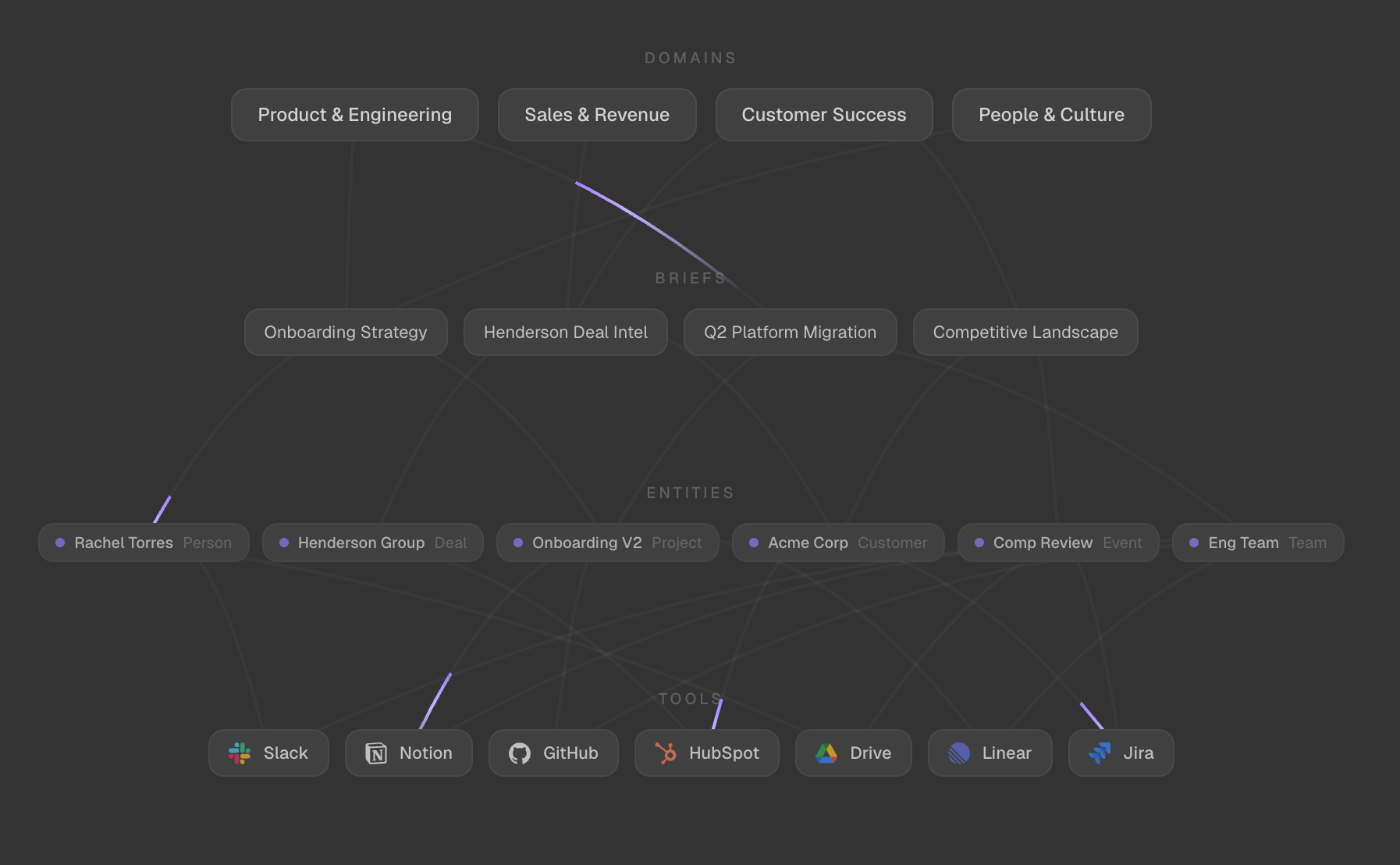
Pensieve connects to the tools your team already uses (Slack, Notion, Linear, CRM) and builds a living knowledge graph of people, projects, customers, and decisions. When you ask an AI agent a question, Pensieve supplies the organizational context so you skip the copy-paste briefing that normally starts every conversation. Agents reason over structured relationships, not just document chunks. Free to use with your own API key for Anthropic, OpenAI, or Google.
Tutorial:
- Go to pensieve.uk and create a free account
- Connect your first data source: Slack, Notion, Linear, or another tool your team uses daily
- Let Pensieve sync and build its knowledge graph, which maps people, projects, and decisions automatically
- Open the workspace and ask a question that would normally require digging through multiple tools: "What did we decide about the pricing change last month?"
- Assign a domain-specific role to an agent (product manager, researcher) so its answers reflect the right priorities
- Queue a background task for the agent to complete independently: "Draft a summary of Q1 customer feedback themes"
- Use the programmatic API to connect the knowledge graph to your own AI workflows and custom agents
URL: https://pensieve.uk
What To Watch Next (24-72 hours)
- March CPI (Friday 8:30 AM ET): First inflation print capturing the Iran war's energy price shock. Cleveland Fed projects headline jumping to 3.16%. If it breaks 3%, rate cut expectations for 2026 evaporate.
- Goldman Sachs Q1 earnings (Monday pre-market): Goldman kicks off bank earnings season with a $1.6 trillion M&A pipeline and OpenAI's $3 billion private placement on the books. AI deal commentary will signal IPO timing.
- Iran ceasefire, first weekend: The two-week truce faces its first real test. If it holds, energy prices ease. If it collapses, Monday's market open reprices the data center energy equation.
🛠️ 5-Minute Skill: Turn a Rough Travel Idea Into a Day-by-Day Itinerary
You booked flights to Lisbon but planned nothing else. You land Thursday, leave Sunday. Budget is moderate. You want a real plan, not a TripAdvisor listicle.
Your raw input:
Destination: Lisbon. Arriving Thursday 2 PM, departing Sunday 11 AM.
Two travelers. Budget: mid-range (~€150/day for food and activities).
Interests: food, architecture, want one day outside the city.
No museums longer than 90 minutes.
The prompt:
Build a day-by-day itinerary for this trip. Include: specific
restaurant names for dinner, realistic transit times between stops,
one day trip, and a hotel neighborhood recommendation. Account
for jet lag on day one. Under 200 words.
What you get back:
Stay in: Alfama or Baixa. Walking distance to most sights.
Thu: Land 2 PM. Check in, walk Alfama. Light dinner at Taberna da Rua das Flores (book ahead). Early night.
Fri: Morning in Belém: Tower + Pastéis de Belém (30 min tram). Afternoon: LX Factory for lunch and shops. Dinner: Cervejaria Ramiro (seafood, arrive by 7 to skip the wait).
Sat: Day trip to Sintra (40 min train from Rossio). Pena Palace morning, Quinta da Regaleira afternoon. Return by 6. Dinner: Ponto Final across the river (€15 mains, sunset view, take the ferry).
Sun: Coffee in Príncipe Real. Pack. Taxi to airport by 8:30 AM.
Why this works
Travel planning stalls because you research every option separately. The prompt forces one specific plan with named restaurants, real transit times, and a jet-lag buffer, so you land with a plan instead of 12 open browser tabs.
What to use
Claude: Better at realistic pacing and local detail.
ChatGPT: Faster at generating multiple itinerary variants if you want options.
📖 AI Alphabet
|
B
|
📖 AI Alphabet Benchmark A benchmark is a test used to compare how well different AI models perform. It gives a shared scorecard, though real-world usefulness often depends on more than benchmark rankings. |
AI & Tech News
Treasury and Fed Convene Emergency Meeting Over Anthropic's Mythos AI Model
Treasury Secretary Bessent and Fed Chair Powell called major bank CEOs to discuss financial stability risks from Anthropic's Mythos model. Regulators flagged the model's capacity to generate sophisticated financial content, demanding immediate risk mitigation from the banking sector.
OpenAI Tells Investors It Has Computing Advantage Over Anthropic
OpenAI sent a note to investors claiming its early infrastructure buildout gives it a meaningful edge over Anthropic after the Mythos announcement. The company argued that scaling massive training clusters first accelerated its model development lead.
Anthropic Explores Designing Its Own Custom AI Chips
Anthropic is weighing whether to build custom AI chips, joining a growing list of AI companies seeking independence from Nvidia's hardware ecosystem. Three sources confirmed the exploration, though no dedicated team or chip design exists.
Meta Creates Applied AI Engineering Division, Pulls Engineers Across Company
Meta is consolidating top engineering talent into a new Applied AI Engineering division to accelerate model improvements. An internal memo framed the move as a strategic response to the intensifying AI competition.
SpaceX Posts $5 Billion Loss as xAI Investment Swallows Profits
SpaceX recorded a pre-tax loss of nearly $5 billion in 2025 despite generating over $18.5 billion in revenue, with the deficit driven by spending on Musk's xAI division. The loss reveals how aggressively SpaceX is funding AI as its next growth engine.
Alibaba Leads $293 Million Investment in AI Video Startup ShengShu
Alibaba Cloud led a $293 million round in Beijing-based ShengShu Technology, two months after Tencent-backed rival Vidu AI raised $88 million. The investment deepens Alibaba's push into the competitive Chinese AI video generation market.
xAI Files Federal Lawsuit Against Colorado's AI Anti-Discrimination Law
Elon Musk's xAI filed a federal challenge to Colorado's AI Anti-Discrimination Act, arguing its transparency and anti-bias requirements violate First Amendment protections. The law, among the strictest state-level AI regulations, takes effect this summer.
Apple Permanently Closes First U.S. Unionized Retail Store
Apple is shutting its Towson, Maryland store in June, the first U.S. Apple location where employees successfully unionized, along with two other stores. The retail workers' union accused Apple of retaliation and said it is exploring legal options.
EFF Leaves X After Nearly 20 Years, Says Post Reach Dropped Below 3%
The Electronic Frontier Foundation announced it is leaving X after two decades, saying the platform "is no longer where the fight is happening." Posts now receive less than 3% of the engagement an average tweet got seven years ago.
Ohio Man Becomes First Person Convicted Under Take It Down Act for AI Deepfakes
An Ohio man became the first person convicted under the federal Take It Down Act after pleading guilty to creating AI-generated nonconsensual explicit images of more than 10 victims. The 2024 law criminalizes synthetic intimate imagery and compels platforms to remove it.
🚀 AI Profiles: The Companies Defining Tomorrow
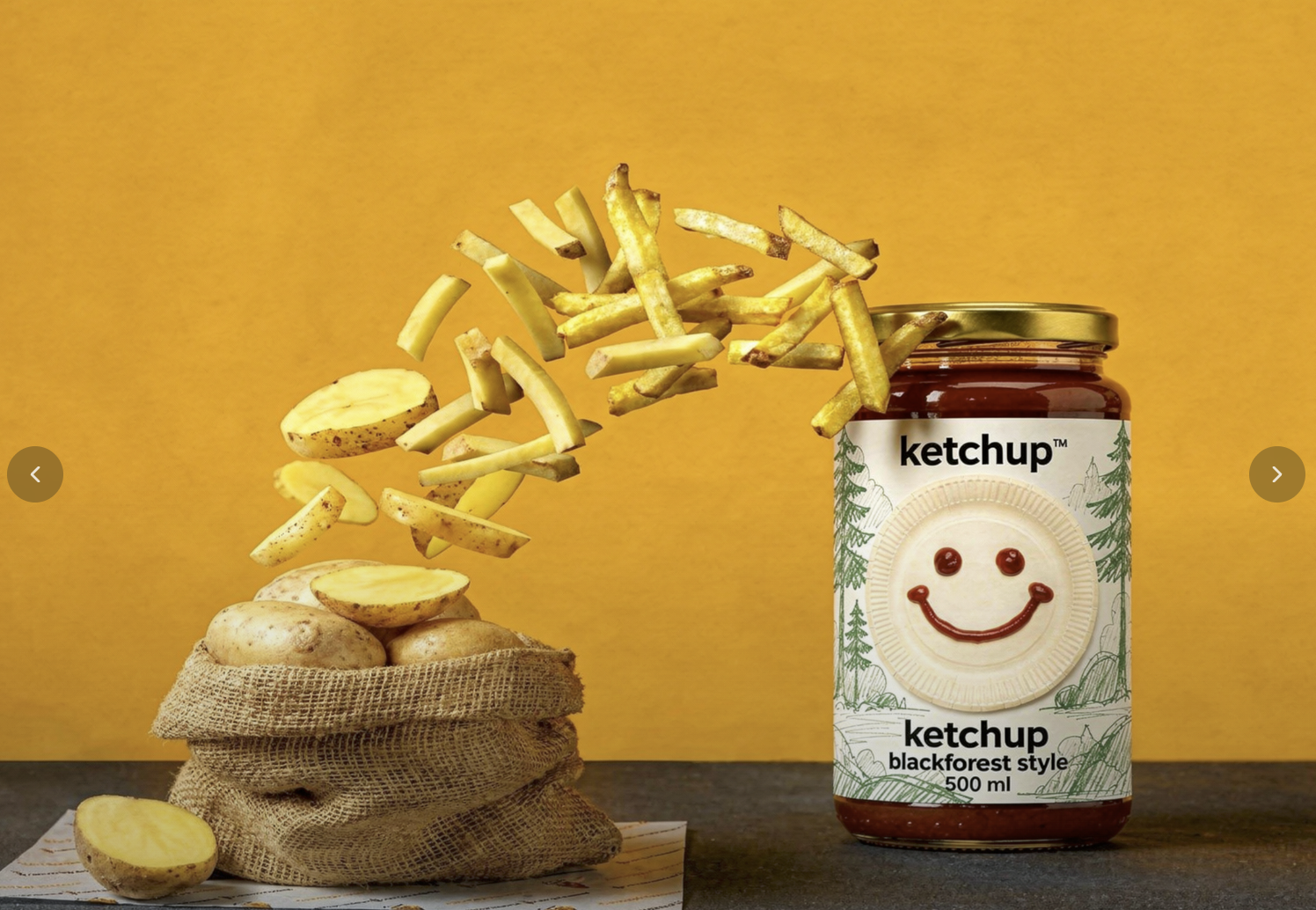
Black Forest Labs builds AI image models from Germany's Black Forest region, competing with labs that have ten times the headcount. 🎨
Founded: 2024 | HQ: Freiburg, Germany | Employees: 70 | Founder(s): Andreas Blattmann, Robin Rombach, Patrick Esser
Founders
Andreas Blattmann, Robin Rombach, and Patrick Esser launched the company in 2024 after leaving Stability AI, where all three worked on the original Stable Diffusion release. Rather than relocating to San Francisco, they kept headquarters in Freiburg, near where they grew up.
Product
The company develops text-to-image AI models built on latent diffusion, a technique that generates images by first mapping to a compressed representation before adding visual detail. Black Forest Labs' FLUX models rank among the top image generators on third-party benchmarks from Artificial Analysis and are among the most downloaded text-to-image models on Hugging Face.
Competition
OpenAI and Google hold the top two positions on independent image quality rankings. Adobe, Canva, Microsoft, Meta, and xAI have all licensed Black Forest Labs technology rather than building equivalent systems in-house. The startup turned down a renewed licensing deal with xAI, reportedly citing operational friction.
Financing 💰
$300 million Series B in December at a $3.25 billion valuation. Meta signed a separate $140 million multiyear licensing agreement in September.
Future ⭐⭐⭐⭐
The founders plan to expand beyond static images into physical AI, with a robot demonstration expected before year-end. Conversations with hardware manufacturers about powering smart glasses and other devices are underway. The discipline of building in Freiburg rather than San Francisco may be the company's strongest competitive advantage, provided it survives the pivot from content creation into robotics without losing the focus that got it here. 🎨
🔥 Yeah, But...

OpenAI said it is pausing its Stargate UK data center project, citing regulation and energy costs. The company announced Stargate UK in September with Nscale and Nvidia, deploying up to 31,000 AI accelerators. It also recently scrapped plans to expand its flagship Texas campus with Oracle and shuttered Sora.
Sources: Bloomberg, April 9, 2026
Our take: OpenAI unveiled Stargate UK in September. Six months later, it seems to have discovered that Britain suffers from the unusual condition of high electricity prices. This was not hidden in a vault. It has been common knowledge for years, accessible to anyone willing to spend half a minute reading.
Since then, OpenAI has also killed Sora, walked away from the Oracle expansion in Texas, and generally treated its infrastructure promises as provisional literature, all while enjoying an $852 billion valuation. Prime Minister Starmer even created an economic development zone to help make the project happen. The zone exists, which is more than can presently be said for the project it was meant to serve.

Marcus Schuler
Senior broadcast journalist and former ARD correspondent for Europe's largest public broadcaster. Covering the tech industry from San Francisco for 10+ years. Founded implicator.ai for independent, rigorous AI reporting. E-mail: [email protected]