IMPLICATOR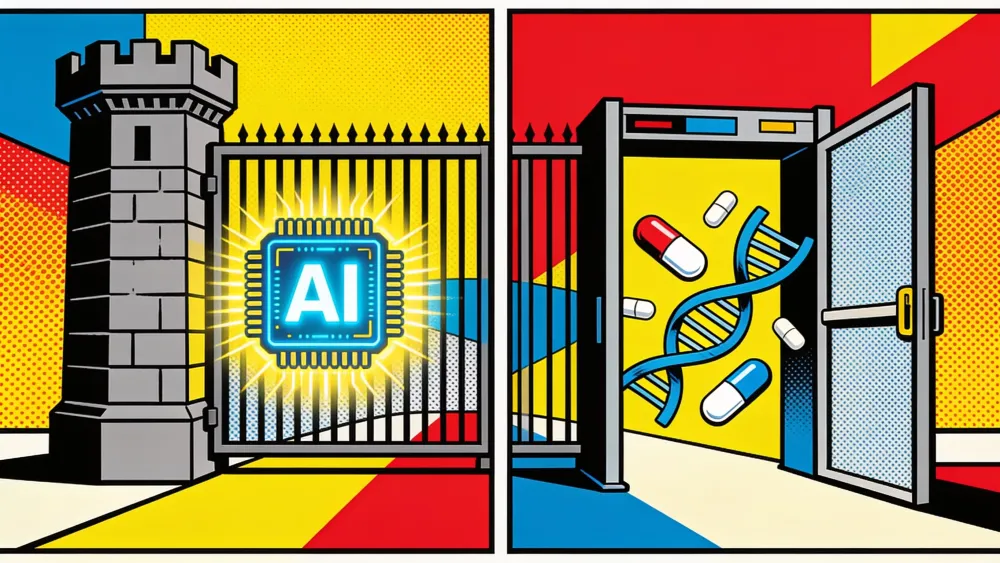
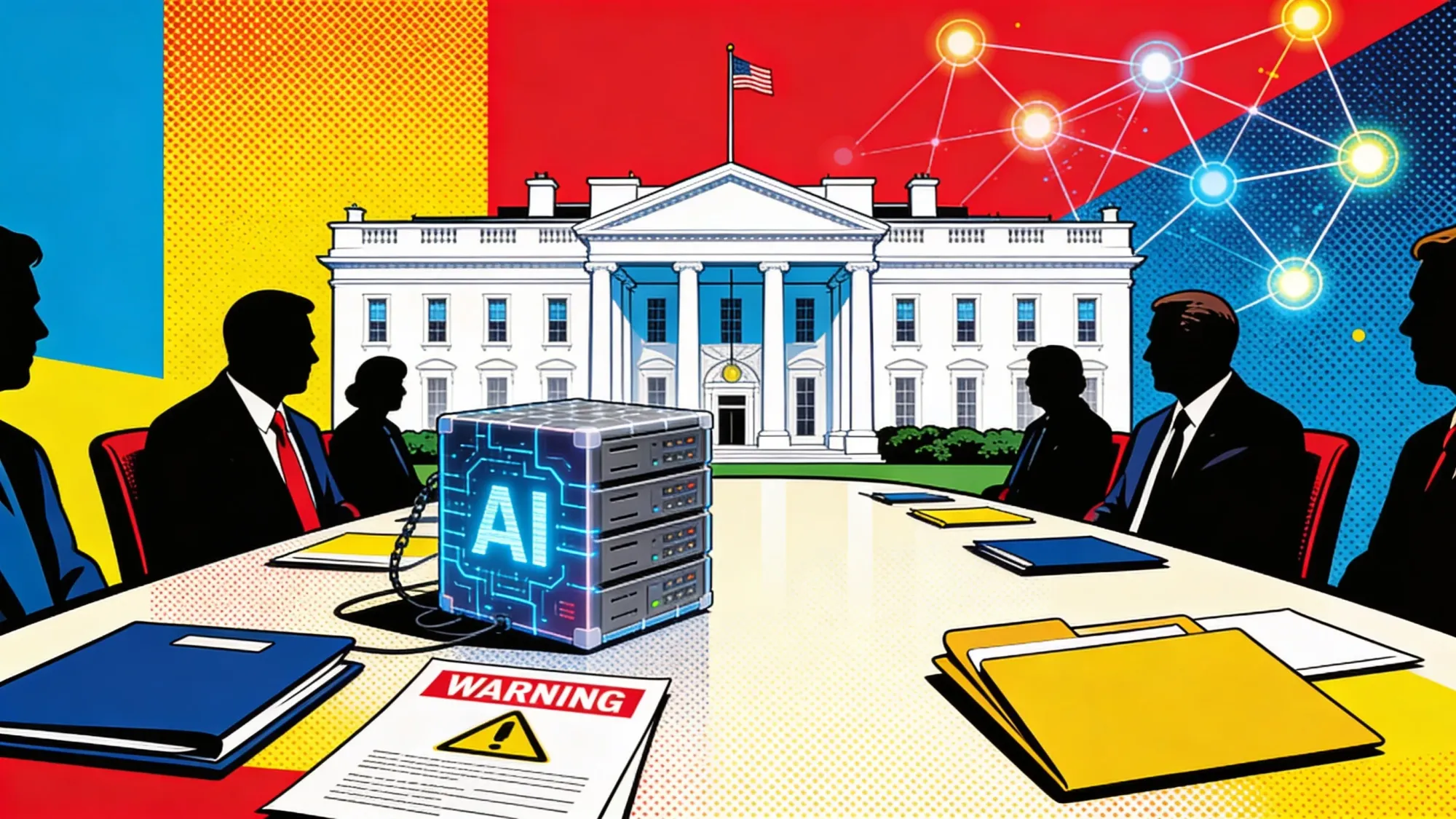
Dario Amodei published a policy essay on Wednesday asking Congress to let the government block or reverse the release of a frontier AI model that fails safety testing, a binding regime that would reach only the five or so labs his own company competes with. The Anthropic chief executive went further than President Trump's June 2 executive order, which set up a voluntary review and expressly barred any "mandatory governmental licensing, preclearance, or permitting requirement."
Read in full, the essay makes two regulatory demands that point in opposite directions. Its first section asks for an aviation-style gate on frontier models, with the government able to block or reverse a deployment that does not clear safety testing. Its third section asks the Food and Drug Administration to drop a "posture of excessive skepticism" and clear AI-designed drugs faster. Amodei wants more gatekeeping on what Anthropic makes, and less on what its models will help its customers make.
Anthropic said it would provide "substantial financial backing" for the legislative proposals it released with the essay, which makes the shape of those proposals worth reading closely.
Key Takeaways
- Amodei asks Congress to let the government block or reverse frontier AI models that fail safety testing, going beyond Trump's voluntary June 2 order.
- The binding gate reaches only models above 10²⁵ FLOPs from companies with $500M+ AI revenue, a perimeter of about five labs.
- The same essay asks the FDA to drop 'excessive skepticism' and clear AI-designed drugs faster, less gatekeeping on what Anthropic's customers build.
- Anthropic's federal lobbying rose from $360K to $1.6M in a year; David Sacks calls the push regulatory capture.
AI-generated summary, reviewed by an editor. More on our AI guidelines.
The 10²⁵-FLOP, $500-million perimeter
Amodei's model is explicit. "Frontier AI models, like airplanes, should be required to go through technical testing and auditing," he writes, "and their release should be blocked or reversed as a threat to public safety if they do not meet high standards of safety." He names the Federal Aviation Administration as the template.
The gate would apply only to models trained on more than 10²⁵ floating-point operations, built by companies earning more than $500 million in AI revenue or spending more than $1 billion on AI research. That compute bar sits an order of magnitude below the 10²⁶ threshold California, New York, and Illinois wrote into their frontier-AI laws over the past year, and it matches the European Union's. The lower number covers more models on paper. The financial gate is what holds the real perimeter to a short list state regulators already name: OpenAI, Anthropic, Google, Meta, and a few others. David Sacks, until March the administration's AI czar, has called Anthropic's policy push "a sophisticated regulatory capture strategy based on fear-mongering" that is "principally responsible for the state regulatory frenzy." The framework would require mandatory third-party testing in four areas, cybersecurity, biological weapons, loss of control, and automated AI research, and let the government bar a model that fails any of them.
What Amodei asks of the FDA
On medicine, Amodei writes that the danger runs the other way. "I am more worried about the regulatory apparatus slowing down progress," he says of downstream AI applications, "than I am about it failing to address important risks." He argues the FDA's 7-to-8-year approval pipeline, built on the assumption that most drug candidates fail, will "jam or overload" once AI floods it with new ones, and he urges regulators to accept AI simulations in place of some trials.
Where AI policy meets business strategy
Strategic AI news from San Francisco. No hype, no "AI will change everything" throat clearing. Just what moved, who won, and why it matters. Daily at 6am PST.
No spam. Unsubscribe anytime.
The pipeline he wants loosened is the one Bloomberg Law measures at about a decade and more than $1 billion a drug, with roughly 90% of candidates never finishing. The agency is already moving his way. It opened a comment period in April on an AI pilot for early-phase trials, and under former commissioner Marty Makary it said in February it would require only one pivotal study, rather than the customary two, to approve some drugs. The government Amodei wants empowered to block or reverse a frontier model his company builds is the same government he wants to step back from the drugs that model helps design.
The administration has already weighed the first half and balked. An earlier draft of Trump's order was described internally as an "FDA for AI" by Kevin Hassett, the National Economic Council director, before Trump pulled it in May as a possible "blocker," according to Tech Policy Press. The version Trump signed kept the review voluntary and cut the pre-release window to 30 days, which Sacks said let labs comply "without delaying new model releases."
Know someone who'd find this useful? ✉️ Email it to a friend in one click, or they can subscribe free here.
Lobbying that rose to $1.6 million
Amodei rejects the cynical reading head-on. "It's become popular in AI industry circles to view this as a PR problem," he writes. "I reject this framing completely," arguing that public concern about AI is accurate rather than manufactured.
Anthropic's federal lobbying rose from $360,000 in the first quarter of 2025 to $1.6 million in the same quarter of 2026, according to disclosure records cited by Tech Policy Press, and Amodei writes that the advocacy has not cost the company: "in the year we've been doing it, Anthropic's valuation has increased by over 6x." A binding gate that only the largest labs can clear raises the cost of competing with them, while the FDA reforms would speed the drugs those labs' models are built to design. Critics in Silicon Valley have read the warnings as "safety theater," a way to set Anthropic apart from OpenAI while it profits from the same technology, Forbes reported in January.
Anthropic calls its two proposals "first steps" and has promised money behind them. Its draft legislation on frontier-model testing would hand the government a veto Trump's order withheld; its push on the FDA points the other way, toward faster clearance for AI-designed drugs. Whether Washington adopts both, or only the half that gates Anthropic's competitors, will show in that legislation and in the FDA's early-phase AI pilot, filed as docket FDA-2026-N-4390.
Frequently Asked Questions
What did Dario Amodei propose in "Policy on the AI Exponential"?
He asked Congress to give the government legal power to block or reverse the deployment of a frontier AI model that fails mandatory third-party testing for cybersecurity, biological weapons, loss of control, or automated AI research. He released the essay June 10, 2026, alongside an economic framework, and Anthropic pledged "substantial financial backing" for the legislative proposals.
How is that different from Trump's June 2 executive order?
Trump's order set up a voluntary review in which labs share frontier models with the government up to 30 days before release. It expressly barred any "mandatory governmental licensing, preclearance, or permitting requirement." Amodei wants that review made binding, with the government able to block or reverse a deployment outright.
Which companies would the rules cover?
Only models trained on more than 10²⁵ floating-point operations, built by companies earning over $500 million in AI revenue or spending more than $1 billion on AI research. That financial gate holds the perimeter to a handful of large labs, including OpenAI, Anthropic, Google, and Meta.
What does the essay ask of the FDA?
It argues the FDA's 7-to-8-year drug-approval pipeline will "jam or overload" once AI produces more candidates, and urges regulators to accept AI simulations in place of some trials and drop a "posture of excessive skepticism." The agency is already piloting AI in early-phase clinical trials.
Why do critics call it regulatory capture?
David Sacks, until March the administration's AI czar, called Anthropic's push "a sophisticated regulatory capture strategy based on fear-mongering." A binding gate only the largest labs can clear raises the cost of competing with them. Anthropic's federal lobbying rose from $360,000 to $1.6 million year over year.
AI-generated summary, reviewed by an editor. More on our AI guidelines.

Free AI briefing · Weekdays
The AI stories that matter, sourced and explained.
Join the Morning Briefing. It goes out every weekday at 4:45 a.m. Pacific, with later sends for the East Coast, Berlin and Tokyo.
Free when you sign up: The Paperclip Compendium, our tested guide to running AI agents.
Free. Unsubscribe in one click.

Marcus Schuler
Editor-in-Chief and founder of Implicator.ai. Former ARD correspondent and senior broadcast journalist with 10+ years covering tech. Writes daily briefings on policy and market developments. Based in San Francisco. E-mail: editor@implicator.ai