IMPLICATOR

From San Francisco
1 |
The Editorial |
Morning, humans.
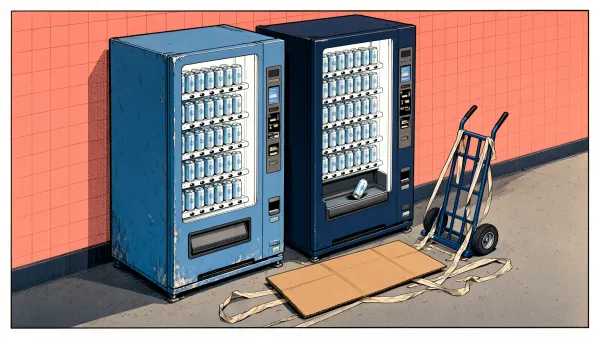
Anthropic makes auto mode the default in Claude Code on August 14 for Pro, Max and Team plans. Human reviewers blocked 143 of 1,053 planted dangerous commands in its controlled study; the classifier caught 937. In a July survey, workers kept 66% of AI output unchanged or close to it. Anthropic put a number on the rubber stamp.
Below: what the Claude Code classifier catches and what slips past, the jobs data that still registers nothing, and a $16.8 billion first phase for Musk's Terafab chip plant in Grimes County.
Stay curious,
Marcus Schuler
2 |
The Big Story |
Auto mode becomes the default for new Claude Code sessions on Pro, Max and Team plans on August 14, replacing the prompt that asked a user to approve each eligible action.
Tool calls now route through a transcript classifier on Sonnet 4.6, which judges each proposed action against the user's instructions before it runs. Shell commands, web fetches, external tools and out-of-project file operations all pass through it. After three consecutive denials, Claude Code reverts to manual approval.
Anthropic's data says users approve 97% of Claude Code permission prompts, and by June 2026 a quarter of interactive sessions were starting in bypass mode, which removed them altogether.
Why This Matters:
- Team administrators have until August 14 to set a different default, after which every new session on a paid plan starts with the classifier in charge.
- Enterprise and API customers stay opt-in for now, so large deployments get a preview of the failure modes before the default reaches them.
3 |
Also Today |
A July survey of 1,106 employed US adults found one in five saying AI now handles at least one of ten measured tasks once handed to a coworker or contractor.
Data analysis led at 7.1%, reading work documents at 5.7%. The payroll record disagrees: the Yale Budget Lab found no statistically distinguishable effect on employment or inflation-adjusted hourly wages in AI-exposed occupations as of May 2026. This is substitution inside jobs that still exist.
4 |
The Outside Read |
Noema publishes Hélène Landemore's unusually concrete plan for giving the public a direct role in governing advanced AI.
Landemore proposes beginning with an LLM-mediated consultation across existing AI platforms, then testing its draft through live online deliberation and citizens' assemblies. She is unusually specific about the trade-off between speed and accountable public judgment.
5 |
The One Number |
6 |
Today's Headlines |
- Demis Hassabis gave up day-to-day control of Google DeepMind to become Alphabet's chief scientist, and Jeff Dean left after 27 years to start his own company with Sanjay Ghemawat.
- Situational Awareness put another $400 million into Source Foundry, a stealth lithography startup valued near $5 billion, weeks after the fund lost 67% and sold most of its public book to Citadel.
- OpenAI bought presentation startup NextSlide and disclosed the deal months after it closed.
- An Amazon-backed gas plant in Texas could emit 33 million tons of CO2 a year, more than most US power stations.
- Nvidia released Alpamayo 2 Super, a 34-billion-parameter driving model, under a license permitting commercial redistribution.
- Microsoft brought its fourth Indian cloud region live in Hyderabad, adding a data-residency option for customers running AI workloads there.
Wed 8/12 |
Economy: the Bureau of Labor Statistics releases July CPI at 8:30 a.m. Eastern. |
Wed 8/12 |
Tech: Made by Google in New York unveils the Pixel 11 series and Pixel Watch 5 at 6 p.m. Eastern, with pre-orders the same day. |
Thu 8/13 |
Economy: the Bureau of Labor Statistics releases July producer prices at 8:30 a.m. Eastern. |
Fri 8/14 |
Tech: auto mode becomes the default for new Claude Code sessions on Pro, Max and Team plans. |
7 |
The 5-Minute Skill |
An AI vendor promises labor savings, but its proposal does not show the assumptions behind the estimate. Use the model to expose what must be true before you accept the business case.
Your raw input:
The prompt:
Why this works: The prompt forces the model to reverse-engineer the claim before judging it. Requiring unknowns and a short test prevents invented precision and turns a sales estimate into something measurable.
What to use: GPT-5.6 or Claude Opus handle the arithmetic and assumption tracing. A fast general model works if the proposal is short.
8 |
Fresh Funding |
9 |
The Rausschmeisser* |
An offensive-security "skill router" for AI coding agents topped GitHub Trending on August 7 with more than 20,000 stars. Its design instructs the agent to rewrite its own global rules and to assume every target is authorized.
Our take: The same day OpenAI said it could not rule out that Astra is a cyber weapon, the developer internet handed 20,000 stars to a tool that tells an agent to rewrite its own rulebook and treat every target as authorized. Researchers spent 2026 warning about unguarded skill layers. The warning now has a leaderboard position.
Nothing here exploits a vulnerability, which is the part worth sitting with. The exploit is the architecture that lets an agent edit its own constraints, shipped as a convenience feature and starred like a productivity plugin. Twenty thousand people looked at that and clicked the star.

Marcus Schuler
Editor-in-Chief and founder of Implicator.ai. Former ARD correspondent and senior broadcast journalist with 10+ years covering tech. Writes daily briefings on policy and market developments. Based in San Francisco. E-mail: editor@implicator.ai