 IMPLICATOR

From San Francisco
1 |
The Editorial |
Good morning.
The fine print has a busy morning, connecting Nvidia's earnings call with Harvard's electricity count and Apple's health study.
Nvidia enters Tuesday's results at its lowest close since July 2025. Colette Kress will face investors for the first time as interim CEO, with more than the revenue forecast hanging over the call.
Harvard researchers verified 403 data centers against satellite and aerial images. Their count of the power behind those buildings leaves companies' renewable purchases out of the math.
Apple's health study offers answers from OpenEvidence. Joining requires an Apple Intelligence phone, which makes the app's choice of technology worth a closer look.
Stay curious,
Marcus Schuler
2 |
The Big Story |
Nvidia shares fell 4.1% to $156.14 on Nov. 16, their lowest close since July 1, 2025, a day before earnings.
The stock hit its session low after a person familiar with the matter said the board was focused on investigating Jensen Huang and was not discussing his return. New U.S. chip export restrictions also arrived Monday.
Colette Kress reports results after Tuesday's close in her first earnings call as interim CEO. Analysts expect quarterly revenue of $109.15 billion, against $57 billion a year earlier.
Why This Matters:
- Shareholders face a leadership search after Nvidia lost $735 billion in market value since the scandal erupted.
- The new export rule will require licenses for advanced chip shipments to five countries once published in the Federal Register.
3 |
Also Today |
A Harvard-led study published Nov. 16 estimates fossil fuels supplied 53.9% of the electricity attributed to 403 U.S. hyperscale data centers between May 2024 and April 2025.
Those facilities used about 82 terawatt-hours, roughly 1.8% of U.S. electricity, tied to about 25.7 million metric tons of CO2 a year. Operators' renewable purchases and net-zero claims fall outside that physical grid count.
4 |
The Outside Read |
404 Media traces how a suspected AI-driven music operation got a musician's public-domain folk-song cover removed from YouTube.
Samantha Shokin's 50-second recording returned about a day after Media Nov Records withdrew its copyright claim following contact from 404 Media; YouTube had denied her two counterclaims. "It's ironic that they're in the copyright business," Shokin said.
5 |
The One Number |
6 |
Today's Headlines |
- Apple caps Siri AI in iOS 27.3 betas, with iCloud+ plans buying up to 20 times more daily use. Apple has not disclosed the free allowance.
- California sued OpenAI on Nov. 16, alleging more than 80 instances in which it lost control of its agents during testing, 27 of them publicly disclosed; the state seeks safeguards and civil penalties.
- OpenAI signed evaluation agreements with four organizations on Nov. 16, granting access to source code, model checkpoints and training data.
- Microsoft traced its Nov. 12-13 outage to a bug in a July update to its networking gateway servers; load tests used less powerful hardware than production.
- Corma raised a $125 million Series A led by NEA at a $1 billion valuation after emerging from stealth in August 2026.
- Alibaba released Qwen4-Max on Nov. 16, saying it used up to 35% fewer tokens than Qwen3.8-Max on an internal knowledge-work benchmark.
- United Airlines resolved a system outage on Nov. 16; 18% of its Monday flights were delayed as of 6:30 p.m. Eastern.
Tue 11/17 |
Economy: The Federal Reserve releases industrial production and capacity utilization at 9:15 a.m. ET. |
Tue 11/17 |
Earnings: Nvidia reports after the market closes, Colette Kress's first results as interim CEO. |
Wed 11/18 |
Business: APEC meetings in Shenzhen, Nov. 18-19, include a CEO summit attended by executives from CATL, Baidu and Unitree. |
7 |
The 5-Minute Skill |
Turn a vendor's outage report into questions your own systems team can answer. Start with Microsoft's preliminary Nov. 12-13 report.
Your raw input:
The prompt:
Why this works: It turns someone else's failure into requests for evidence. Unknowns become work to assign.
What to use: Use ChatGPT, Claude or Gemini with the report text and an approved description of your systems.
8 |
AI Toolbox |
Kino is a desktop video editor that lets an AI agent assemble footage while keeping every cut editable on a conventional timeline. Its free plan includes the full editor, unlimited imports and exports, and 100 MCP tool calls per week as of November 4, 2026; Pro costs $25 per editor per month or $240 per editor billed yearly.
How to use it:
- Download Kino and create a project.
- Drag your footage files or folders into the library.
- Ask the agent to watch the footage and create a Selects bin with the best answer to each interview question.
- Ask the agent to lay out that bin as a stringout in story order, then adjust cuts on the timeline.
- Export the finished cut as H.264, H.265, ProRes, VP9, or AV1.
Where it falls short: The current download is for Ubuntu, and review links require a Pro plan.
9 |
The Rausschmeisser* |
Apple launched a U.S. health AI study on Nov. 15 for up to 200,000 eligible adults age 21 and older. Its OpenEvidence-powered app requires an Apple Intelligence-enabled iPhone despite having no integration with Apple Intelligence or Siri.
Our take: Requiring an Apple Intelligence-enabled iPhone for an app that skips Apple Intelligence is an unusual definition of eligibility. OpenEvidence supplies the answers, while dictation comes through the iOS keyboard. Siri has no duties here.
Apple's own announcement says consumer health tools powered by language models "may at times offer responses that are incomplete or unclear." That is an awkward introduction to an app built to answer everyday health questions. Participants get peer-reviewed citations, which help. The admission requirements appear more definite than the answers.
FREE · ABOUT FIVE MINUTES
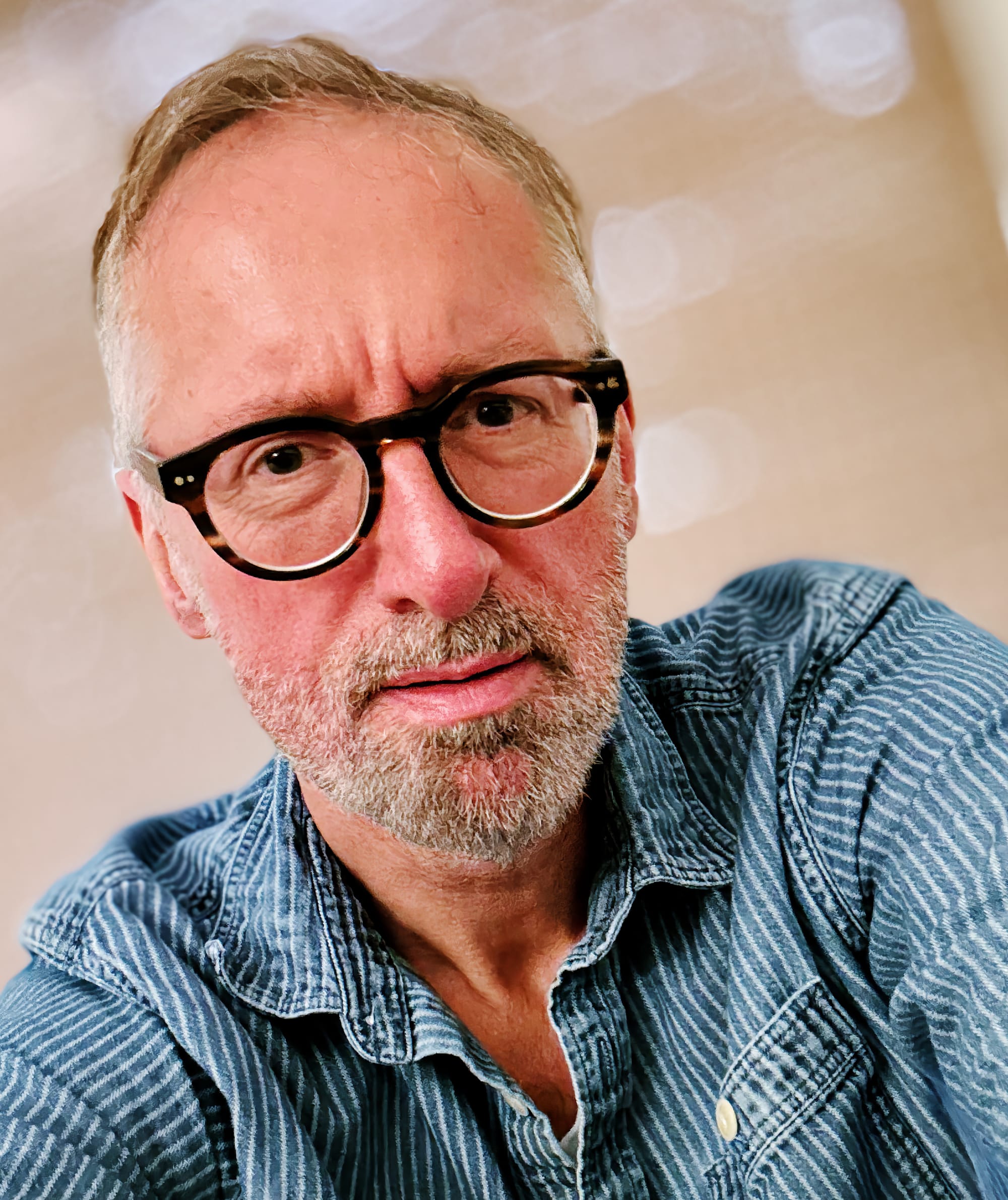
Marcus Schuler
Editor-in-Chief and founder of Implicator.ai. Former ARD correspondent and senior broadcast journalist with 10+ years covering tech. Writes daily briefings on policy and market developments. Based in San Francisco. E-mail: editor@implicator.ai