Implicator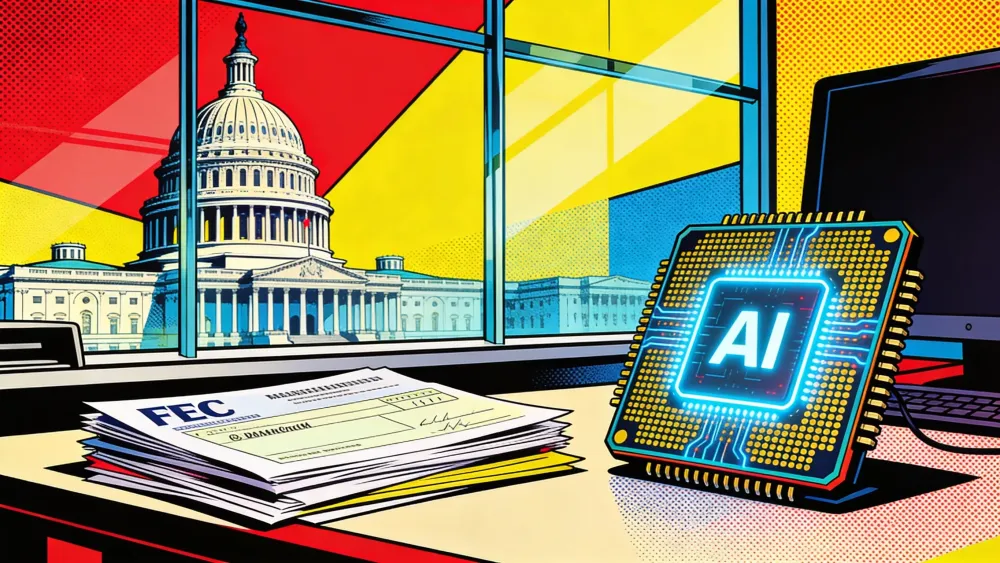
Anthropic wants a seat at the table in Washington. The company filed an FEC statement of organization on Friday to launch AnthroPAC, a political action committee funded by employee donations, The Hill reported. Employees can kick in up to $5,000 a year. A bipartisan board will decide which House and Senate candidates get the money, with AI policy as the filter. The AI industry has already poured more than $300 million into the 2026 midterms. Anthropic just added another channel.
Key Takeaways
- Anthropic filed FEC paperwork Friday to form AnthroPAC, an employee-funded PAC backing House and Senate candidates on AI policy
- Employee contributions capped at $5,000 per year, bipartisan board overseeing donations to both parties
- AI companies have poured more than $300 million into 2026 midterms, outpacing every previous tech sector spending cycle
- PAC launch arrives as Anthropic fights a Pentagon lawsuit over its supply chain risk designation
AI-generated summary, reviewed by an editor. More on our AI guidelines.
How AnthroPAC works
The committee is a traditional corporate PAC. Not a super PAC. That distinction matters more than it sounds.
Super PACs accept unlimited donations but cannot write checks directly to candidates. AnthroPAC works the other way around. It can fund campaigns, but the cash comes only from employees who volunteer to contribute. Five thousand dollars per person, per year, all of it disclosed through FEC filings.
The filing lists Allison Rossi as treasurer. She signed it from Anthropic's San Francisco headquarters at 548 Market Street. Jared Powell serves as assistant treasurer. Google, Microsoft, Amazon, and Meta already run similar employee-funded PACs. Nothing new about the structure. Anthropic is copying the playbook its competitors wrote years ago.
The bigger political operation
AnthroPAC is the smaller piece of Anthropic's political push. In February, the company donated $20 million to Public First Action, a super PAC backing candidates who favor AI regulation. That donation pushed Public First's fundraising target from $50 million to $75 million, according to the Los Angeles Times.
Get Implicator.ai in your inbox
Strategic AI news from San Francisco. No hype, no "AI will change everything" throat clearing. Just what moved, who won, and why it matters. Daily at 6am PST.
No spam. Unsubscribe anytime.
Across the table sits Leading the Future, which has raised $125 million from OpenAI co-founder Greg Brockman, Andreessen Horowitz, and a roster of Silicon Valley investors who want lighter regulation. The group's Democratic arm spent more than $900,000 opposing New York Assemblyman Alex Bores, who sponsored that state's AI safety bill. Its Republican affiliate put over $500,000 behind a candidate in Texas.
The Washington Post reported in March that AI companies had contributed $185 million to midterm contests. The number has since grown past $300 million, outpacing the crypto industry's 2024 spending. No technology sector has moved this kind of political money this early in a midterm cycle.
A legal fight colors everything
AnthroPAC arrives while Anthropic is locked in a legal battle with the Pentagon that has left the company cornered on two fronts. Defense Secretary Pete Hegseth labeled the company a "supply chain risk" in March. A designation normally reserved for foreign adversaries. The dispute started after Anthropic refused to strip contract language barring its AI from use in autonomous weapons or mass domestic surveillance.
A federal judge in San Francisco blocked the designation on March 26. "This appears to be classic First Amendment retaliation," wrote U.S. District Judge Rita Lin. Her preliminary injunction halted both the supply chain risk label and Trump's directive ordering federal agencies to stop using Anthropic's products. The Washington Examiner reported the contract at stake is worth $200 million.
Skeptics and the bipartisan question
Trump-aligned figures are not buying the bipartisan framing. Alex Bruesewitz, a political operative close to the president, questioned on X whether AnthroPAC would genuinely donate across party lines given Anthropic's open conflict with the administration. David Sacks, who stepped down as White House AI czar last week after hitting the 130-day limit for special government employees, had accused the company of running a "sophisticated regulatory capture strategy based on fear-mongering."
But corporate PACs typically do spread money to both parties. And Anthropic has already backed Republicans through Public First Action, which ran ads for Senator Marsha Blackburn's Tennessee gubernatorial campaign and Senator Pete Ricketts's re-election in Nebraska. If you follow the checks, the bipartisan pattern holds so far.
Where this goes
The FEC filing is step one. AnthroPAC still needs to raise money, pick races, and start writing checks before November. Every dollar will be public record. In and out.
For Anthropic, the PAC is a bet that congressional allies are worth cultivating while a federal judge decides whether the Pentagon can blacklist the company. The courtroom fight and the campaign spending run on parallel tracks now, and both will shape how much influence AI companies hold over the rules written for them. You can read every FEC filing to watch it unfold.
Frequently Asked Questions
What is AnthroPAC?
AnthroPAC is a traditional corporate political action committee formed by Anthropic. It collects voluntary employee donations capped at $5,000 per year and directs them to House and Senate candidates involved in AI policy. A bipartisan board oversees all disbursements.
How is AnthroPAC different from a super PAC?
Super PACs accept unlimited donations but cannot give money directly to candidates. AnthroPAC can write checks to campaigns but only uses money from employee contributions, not corporate funds. All donations are publicly reported through FEC filings.
How much has the AI industry spent on the 2026 midterms?
AI companies have committed more than $300 million to the 2026 midterm elections. Leading the Future, backed by OpenAI's Greg Brockman and Andreessen Horowitz, raised $125 million. Anthropic donated $20 million to Public First Action. The crypto sector's 2024 spending was the closest comparison.
What is Anthropic's legal fight with the Pentagon about?
The Pentagon labeled Anthropic a supply chain risk after the company refused to remove contract language barring its AI from autonomous weapons and mass surveillance. A federal judge blocked the designation in March, calling it classic First Amendment retaliation. The contract is reportedly worth $200 million.
Which other tech companies have corporate PACs?
Google, Microsoft, Amazon, and Meta all run employee-funded PACs similar to AnthroPAC. These are standard structures in the technology industry, letting employees voluntarily contribute to candidates aligned with their company's policy interests.
AI-generated summary, reviewed by an editor. More on our AI guidelines.




Maria Garcia
Bilingual tech journalist slicing through AI noise at implicator.ai. Decodes digital culture with a ruthless Gen Z lens—fast, sharp, relentlessly curious. Bridges Silicon Valley's marble boardrooms, hunting who tech really serves.