IMPLICATOR
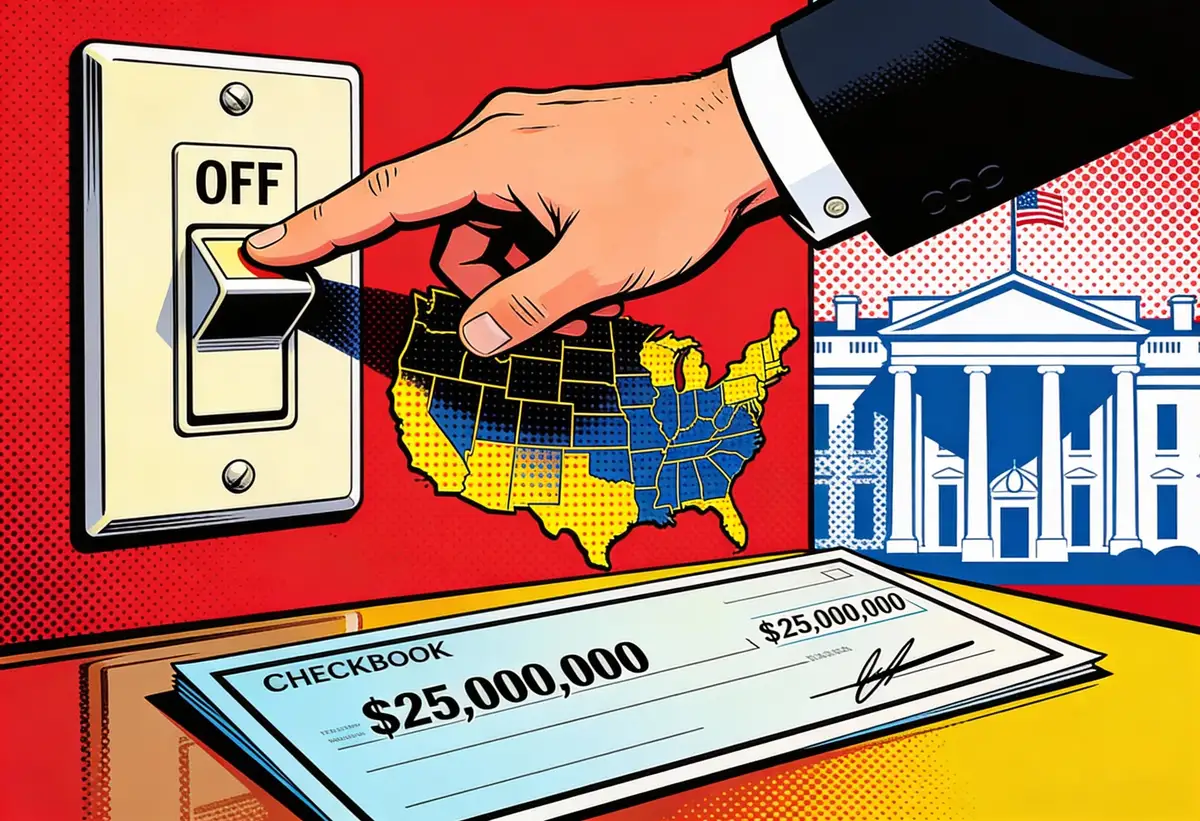
Innovation Council Action, a pro-Trump political nonprofit, plans to spend more than $100 million on the 2026 midterms to advance the president's AI deregulation agenda, Axios reported Sunday. The group, led by former Trump deputy chief of staff Taylor Budowich, has compiled a lawmaker scorecard to identify which members of Congress support or resist that agenda. Add it up and the AI industry has now committed more than $300 million to November's elections. For scale: Club for Growth Action set the previous single-PAC midterm record at $69 million back in 2022. Innovation Council alone is pledging to beat that.
Key Takeaways
- Innovation Council Action, backed by David Sacks, plans $100M+ midterm spend aligned with Trump's AI deregulation agenda
- Total AI-industry election spending now exceeds $300M, with pro-deregulation groups outspending regulators three-to-one
- AI-backed candidates won 10 of 11 congressional primaries so far, following crypto's super PAC playbook from 2024
- Polling shows bipartisan voter skepticism of AI, with more Republicans than Democrats favoring regulation
A MAGA operation, not a bipartisan one
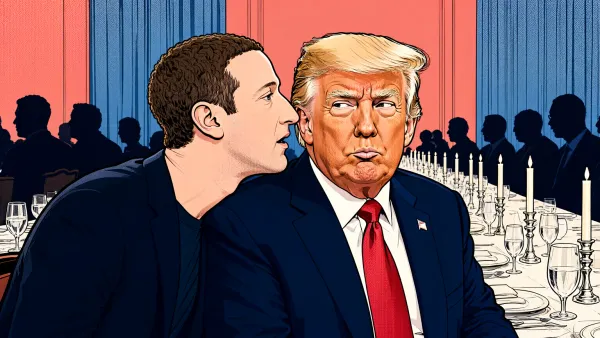
Budowich is a familiar name in Trumpworld. He ran MAGA Inc., the main pro-Trump super PAC, worked the 2024 campaign, and now runs Innovation Council. The group has the endorsement of David Sacks, the outgoing White House AI and crypto czar. Sacks was named co-chair of the President's Council of Advisors on Science and Technology last week, joining a panel that includes Meta's Mark Zuckerberg, Nvidia's Jensen Huang, and Oracle's Larry Ellison.
"Innovation Council will play a critical role in advancing the innovation agenda championed by President Trump and this administration," Sacks told Axios. "We welcome its support at this important juncture."
No donor disclosures required. That's what nonprofit status buys you, and it's the reason campaign finance watchers call this dark money. It filed incorporation paperwork in Utah last October and quietly opened a D.C. office while raising funds, according to the New York Times. A super PAC arm is planned as part of the $100 million push, which would require listing contributors.
Other operations in the AI lobby, including the bipartisan Leading the Future super PAC network, court both parties. Innovation Council does not.
The money race
The AI industry's election spending now breaks down roughly like this:
- Innovation Council Action: $100 million+ (pro-Trump, pro-deregulation)
- Leading the Future: $125 million raised, according to the Financial Times, backed by OpenAI co-founder Greg Brockman, Andreessen Horowitz, and Palantir's Joe Lonsdale
- Meta: $65 million earmarked for state-level races
- Public First Action: targeting $75 million, funded in part by a $20 million Anthropic donation, backing candidates who favor stricter oversight
- Future of Life Institute: $8 million on "pro-human" TV ads in five states
Get Implicator.ai in your inbox
Strategic AI news from San Francisco. No hype, no "AI will change everything" throat clearing. Just what moved, who won, and why it matters. Daily at 6am PST.
No spam. Unsubscribe anytime.
Pro-deregulation money alone approaches $290 million. The regulation side musters roughly $83 million. Better than three-to-one.
The playbook borrows from crypto. Fairshake, crypto's own super PAC, dropped $133 million on 2024 congressional races. Fifty-two wins out of sixty-one races where it spent six figures. Members of Congress watched those results come in. And early 2026 results follow the pattern: AI-backed candidates advanced in 10 of 11 primaries earlier this month.
Republican states aren't waiting
Innovation Council launched days after the White House released an AI regulatory framework on March 20 asking Congress to create a single federal standard and block states from writing their own rules. That framework is exactly the legislation Budowich's group exists to enact.
But Republican state lawmakers are pushing ahead anyway.
In Utah, State Rep. Doug Fiefia proposed an AI transparency bill that never reached a vote after a one-line White House memo called it "against the administration's AI agenda." No further explanation. In Pennsylvania, State Sen. Tracy Pennycuick pushed ahead with her SAFECHAT Act regardless. "I am mildly interested in what the federal government's doing at this point," she told NPR. "States are the first ones to see when there's a problem."
Tennessee's Marsha Blackburn has her own version, the TRUMP AMERICA AI Act, a nearly 300-page bill that would expand the White House's four-page framework into federal statute. Not that Congress has ever managed to get a comprehensive AI bill across the finish line. The gridlock that killed Sen. Ted Cruz's attempt to preempt state regulations last year hasn't broken.
The polling problem no one can buy past
Voters do not like AI. Full stop.
An NBC News survey that circulated inside the White House found AI to be less popular than Immigration and Customs Enforcement. Pew Research reports 58% of Americans believe the government will not go far enough in regulating the technology. A Morning Consult poll showed a majority think the Trump administration is too close to Big Tech. Vanderbilt University polling found more Republicans than Democrats favor regulating AI. That last number complicates things considerably for anyone trying to sell deregulation as a conservative cause.
Outspending your opponents three-to-one is one thing. Convincing voters who already distrust the product is something else entirely. November will show whether the AI industry's cash can overcome a growing, bipartisan suspicion that the technology is moving faster than anyone they elect can slow it down.
Frequently Asked Questions
What is Innovation Council Action?
A pro-Trump political nonprofit led by former White House deputy chief of staff Taylor Budowich. It plans to spend over $100 million in the 2026 midterms to advance Trump's AI deregulation agenda, using a lawmaker scorecard to identify supporters and opponents.
How much is the AI industry spending on the 2026 midterms?
More than $300 million across multiple groups. Pro-deregulation spending approaches $290 million from Innovation Council Action, Leading the Future, and Meta. Pro-regulation groups have committed roughly $83 million.
What is David Sacks' role with Innovation Council Action?
Sacks endorsed the group but holds no formal role. The former White House AI czar was recently named co-chair of the President's Council of Advisors on Science and Technology, keeping his influence over tech policy.
Are AI super PACs winning elections?
So far, yes. AI-backed candidates advanced in 10 of 11 congressional primaries this month. The strategy mirrors crypto's Fairshake PAC, which won 52 of 61 races in 2024.
How do voters feel about AI regulation?
Polling consistently shows majority support for stricter rules. Pew found 58% believe government won't regulate AI enough. Vanderbilt research shows more Republicans than Democrats favor regulation, complicating pro-deregulation strategies.

Free AI briefing · Weekdays
The AI stories that matter, sourced and explained.
Join the Morning Briefing. It goes out every weekday at 4:45 a.m. Pacific, with later sends for the East Coast, Berlin and Tokyo.
Free when you sign up: The Paperclip Compendium, our tested guide to running AI agents.
Free. Unsubscribe in one click.

Marcus Schuler
Editor-in-Chief and founder of Implicator.ai. Former ARD correspondent and senior broadcast journalist with 10+ years covering tech. Writes daily briefings on policy and market developments. Based in San Francisco. E-mail: editor@implicator.ai