Implicator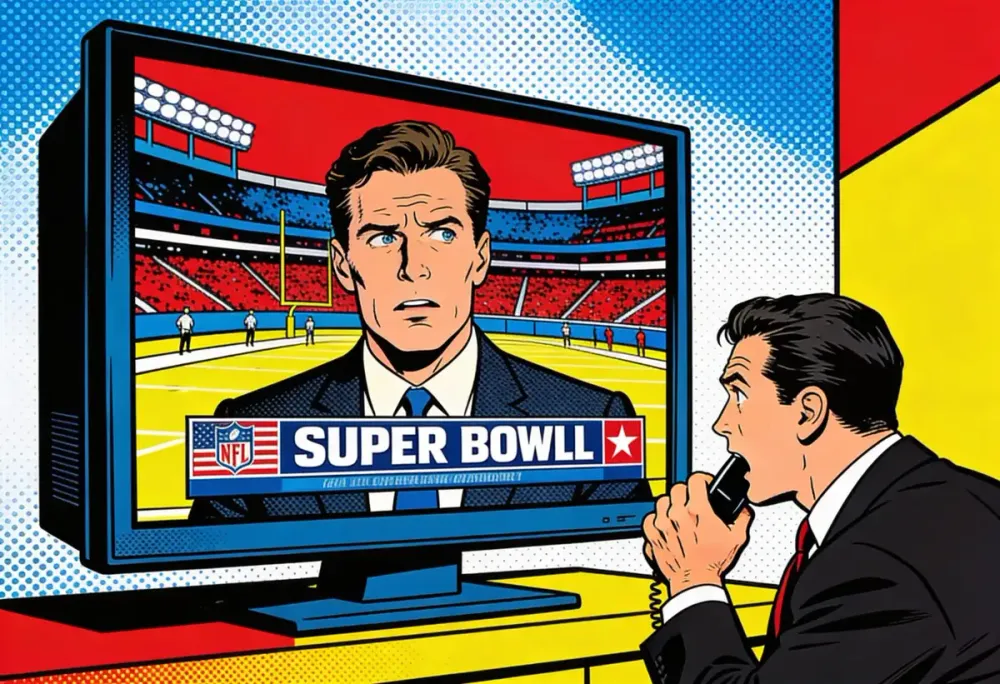
Sam Altman was having a normal Tuesday. Then Anthropic bought four Super Bowl commercials to mock his business model, and he posted a 400-word rant calling his competitor "dishonest" and "authoritarian." Over a joke about dating cougars.
Credit where it's due, the ads land. The 60-second pregame spot opens on a guy in therapy, working up the nerve to ask about reconnecting with his mother. She offers warm, AI-cadenced advice before pivoting into a pitch for Golden Encounters, a dating site "that connects sensitive cubs with roaring cougars." In another, a guy asking about six-pack abs gets sold height-boosting insoles. The tagline lands clean. "Ads are coming to AI. But not to Claude."
But something more interesting happened after the spots aired. Altman's response revealed exactly the nerve Anthropic was aiming for. And the speed of his reaction, the length of the post, the escalation from "dishonest" to "authoritarian" to "dark path," tells you everything about where the real anxiety sits in this industry. Not in the ad wars. In the question nobody has answered yet. How do you pay for intelligence that costs this much to run?
The temperance preacher who owns the bar
Start with the irony, because it's load-bearing. Anthropic paid more than $8 million for a 30-second Super Bowl slot to tell you it would never put ads in Claude. The company that released four commercials on YouTube and plans a TV, digital, and influencer marketing campaign running through most of 2026 wants you to know it finds advertising incompatible with clear thinking.
The Argument
• Anthropic paid $8M+ for Super Bowl ads attacking ChatGPT's ad model while leaving itself an escape clause to reverse course later
• Altman's 400-word response, escalating from 'dishonest' to 'authoritarian,' reveals how effectively the ads targeted OpenAI's biggest vulnerability
• No major AI lab has proven a sustainable business model. OpenAI needs ads for scale; Anthropic needs enterprise revenue to avoid the same path
• The real audience was enterprise buyers and CISOs, not consumers. The ad-free pledge doubles as a B2B sales pitch
This is not hypocrisy, exactly. Anthropic's argument, laid out in a blog post titled "Claude is a space to think," draws a distinction between advertising a product and advertising inside a product. The company compares Claude to a notebook or a chalkboard. You buy the tool. The tool stays clean. Nobody slips a coupon between the pages.
That distinction is real. But it also flatters Anthropic's current position. When your biggest competitor has 800 million weekly active users and you don't, an ad-free promise costs less than it sounds. Anthropic isn't turning down ad revenue from a massive free tier. It doesn't have a massive free tier. Andrew Stirk, the company's head of brand marketing, told the Wall Street Journal that the goal is to position Claude as "a different choice" based on values. Fair enough. It's also a different choice because the scale problem looks completely different when you're selling to developers and enterprises rather than trying to serve everyone on earth for free.
And buried in the blog post, one sentence does more work than the rest combined. Anthropic writes that it will be "transparent about our reasons" should it ever need to "revisit this approach." Read that as what it is. An escape hatch, painted the same color as the wall.
Why Altman couldn't let it go
The rational response to a competitor's Super Bowl ad is silence, or maybe a self-deprecating tweet. Altman chose a different route. His post on X opened with a compliment ("they are funny, and I laughed") and then spent 350 words calling Anthropic dishonest, authoritarian, and dark. He accused the company of blocking competitors from Claude Code. He said Anthropic "serves an expensive product to rich people." He invoked democratic values and builders and agency.
Nobody writes 350 words at that speed unless the punch landed.
OpenAI's position on advertising has traveled a visible arc. In October 2024, Altman called ads "a last resort." By January 2026, the company was testing them in ChatGPT for U.S. users at a CPM of around $60, according to Search Engine Land. The company has promised ads will be clearly labeled, will sit at the bottom of responses, and will never influence the conversation itself. OpenAI's blog post described a plan to "test ads at the bottom of answers in ChatGPT when there's a relevant sponsored product or service based on your current conversation."
Read that last clause again. Based on your current conversation. That's the gap Anthropic drove a Super Bowl ad through.
Join 10,000+ AI professionals
Strategic AI news from San Francisco. No hype, no "AI will change everything" throat clearing. Just what moved, who won, and why it matters. Daily at 6am PST.
No spam. Unsubscribe anytime.
OpenAI insists the distinction between "conversation-aware placement" and "conversation-influencing content" holds. Maybe it does, technically. But if you've ever noticed that Instagram shows you running shoe ads after you texted a friend about jogging, you know how users actually experience that distinction. They don't.
OpenAI has stressed that ads won't impact ChatGPT's answers, that conversations remain confidential from advertisers, that promotions will be labeled and appear at the bottom of responses. Users under 18 won't see them. Sensitive topics like politics and mental health are excluded. These are reasonable guardrails. They're also exactly the kind of guardrails that erode quarter by quarter once the ad team starts optimizing for engagement metrics and the finance team starts modeling what "expanding the ad surface" could do to revenue projections.
Anthropic's blog post made this point explicitly. "The history of ad-supported products suggests that advertising incentives, once introduced, tend to expand over time as they become integrated into revenue targets and product development." That sentence wasn't aimed at consumers. It was aimed at every CTO who's watched a free tool slowly become an ad delivery vehicle.
Altman's "rich people" line is the most revealing. Line up the subscription tiers and the gap shrinks fast. Claude charges nothing, $17, $100, or $200 a month. ChatGPT charges nothing, $8, $20, or $200. The pricing is not dramatically different. The user bases are. OpenAI has the scale. Anthropic has the margins. Altman's frustration isn't really about price. It's that Anthropic found a way to make scale look like a liability.
The business model nobody has solved
Pull back from the ad war and the picture clarifies. Somewhere in a data center in Iowa or Texas, thousands of GPUs are running inference on free-tier queries that generate zero revenue. Every major AI lab is burning cash at rates that would make a 2021 crypto startup flinch. AI companies spent $333.6 million on U.S. broadcast TV ads last year alone, a 43% jump from the year before. Digital ad spending more than tripled to $426 million. And those are just the marketing costs. The compute bills are worse.
OpenAI's bet is that advertising can subsidize free access at massive scale. Anthropic's bet is that enterprise contracts and paid subscriptions can sustain a smaller, more lucrative user base. Neither has proven the math works long-term. eMarketer projects the U.S. AI search ad market at $2.08 billion this year, ballooning to $25.93 billion by 2029. Sounds like real money. It isn't, not when you stack it against what frontier models actually cost to run for hundreds of millions of users. Training runs alone cost hundreds of millions. Inference costs scale with every new user. OpenAI isn't introducing ads because the business is comfortable. It's introducing ads because the business needs another revenue stream and the IPO window is approaching.
Microsoft's Copilot already introduced ad formats back in March 2025. Google says Gemini won't get ads but runs them inside AI Overviews, where they monetize at roughly the same rate as traditional Search. Temperance preachers everywhere. Every company promises the AI product stays clean. Then the quarterly earnings call happens.
And here's what Anthropic's Super Bowl stunt quietly concedes. The company is spending tens of millions on a brand campaign precisely because it can't compete on distribution. It can't outspend OpenAI on free users. It can't match 800 million weekly actives. So it's competing on identity. On the promise that your AI assistant isn't also your AI salesperson.
That promise is worth something. It might even be worth $8 million in Super Bowl airtime. But it only works as long as Anthropic's burn rate stays manageable and its enterprise revenue keeps growing. The moment the economics shift, that escape-hatch sentence activates.
The real audience wasn't you
Anthropic's Daniela Amodei told the WSJ that putting ads inside Claude would be "exploitative" given that users share personal and medical information. She also said the company may forgo some revenue as a result. That framing matters. It positions the ad-free pledge not as a business strategy but as a moral stance.
Think about who that message actually targets. Not the average ChatGPT user comparing prices. Enterprise buyers. CISOs worried about data flowing to advertisers. Healthcare companies and law firms that need to know their employees' conversations with AI aren't being monetized. The Super Bowl ad looked like a consumer play. It was an enterprise sales pitch wrapped in a joke about cougar dating.
Altman, for all his bluster, seems to understand this. His post mentioned 500,000 Codex app downloads since launch on Monday, a number that reads like it was pulled from a dashboard specifically to counter the narrative. He's fighting on two fronts now, consumer scale and developer loyalty, and the Anthropic ad made the second front harder.
The escape hatch, painted shut for now
Anthropic chose the advertising industry's biggest night of the year to take a swing at advertising. There's a confidence in that, verging on cockiness. The company is emboldened by its coding market gains, by enterprise wins the WSJ has documented, by the sense that it found a lane OpenAI can't occupy.
But confidence and sustainability are different things. The ad-free promise is easy when your user base is small enough that you don't need to subsidize free access. It gets harder when you're spending through 2026 on TV and influencer campaigns. Impossible, though, if the enterprise market contracts or a competitor undercuts your API pricing by half.
For now, the Super Bowl ads accomplished exactly what they needed to. They rattled Altman, turned "ad-free" into a feature, and left one sentence in a blog post that nobody's reading closely enough.
"Should we need to revisit this approach, we'll be transparent about our reasons for doing so."
Remember that line. You'll hear it again.
Frequently Asked Questions
Q: Why did Anthropic run Super Bowl ads attacking ChatGPT?
A: Anthropic used the ads to position Claude as an ad-free alternative after OpenAI announced plans to test ads in ChatGPT's free tier in January 2026. The campaign targets both consumers and enterprise buyers who worry about commercial influence on AI responses.
Q: How much did Anthropic spend on Super Bowl advertising?
A: A 30-second Super Bowl spot costs more than $8 million in 2026. Anthropic ran at least a 30-second in-game ad and a 60-second pregame spot, plus a broader TV, digital, and influencer campaign planned through most of 2026.
Q: Will ChatGPT ads actually influence conversations?
A: OpenAI says ads will be labeled, appear at the bottom of responses, and never influence chat content. However, the company also said ads will be 'based on your current conversation,' meaning the AI reads your chat to select relevant ads, even if it doesn't change its answers.
Q: Could Anthropic reverse its ad-free promise?
A: Yes. Anthropic's blog post includes the line: 'Should we need to revisit this approach, we'll be transparent about our reasons for doing so.' The company hasn't ruled out advertising outside the chatbot experience either.
Q: How do Claude and ChatGPT subscription prices compare?
A: Claude offers tiers at $0, $17, $100, and $200 per month. ChatGPT offers $0, $8, $20, and $200. The pricing is comparable, but OpenAI has far more free-tier users to support, which drives the need for ad revenue.

Marcus Schuler
Tech translator with German roots who fled to Silicon Valley chaos. Decodes startup noise from San Francisco. Launched implicator.ai to slice through AI's daily madness—crisp, clear, with Teutonic precision and sarcasm. E-Mail: [email protected]