IMPLICATOR
Apple used WWDC26 on Monday to preview Siri AI and the next Apple Intelligence architecture in the company's software release, while MacRumors and CNET reported that the new Apple Foundation Models were built with Google using Gemini technology. The announcement turns the reported Google partnership into the product test for Siri AI, Apple's rebuilt assistant after two years of delay.
Google can supply model strength, but Apple still has to prove that the device, the Siri surface and the privacy boundary remain under its control. That is harder than announcing a smarter assistant, because the relaunch asks users to trust more personal context at the same moment Apple is relying on Gemini technology to strengthen its own model stack.
Key Takeaways
- Apple previewed Siri AI and a new Apple Intelligence architecture using Gemini-derived model work.
- Siri AI adds a dedicated app, Dynamic Island access, screen awareness and personal-context actions.
- The relaunch follows a two-year Siri delay and a $250 million settlement over earlier promises.
- The Siri AI beta starts later this year, with EU iPhone/iPad and China availability limited at launch.
AI-generated summary, reviewed by an editor. More on our AI guidelines.
What Apple said at WWDC26
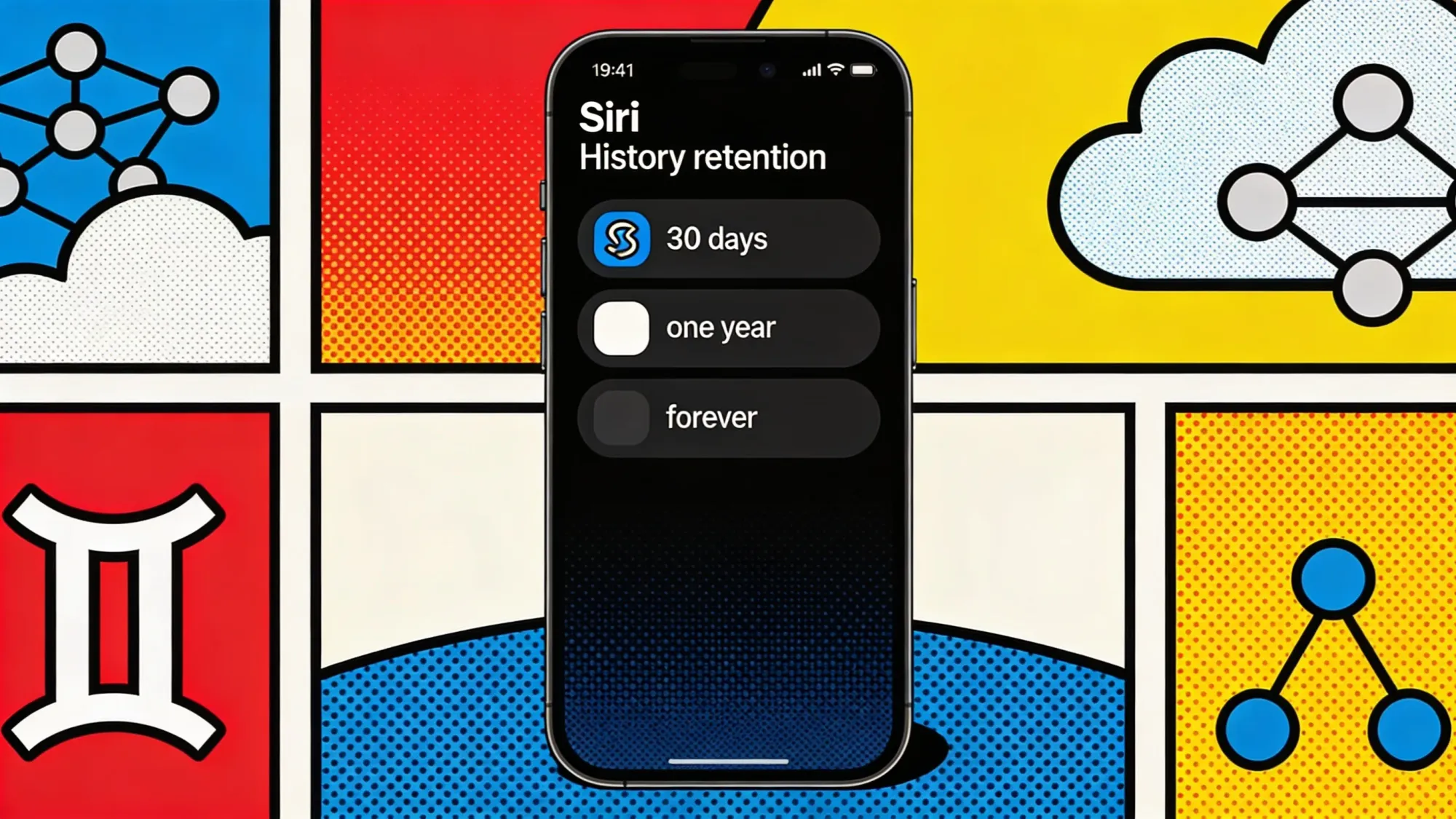
Apple's release said Siri AI will be "deeply integrated" into iPhone, iPad, Mac, Apple Watch and Apple Vision Pro. The assistant "can draw on personal context understanding to search across messages, emails, photos, and more, and get things done across apps with even more systemwide app actions," Apple said. The company also said a dedicated Siri app will let users reopen old conversations or start new ones, with history synced through iCloud.
Craig Federighi, Apple's senior vice president of software engineering, framed the upgrade as both a product expansion and a privacy argument. "We're delivering the next generation of Apple Intelligence across our platforms; introducing Siri AI, a profoundly more intelligent, knowledgeable, and capable Siri," he said in Apple's release. During the keynote stream, TechCrunch quoted him saying, "We believe privacy in AI is non-negotiable," and adding that "data is only used to execute your request."
The mechanics matter because the assistant is moving beyond voice commands. TechCrunch reported that Siri can draft messages by pulling information from the web, email, calendar and contacts. CNBC said Mike Rockwell, Apple's vice president of Siri engineering, demoed Siri asking about a landmark in an Instagram post. Engadget reported that, in a separate demo, Rockwell asked Siri to add family members to a shared album. "Siri is now a profoundly more capable assistant that helps you find what you need and gets more done," Rockwell said, according to CNBC.
Apple also placed Siri inside the iPhone's most visible interface surfaces. Engadget said the assistant now lives in the Dynamic Island and opens through a new "Search or Ask" field. CNN reported that the camera app will get a Siri mode that can answer questions and take actions based on what a user points at. At a restaurant, CNN wrote, Apple showed Siri calculating a customer's share of a bill after the user selected what they ordered.
The two-year Siri gap
Apple is launching the new Siri against its own record. The company showed a more personal assistant at WWDC 2024, then delayed the core features. Engadget reported that Apple did not let the press try the 2024 version and that The Information later described the public demo as closer to a concept video. Engadget also reported that Apple agreed in May to pay $250 million to settle a U.S. class action over claims that the new Siri would arrive in 2024.
The delay complicates Apple's pitch. Apple says Siri AI is a more capable assistant centered on the user, but the product arrives after a missed schedule, a lawsuit settlement and a model partnership with one of its largest AI rivals. Avi Greengart, president of Techsponential, told WIRED that other assistants became "tremendously capable" while Siri "remained relatively programmatic and limited in what it can do."
Wall Street's test is also numerical. CNN reported that more than 2.5 billion Apple devices are in use globally, while Bloomberg Intelligence analyst Anurag Rana estimated that about 1 billion iPhones do not support Apple Intelligence because the feature requires an iPhone 15 Pro or later. Apple can pitch a software turn, but the installed base only matters if the supported base upgrades.
The leadership timing raises the bar. CNBC described Monday's keynote as Tim Cook's last WWDC as chief executive, with hardware chief John Ternus taking over Sept. 1. Yahoo Finance quoted Bernstein analyst Mark Newman saying Apple Intelligence "presents a huge opportunity to reinvent the company, accelerate product replacement cycles, and drive increased services revenue." Newman estimated 13% upside to earnings per share from a faster replacement cycle and another 16% from a premium version of Apple Intelligence. Those are upside estimates, not product proof, and they depend on Siri becoming a reason to replace a device rather than a feature users ignore.
Where Gemini fits
Google Cloud CEO Thomas Kurian previewed the dependency in April, when 9to5Mac reported that he described Google as Apple's preferred cloud provider. "We're collaborating with Apple as their preferred cloud provider to develop the next generation of Apple Foundation Models based on Gemini technology," Kurian said, according to 9to5Mac. He said those models would help power "a more personalized Siri coming later this year."
Track the AI platform shift
Strategic AI news from San Francisco. No hype, no "AI will change everything" throat clearing. Just what moved, who won, and why it matters. Daily at 6am PST.
No spam. Unsubscribe anytime.
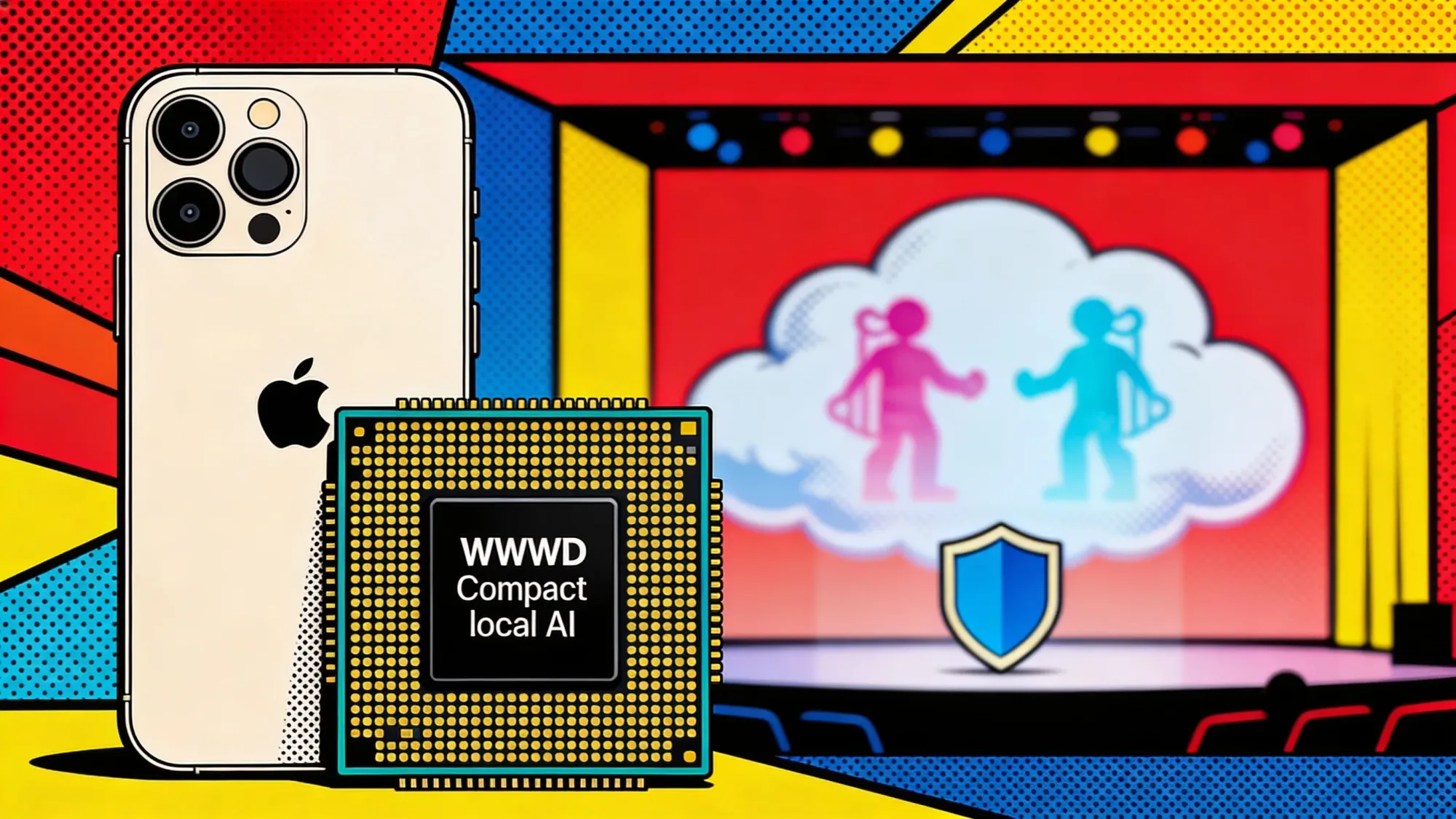
Apple is trying to keep Google's role below the product surface. MacRumors reported that the new architecture centers on Apple Foundation Models co-developed with Google, adapted for on-device work and Private Cloud Compute. AppleInsider cited Ming-Chi Kuo's investor-focused view that Apple's long-term test is whether it can use Gemini to deliver better AI applications, agentic workflows and hybrid on-device/cloud experiences than Google, while also noting that users will not see Google Gemini on their iPhones.
The distinction is more than branding. Apple's product claim depends on making Gemini-derived model work appear through Apple-controlled interfaces, rather than as a separate Google assistant on the device. That keeps the customer relationship, the app action layer and the privacy contract with Apple. Federighi's own contrast sharpened the point when CNBC quoted him criticizing companies that pursue "AI for the sake of AI."
CNET reported that Apple's more powerful on-device model is multimodal, with speech and image understanding, stronger dictation and better language understanding. MacRumors reported that higher-power model variants will add speech generation, improved dictation accuracy and stronger natural-language understanding, although Apple did not specify which devices qualify.
Know someone who'd find this useful? ✉️ Email it to a friend in one click, or they can subscribe free here.
Apple's system orchestrator carries much of that product claim. Apple's release said the new orchestrator coordinates Apple Intelligence features across its platforms. Apple has described the broad split between on-device processing and Private Cloud Compute, and AppleInsider reports that Gemini itself will not run on device or receive user data. What Apple has not yet made clear is the task-level routing: which requests use which Apple model, server model or Gemini-derived capability. That distinction is likely to matter to regulators and developers.
The privacy boundary in beta
Apple's own release supplies the concrete limit. Siri AI will be available for developer testing now across iOS 27, iPadOS 27, macOS 27 and visionOS 27, with watchOS testing later. The consumer beta starts later this year in English. Mac, Apple Watch and Vision Pro users in the European Union are included when set to a supported language, but Siri AI will not initially be available on iOS and iPadOS in the EU, and it will not be available in China while Apple works through regulatory requirements.
The operational detail in the release is in the footnotes, not the keynote line. Apple's up-to-5x faster iPad file-browsing-and-transfer claim was tested on an 11-inch iPad Pro with M4, an APFS-formatted USB4 external SSD and 10,000 JPG files. Its 70% faster Photos claim used an iPhone 15 with a 50,000-asset library. Apple knows how to publish test conditions when it wants to.
That kind of specificity is what Siri AI still lacks. Apple says "user data is only used to execute the immediate request and is not accessible to Apple or third parties," while outside experts can verify the promise. The beta still needs to show how that promise applies across conversation history, document uploads, camera queries and personal-context requests, especially now that the Siri app can reopen old conversations across devices.
There is a consumer version of that issue too. Marshini Chetty, a University of Chicago computer scientist who studies privacy and human-computer interaction, told WIRED that a more personal assistant "could have good benefits" but makes privacy "a little bit more murky." Serge Egelman, a Berkeley privacy and security expert, told the same outlet that many users do not want AI features even as large platforms keep adding them.
Apple enters the beta with more than 2.5 billion devices in use globally, according to CNN, and a model story that still leans on Google's Gemini technology. The Gemini partnership does not settle that trade. The Siri AI beta later this year is where Apple's privacy claim, model routing and iPhone-upgrade story become testable facts.
Frequently Asked Questions
What did Apple announce at WWDC26?
Apple previewed Siri AI, a rebuilt assistant tied to the next Apple Intelligence architecture, plus iOS 27 and other software updates. Reports say the new Apple Foundation Models were built with Google using Gemini technology.
Is Siri AI simply Google Gemini on the iPhone?
No. The reporting says Apple is using Gemini technology to improve Apple Foundation Models. Apple says the user-facing system remains tied to Apple Intelligence, on-device processing and Private Cloud Compute.
When can users try Siri AI?
Developers can test Siri AI now across iOS 27, iPadOS 27, macOS 27 and visionOS 27. Apple says an English-language Siri AI beta for users will arrive later this year.
Why does the Gemini partnership matter?
It tests whether Apple can use Google's model strength while keeping the Siri interface, app actions, privacy boundary and customer relationship under Apple control.
What privacy question remains after WWDC26?
Apple says request data is used only for the immediate request. The beta still needs to show how that applies to chat history, document uploads, camera queries and personal-context requests.
AI-generated summary, reviewed by an editor. More on our AI guidelines.
Free AI briefing · Weekdays
The AI stories that matter, sourced and explained.
Join the Morning Briefing. It goes out every weekday at 4:45 a.m. Pacific, with later sends for the East Coast, Berlin and Tokyo.
Free when you sign up: The Paperclip Compendium, our tested guide to running AI agents.
Free. Unsubscribe in one click.

Marcus Schuler
Editor-in-Chief and founder of Implicator.ai. Former ARD correspondent and senior broadcast journalist with 10+ years covering tech. Writes daily briefings on policy and market developments. Based in San Francisco. E-mail: editor@implicator.ai