IMPLICATOR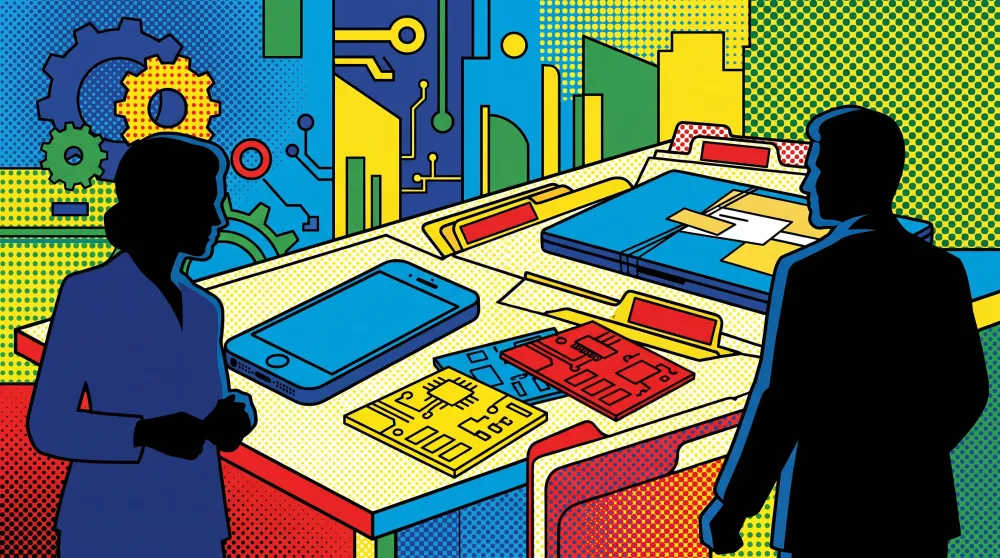
Apple’s July 10 lawsuit against OpenAI says the ChatGPT company now employs more than 400 former Apple workers, including two ex-employees Apple accuses of using hardware trade secrets to aid OpenAI’s device plans. The 41-page complaint names Chang Liu, Tang Yew Tan, OpenAI Foundation, OpenAI Group PBC and io Products, LLC as defendants.
The case was filed in the U.S. District Court for the Northern District of California. Apple says the dispute is about OpenAI’s hardware operation, not the companies’ written agreement to integrate ChatGPT into Apple Intelligence, which the complaint says “is not at issue here.”
Drew Pusateri, an OpenAI spokesperson, rejected the allegation in a statement reported by AP and CNN. “We have no interest in other companies’ trade secrets,” he said. “We remain focused on building innovative technology that empowers people everywhere.”
Key Takeaways
- Apple sued OpenAI in Northern California over alleged hardware trade-secret theft.
- The complaint says OpenAI employs more than 400 former Apple workers.
- Apple alleges candidates were asked to bring hardware parts to OpenAI interviews.
- OpenAI says it has no interest in other companies’ trade secrets.
AI-generated summary, reviewed by an editor. More on our AI guidelines.
Tan and the interview parts
Tan worked at Apple for 24 years and served as vice president of product design for the iPhone and Apple Watch before co-founding io Products in 2024, according to the complaint. OpenAI acquired io in May 2025 for about $6.5 billion. Tan is now OpenAI’s chief hardware officer.
Apple alleges that Tan used an Apple project code name during OpenAI interviews and told current Apple employees to bring “Actual parts” for “show and tell” sessions. The complaint says Tan and OpenAI colleagues also shared an internal Apple “Need to Know” departure-security document with recruits before they notified Apple they were leaving.
The parts allegation is specific. Apple says candidates were asked to bring batteries, systems-in-package components, multi-layer or main logic boards and shields. One candidate was quoted in the filing as saying they “didn’t even know we could take those from the office.”
Liu and the 1,000 pages
Liu worked at Apple for eight years as a senior system electrical engineer and departed on January 22, 2026, to join OpenAI, the complaint and Reuters account say. Apple alleges that he failed to return an Apple-issued laptop and later used what the complaint describes as an authentication bug to reach Apple shared network folders after his departure.
The filing says Liu downloaded dozens of confidential hardware files while working for OpenAI. Apple says the material included technical presentations, spreadsheets, PDFs and a compilation of more than 1,000 pages tied to manufacturing and testing information for multi-layer boards used in Apple hardware.
Get Implicator.ai in your inbox
Strategic AI news from San Francisco. No hype, no "AI will change everything" throat clearing. Just what moved, who won, and why it matters. Daily at 6am PST.
No spam. Unsubscribe anytime.
Apple also alleges that Liu coached an Apple employee he was recruiting to OpenAI on how to “avoid trouble with the security team” when copying Apple files. According to the complaint, Liu pointed that employee to specific project folders and engineering material before her OpenAI interview.
Suppliers enter the case
Apple says OpenAI used confidential Apple information with suppliers while building its own hardware operation. The complaint says one Apple supplier carried out a proprietary metal-finishing technique for OpenAI after being led to believe Apple had approved the work.
Know someone who'd find this useful? ✉️ Email it to a friend in one click, or they can subscribe free here.
A second supplier that works on power and battery manufacturing was asked targeted questions using Apple terminology, according to the filing. Apple argues the alleged pattern shows OpenAI was using Apple information, not merely recruiting experienced workers, to shorten its path into consumer devices.
Reuters quoted Stanford Law School professor Mark Lemley drawing the legal line. Hiring hundreds of Apple employees is not itself illegal in California, he noted. “But if Apple’s claims that the employees took confidential documents with them, and that OpenAI is using those documents, are true, that is a problem for OpenAI,” Lemley said.
Apple seeks injunctions
Apple says it wrote to OpenAI in February, raised concerns about Apple confidential information reaching OpenAI and asked the company to investigate and address the issue. The complaint says OpenAI did not respond.
The lawsuit seeks damages, exemplary damages and court orders requiring the defendants to return Apple property and stop accessing or using Apple trade secrets. Apple also asks for an order preserving evidence, including emails, electronic documents, metadata and directories.
The hardware case follows a strained software relationship. Implicator covered OpenAI’s earlier review of legal options against Apple over the Siri-ChatGPT integration in May, and CNBC reported that Apple’s updated Siri assistant is based on Google’s Gemini AI models. The requested orders would require OpenAI and io Products to preserve emails, electronic documents, metadata and directories tied to the case.
Frequently Asked Questions
What did Apple accuse OpenAI of doing?
Apple alleges OpenAI and former Apple employees used confidential hardware information to speed OpenAI’s consumer-device work. The claims remain allegations in a federal complaint.
Who are Chang Liu and Tang Yew Tan?
Apple says Liu was a senior system electrical engineer who joined OpenAI in January 2026. Tan spent 24 years at Apple and is now OpenAI’s chief hardware officer.
What is io Products?
io Products is the hardware venture OpenAI acquired in May 2025 for about $6.5 billion. Apple named io Products, LLC as a defendant in the lawsuit.
What does OpenAI say?
OpenAI spokesperson Drew Pusateri said the company has no interest in other companies’ trade secrets and remains focused on building technology for users.
What is Apple asking the court to do?
Apple seeks damages and court orders requiring defendants to return Apple property, stop using Apple trade secrets and preserve evidence tied to the case.
AI-generated summary, reviewed by an editor. More on our AI guidelines.

Free AI briefing · Weekdays
The AI stories that matter, sourced and explained.
Join the Morning Briefing. It goes out every weekday at 4:45 a.m. Pacific, with later sends for the East Coast, Berlin and Tokyo.
Free when you sign up: The Paperclip Compendium, our tested guide to running AI agents.
Free. Unsubscribe in one click.

Marcus Schuler
Editor-in-Chief and founder of Implicator.ai. Former ARD correspondent and senior broadcast journalist with 10+ years covering tech. Writes daily briefings on policy and market developments. Based in San Francisco. E-mail: editor@implicator.ai