IMPLICATOR
Ken Griffin’s Citadel bought the bulk of Situational Awareness’s public equity portfolio after the hedge fund suffered heavy losses in July’s AI stock selloff, the Financial Times and Wall Street Journal reported Thursday. The agreement moved most of a public equity book valued at $16 billion after prime brokers pressed the firm to meet margin requirements. It was negotiated overnight into July 30 as Situational Awareness sought buyers and fresh capital.
What Changed
- Ken Griffin's Citadel agreed overnight into July 30 to buy most of Situational Awareness's public equity book, valued by the Financial Times at $16 billion, after prime brokers pressed the fund to meet margin requirements.
- The fund reported a 439% net return for the year through June 30 in a July 24 investor letter, and CNBC reported assets under management reached $45 billion at the start of July, before the AI selloff reversed it.
- Situational Awareness ran with four investment professionals and eight employees in total, according to its most recent regulatory filing.
- The size of the fund's losses, the amount it was seeking to raise, and the discount Citadel received have not been disclosed or confirmed.
AI-generated summary, reviewed by an editor. More on our AI guidelines.
The July selloff
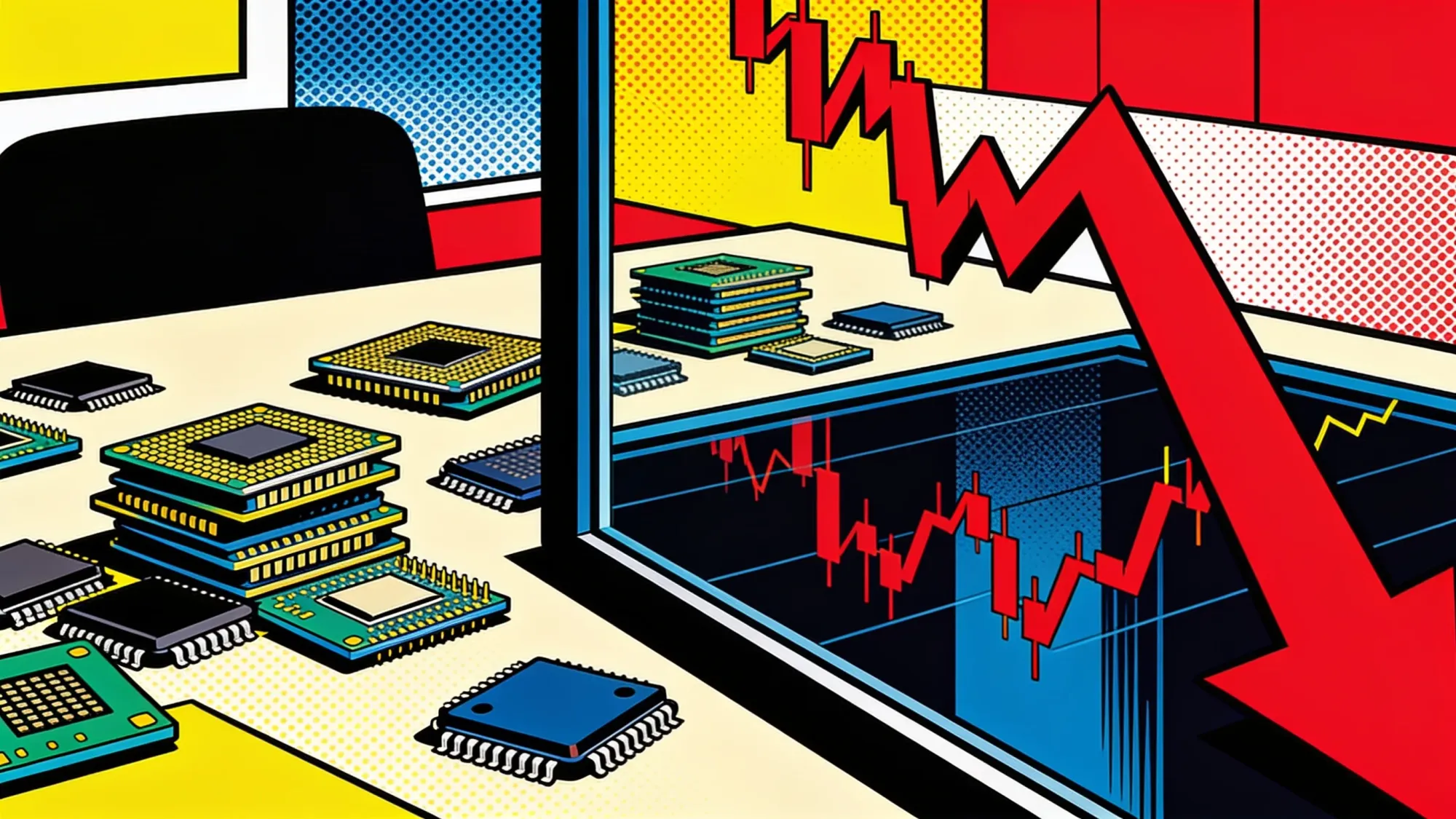
Six days earlier, a July 24 investor letter reported a 439% net return for the year through June 30. CNBC reported that assets under management had reached $45 billion at the start of July. The firm’s most recent regulatory filing listed four investment professionals and eight employees in total. The Nasdaq 100 then fell 10% during July, while South Korea’s Kospi lost about one-third of its value over the same month. Oracle and AMD each declined about 20% during July. Nebius, Sandisk, Micron and CoreWeave were each down more than 35% for the month.
Prime-broker leverage magnified gains before July and losses during the selloff. People familiar with the matter said margin calls forced the sale of much of the public portfolio. Goldman Sachs and JPMorgan Chase helped negotiate the transaction. The New York Times put the stock package offered during the July 30 process at more than $10 billion. The deal was finalized hours before its report appeared. Millennium Management and at least two other multibillion-dollar funds also held talks before Citadel, a $71 billion multi-strategy firm as of July 30, agreed to buy most of the public equity holdings.
Aschenbrenner, a 25-year-old German-born investor, founded Situational Awareness in 2024 after publishing an essay with the same name. He graduated from Columbia University as valedictorian at age 19 and later worked on OpenAI’s Superalignment team. OpenAI fired him in 2024 over what it called an improper disclosure, a characterization he disputes.
The March filing
Situational Awareness’s March 31 Form 13F disclosed $13.68 billion across 42 entries. About $8.46 billion, or 62% of the filing value as of that date, consisted of put-option exposure tied to semiconductor and technology securities. That included $2.04 billion against the VanEck Semiconductor ETF and $1.57 billion against Nvidia, both measured by the value of the underlying securities.
CNBC reported that Nebius, Sandisk, Micron and CoreWeave were among the largest holdings in end-of-first-quarter filings. The Financial Times said the late-March regulatory disclosure included Oracle and AMD among the hard-hit reported positions. It separately reported that Situational Awareness had backed Nebius, Sharon AI, Bloom Energy and Sandisk, without tying those four companies to the filing. The Wall Street Journal reported that SK Hynix was among the fund’s public investments. Seven bitcoin-miner stocks, including IREN, Core Scientific, Riot Platforms and CleanSpark, accounted for about $1.11 billion of filing value on the same date. Short positions in software companies such as Adobe moved against the fund during July, people familiar with its performance reported.
Get Implicator.ai in your inbox
Strategic AI news from San Francisco. No hype, no "AI will change everything" throat clearing. Just what moved, who won, and why it matters. Daily at 6am PST.
No spam. Unsubscribe anytime.
What the filing cannot show
The 13F does not disclose option strikes, expiration dates, leverage or offsetting positions, so it cannot establish whether an individual put was a directional short or a hedge. Its option values refer to underlying securities rather than premiums. The discount Citadel received is unconfirmed. CNBC reported that the size of the fund’s losses and the amount it was seeking to raise could not immediately be determined.
The status of the private Anthropic stake was contested on July 30. A Situational Awareness spokesman said reports that the firm was marketing the stake “are not accurate,” while the same reporting said it had been negotiating to sell it. The Financial Times valued the holding at $5 billion as of July 30. Situational Awareness did not respond to requests for comment. Citadel, Millennium, Goldman Sachs and JPMorgan declined to comment or did not respond.
Know someone who'd find this useful? ✉️ Email it to a friend in one click, or they can subscribe free here.
Wall Street’s concern
The New York Times reported on July 30 that investors were concerned other distressed hedge funds could be forced to liquidate into the same semiconductor names and push share prices lower. Goldman Sachs and JPMorgan Chase have issued margin calls to hedge funds holding concentrated AI positions, according to a July 30 report carried by Investing.com.
Venu Krishna, Barclays’ head of U.S. equity strategy, described the market’s focus in that report: “The market is currently most focused on three issues: financing uncertainty, corporate capital expenditure expansion, and pressure on big tech free cash flow.”
A person close to Situational Awareness told Business Insider on July 30 that the firm would continue trading public equities after retaining a small part of its book and its Anthropic stake. In the July 24 letter, Aschenbrenner had invited investors to add cash on August 1: “PS. At times we call out opportunities that seem like a particularly good time to add funds, if you have been waiting for one.”
Frequently Asked Questions
How large was Situational Awareness before the July selloff?
CNBC reported that assets under management had reached $45 billion at the start of July. The Financial Times valued the fund's public equity book at $16 billion, and its March 31 Form 13F disclosed $13.68 billion across 42 entries.
Why was the fund forced to sell?
Prime-broker leverage magnified gains before July and losses during the selloff. People familiar with the matter said margin calls forced the sale of much of the public portfolio. Goldman Sachs and JPMorgan Chase helped negotiate the transaction.
What did the March 31 filing actually show?
It disclosed $13.68 billion across 42 entries, of which about $8.46 billion, or 62% of filing value, was put-option exposure tied to semiconductor and technology securities, including $2.04 billion against the VanEck Semiconductor ETF and $1.57 billion against Nvidia, measured by the value of the underlying securities.
Does Situational Awareness still hold its Anthropic stake?
The status was contested on July 30. A spokesman said reports that the firm was marketing the stake are not accurate, while the same reporting said it had been negotiating to sell it. The Financial Times valued the holding at $5 billion. A person close to the firm told Business Insider it retained the stake and a small part of its book.
What is the wider market concern?
The New York Times reported that investors were concerned other distressed hedge funds could be forced to liquidate into the same semiconductor names and push share prices lower. Goldman Sachs and JPMorgan Chase have issued margin calls to hedge funds holding concentrated AI positions.
AI-generated summary, reviewed by an editor. More on our AI guidelines.


Marcus Schuler
Editor-in-Chief and founder of Implicator.ai. Former ARD correspondent and senior broadcast journalist with 10+ years covering tech. Writes daily briefings on policy and market developments. Based in San Francisco. E-mail: editor@implicator.ai