IMPLICATOR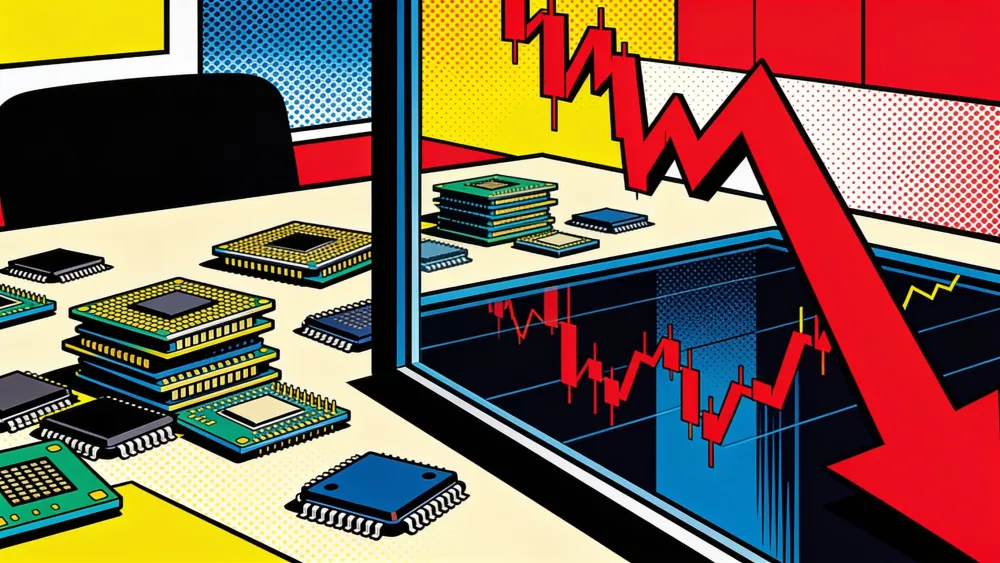
Reuters said the Nasdaq Composite and S&P 500 closed at more than one-week lows Tuesday after selling in semiconductor shares spread from memory names to the broader AI hardware trade. Its closing table put the Philadelphia Semiconductor Index at a 7.9% loss and the S&P 500 technology sector 3.7% lower, with Micron Technology and SanDisk down about 13% apiece after ranking among the S&P 500's strongest performers this year.
The Dow ended slightly lower.
At the close, Reuters' figures showed the Dow off 47.22 points at 51,665.49, the S&P 500 down 107.32 points at 7,365.47 and the Nasdaq Composite lower by 579.56 points at 25,587.04. Nvidia lost 4.1%, Alphabet fell 1%, and Intel, Marvell Technology and Advanced Micro Devices each dropped between 5.8% and 9.4%.
Key Takeaways
- The Philadelphia Semiconductor Index fell 7.9% as AI chip and memory stocks sold off Tuesday.
- Micron and SanDisk each dropped about 13% before Micron's Wednesday earnings report.
- South Korea's Kospi fell 10% after SK Hynix and Samsung each lost more than 10%.
- Fed rate-hike bets and debt-funded AI spending concerns added pressure to crowded chip trades.
AI-generated summary, reviewed by an editor. More on our AI guidelines.
Micron reports Wednesday
The heaviest pressure landed on memory shares before Micron's quarterly results, which are due Wednesday. Bloomberg reported that Micron had rallied more than 300% earlier in 2026 and was the year's top performer in the Philadelphia Semiconductor Index before Tuesday's decline. MarketWatch cited Dow Jones Market Data saying SanDisk's drop was its worst one-day move since February.
"Some of the news lately about AI raises questions about all the spending that's being done and the capex and ramping of the capacity for semiconductors," Thomas Martin, senior portfolio manager at Globalt, told Reuters. Concerns about debt-funded AI spending were already in the market after SpaceX, which debuted this month, joined other megacaps in tapping the bond market to raise capital, Reuters said.
Micron crossed a $1 trillion market value in May after UBS analyst Timothy Arcuri tripled his price target, a move that treated high-bandwidth memory as a more durable profit stream than old commodity DRAM. Tuesday's 13% decline sends the question back to management: whether HBM contracts and cloud demand still support that rerating after the sharpest pressure on the stock in weeks.
South Korea moved before Wall Street
The U.S. drop followed heavier selling in Seoul. Bloomberg reported that South Korea's Kospi fell 10% and triggered a circuit breaker after SK Hynix and Samsung Electronics each dropped more than 10%. CNBC and NBC News put the losses for both memory makers above 12%.
Get Implicator.ai in your inbox
Strategic AI news from San Francisco. No hype, no "AI will change everything" throat clearing. Just what moved, who won, and why it matters. Daily at 6am PST.
No spam. Unsubscribe anytime.
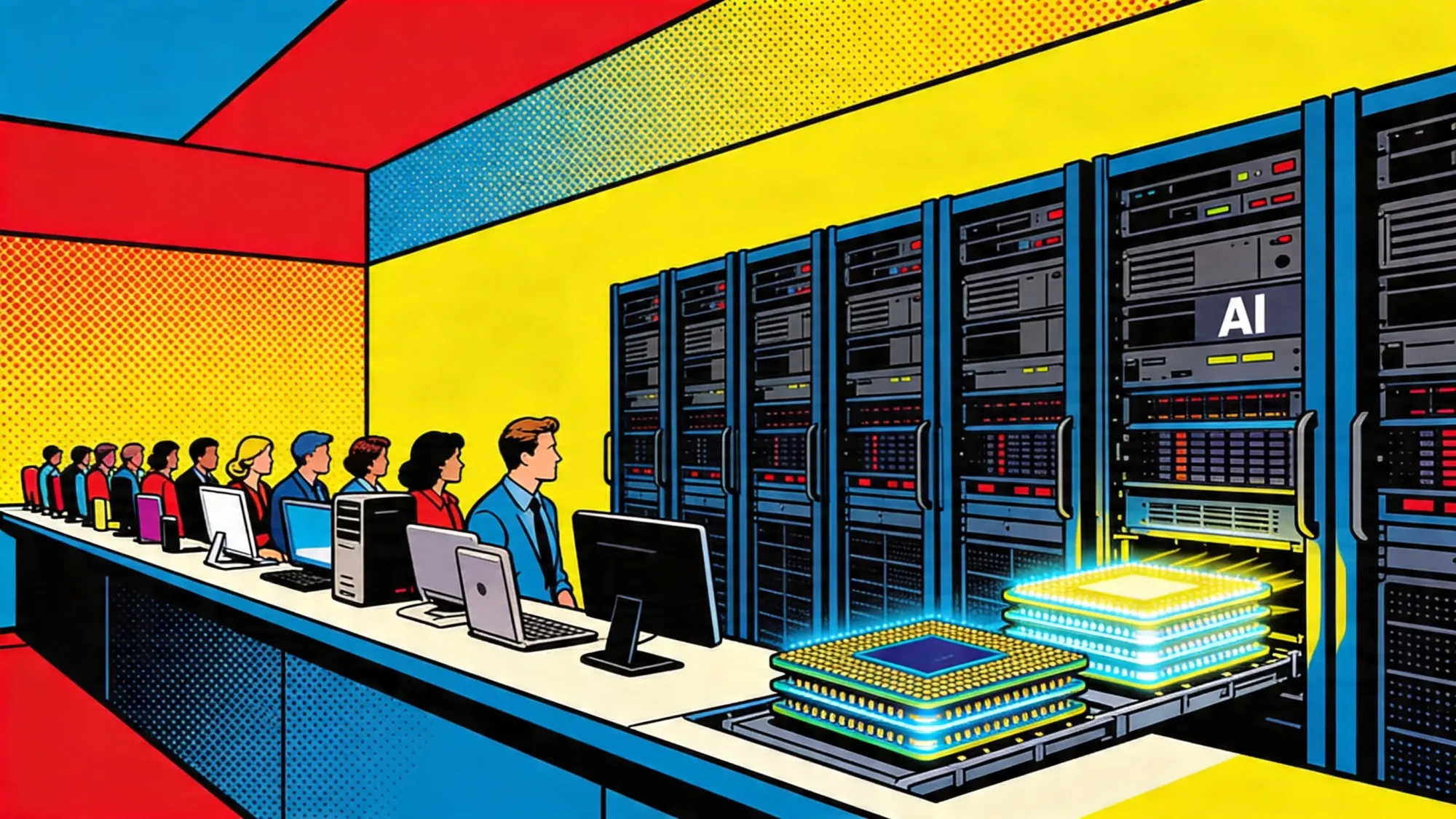
Bloomberg tied that move to a local media report that SK Hynix was slowing expansion of AI memory chip production and shifting emphasis toward cheaper commodity DRAM. SK Hynix declined to comment on the report, Bloomberg said. Samsung, SK Hynix and Micron are the core suppliers for high-bandwidth memory used in AI servers, and their shares have benefited from the argument that AI demand can keep supply tight into 2027.
JPMorgan analysts said the selling could reflect anxiety before Micron's report, NBC News said. Dan Ives, head of tech research at Wedbush Securities, wrote that "with Micron set to report earnings this Wed there is some added nervousness on the important memory chip trade," according to NBC News. MarketWatch cited Ives saying the AI trade would continue to have "gut-check moments" after the rally.
Know someone who'd find this useful? ✉️ Email it to a friend in one click, or they can subscribe free here.
Fed pricing added another weight
Reuters said traders were increasingly betting on a second Federal Reserve rate increase by December, citing LSEG data, compared with expectations for one 25-basis-point increase two weeks earlier. The Personal Consumption Expenditures Price Index, the Fed's preferred inflation gauge, is expected Thursday.
Defensive sectors kept the selloff from becoming a full-market retreat. Reuters said six of the 11 major S&P 500 sectors rose, led by consumer staples at 1.8%, even as decliners outnumbered advancers on both the NYSE and Nasdaq. Volume was heavier than usual, at 24.1 billion shares against a 20-day average of 22.53 billion.
"Looks like this was more of a technical related selloff than anything else," Natixis Advisors portfolio manager Jack Janasiewicz told Bloomberg, adding that breadth off the open was decent even with many large technology stocks in the red. Janasiewicz's point was that early trading did not match a full-market liquidation, according to Bloomberg.
Micron reports after Wednesday's close. The company's release and call will put fresh revenue, margin and HBM-demand language on the record after Tuesday's 7.9% drop in the chip index.
Frequently Asked Questions
Why did chip stocks sell off Tuesday?
Investors sold AI-linked chip and memory stocks after concern grew around debt-funded AI capacity spending, Micron's pending earnings and a sharp South Korea technology selloff. Reuters said the Philadelphia Semiconductor Index fell 7.9%.
How much did Micron and SanDisk fall?
Reuters said Micron Technology and SanDisk each fell about 13% Tuesday. Bloomberg said Micron had been the year's top performer in the Philadelphia Semiconductor Index before the drop.
What happened in South Korea?
Bloomberg reported that South Korea's Kospi fell 10% and triggered a circuit breaker after SK Hynix and Samsung Electronics each dropped more than 10%. CNBC and NBC News put both losses above 12%.
Why is Micron's earnings report important?
Micron reports Wednesday. Investors are watching whether high-bandwidth memory contracts and cloud demand still support the stock's AI-driven rerating after a 13% selloff.
How did Fed expectations affect the trade?
Reuters said traders were increasingly betting on a second Federal Reserve rate increase by December. Higher rates pressure growth stocks and make debt-funded AI infrastructure spending harder to ignore.
AI-generated summary, reviewed by an editor. More on our AI guidelines.

Marcus Schuler
Editor-in-Chief and founder of Implicator.ai. Former ARD correspondent and senior broadcast journalist with 10+ years covering tech. Writes daily briefings on policy and market developments. Based in San Francisco. E-mail: editor@implicator.ai