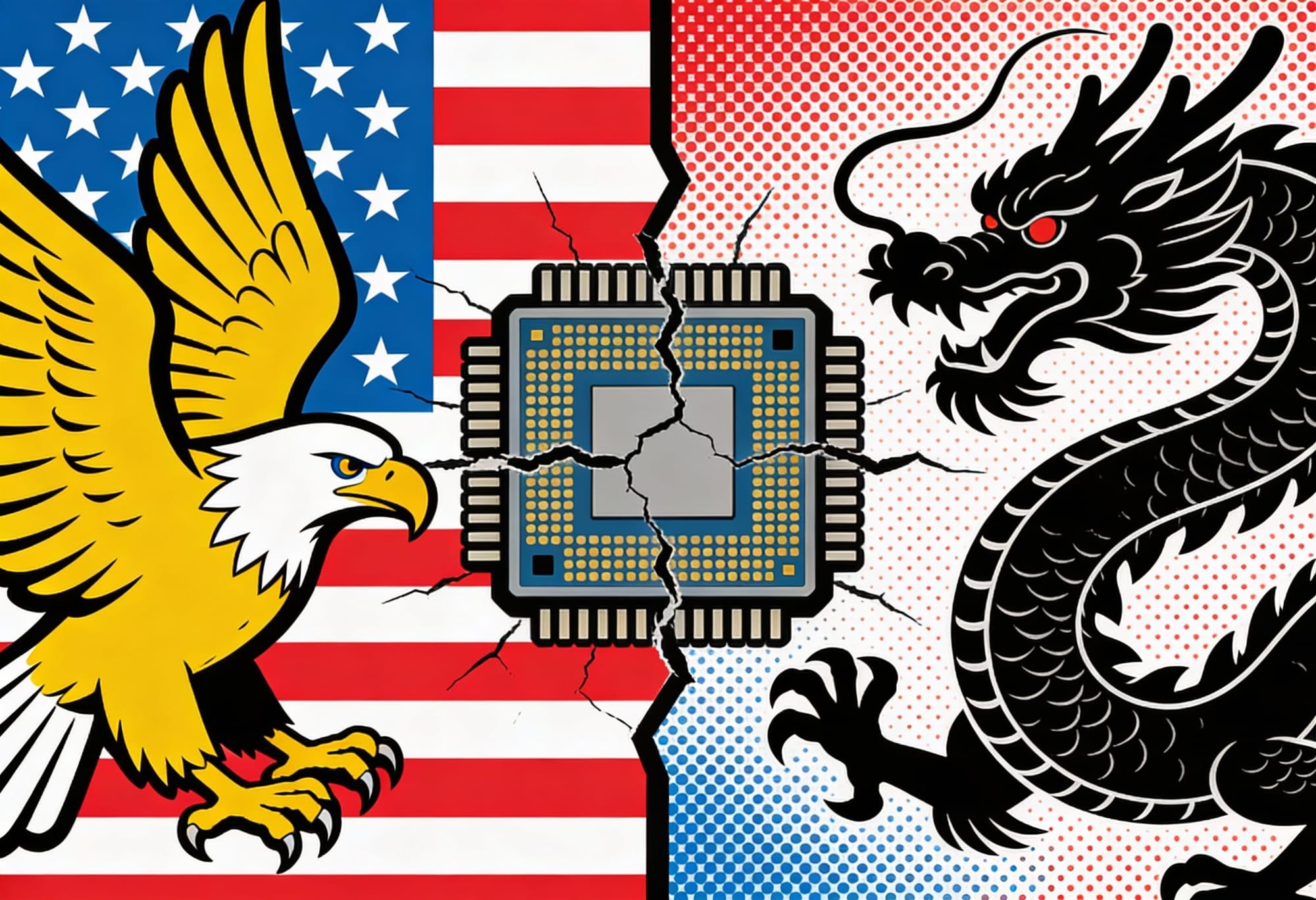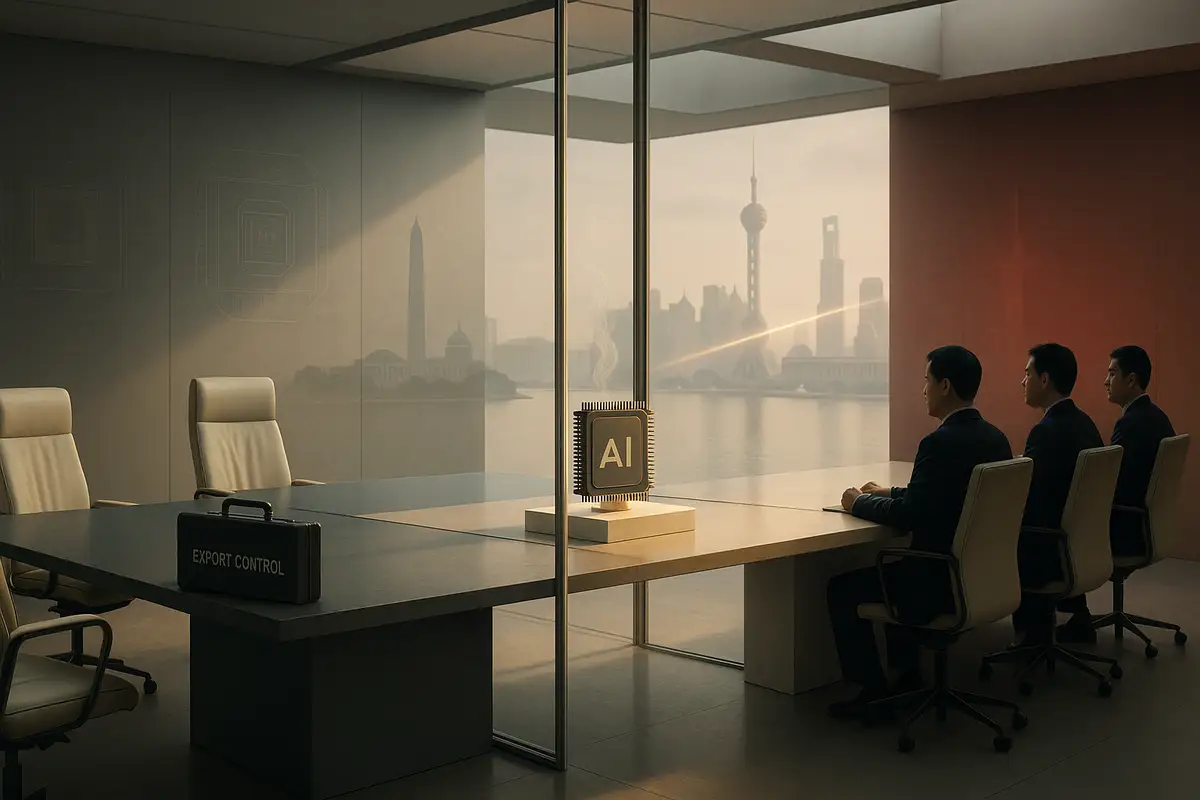
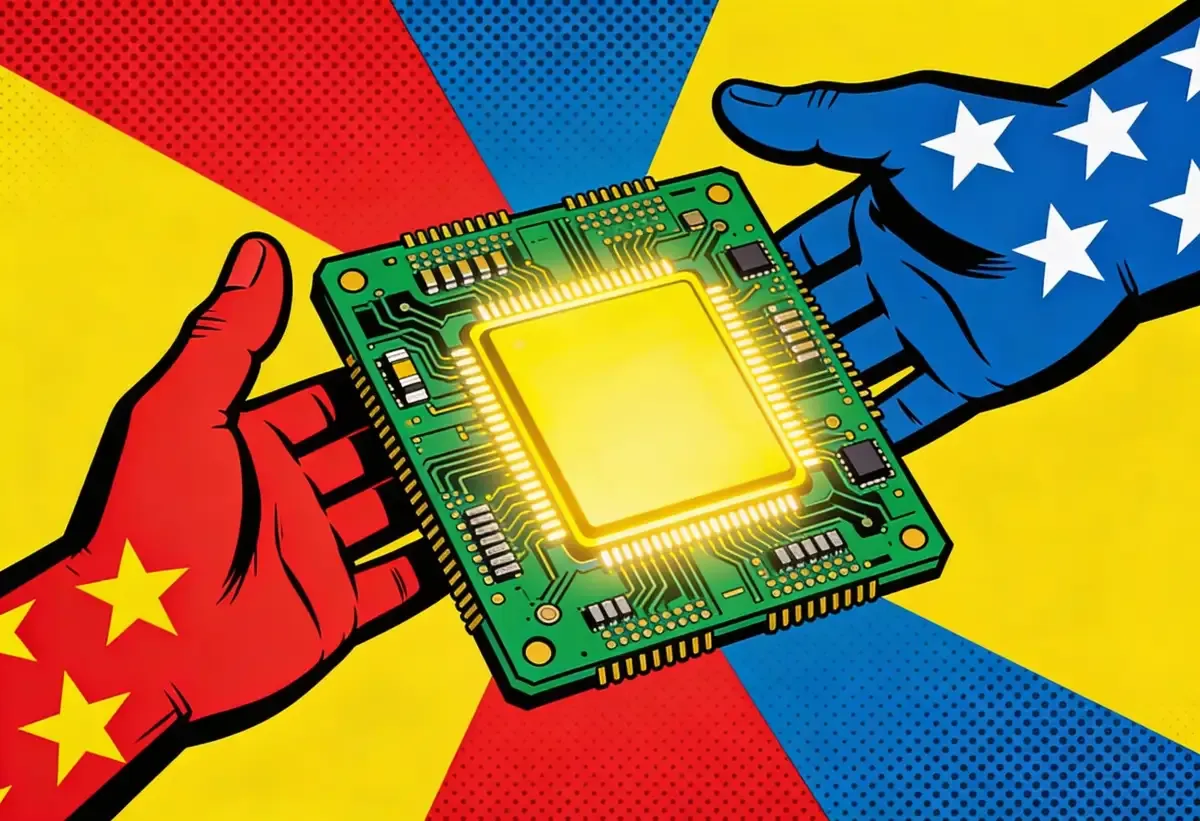
Chinese regulators just told Alibaba, Tencent, and ByteDance they can start preparing H200 purchase orders. Nvidia jumped 2.3% in premarket on the news Thursday, investors pricing in a deal that hasn't actually closed. Notice the word "preparing." No chips have shipped. No formal approval exists. What exists is permission to discuss quantities.
This is the H200 saga in miniature: two governments signaling openness while building gates fast enough to close them.
What Changed
• Beijing granted in-principle approval for Alibaba, Tencent, and ByteDance to begin discussing H200 purchase quantities with Nvidia
• Companies must buy domestic chips alongside any H200 orders, though no ratio has been set
• Over two million H200 chips ordered at $27,000 each, nearly three times Nvidia's current inventory of 700,000 units
• Washington and Beijing run parallel approval systems with no coordination mechanism, leaving $54 billion in orders frozen
The chip between two capitals
The H200 is a last-generation Nvidia processor that has somehow become the most politically charged piece of silicon on the planet. Two generations behind the company's current Blackwell architecture, it sits in a regulatory sweet spot that both Washington and Beijing find useful. Advanced enough to matter for AI training. Old enough to be politically defensible.
Jensen Huang's framing at CES told you everything about how Nvidia sees this. Standing at a press conference in Las Vegas, leather jacket catching the stage lights, he offered the kind of studied calm that comes from knowing exactly how much money is on the table. "We're not expecting any press releases, or any large declarations," he said. "It's just going to be purchase orders." Quiet commerce, not loud diplomacy. The math is straightforward: Chinese companies have ordered more than two million H200 chips at roughly $27,000 each. That's $54 billion in pending revenue from a market Nvidia lost entirely by October 2025.
On January 13, the Commerce Department published new rules that flipped its old presumption of denial to case-by-case review. Washington was open for business, on paper. The conditions attached read like reasonable guardrails on paper. Shipments capped at 50% of domestic sales. Third-party testing in the US before export. Know-your-customer procedures. A 25% fee paid to the US government.
"We applaud President Trump's decision to allow America's chip industry to compete," Nvidia said in a statement that managed to sound both grateful and transactional.
Then Beijing responded. Within hours of Washington's green light, Chinese customs blocked H200 shipments entirely. Officials called meetings with Alibaba, ByteDance, and Tencent. The message: purchases approved only under special circumstances, primarily university research. Buy chips when "necessary," officials said. Nobody defined what necessary means. That was the point.
Two million chips, zero coordination
The demand numbers expose how badly three years of restrictions bottled up Chinese AI ambitions. Alibaba alone wants more than 200,000 units, ByteDance the same, and Nvidia's entire inventory amounts to roughly 700,000 chips, less than what those two companies ordered combined. Orders outstrip supply nearly three to one.
Zhang Yuchun, general manager at SuperCloud, put it plainly: "The training of leading Chinese AI models still relies on Nvidia cards. I expect the leading Chinese tech companies to buy a lot although in a low key manner."
Low key is the operative mode. Both governments want this deal to happen without looking like they wanted it to happen. Washington gets revenue and the appearance of strategic generosity. Beijing gets chips and the appearance of self-sufficiency. Neither side built a mechanism to coordinate their approvals.
Stay ahead of the curve
AI chip geopolitics. Semiconductor trade wars. Data center buildouts. We track the moves that matter for AI infrastructure, daily at 6am PST.
No spam. Unsubscribe anytime.
This is the structural problem nobody has solved, and if you're watching the AI hardware market, it should worry you more than any individual policy decision. Washington issues export licenses. Beijing issues import approvals. Neither process references the other. A company can hold a valid US export license for chips that Chinese customs won't accept. Or Chinese regulators can approve purchases that the Commerce Department hasn't cleared. The system runs on parallel tracks with no switching station.
Thursday's news represents movement on Beijing's side. Companies now have in-principle approval to discuss specifics. But the condition attached is revealing: Beijing will encourage companies to buy a certain amount of domestic chips alongside any H200 purchases. No ratio has been set. The leverage sits with the regulators who get to define what "a certain amount" means next month or the month after.
The performance gap Beijing can't close
Why would China's largest technology firms endure this bureaucratic whiplash for a chip that's already two generations old? The answer sits in the specifications.
The H200 delivers roughly six times the performance of the H20, the previous China-compliant Nvidia chip. Its 141 gigabytes of HBM3e memory and 4.8 terabytes per second bandwidth give it 1.9 times the inference performance of the H100 on large language models. Huawei's Ascend 910C, the best domestic alternative, trails by 32% on processing and 50% on memory bandwidth.
If you've followed the AI infrastructure buildout, you know what those gaps mean in practice. A training run that takes three weeks on H200 clusters stretches past five weeks on Ascend hardware. That's not an abstraction. It's missed product launches, delayed API rollouts, revenue that goes to competitors who shipped first. The gap compounds. US labs training on H200s iterate faster, ship products sooner, capture revenue that funds the next generation of hardware. Chinese developers stuck on domestic alternatives fall further behind with each training cycle. DeepSeek, the Hangzhou startup that stunned the industry with its R1 reasoning model a year ago, built that achievement by wringing performance from constrained hardware. Even DeepSeek wants H200s now.
Demis Hassabis, running Google DeepMind, offered an assessment during a joint panel at Davos this week that stung precisely because it was measured. Seated beside Amodei on the same stage where CEOs typically trade pleasantries, he went clinical. Chinese AI firms "haven't been able to innovate beyond the cutting edge," he said. "They're very good at catching up to where the frontier is. But I think they've yet to show they can innovate beyond the frontier."
Six months behind, in his estimation. Enough to matter. Not enough to feel safe about.
Nukes, purchase orders, and the honesty gap
The sharpest criticism of the H200 deal came from an unexpected corner. Dario Amodei, CEO of Anthropic, sat across from Bloomberg's editor-in-chief in a wood-paneled room at Davos on Tuesday, the Swiss winter grey visible through the windows behind him, and compared chip sales to "selling nuclear weapons to North Korea."
Amodei leaned forward. "Imagine 100 million people smarter than any Nobel Prize winner, and it's going to be under the control of one country or another." No hedging, no diplomatic softening. The comment landed because Amodei runs one of the companies racing to build exactly that kind of intelligence, and he's saying the hardware enabling it shouldn't cross the Pacific.
The White House AI czar David Sacks holds the opposite view. His argument: shipping chips to China discourages Huawei from redoubling efforts to catch up. Access undermines self-sufficiency incentives. Give them what they want and they stop trying to build their own.
Chinese analyst Ma Jihua reads the same situation differently. "Nvidia is eager to re-enter the Chinese chip market because time is running out," he said, arguing that Washington's unreliability as a supplier accelerates domestic alternatives faster than any embargo could.
Daily at 6am PST
Don't miss tomorrow's analysis
Semiconductor geopolitics moves fast. We break down who's buying, who's blocking, and what it means for AI infrastructure.
Free. No spam. Unsubscribe anytime.
Ma Jihua is probably closest to the mark. Washington's on-again-off-again behavior as a supplier does more to accelerate Chinese chip independence than any deliberate embargo. But that long-term insight doesn't solve ByteDance's problem next quarter, when it needs compute and the only available option runs 50% slower. Former NSC director Saif Khan quantified the stakes. The rule allows about two million advanced AI chips to reach China, "an amount equal to the compute owned today by a typical US frontier AI company." That's not a minor trade deal. That's a transfer of an entire generation's worth of computing power.
The waiting room
Beijing's latest signal moves the needle without resolving anything. Companies can now discuss purchase quantities. They can plan infrastructure around potential H200 deliveries. They cannot actually buy the chips.
Beijing's anxiety shows in the bundling condition. Want H200s? Buy domestic chips too. The ratio hasn't been set, which gives regulators a lever they can pull tighter whenever they choose. Wei Shaojun, who runs the China Semiconductor Industry Association's academic wing at Tsinghua University, put the question bluntly: is Washington's relaxation genuine engagement, or "a calculated tactic aimed at slowing China's development momentum"? His concern cuts both ways. Every H200 that enters China is a chip that Huawei didn't sell. Every month of regulatory delay is a month Chinese labs train on inferior hardware.
Nvidia fired up its supply chain weeks ago. TSMC will begin producing additional H200 units in the second quarter. The chips will flow through manufacturing lines while lawyers in Washington and Beijing argue about who gets to say yes first.
If you're running infrastructure planning at Alibaba or ByteDance right now, you're trapped between two principals who won't coordinate and won't tell you when they will. According to people familiar with the discussions, teams that should be building AI products are instead modeling regulatory scenarios, gaming out which approval might come first, hedging procurement across two incompatible chip architectures. Wait for H200s that could arrive next month or next quarter, nobody knows. Or redesign around Huawei Ascend chips and accept the performance penalties that compound with every model trained on slower hardware. Each week of uncertainty costs them position against US competitors who face no such choices.
The parallel tracks run on. TSMC produces chips that sit in warehouses. Nvidia holds inventory it can't ship. Alibaba holds budgets it can't spend. Two governments inch toward approvals on separate timelines, neither willing to build the switching station that would let the trains through. Fifty-four billion dollars in orders, waiting for a signal that both capitals want to send and neither will.
Frequently Asked Questions
Q: What is the Nvidia H200 and why does China want it?
A: The H200 is Nvidia's previous-generation AI accelerator with 141 GB HBM3e memory and 4.8 TB/s bandwidth. It delivers roughly six times the performance of the H20, the last chip China could legally buy, and outperforms Huawei's best domestic alternative by 32-50% depending on the benchmark. Chinese AI labs need it to train competitive large language models.
Q: Why did China block H200 shipments after the US approved them?
A: Beijing wants to control the terms. Chinese customs blocked shipments on January 14, the same day Washington published export rules, to preserve bargaining leverage. Officials want to attach conditions including mandatory purchases of domestic chips alongside any Nvidia imports, supporting Huawei and other local chipmakers.
Q: What is the 25% fee Trump imposed on H200 exports?
A: Trump announced in December 2025 that the US government would collect 25% of H200 sales revenue as a condition for allowing exports to China. This applies alongside a 50% cap limiting China's allocation to half the total H200s sold to American customers. The Commerce Department also requires third-party testing and know-your-customer procedures.
Q: How many H200 chips has China ordered and can Nvidia fill those orders?
A: Chinese companies have ordered more than two million H200 chips at approximately $27,000 each, totaling $54 billion. Nvidia currently holds about 700,000 units in inventory. TSMC will begin producing additional chips in Q2 2026, but the order-to-inventory mismatch of nearly 3-to-1 means demand far exceeds current supply.
Q: What happens if Chinese companies can't get H200 chips?
A: They fall back on Huawei's Ascend 910C, which trails the H200 by 32% on processing and 50% on memory bandwidth. Training runs that take three weeks on H200 clusters stretch past five weeks on Ascend hardware, meaning delayed product launches and slower AI model iterations compared to US competitors using H200s.
Related Stories