IMPLICATOR
ChatGPT still looks like the app that owns consumer AI, with Sensor Tower counting more than 1.1 billion monthly users in May, ahead of Gemini's 662 million and Claude's 245 million. But the same data shows OpenAI's one-app advantage weakening as Gemini and Claude turn distribution and paid productivity into share.
Key Takeaways
- ChatGPT ended May at 46.4% True Audience share, below the 50% line Sensor Tower says it crossed in March.
- Gemini and Claude together reached 38.0% share, leaving them 8.4 percentage points behind ChatGPT.
- Claude leads the mobile monetization metrics cited in the report, with $2.76 ARPU and 13% iOS paid conversion.
- OpenAI's ChatGPT ad test makes trust part of the consumer AI competition, not only model quality.
AI-generated summary, reviewed by an editor. More on our AI guidelines.
Sensor Tower's True Audience measure removes overlap across mobile apps and web. By the end of May, the measure put ChatGPT at 46.4%, Gemini at 27.7% and Claude at 10.3%, after ChatGPT crossed below 50% in March. Add Gemini and Claude together and the gap to ChatGPT was 8.4 percentage points. The same shift showed up earlier in U.S. mobile data, where The Implicator covered ChatGPT's share dropping below half as Gemini and Grok gained.
Sensor Tower wrote that "users remain willing to try alternative AI assistants." The counterargument starts with scale. ChatGPT's mobile apps reached 1 billion monthly active users in May, about three years after arriving on smartphone app stores and faster than TikTok, YouTube or Instagram, according to Sensor Tower.
Forbes, citing the report, put ChatGPT's retention rate at 86% in May, still ahead of Claude's 73.7%. Sensor Tower said ChatGPT, DeepSeek and Gemini accounted for nearly 90% of time spent on AI assistant apps in the first quarter. This is a concentrated market, and OpenAI still owns the largest standalone assistant inside it.
Google's answer is distribution rather than chatbot purity. At I/O, Sundar Pichai said the Gemini app had passed 900 million monthly users, up from 400 million a year earlier. "We've surpassed 900 million, more than doubling in a year," he said, alongside 2.5 billion monthly users for AI Overviews and 1 billion for AI Mode. The Implicator's I/O coverage put those figures beside Google's planned $180 billion to $190 billion in 2026 capital spending. Sensor Tower's outside app-and-site count was lower, at 662 million, but the gap makes the point: Google's assistant can reach users before they open a standalone chatbot.
Claude's consumer-app case is narrower and more lucrative on mobile monetization metrics. Sensor Tower said Claude's U.S. True Audience share rose from 4.4% to nearly 14% in a year, while its average U.S. mobile revenue per user climbed from less than 50 cents in September to $2.76 in May. ChatGPT's comparable figure was $1.74, and Forbes said 13% of Claude's iOS users paid for a subscription, compared with 8% for ChatGPT. Claude does not need ChatGPT's audience to matter if it keeps over-indexing among paid mobile users.
Follow the AI platform fight
Strategic AI news from San Francisco. No hype, no "AI will change everything" throat clearing. Just what moved, who won, and why it matters. Daily at 6am PST.
No spam. Unsubscribe anytime.
The brand turn made that more than a pricing story. After OpenAI's February agreement with the Pentagon, which Sensor Tower and company materials describe as the Department of War, Sensor Tower said ChatGPT uninstalls in the U.S. peaked at roughly 200% above the app's average during the week of March 9 to 15. Anthropic was not rejecting military use outright; Amodei wrote that Claude already served Department of War and national-security customers. He said the dispute was over "any lawful use" language and safeguards around mass domestic surveillance and fully autonomous weapons, a position Anthropic could not "in good conscience accede" to. OpenAI later said its agreement barred intentional domestic surveillance of U.S. persons, blocked use by Department of War intelligence agencies without a new agreement and prohibited its technology from directing autonomous weapons systems.
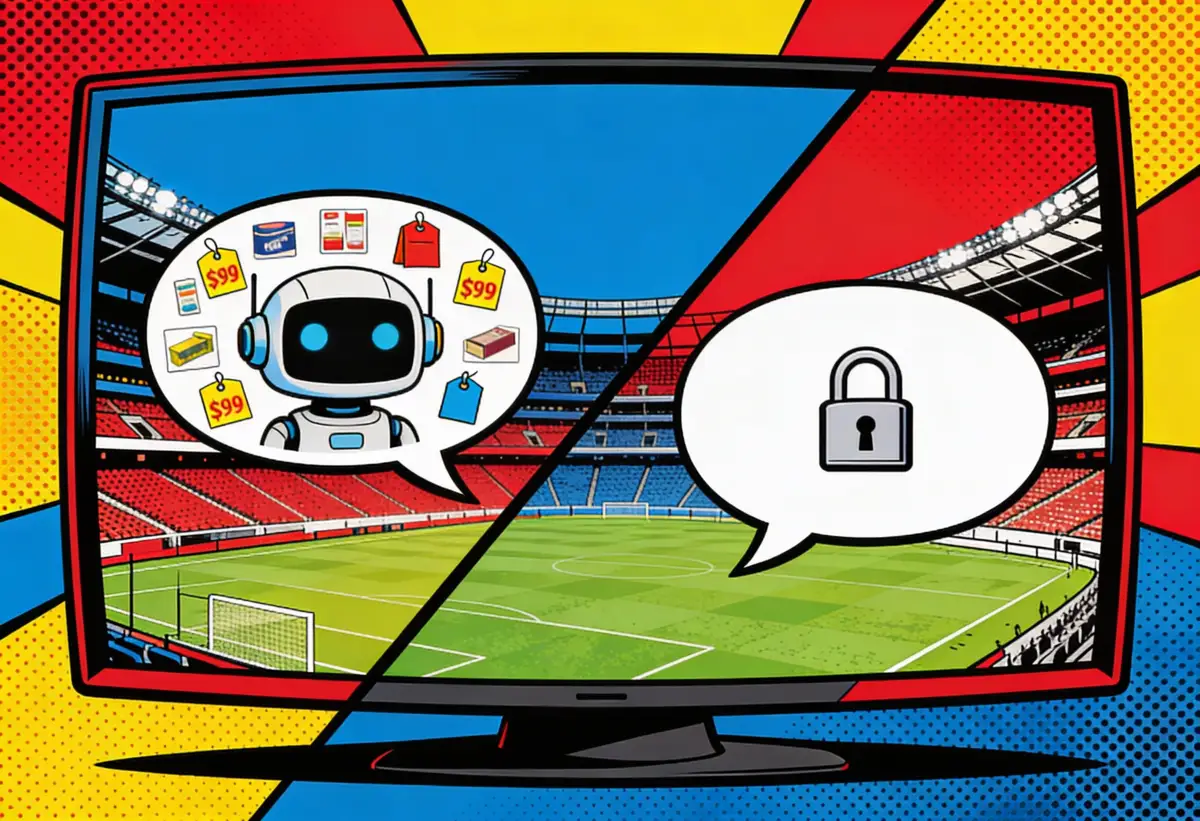
OpenAI's February ad test is the monetization half of the same shift. Its post told users, "Ads do not influence the answers ChatGPT gives you," and said early tests showed no impact on trust metrics. Sensor Tower's May readout put ads in front of 17% of daily users; the firm also said impressions had increased more than sevenfold since March. That gives OpenAI a path to subsidize free access, while asking users to trust a sponsored surface next to ad-free subscriptions and embedded search assistants.
Sensor Tower is measuring consumer app and web behavior, not API revenue, enterprise contracts or model quality. Google separately reports product integrations that Sensor Tower excludes. The next True Audience release will show whether ChatGPT climbs back above 50% after May's 46.4%, as OpenAI pushes ads and subscriptions through the product.
Frequently Asked Questions
Is ChatGPT still the largest AI assistant?
Yes. Sensor Tower counted more than 1.1 billion monthly ChatGPT users in May, ahead of Gemini at 662 million and Claude at 245 million.
What is Sensor Tower's True Audience measure?
It is Sensor Tower's cross-platform audience metric for unique users across mobile apps and web, with overlap removed so a person is not counted twice.
Why is Gemini gaining ground?
Gemini benefits from Google distribution. Pichai said the Gemini app passed 900 million monthly users, while AI Overviews and AI Mode add larger Google surfaces.
Why does Claude matter with only 10.3% share?
Claude is smaller but monetizes better on mobile. Sensor Tower and Forbes put Claude's U.S. mobile ARPU at $2.76, above ChatGPT's $1.74.
What should OpenAI watch next?
The next True Audience share print. A move back above 50% would soften May's reading; another print near 46.4% would confirm a tougher consumer market.
AI-generated summary, reviewed by an editor. More on our AI guidelines.

Marcus Schuler
Editor-in-Chief and founder of Implicator.ai. Former ARD correspondent and senior broadcast journalist with 10+ years covering tech. Writes daily briefings on policy and market developments. Based in San Francisco. E-mail: editor@implicator.ai