



San Francisco | Wednesday, March 4, 2026
Anthropic ships voice mode for Claude Code, letting developers talk to their terminal instead of typing. Hold the spacebar, describe the architecture change you want, release. The feature rolls to 5% of users first, with transcription tokens free across all paid plans. Claude Code's run-rate revenue sits at $2.5 billion and climbing.
Google's threat intelligence team traces a 23-exploit iOS toolkit from a US government contractor through Russian espionage operations into the hands of Chinese cybercriminals. 42,000 iPhones hit. The exploit broker market delivers again.
And for developers who already live in the terminal, fifteen CLI tools turn raw shell sessions into something worth staying in all day.
Stay curious,
Marcus Schuler
Anthropic Rolls Out Voice Mode for Claude Code, Starting With 5% of Users

Anthropic added voice input to Claude Code on Tuesday, letting developers speak commands into the terminal instead of typing them. The push-to-talk feature, activated by holding the spacebar, transcribes speech at the cursor position in real time.
Engineer Thariq Shihipar announced the gradual release on X, confirming that roughly 5% of users have access now. Wider availability follows over the next several weeks. Voice transcription tokens are free and don't count against rate limits across Pro, Max, Team, and Enterprise plans.
The interaction model stays inside the existing terminal. Type /voice to toggle it on. A developer can type half a prompt, hold the spacebar to voice the complex middle section describing an architecture change, then release and keep typing. The transcript lands exactly where the cursor sits.
Claude Code's run-rate revenue passed $2.5 billion in early 2026, more than doubling since January. Weekly active users doubled in the same period. That growth rate explains why Anthropic is stacking releases: Apple recently allowed Claude Agent to integrate with Xcode, and the company shipped free memory import for the Claude chatbot earlier this week.
The competitive math favors speed. GitHub Copilot still has millions of paying subscribers. Cursor recently reported more than $2 billion in annualized revenue. OpenAI is building its own coding products. Google shipped Gemini CLI last year. Voice alone won't decide who wins, but it addresses a real workflow bottleneck. Typing long prompts that describe architecture decisions, edge cases, and patterns takes time. Talking through those same instructions moves faster.
Anthropic hasn't disclosed whether a third-party provider powers the transcription. The company was reportedly in talks with ElevenLabs and Amazon about voice capabilities for Claude. Technical constraints remain unclear: jargon handling, noise environments, barge-in correction mid-sentence.
Why This Matters:
- Voice mode closes the gap between thinking about code and communicating it to the AI, a bottleneck that grows as prompts get longer and more architectural
- Anthropic bringing voice in-house removes the pip-install-and-configure friction that kept third-party voice tools as novelties rather than daily habits
Reality Check
What's confirmed: Voice mode exists, uses push-to-talk spacebar input, and is rolling to 5% of Claude Code users. Transcription tokens are free.
What's implied (not proven): That voice input will become a daily coding habit rather than a novelty tried once and abandoned.
What could go wrong: Transcription that mangles library names, function identifiers, or framework-specific jargon would kill adoption immediately.
What to watch next: Whether Anthropic names its transcription provider and publishes accuracy benchmarks on coding vocabulary.

The One Number
93% of developers now use AI coding tools every month. AI has written its way into 27% of production code. Yet organizational productivity gains have flatlined at just 10% across 121,000 developers. The question isn't whether AI codes anymore. It's why adoption isn't moving the productivity needle.
Source: ShiftMag / DX Research
Google Traces 23-Exploit iPhone Toolkit From US Intelligence to Chinese Criminals

Google's Threat Intelligence Group identified a 23-vulnerability iOS exploit kit called Coruna that traveled from a US government contractor through Russian espionage operations into the hands of Chinese cybercriminals. Mobile security firm iVerify estimates 42,000 iPhones compromised in the criminal campaign alone.
The exploit kit carries five full attack chains. Browse to a rigged website on Safari and the malware installs before the user notices. Google's researchers first picked up components in February 2025, deployed by what they described as a "customer of a surveillance company." A more complete version turned up five months later in watering hole attacks against Ukrainian websites, pinned with moderate confidence on a suspected Russian espionage group.
By December 2025, the full kit appeared on Chinese-language cryptocurrency and gambling scam sites. The criminal variant bolted crude malware onto Coruna's polished framework, scanning compromised devices for crypto wallet apps and exfiltrating seed phrases, recovery keys, and photos.
iVerify's cofounder Rocky Cole, a former NSA employee, told WIRED the code bears the hallmarks of US government development. Both Google and iVerify flagged heavy code overlap with Operation Triangulation, the 2023 campaign that hit Kaspersky. Apple fixed the bugs in iOS 26. Older versions, iOS 13 through 17.2.1, remain exposed. Lockdown Mode blocks the toolkit. Apple has not commented.
Why This Matters:
- A former US government contractor executive was sentenced to seven years this month for selling exploits to a Russian broker, illustrating the structural pipeline that moves offensive tools from governments to criminals
- Cole calls this "the EternalBlue moment for mobile malware," referencing the NSA tool that escaped in 2017 and enabled WannaCry and NotPetya

AI Image of the Day

Prompt: a vintage style picture of an 80's americana aesthetic kid playing with action figures on the living room floor --ar 3:4 --profile aq7e75q
15 CLI Tools Turn Raw Terminal Sessions Into Workable AI Coding Environments

AI coding agents live in the terminal now. Claude Code, Gemini CLI, Codex. The productivity gains feel enormous, but the surrounding workflow can't keep up. Fifteen CLI utilities fix the plumbing around the AI.
Three terminal replacements lead. Ghostty, built by Terraform creator Mitchell Hashimoto, is GPU-accelerated and open-source. iTerm2 holds the power-user crown with regex scrollback search and tmux integration. Warp turns every command into a selectable block, almost like a notebook cell.
LazyGit answers the most disorienting question in AI-assisted coding: what did it just do to my files? It shows changed files alongside diffs, branch state, and commit history on a single terminal screen. When an AI rewrites three files simultaneously, every changed line shows up character by character.
Zoxide replaces cd with fuzzy directory matching that learns which directories you visit most. Btop puts CPU, memory, and process data on a single dashboard.
The core value across all fifteen tools is awareness: knowing what the AI changed, where files landed, and how much of the machine it consumed.
Why This Matters:
- AI coding agents consume resources aggressively, and developers without monitoring tools discover bottlenecks only when their machines grind to a halt
- The gap between adopting an AI coding agent and building a functional workflow around it determines whether the productivity gains stick

🧰 AI Toolbox
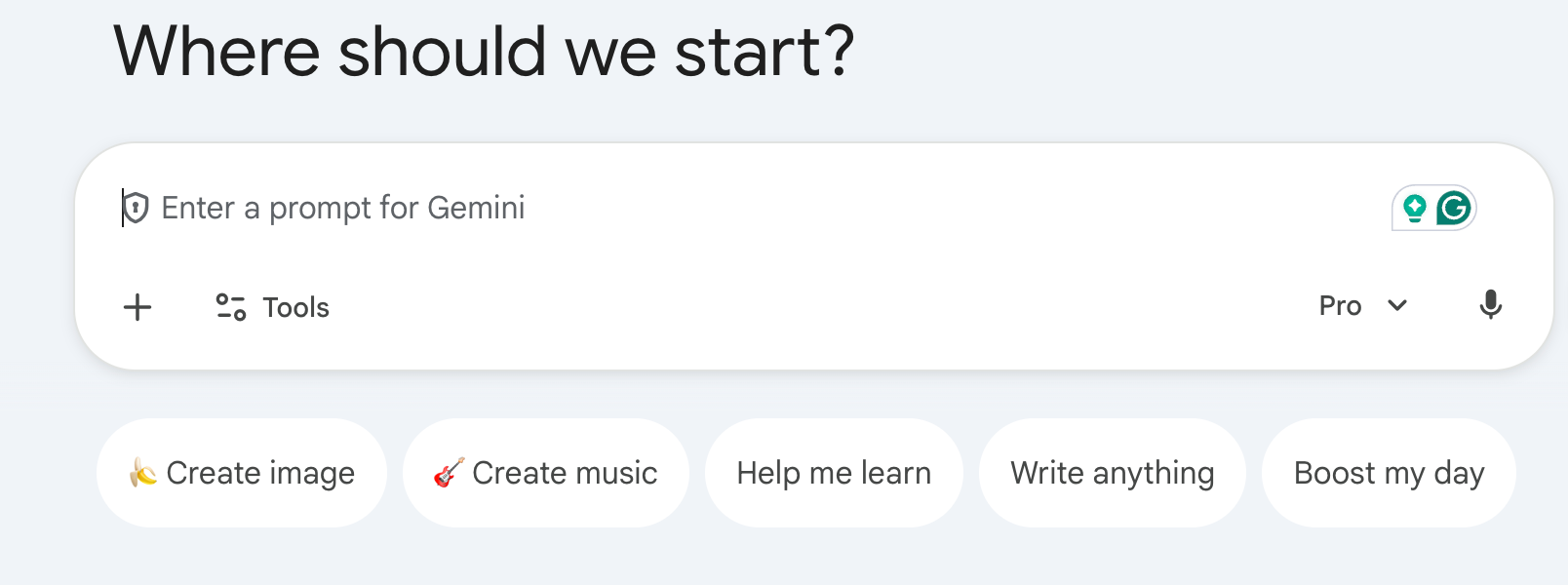
How to generate original music tracks with Gemini Lyria 3
Google DeepMind's Lyria 3 is now built directly into the Gemini app. Describe what kind of music you want, or upload an image for inspiration, and it creates a 30-second track complete with instrumentals, vocals, and generated lyrics. Every track gets watermarked with SynthID so you know what's AI-made. It's free for anyone 18 and older.
Tutorial:
- Open Gemini on your phone or visit gemini.google.com on desktop. No extra signup needed.
- Type a text prompt describing your song. Be specific: "80s synth pop with nostalgic lyrics about summer" works better than "upbeat."
- Or upload an image and ask Lyria 3 to compose a track inspired by it.
- Lyria 3 generates a 30-second instrumental and vocal track in a few seconds.
- The output includes generated lyrics matched to the music and melody.
- Listen to your track directly in the chat. You can generate variations by asking for different styles or moods.
- Use the watermarked output for portfolio work, projects, or creative experiments. It's clearly labeled AI-generated.
URL: https://gemini.google.com
What To Watch Next (24-72 hours)
- Okta: Q4 and full FY2026 earnings after market close today. Watch for commentary on AI-driven identity threats and net new customer adds. The identity security company is testing whether its post-2023 breach recovery holds.
- Marvell Technology: Q4 FY2026 earnings Thursday at 1:45 PM PT. Custom AI silicon is the story, data center revenue up 38% YoY in Q3. First major test of AI infra spending post-Broadcom.
- Apple iPhone 17e: Pre-orders open today at $599. Apple's first AI-capable mid-range device ships March 11.
🛠️ 5-Minute Skill: Turn a Brainstorm Whiteboard Into an Action Plan With Owners
Your team just finished a 90-minute brainstorm. The whiteboard is covered in sticky notes, half-drawn diagrams, and three different lists that may or may not overlap. Someone took a photo. Nobody wrote a summary. The ideas need owners and deadlines by tomorrow's standup.
Your raw input:
Brainstorm whiteboard photo transcript — Q2 feature planning

Sticky cluster 1 (labeled "Quick Wins"):
- fix broken CSV export (jake says 2 hrs)
- add dark mode toggle (design already done?)
- email notification preferences (users keep asking)
- auto-save on form pages (lost 3 customers to this)

Sticky cluster 2 (labeled "Big Bets"):
- API v2 (new auth, rate limiting, webhooks)
- mobile app MVP (ios first? android?)
- self-serve onboarding flow (remove sales dependency)
- AI-powered search across workspace

Sticky cluster 3 (labeled "Tech Debt"):
- migrate to postgres 16
- kill the legacy billing module
- consolidate three notification systems into one
- fix flaky integration tests (CI takes 45 min)

Random notes on the side:
- "do we even need a mobile app or is PWA enough?"
- "API v2 blocks mobile AND self-serve"
- "billing migration = 2 sprints minimum, probably 3"
- "JAKE IS ON VACATION MARCH 10-21"
The prompt:
You are a senior PM converting a chaotic brainstorm whiteboard into a
structured action plan.

From these notes, produce:
1. A prioritized backlog: rank items by impact x feasibility
2. Dependencies map: which items block others?
3. A Q2 sprint plan (6 two-week sprints) showing what fits and what
   doesn't
4. An explicit "not doing" list for items that won't make Q2

Brainstorm notes:
[paste notes here]

Rules:
- If an item blocks multiple others, it goes first regardless of other
  factors.
- Flag any item that depends on a specific person and that person's
  availability.
- Don't add items that weren't on the whiteboard. Brainstorm scope only.
- Be honest about what doesn't fit. Overpromising ruins the next
  brainstorm.
- Use simple table format. No Gantt charts.
What you get back:
Dependencies
API v2 blocks: Mobile app, Self-serve onboarding
Notification consolidation blocks: Email notification preferences
Q2 Sprint Plan (Apr 7 - Jun 27)
Personnel flag: Jake is on vacation March 10-21. If API v2 depends on Jake, Sprint 2 start must hold. Confirm now.
Not doing in Q2:
- Mobile app MVP (blocked until API v2 ships and stabilizes; revisit Q3)
- AI-powered search (no spec, no design, not sprint-ready)
- Legacy billing module removal (2-3 sprint effort, insufficient Q2 capacity)
Risk: This plan has zero buffer. One slip in API v2 cascades into Sprints 4-6. Consider cutting Sprint 6 tech debt items as insurance.
Why this works
The prompt identifies blockers first, which prevents the common mistake of scheduling work that can't start. The "not doing" list is the most important output. Most brainstorms fail not because the ideas are bad, but because nobody explicitly kills the ones that don't fit.
Where people get it wrong: Asking AI to "turn these brainstorm notes into a project plan." You'll get a list of everything with fake deadlines. The hard part isn't organizing. It's cutting. Force the AI to say no by giving it a fixed number of sprints.
What to use
Claude (claude.ai): Strongest at catching dependency chains and flagging overcommitment. Will tell you the plan is unrealistic if it is. Watch out for: May add too many risk caveats. Pick the top two risks and cut the rest.
ChatGPT: Good at clean table formatting and sprint-level organization. Watch out for: Tends to squeeze everything in and underestimate effort. If it says everything fits, it probably doesn't.
AI & Tech News
Anthropic's Claude AI Helped US Military Identify 1,000 Targets in Iran Within 24 Hours
Palantir's Maven Smart System, integrated with Anthropic's Claude model, identified and prioritized roughly 1,000 targets in the first 24 hours of US strikes against Iran. The AI-driven targeting technology supported operations carried out by US and Israeli forces, rapidly processing intelligence to generate and rank potential targets.
OpenAI Clarifies Altman's Comments on NATO Contract, Says Deployment Targets Unclassified Networks
OpenAI is pursuing a contract to deploy its AI on NATO networks, but a spokesperson corrected Altman's claim that the deployment would involve classified systems. The effort targets unclassified infrastructure, a distinction that matters as AI companies expand military relationships.
Suspicious Betting Surge on Polymarket Preceded US Strikes on Iran
A New York Times analysis found more than 150 accounts placed bets of at least $1,000 predicting an imminent attack on Iran before the strikes began. The unusual surge in high-value wagers raises serious concerns about possible insider trading on the prediction market platform.
Polymarket Pulls Nuclear Detonation Betting Markets After Public Outcry
Polymarket removed its long-running nuclear detonation markets following criticism that intensified during the Iran strikes. The contracts had generated $1.7 million in volume on a 2025 contract alone before the platform deleted them.
Kraken Becomes First Crypto Firm to Gain Direct Access to Federal Reserve Payment Systems
Kraken's banking unit secured "master account" access to the Fed's core payment systems, making it the first cryptocurrency company on equal footing with traditional banks. The milestone allows Kraken to move money directly through the Fed's payment rails.
Visa and Stripe's Bridge Plan Stablecoin-Linked Cards in Over 100 Countries
Visa and Stripe's stablecoin platform Bridge are expanding their partnership to issue stablecoin-linked cards in more than 100 countries, up from 18 today. The deal unites the world's largest payments network with its biggest fintech company on digital dollar-backed cards.
Perplexity Signs Multiyear CoreWeave Deal for Nvidia Grace Blackwell AI Inference
AI search company Perplexity signed a multiyear agreement with CoreWeave for dedicated computing clusters powered by Nvidia's Grace Blackwell chips. CoreWeave shares surged more than 5% in pre-market trading on the news.
Sony Reverses PC Strategy, Returns to PlayStation Console Exclusivity
Sony abandoned plans to release major single-player PS5 games on PC, returning to console exclusivity after years of porting flagship titles. Highly anticipated games like Ghost of Yotei will remain PlayStation-only, Bloomberg's Jason Schreier reports.
China's AI Optimism Stands in Sharp Contrast to Western Skepticism
Chinese policymakers and the public demonstrate significantly higher enthusiasm for AI than their Western counterparts. The gap appears driven by China's focus on practical applications, which has built public confidence in the technology's integration into daily life.
Trump Met Coinbase CEO Before Publicly Siding With Crypto Industry Against Banks
President Trump held a private meeting with Coinbase CEO Brian Armstrong before making public statements criticizing banks over the GENIUS Act. The president's remarks closely echoed Coinbase's lobbying position on the stablecoin legislation.
🚀 AI Profiles: The Companies Defining Tomorrow
Decagon
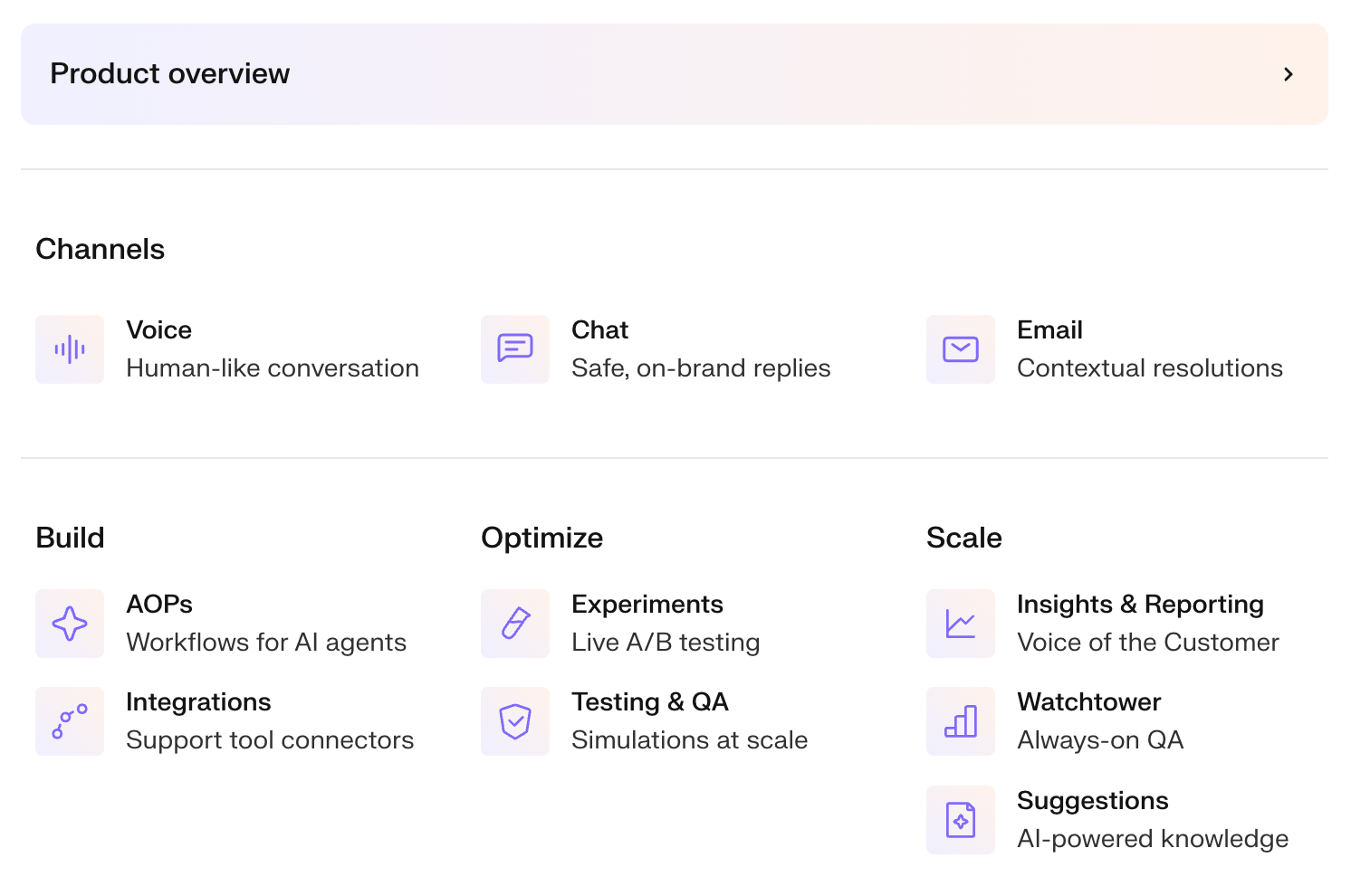
Decagon lets CX teams steer enterprise AI agents in real time without touching code.
Founders
Jesse Zhang (Google engineer, founded Lowkey and sold to Niantic) and Ashwin Sreenivas (ex-Palantir strategist, co-founded Helia before its Scale AI acquisition) started Decagon to fix the main bottleneck in AI customer service: business teams want agility, engineering teams want safety. The San Francisco company now counts Duolingo, Notion, Rippling, Eventbrite, and Deutsche Telekom as customers.
Product
Decagon's core is Agent Operating Procedures, a system that lets customer experience teams adjust agent behavior in plain English while preserving code-level control for engineers. Support teams write rules like "offer a refund if the customer mentions a billing error twice" and the agent follows. No ticket to engineering required.
Competition
Salesforce, Zendesk, and Intercom all have AI modules, but they're bolt-ons to broader platforms. Decagon competes as a pure-play agent infrastructure layer, leaning into control and customization rather than all-in-one workflow suites. Sierra AI is the nearest direct competitor, but Decagon's plain-language procedure management differentiates on operational speed.
Financing 💰
Series D of $250 million in January 2026 valued the company at $4.5 billion. Coatue Management and Index Ventures led, bringing total funding to $481 million across six rounds.
Future ⭐⭐⭐⭐
Decagon went from zero to eight-figure ARR and quadrupled its customer base in a single year, then tripled its valuation in one funding round. The real question: will enterprises trust AI agents to handle mission-critical CX at scale? The founders have two acquisitions between them. They know how to build, sell, and exit. Whether this one stays independent long enough to find out is the bet.
🔥 Yeah, But...
SAP investors and partners are raising doubts about the company's AI products, according to Bloomberg. Volkswagen tested SAP's flagship AI assistant Joule and concluded it was "not mature enough" for production use. SAP is betting its growth strategy on AI features that two-thirds of its cloud customers are now purchasing.
Sources: Bloomberg, February 25, 2026
Our take: SAP rebranded everything around AI. Two-thirds of cloud deals now include AI features. The stock hit all-time highs. Then Europe's biggest car company took the flagship product for a test drive and said no. Volkswagen has some experience with announcing ambitious technology before it's ready. SAP's pitch deck says "AI-powered enterprise." Volkswagen's engineers say "not mature enough," which in German corporate culture means it barely turned on. The investors who priced in AI-driven growth are now discovering the gap between "purchased AI features" and "uses AI features." One goes on the balance sheet. The other involves a support ticket and a shrug.


