IMPLICATOR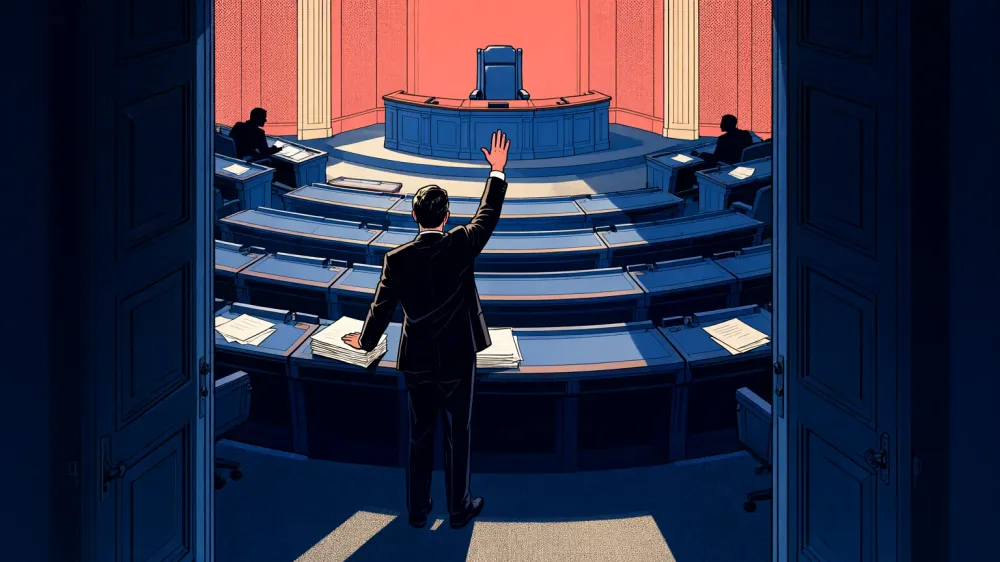
Sen. Ted Cruz blocked Democrats’ AI Safety Board bill on the Senate floor Tuesday, the day President Donald Trump and AI executives signed a voluntary White House accord. The bill would require frontier AI developers to give a federal safety board access to new models at least 45 days before release. House members are not expected back in Washington until after the Nov. 3 midterm elections, and senators could leave town as soon as this week.
What Changed
- Sen. Ted Cruz objected on Sept. 29 to Democrats' request to pass the Artificial Intelligence Risk Management and Security Act of 2026 by unanimous consent.
- The bill would create an AI Safety Board in the Commerce Department and require frontier developers to give it access to new models at least 45 days before release.
- Developers would have to report safety or security incidents within 30 days, or within 72 hours for an imminent national security threat.
- The same day, Trump and executives from six AI companies signed a voluntary accord he called "morally binding."
AI-generated summary, reviewed by an editor. More on our AI guidelines.
What the bill would require
Sen. Mark Warner, D-Va., joined by Sens. Brian Schatz, D-Hawaii, and Andy Kim, D-N.J., sought unanimous consent to pass the Artificial Intelligence Risk Management and Security Act of 2026. A single senator’s objection stops that procedure.
The measure would establish an AI Safety Board within the Commerce Department to set enforceable technical standards and security controls. Developers would need safety plans and would have to report safety or security incidents within 30 days, or within 72 hours if an incident posed an imminent threat to national security.
“I’ve not talked to a single member on either side of the aisle that doesn’t think we need to move,” Warner said.
“If Congress goes out, God forbid we have an incident, AI is already suspect by most Americans, we could see the stop of innovation if an AI tool took over a hospital or water system,” he said.
In Verasight’s September national survey, 63% of respondents said AI should slow down; 5% said it should accelerate.
FREE WEEKDAY MORNING BRIEFING
Track what Congress does about AI safety.
The Implicator Morning Briefing filters the AI news cycle to the stories worth your attention and explains their consequences. From San Francisco, every weekday at 4:45 a.m. Pacific, 7:45 a.m. Eastern.
About five minutes. No hype. No spam.
Cruz’s objection
Cruz, R-Texas, chairs the Senate Commerce Committee. He said Warner’s proposal would give the safety board and Commerce Department too much authority and that he preferred a role for “independent judges.”
He said he shares concerns about AI safety warnings and is continuing work on a catastrophic-risk bill with Senate Majority Leader John Thune, R-S.D., and Sen. Amy Klobuchar, D-Minn.
Cruz said “federal standards on advanced AI must also address the burgeoning patchwork of state laws.”
“Congress must not legislate on the issue of artificial intelligence hastily or in a closed manner,” he said. “Robust AI legislation needs to involve both sides.”
Sen. Josh Hawley, R-Mo., wrote Tuesday that models should undergo mandatory testing before deployment and said he plans legislation making AI firms liable for reckless design.
Warner’s bill was still unnumbered when it came to the floor, and Cruz has described his alternative only as work in progress, so its terms are not known.
Know someone who'd find this useful? ✉️ Email it to a friend in one click, or they can subscribe free here.
The White House position
Trump said on Tuesday: “There’s a belief that there should be tremendous self-regulation, and we automatically have regulation with the Department of Justice, the FBI, all of that.”
“But the self-regulation is very important,” he said.
Trump and executives from Anthropic, Google, Meta, Nvidia, OpenAI and SpaceXAI signed the voluntary agreement, which he called “morally binding.” The accord commits the companies to internal controls that monitor model capabilities and alignment, an internal team to ensure the controls work, an independent external auditor or evaluator, and an independent board committee to oversee reports and remediation.
Asked why the executives should be trusted to regulate themselves, Trump replied: “Because they’re outstanding people.”
House Speaker Mike Johnson did not commit to legislation.
What comes next
Schatz told reporters that if an AI-related “catastrophic event” occurs before the election, the Senate should return to Washington to “deal with it.” Otherwise, he said, Congress should take up the issue in the lame-duck session.
Frequently Asked Questions
What bill did Ted Cruz block?
The Artificial Intelligence Risk Management and Security Act of 2026, brought to the Senate floor on Sept. 29 by Sens. Mark Warner, Brian Schatz and Andy Kim. They sought unanimous consent, which a single senator's objection stops, and Cruz objected.
What would the AI Safety Board bill require?
It would establish an AI Safety Board within the Commerce Department to set enforceable technical standards and security controls. Frontier developers would give the board access to new models at least 45 days before release, keep safety plans, and report safety or security incidents within 30 days, or 72 hours for an imminent national security threat.
Why did Cruz object?
Cruz said the bill would give the safety board and the Commerce Department too much authority and that he preferred a role for independent judges. He said he is working on a catastrophic-risk bill with John Thune and Amy Klobuchar, and that federal standards must also address state laws.
What did Trump sign with AI executives the same day?
A voluntary accord signed by Trump and executives from Anthropic, Google, Meta, Nvidia, OpenAI and SpaceXAI. It commits the companies to internal controls, an internal team, an independent external auditor or evaluator, and an independent board committee. Trump called it morally binding.
Could Congress still act before the election?
House members are not expected back until after the Nov. 3 midterms, and senators could leave as soon as this week. Sen. Brian Schatz said the Senate should return if a catastrophic AI event occurs before the election, and otherwise take up the issue in the lame-duck session.
AI-generated summary, reviewed by an editor. More on our AI guidelines.

Free AI briefing · Weekdays
The AI stories that matter, sourced and explained.
Join the Morning Briefing. It goes out every weekday at 4:45 a.m. Pacific, with later sends for the East Coast, Berlin and Tokyo.
Free when you sign up: The Paperclip Compendium, our tested guide to running AI agents.
Free. Unsubscribe in one click.

Marcus Schuler
Editor-in-Chief and founder of Implicator.ai. Former ARD correspondent and senior broadcast journalist with 10+ years covering tech. Writes daily briefings on policy and market developments. Based in San Francisco. E-mail: editor@implicator.ai