 IMPLICATOR
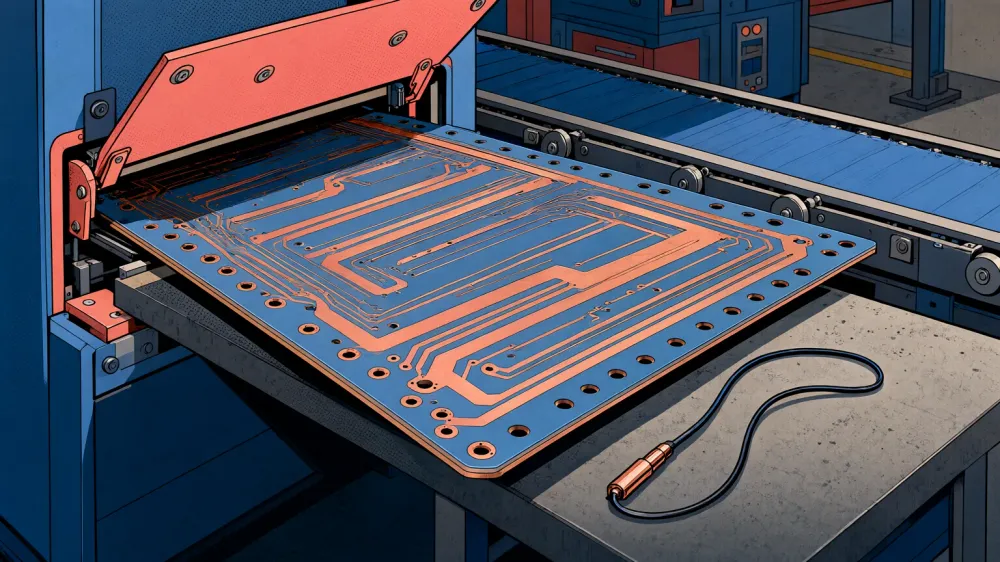
Dongshan Precision raised $1.3 billion in its Hong Kong listing Wednesday after earlier seeking as much as $3 billion. The maker of printed circuit boards and optical transceivers used in AI infrastructure priced the deal below its maximum. Demand was split: local retail orders covered barely half their initial allocation, while international subscriptions exceeded the shares on offer.
Gerald Gan, chief investment officer at Singapore-based Reed Capital, said investors increasingly wanted better valuations rather than buying every AI-related listing indiscriminately.
What Changed
- Dongshan Precision closed 0.75% below its offer price after raising about $1.3 billion in Hong Kong.
- Retail orders covered 0.52 times their initial allocation; international subscriptions covered their offering 3.17 times.
- Cornerstone investors received half the shares sold, subject to a six-month lock-up.
- The proceeds will primarily expand optical chips, optical modules and high-end circuit board production.
AI-generated summary, reviewed by an editor. More on our AI guidelines.
Shares recover from opening fall
The stock opened at HK$82.40 against an issue price of HK$86.80 and fell as much as 6.1% in early trading. It recovered before finishing at HK$86.15, down 0.75% from its offer price.
The modest closing loss came as Hong Kong’s Hang Seng Index gained 0.23% and its technology index rose 1.4%. Mainland hardware stocks also rallied after circuit-board makers and materials suppliers posted strong third-quarter earnings.
Retail demand falls short
Dongshan sold about 113.8 million shares at HK$86.80 each, below the maximum price of HK$93.80. It did not exercise an option to increase the offering’s size.
The offering generated gross proceeds of about HK$9.88 billion. After estimated listing expenses of roughly HK$159 million, net proceeds came to about HK$9.72 billion.
FREE AI BRIEFING · WEEKDAYS
Follow the money behind AI hardware.
Get the AI stories shaping the day, with concise context from San Francisco. The briefing takes about five minutes and arrives at 4:45 a.m. Pacific, 7:45 a.m. Eastern.
Free. No hype. Unsubscribe anytime.
Local retail subscriptions covered 0.52 times the shares originally reserved for them. Dongshan shifted roughly 5.47 million shares to the international offering, leaving retail investors with 5.19% of the final deal.
International demand was stronger, with subscriptions covering that offering 3.17 times. The retail shortfall did not mean the whole offer lacked buyers. Orders for the international offering exceeded the shares on offer even as local retail subscriptions fell short. Cornerstone investors received half the shares sold. Buyers included JPMorgan Asset Management (Asia Pacific), Alibaba Investment and CPE Bodhi.
Those cornerstone shares carry a six-month lock-up, restricting when their holders can sell. The allocation data measures demand for Dongshan shares rather than future orders for AI equipment.
Optical business adds revenue
The Suzhou-based manufacturer makes printed circuit boards and optical transceivers. Printed circuit boards connect electronic components; optical transceivers send data through fiber-optic cables. Dongshan also makes automotive components and display modules, giving it businesses beyond AI infrastructure.
It entered optical transceivers through the acquisition of Source Photonics, completed in September 2025. The segment contributed 19.2% of revenue in the six months ended June 30, 2026.
Know someone who'd find this useful? ✉️ Email it to a friend in one click, or they can subscribe free here.
The listing proceeds will primarily fund expanded production of high-speed optical chips and modules, along with high-end circuit boards.
Dongshan’s domestic interim accounts showed first-half revenue of 27.8 billion yuan, compared with 17 billion yuan a year earlier. Net profit attributable to listed shareholders reached 2.96 billion yuan, roughly four times the year-earlier result. Operating cash flow fell 4.65% to 2.38 billion yuan over the same period.
Other issuers delay sales
Dongshan proceeded after Chinese robot maker Changzhou Microintelligence and tourism company Jiangsu Slender West Lake Culture and Tourism delayed planned Hong Kong offerings, citing market conditions.
Dickie Wong, executive director of research at uSMART Securities, said enthusiasm for the local AI supply-chain theme had cooled and investors had become more selective.
Dilin Wu, a strategist at Pepperstone, said the recovery in mainland hardware shares offered only limited help to sentiment, adding: “For Hong Kong’s IPO pipeline, I don’t think this will stop companies from coming to market. But it could make pricing more difficult, particularly for companies hoping their AI exposure alone will justify a premium valuation.”
Frequently Asked Questions
How did Dongshan Precision trade on its Hong Kong debut?
The shares opened at HK$82.40 against an offer price of HK$86.80 on Wednesday. After falling as much as 6.1%, they recovered and closed at HK$86.15, a loss of 0.75% from the offer price.
How much money did the listing raise?
Dongshan sold about 113.8 million shares at HK$86.80 each. Gross proceeds were approximately HK$9.88 billion, or $1.3 billion. After estimated listing expenses of roughly HK$159 million, net proceeds were about HK$9.72 billion.
How strong was demand for the shares?
Local retail subscriptions covered 0.52 times the initial retail allocation. About 5.47 million shares were moved to the international offering, where subscriptions covered the offering 3.17 times. Allocation data measures demand for shares rather than future AI equipment orders.
Who were the cornerstone investors?
The cornerstone buyers included JPMorgan Asset Management (Asia Pacific), Alibaba Investment and CPE Bodhi. Together, cornerstone investors received half the shares sold, with a six-month lock-up restricting sales.
What does Dongshan make and how will it use the proceeds?
Dongshan makes printed circuit boards, optical transceivers, automotive components and display modules. The listing proceeds will primarily fund expanded production of high-speed optical chips and modules, along with high-end circuit boards.
AI-generated summary, reviewed by an editor. More on our AI guidelines.


Free AI briefing · Weekdays
The AI stories that matter, sourced and explained.
Join the Morning Briefing. It goes out every weekday at 4:45 a.m. Pacific, with later sends for the East Coast, Berlin and Tokyo.
Free when you sign up: The Paperclip Compendium, our tested guide to running AI agents.
Free. Unsubscribe in one click.

Marcus Schuler
Editor-in-Chief and founder of Implicator.ai. Former ARD correspondent and senior broadcast journalist with 10+ years covering tech. Writes daily briefings on policy and market developments. Based in San Francisco. E-mail: editor@implicator.ai