Implicator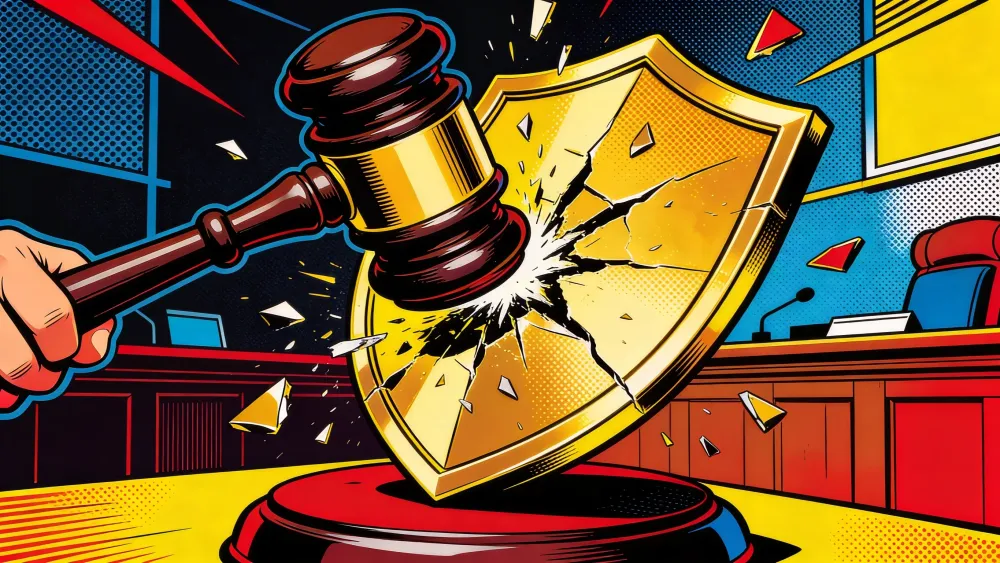
Elon Musk lost a securities fraud trial. Rare territory for him. A federal jury in San Francisco concluded Friday that two tweets he fired off during the 2022 Twitter takeover battle misled investors. But the verdict was messy, not the clean kill plaintiffs wanted. Jurors rejected a broader claim that Musk engaged in a deliberate scheme to defraud shareholders, and cleared him over remarks made on a podcast, Bloomberg reported. The tweets at issue included his May 13, 2022, post declaring the deal "temporarily on hold," which sent the stock into a slide that Musk's own statements kept deepening over the months that followed.
The verdict leaves damages to be worked out. The jury determined a per-share, per-day measure of how much Musk's statements deflated the stock across the roughly five-month class period. Plaintiffs' attorney Mark Molumphy had told jurors the case could expose Musk to more than $2 billion. Because the class action covers thousands of investors, many of them institutional, the final figure will take time to calculate.
Three days of deliberation. Nearly three weeks of trial. And a courtroom where close to 40 prospective jurors were dismissed during selection after saying they could not be impartial toward Musk. That is the backdrop to a verdict that breaks the courtroom winning streak of the world's richest person.
The Breakdown
- San Francisco jury found Musk liable for two misleading tweets during 2022 Twitter takeover, rejected broader "scheme to defraud" claim
- Damages estimated at $2B+ based on per-share, per-day calculation across five-month class period covering thousands of investors
- Musk's "deal temporarily on hold" tweet crashed Twitter stock 9.6% in one day; shares fell 32% from $54.20 offer by July 2022
- First major courtroom loss for "Teflon Elon" after winning Tesla trial, SolarCity suit, and $139B pay package appeal
The tweets that crashed the stock
Musk tapped it out on May 13, 2022, and broadcast it to tens of millions of followers. "Twitter deal temporarily on hold." Shares cratered. Reuters reported a 9.6% drop on that day alone, and in premarket the next morning the stock fell further. Two hours after the original tweet, he followed up saying he was "still committed to acquisition." The stock had already been hit.
Three days later, he responded to then-CEO Parag Agrawal's public defense of Twitter's bot methodology with a poop emoji. Told a conference audience on May 16 that at least 20% of accounts were fake, almost four times Twitter's public figure. Between those posts the stock fell nearly 18%, KQED reported. By July 8, when Musk announced he was walking away from the deal entirely, Twitter closed at $36.81, a 32% drop from his offer price.
The merger agreement did not expressly give Musk a unilateral right to put the deal "on hold." He had signed a binding agreement at $54.20 per share the previous month and waived due diligence, giving up his right to dig through Twitter's nonpublic books before closing. During a May meeting with Agrawal and CFO Ned Segal, Musk asked how the company counted spam accounts. He told jurors he was "flabbergasted" when they could not explain the methodology, according to KQED's trial coverage.
"He trashed the company, he trashed the executives and he tanked the stock," Molumphy told the jury during closing arguments.
But Musk's defense attorney Michael Lifrak countered that the bot concerns were genuine. When Musk asked for data at the May executive meeting, Lifrak said, the company "clammed up." Musk never asked for a discount directly. And the deal eventually closed at the original $54.20, after Twitter sued in Delaware to force him to honor it.
Join 10,000+ AI professionals
Strategic AI news from San Francisco. No hype, no "AI will change everything" throat clearing. Just what moved, who won, and why it matters. Daily at 6am PST.
No spam. Unsubscribe anytime.
Musk took the witness stand earlier this month in a dark suit and shrugged the May 13 post off. Called it honest frustration, compared it to telling someone you'd be late for a meeting. "It may not be my wisest tweet," he said. Then plaintiffs' attorney Arnzen asked whether he had run a rope-a-dope strategy during takeover talks. Musk said two words. "May have."
Teflon, cracked
The verdict marks a rare courtroom loss for a man dubbed "Teflon Elon." He walked out of the Tesla "funding secured" trial in 2023 without paying a dime. Beat a shareholder suit over Tesla's SolarCity purchase. And last December, the Delaware Supreme Court handed him back a $139 billion pay package that a lower court had thrown out.
Quinn Emanuel, his legal team, had tried to kill the trial before it got to a verdict. They filed a mistrial motion on March 7 arguing that the whole environment was poisoned against Musk. DOGE. His political activity. The way he runs X. All of it had shifted the jury pool since 2022, the 20-page filing said. Nearly half the jury pool got sent home for admitting bias. Judge Charles Breyer let the trial continue. The jury spoke anyway.
Lifrak had urged jurors to stick to the evidence. "This is about what happened in 2022, whether Mr. Musk engaged in the scheme to defraud, whether he purposely was tanking Twitter's stock price, whether he lied," he said. "He didn't. They didn't prove it."
On the narrow question of "scheme," the jury agreed with the defense. On whether two of Musk's tweets misled investors who sold at depressed prices, they did not.
A verdict the balance sheet won't feel
Even billions in damages would barely register against Musk's wealth. Bloomberg's Billionaires Index put his net worth at $661.1 billion on Friday. The man found liable for misleading Twitter shareholders now controls a combined SpaceX-xAI-X empire that valued itself at $1.25 trillion earlier this year. X included.
For Brian Belgrave, a named plaintiff who bought 15,000 shares expecting $54.20 and sold around $33, the scale makes the loss sting differently. "I got lied to," Belgrave told the court. "Felt like I got cheated."
No comment from Musk. There never is when he loses. The SEC is still after him separately, having sued in January 2025 over the 9.1% Twitter stake he sat on without telling regulators. Settlement talks are ongoing. Another investor suit waits in a New York courtroom. And you can expect an appeal from Quinn Emanuel, given the mistrial motion they filed before deliberations even started. The Teflon label held for years. Friday in San Francisco, a jury cracked it.
Frequently Asked Questions
What exactly did the jury find Musk liable for?
The jury found Musk liable for misleading investors with two specific tweets during the 2022 Twitter takeover, including his May 13, 2022, post declaring the deal "temporarily on hold." But jurors rejected the broader allegation that Musk engaged in a deliberate "scheme" to defraud shareholders, and cleared him over statements made on a podcast.
How much will Musk have to pay in damages?
The jury determined a per-share, per-day measure of stock deflation across the roughly five-month class period. Plaintiffs' attorney Mark Molumphy estimated total damages could exceed $2 billion. The exact payout to each of the thousands of shareholders in the class action still needs to be calculated by the court.
Why were so many prospective jurors dismissed?
Close to 40 prospective jurors were dismissed during selection after saying they could not be impartial toward Musk. His lawyers cited this in a mistrial motion, arguing that Musk's public profile had shifted drastically since 2022 due to DOGE, his political activity, and his conduct on X.
What was the rope-a-dope moment during the trial?
Plaintiffs' attorney Arnzen asked Musk whether he had used a rope-a-dope strategy during takeover negotiations. Musk's two-word response, "May have," was widely seen as a potentially damaging concession that he may have deliberately worn down Twitter's negotiating position through public attacks on the company.
Can Musk appeal the verdict?
His legal team at Quinn Emanuel filed a mistrial motion on March 7 before the verdict, arguing community hostility prevented a fair trial. That filing creates the groundwork for an appeal. The SEC also sued Musk separately in January 2025 over his delayed disclosure of a 9.1% Twitter stake, and settlement talks in that case are ongoing.

Maria Garcia
Bilingual tech journalist slicing through AI noise at implicator.ai. Decodes digital culture with a ruthless Gen Z lens—fast, sharp, relentlessly curious. Bridges Silicon Valley's marble boardrooms, hunting who tech really serves.