IMPLICATOR
Emerald AI raised $150 million on August 25, 2026. The round valued the data-center software company at $1.05 billion, while its system slows, pauses, caps or moves selected computing jobs when a utility needs electricity demand reduced. Emerald says dispatchable AI work can win faster grid connections without leaving operators unable to serve customers.
What Changed
- Emerald AI raised $150 million at a $1.05 billion valuation, although the final round terms are not separately confirmed by a company announcement or filing.
- A Phoenix test cut a 256-GPU cluster's power draw by 25% for three hours while keeping jobs within predefined service tiers.
- Silicon Valley Power is testing the system at a commercial, multi-megawatt Santa Clara data center, but the pilot has not produced public results.
- Commercial adoption still depends on control rights, operator incentives and whether shifting work actually lowers emissions.
AI-generated summary, reviewed by an editor. More on our AI guidelines.
Investors back dispatchable computing
DCVC and Energize Capital led the financing, with Nvidia, Samsung Ventures, GE Vernova and Salesforce Ventures participating. Emerald was founded in November 2024 by Varun Sivaram, a former Biden administration energy official. The money backs a business built around sharing the value of added grid capacity with utilities and data-center operators.
An August 3, 2026, Form D showed $90,229,639 sold toward a planned $150 million offering. The filing did not identify the valuation or lead investors, and it did not establish whether earlier rounds overlapped with the offering.
The final financing details are not separately confirmed by a company announcement or filing.
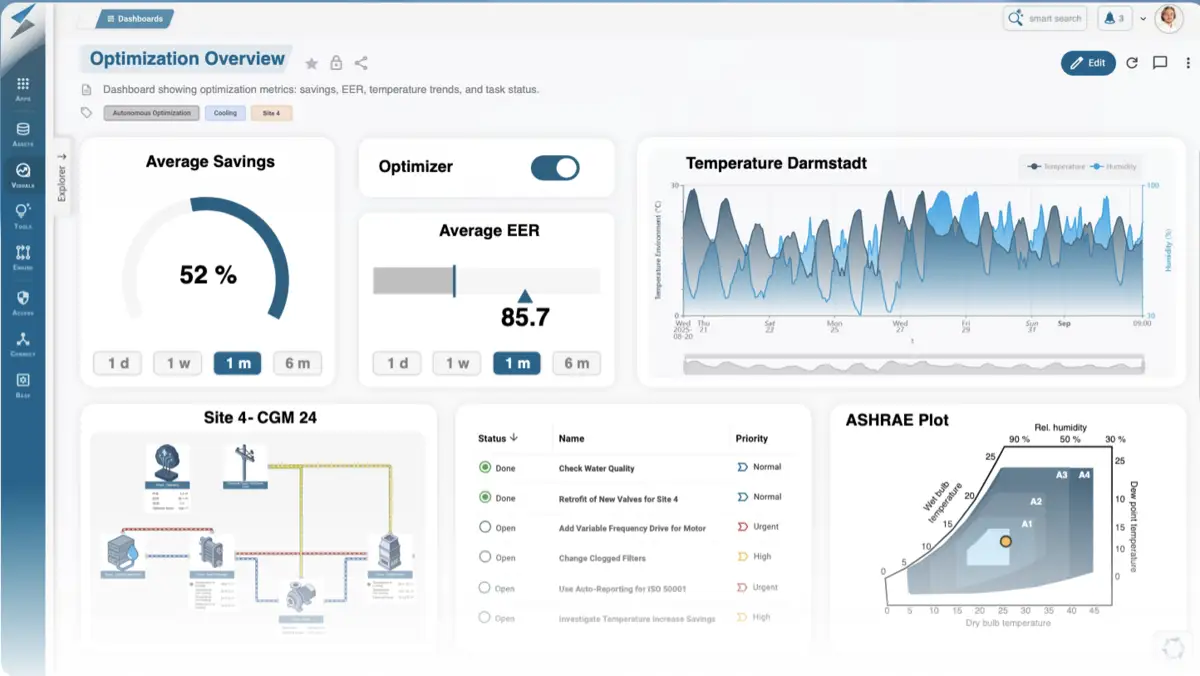
Emerald targets the computing load itself. By comparison, etalytics changes how facility-side cooling equipment such as pumps, cooling towers and heat exchangers operates, without changing compute workloads. Emerald sorts jobs by the delay or reduced throughput a customer will tolerate, then responds to a utility signal within those limits. Its tiers allowed throughput reductions of 0% to 50% over three to six hours.
A smaller test supplies the evidence
The strongest measured result comes from a Phoenix field test on May 1 and May 3, 2025. Emerald and its partners used a cluster of 256 Nvidia A100 GPUs to cut power by 25% from its average base load for three hours, with 15-minute ramps down and back up.
Across 33 experiments lasting three to six hours, the system managed 212 jobs and recorded a 4.52% power-prediction error relative to average experiment power. No job broke the test's predefined service tier.
The study was written by Emerald personnel and partners, used one cluster and profiled workloads before each event. It slowed or paused batch-style training, fine-tuning and some inference jobs, but did not alter real-time inference, streaming or model-serving work. The authors said larger deployments with full-site telemetry are needed to measure effects beyond a single cluster.
FREE WEEKDAY MORNING BRIEFING
The AI infrastructure race, explained
The Implicator Morning Briefing filters the AI news cycle to the stories worth your attention and explains their consequences. From San Francisco, every weekday at 4:45 a.m. Pacific, 7:45 a.m. Eastern.
About five minutes. No hype. No spam.
Santa Clara moves toward commercial use
Silicon Valley Power and Emerald announced a Santa Clara pilot on April 21, 2026, at a commercial, multi-megawatt data center where Nvidia runs AI workloads. As of June 2026, the municipal utility served about five dozen data centers across 20 square miles and had said its spare capacity was already committed.
Under the plan, the utility would send requests during limited periods of grid need, while Emerald would translate them into approved workload changes and report the response. The Santa Clara pilot has not yet produced public results.
Know someone who'd find this useful? ✉️ Email it to a friend in one click, or they can subscribe free here.
A successful cluster test does not itself create a commercial right to interrupt a customer's machines. Utilities want verifiable reductions, while operators want limits on how often work can be slowed and which services must stay untouched.
Control remains unsettled
No standardized binding utility-data-center agreement existed as of June 26, 2026. Silicon Valley Power chief operating officer Chris Karwick said full utility control of the load-side breaker “is non-negotiable” for faster interconnection and added capacity.
Data-center operators resist surrendering that authority because an abrupt shutdown can damage costly hardware. A sudden loss of a very large load can also cause problems on the grid. Traditional bill credits may be too small to justify delaying lucrative computing jobs, leaving faster access to electricity as the stronger inducement.
The environmental result is not automatic either. A Green Software Foundation policy review published March 10, 2026, found that most demonstrations were under two years old and favored deferrable workloads. Moving work into cheaper hours can increase emissions where fossil generation supplies the off-peak power.
Steven Carlini, Schneider Electric's chief advocate for AI and data centers, put the commercial choice plainly: “Data centers are capable of slowing, capping or shifting workloads, but it’s questionable whether they want to do it.”
Frequently Asked Questions
What does Emerald AI's software control?
It controls selected computing jobs rather than only cooling and facility equipment. Workloads are sorted by their tolerance for delay or lower throughput, then slowed, paused, capped or moved within approved limits when a utility requests a reduction.
What did the Phoenix field test demonstrate?
A 256-GPU Nvidia A100 cluster cut power by 25% from its average base load for three hours, with 15-minute ramps. Across 33 experiments and 212 jobs, no job broke its predefined service tier.
What are the test's main limits?
The study involved Emerald and commercial partners, covered one pre-profiled cluster and did not modify real-time inference, streaming or model-serving work. Larger deployments with full-site telemetry are still needed.
Why are utilities interested in flexible data centers?
Verifiable demand reductions could help utilities manage periods of grid stress and connect new data centers faster. Utilities also want firm control rights, while operators want protection for costly hardware and critical services.
Does shifting AI work automatically cut emissions?
No. Moving work into cheaper off-peak hours can raise emissions where fossil generation supplies the marginal power. The result depends on carbon-aware scheduling and the grid's generation mix.
AI-generated summary, reviewed by an editor. More on our AI guidelines.

Free AI briefing · Weekdays
The AI stories that matter, sourced and explained.
Join the Morning Briefing. It goes out every weekday at 4:45 a.m. Pacific, with later sends for the East Coast, Berlin and Tokyo.
Free when you sign up: The Paperclip Compendium, our tested guide to running AI agents.
Free. Unsubscribe in one click.

Marcus Schuler
Editor-in-Chief and founder of Implicator.ai. Former ARD correspondent and senior broadcast journalist with 10+ years covering tech. Writes daily briefings on policy and market developments. Based in San Francisco. E-mail: editor@implicator.ai