IMPLICATOR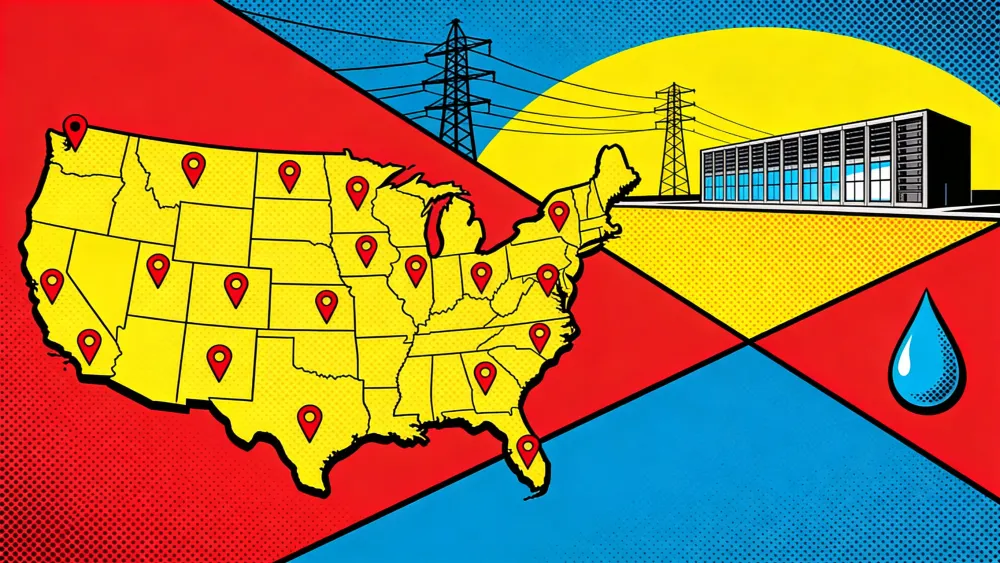
"Future litigation around data centers is coming," Erin Brockovich wrote on April 28, the day after she launched a website where residents log complaints about the AI facilities rising near them. By May 24 the map had gathered 2,716 reports from 49 states, with water the most common worry, ahead of electricity and health.
Brockovich helped build the 1990s case that ended in a $333 million settlement with Pacific Gas & Electric, then the largest payout in a U.S. direct-action lawsuit. The map is how she is pointing that method at the AI buildout, and it arrives as local boards and ballot measures, more than Congress or the courts so far, become the brakes that actually slow it, while Washington loosens the federal ones.
Key Takeaways
- Brockovich's crowdsourced map has logged 2,716 AI data center complaints from 49 states, led by water, then electricity and health.
- Her own newsletter frames it as pre-litigation groundwork: 'document everything,' she tells residents, because 'litigation is coming.'
- The reports cluster hard: 297 of Texas's 612 come from one town, Sulphur Springs, near a 3-gigawatt complex.
- Local boards and ballots are the working brakes while Washington loosens federal checks. Charlotte and Nassau County both vote June 8.
AI-generated summary, reviewed by an editor. More on our AI guidelines.
Where the litigation starts
On the site, Brockovich keeps the framing civic. "Self-reporting is the best way we can get this information out to the public," she writes, listing six community concerns led by water and energy use. Her newsletter is blunter, telling residents to "document everything" where contamination or health effects have already appeared. Tom's Hardware read the project the same way, noting that compiling resident complaints "is often one of the first steps needed for lawyers to see if a class-action lawsuit has merit."
Amazon agreed in March to a $20.5 million settlement, without admitting fault, in a case alleging that an AWS data center in eastern Oregon contaminated community drinking water with nitrates. The map itself is ordinary tooling, a Leaflet build on OpenStreetMap and CARTO basemaps of the kind behind countless hobbyist sites, with residents adding pins by emailing their zip codes.
A national map of a few local fights
The reports span 49 states but bunch up in a few. Texas accounts for 612 of the 2,716, and 297 of those, nearly half the state's total, come from one town. Sulphur Springs is where MSB Global is building a 3-gigawatt complex across about 1,600 acres and 30 buildings, Engadget reported, and where residents have packed council meetings and filed multiple lawsuits over the area's data center plans. A judge has allowed one of those challenges to proceed, according to KLTV.
The map measures intensity at a few mega-project flashpoints more than it captures uniform national opposition, and that concentration tracks where the legal fights already sit. Nationally, Data Center Watch counts more than 140 local groups that have blocked or delayed upward of $64 billion in projects. Against the roughly $700 billion the largest AI builders are expected to spend this year, per CNBC, that is a small share of the buildout. In the towns where it has landed, the cost has been as much political as financial.
Get Implicator.ai in your inbox
Strategic AI news from San Francisco. No hype, no "AI will change everything" throat clearing. Just what moved, who won, and why it matters. Daily at 6am PST.
No spam. Unsubscribe anytime.
Bipartisan because it is local
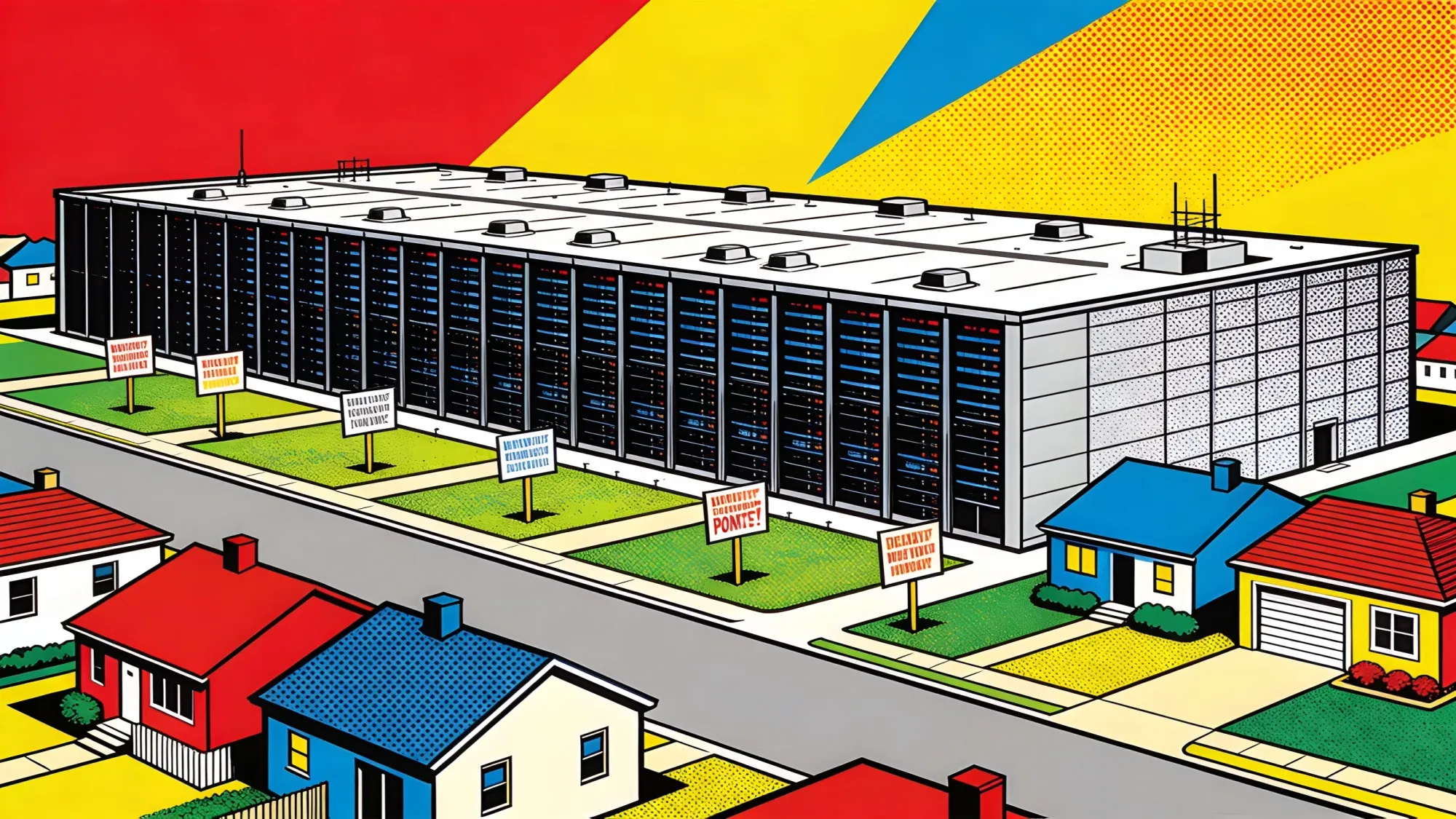
About seven in ten Americans oppose a data center near their home, according to a Gallup survey this year, and a majority told the pollster they would rather live next to a nuclear plant. Opposition has climbed fast; Tom's Hardware put it at 47 percent in a poll months earlier. It does not split along party lines. "Amid so much partisan division, opposition to data centers seems to be the thing that unites Americans right now," said Megan Mullin, faculty director of UCLA's Luskin Center for Innovation, who traced it less to a fear of technology than to "our deep affinity for where we live."
Ben Green, who studies information and public policy at the University of Michigan, said voters read the issue as a proxy. "People very much recognize data centers as being about big industry against the local community," he told Rolling Stone. The consequences are already showing up at the ballot box. In Festus, Missouri, voters removed four of eight city council members weeks after the council approved a $6 billion project over public objection. In Port Washington, Wisconsin, about 66 percent backed the nation's first referendum requiring voter approval for large tax-increment districts, a measure a grassroots group put on the ballot with more than 1,000 signatures.
The federal brakes are coming off
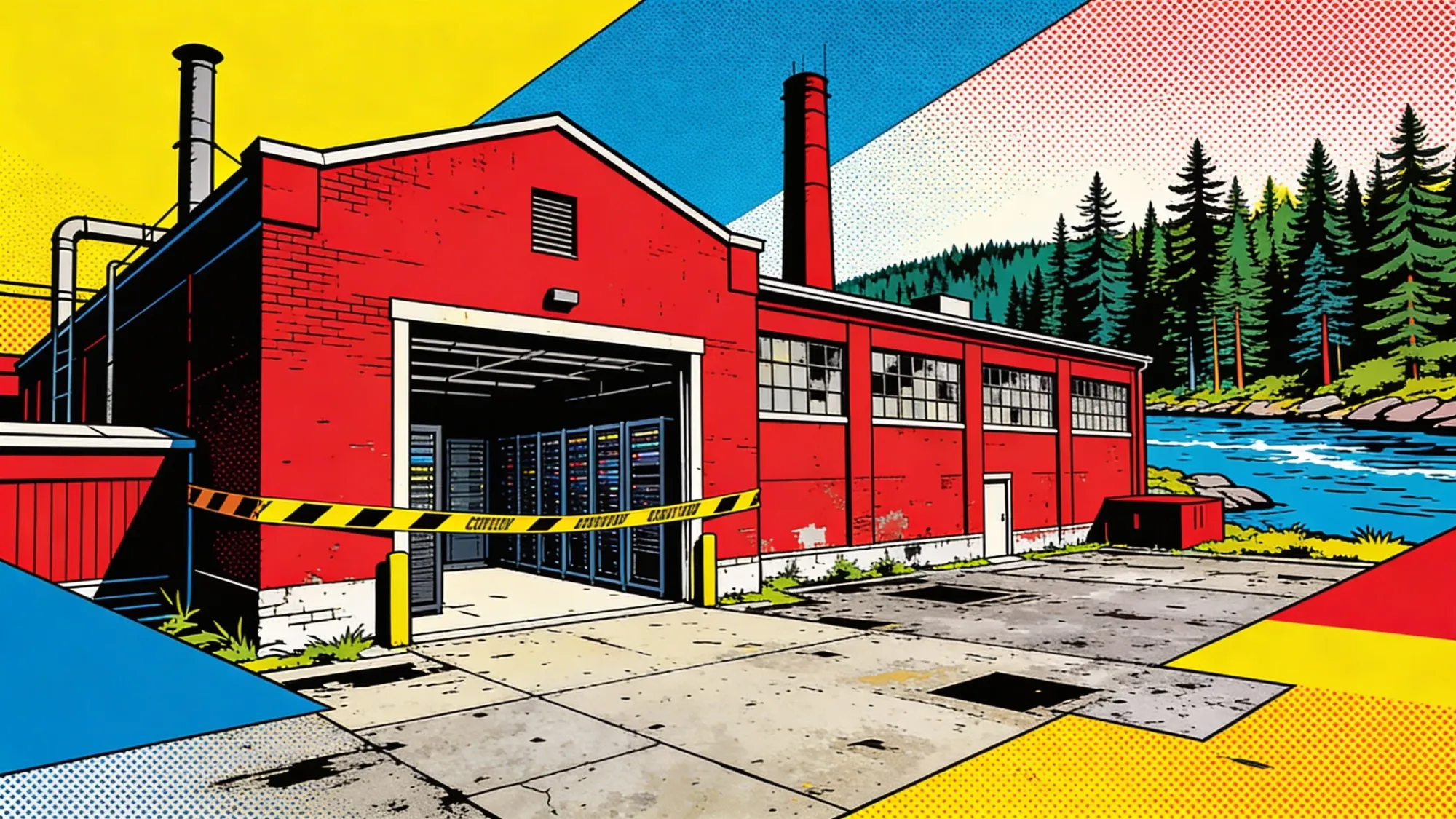
While towns tighten, Washington loosens. Last summer President Trump signed an executive order to speed federal permitting for data centers. This month, EPA Administrator Lee Zeldin proposed a rule that would let projects begin "pre-construction" work before final environmental approval, on the agency's finding that such activity has "no impact to human health or the environment," HuffPost reported. In Maine, Governor Janet Mills vetoed what would have been the first statewide moratorium, on data centers above 20 megawatts, after the legislature passed it with bipartisan support; she objected to the lack of a carve-out for one project in a former mill town.
The industry's answer is that the newest builds will not repeat the old harms. QTS, courting Clinton, Iowa, this month, promised a "closed-loop cooling system that does not consume water once operational" and pledged to cover its own energy costs so local rates would not rise. In Morgan County, Georgia, Representative Alexandria Ocasio-Cortez held up jars of brown water at a House subcommittee hearing this month that she said came from homes next to a Meta data center, where, by her office's account, 10 percent of the community's daily water now goes to the facility and a total deficit is projected by 2030. Meta has disputed the claim.
The federal moratorium bill from Senator Bernie Sanders and Ocasio-Cortez, introduced this spring, has not advanced in a Congress the administration has steered away from AI regulation. That leaves the fight in front of local boards, where Brockovich has been directing it. Two such votes fall on June 8, when Charlotte's city council decides on a data center moratorium and Nassau County, Florida, holds a second public hearing on its own. Both outcomes go onto Brockovich's map, the record she says the coming lawsuits will rely on.
Frequently Asked Questions
What is the Brockovich AI data center map?
A crowdsourced website, brockovichdatacenter.com, where residents report concerns about AI data centers near them. As of May 24 it had logged 2,716 reports from 49 states, plotted alongside operational, under-construction, and proposed facilities. Erin Brockovich, the consumer advocate behind the 1990s Pacific Gas & Electric case, opened it this spring.
Why does it matter that Brockovich is involved?
Brockovich helped build the case that ended in a $333 million settlement with PG&E, then the largest U.S. direct-action payout. Her newsletter tells residents to 'document everything' because 'litigation is coming,' and an AWS data center case in Oregon already settled for $20.5 million, suggesting the map could feed future lawsuits.
What are residents most worried about?
Water leads, followed by electricity and health. Cooling systems can consume large volumes of water, and the facilities draw heavy power that can raise local rates. About seven in ten Americans oppose a data center near their home, according to Gallup, a rare bipartisan position.
Where are the complaints concentrated?
Texas leads with 612 of the 2,716 reports, and 297 of those come from one town, Sulphur Springs, where MSB Global is building a 3-gigawatt complex. The map captures intensity at a few mega-project flashpoints more than uniform national opposition.
What is the government doing about it?
Washington has loosened federal checks: a Trump permitting order, an EPA proposal to allow pre-construction work before final approval, and a stalled Sanders-Ocasio-Cortez moratorium bill. Maine's governor vetoed the first statewide moratorium. Local boards are acting instead; Charlotte and Nassau County, Florida, both vote June 8.
AI-generated summary, reviewed by an editor. More on our AI guidelines.
Free AI briefing · Weekdays
The AI stories that matter, sourced and explained.
Join the Morning Briefing. It goes out every weekday at 4:45 a.m. Pacific, with later sends for the East Coast, Berlin and Tokyo.
Free when you sign up: The Paperclip Compendium, our tested guide to running AI agents.
Free. Unsubscribe in one click.

Marcus Schuler
Editor-in-Chief and founder of Implicator.ai. Former ARD correspondent and senior broadcast journalist with 10+ years covering tech. Writes daily briefings on policy and market developments. Based in San Francisco. E-mail: editor@implicator.ai