OpenAI's CFO floated a federal backstop for AI infrastructure, then reversed within hours after White House rejection. The whiplash exposed the core problem: OpenAI needs $1.4 trillion while generating $20 billion. The math doesn't work.
Microsoft declares it's building "humanist superintelligence" to keep AI safe. Reality check: They're 2 years behind OpenAI, whose models they'll use until 2032. The safety pitch? Product differentiation for enterprise clients who fear runaway AI.
Three Stanford professors just raised $50M to prove OpenAI and Anthropic generate text wrong. Their diffusion models claim 10x speed by processing tokens in parallel, not sequentially. Microsoft and Nvidia are betting they're right.
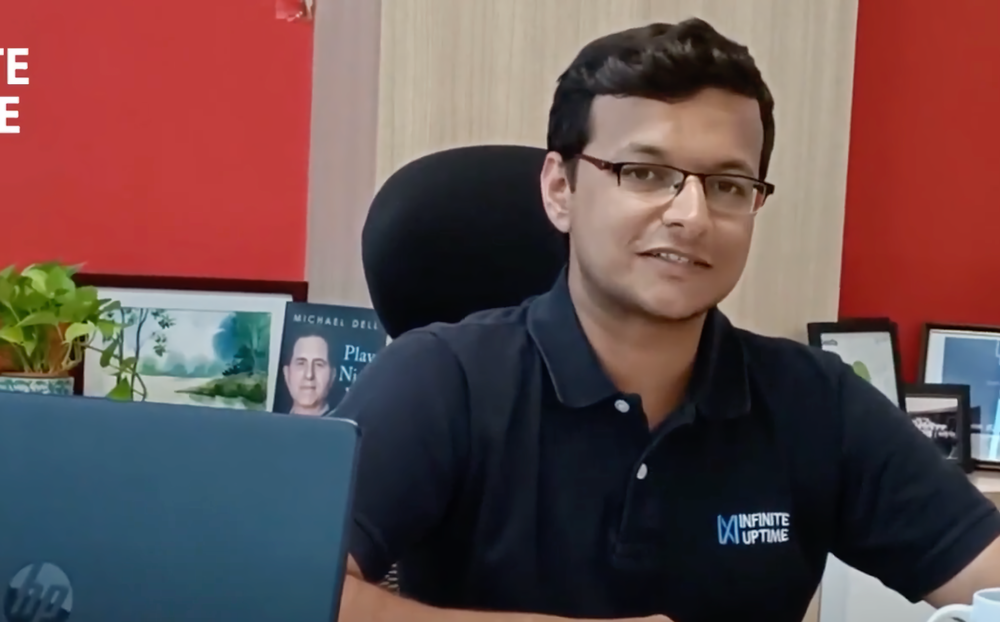
Infinite Uptime just scored $35 million to tell factories when their machines might break. The Indian startup's sensors and AI help prevent costly breakdowns in some of the world's harshest industrial environments.
The company's tech monitors factory equipment in real-time, spotting problems before they cause shutdowns. Their sensors work where others can't - in extreme heat and corrosive acid plants. It's like having a doctor for machines, but one that never sleeps and can predict heart attacks.
CEO Raunak Bhinge claims their approach beats both industry giants and other startups. While Siemens and Honeywell take a top-down view, Infinite Uptime gets up close and personal with individual machines. Their sensors have already saved factories over 74,000 hours of downtime.
The Series C round, led by Avataar Ventures, will fuel US expansion. The company serves 800 plants across 30 countries and has grown revenue 2x annually for three years straight. They're already cash-flow positive - a rare feat in the startup world.
Why this matters:
Heavy industry is finally getting the 'smart' upgrade it desperately needs - turns out even steel mills need AI these days
A startup from India is beating global giants at their own game in some of manufacturing's toughest environments. Someone had to do it.

Tech translator with German roots who fled to Silicon Valley chaos. Decodes startup noise from San Francisco. Launched implicator.ai to slice through AI's daily madness—crisp, clear, with Teutonic precision and sarcasm.
E-Mail: marcus@implicator.ai
Three Stanford professors just raised $50M to prove OpenAI and Anthropic generate text wrong. Their diffusion models claim 10x speed by processing tokens in parallel, not sequentially. Microsoft and Nvidia are betting they're right.
Ex-Tencent AI scientist Wei Liu chose Singapore for unrestricted Nvidia chip access, raising $50M for Video Rebirth. The geography play matters more than the physics pitch—it's about training on Blackwell while China can't.
Microsoft's venture arm doubled funding for a German startup that cuts datacenter cooling costs by up to 40% using software alone. The timing: North American operators face years-long power constraints while AI demand climbs.
FurtherAI closed $25M from Andreessen Horowitz six months after seed to automate insurance workflows—from submission intake to claims processing. The velocity signals a shift from AI pilots to production deployment, with early customers reporting measurable ROI.