Implicator
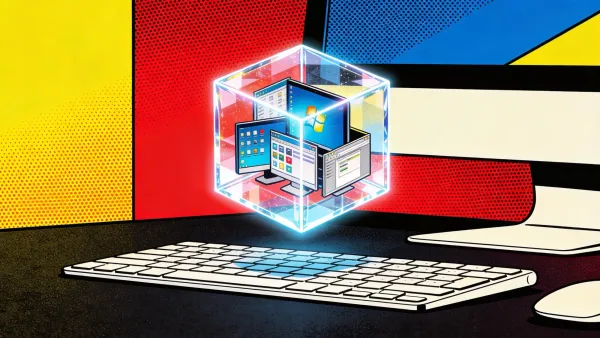
France's digital affairs directorate DINUM announced this week that it will replace Windows with Linux on government workstations, requiring every ministry and public operator to submit a formal migration plan by autumn 2026. The directive emerged from an interministerial seminar held April 8 and organized jointly by the Directorate General for Enterprise, France's cybersecurity agency ANSSI, and the State Procurement Directorate.
David Amiel, Minister of Public Action and Accounts, called the move an effort to "regain control of our digital destiny," telling reporters the government "can no longer accept that our data, our infrastructure, and our strategic decisions depend on solutions whose rules, pricing, evolution, and risks we do not control."
Key Takeaways
- France's DINUM orders every ministry to submit a Windows-to-Linux migration plan by autumn 2026
- Migration covers desktops, collaboration tools, AI platforms, databases, and network equipment across the entire French state
- The Gendarmerie Nationale has run 100,000+ Linux workstations since 2008, providing institutional precedent for the broader move
- No Linux distribution has been chosen yet, and many major distributions are developed by U.S. companies
AI-generated summary, reviewed by an editor. More on our AI guidelines.
Beyond desktops
The Linux switchover is one of three "concrete initial steps" DINUM committed to at the seminar. Ministry roadmaps must cover not just operating systems but collaboration tools, antivirus software, AI platforms, databases, virtualization, and network equipment. France's national health insurance body CNAM is migrating 80,000 agents to homegrown alternatives: Tchap for messaging, Visio for video calls, and FranceTransfert for file sharing. The country's health data platform is scheduled to move to a sovereign hosting solution by the end of 2026.
None of this is theoretical. DINUM itself will be the first agency to ditch Windows entirely. A first set of "Industrial Digital Meetings" is planned for June, where public-private coalitions will formalize the transition. Two parallel projects, Open Interop and OpenBuro, are supposed to produce a European orchestration layer that replaces Microsoft 365. Whether they can ship something usable before ministries lose patience is another question entirely.
Gendarmerie wrote the playbook
Here is the part most people miss: France already pulled this off once. The Gendarmerie Nationale ripped out Windows in 2008. Not a pilot. Not a study. A full migration, and it stuck. More than 100,000 gendarmerie desks have run Linux for 18 years now, which is the institutional muscle memory DINUM leans on when critics call the plan unrealistic. Lyon, France's third-largest city, is making its own move to Linux and OnlyOffice on municipal machines. The tax authority is reportedly weighing the same.
Video conferencing is where Paris has moved fastest. Back in January, France told 2.5 million civil servants to dump Teams, Zoom, Webex, and GoTo Meeting by 2027 and switch to Visio instead. The tool is French-made, built on top of Jitsi's open-source code, and hosted by a Dassault Systemes subsidiary called Outscale. Servers in France, not Northern Virginia. The claimed savings: about a million euros a year per 100,000 users. Take that with appropriate skepticism, since the government has not published an independent audit. What we know for certain is that 40,000 people used Visio for months in a pilot, and when the mandate came, none of the early adopters complained.
The sovereignty calculation
Anne Le Henanff, Minister Delegate for AI and Digital Affairs, framed the stakes bluntly: "Digital sovereignty is not optional, it is a strategic necessity."
Get Implicator.ai in your inbox
Strategic AI news from San Francisco. No hype, no "AI will change everything" throat clearing. Just what moved, who won, and why it matters. Daily at 6am PST.
No spam. Unsubscribe anytime.
The pressure runs deeper than preference. Since taking office in January 2025, the Trump administration has weaponized sanctions against critics including International Criminal Court judges, effectively cutting them off from U.S. tech services, closing their bank accounts, and blocking transactions with American companies. For European governments running their digital infrastructure on U.S. software, that is not an abstract risk. It is a demonstrated capability.
The European Parliament voted in January to direct the European Commission to identify areas of excessive foreign dependency. France is not alone in acting on it. Austria's armed forces have switched from Microsoft Office to LibreOffice. Denmark's government committed to the same. The German state of Schleswig-Holstein migrated 44,000 employee inboxes away from Microsoft to open-source alternatives. Germany mandated the Open Document Format for all government files, explicitly excluding Microsoft's proprietary formats.
What's missing
No Linux distribution has been chosen yet. That matters. As French outlet 01net pointed out, opting for open-source does not automatically mean opting for European sovereignty. The Linux Foundation itself is headquartered in San Francisco. Many major distributions are developed by U.S. companies. The governance and supply chain of whichever distribution France selects will determine whether this is a genuine decoupling or a lateral move between American vendors.
Ambitious barely covers it. The presidential election hits in about a year. Ministry plans are due by autumn, quantified dependency targets after that, operational migrations by 2027. Microsoft had nothing to say when TechCrunch asked for comment. The company's revenue exposure here extends well beyond Windows licenses into Azure, Microsoft 365, and enterprise services that touch every corner of the French state.
You do not restructure the operating system of a G7 government on a political schedule. But France has done the hardest part already: it committed in writing, on the record, with deadlines attached.
Frequently Asked Questions
Why is France switching from Windows to Linux?
France says it needs to reduce dependence on non-European technology providers. Minister David Amiel cited concerns about data control, pricing, and infrastructure decisions depending on foreign companies. The Trump administration's weaponization of sanctions against critics added urgency to the move.
When will French government computers switch to Linux?
DINUM will switch first. Every ministry and public operator must submit a formal migration plan by autumn 2026, with operational migrations expected by 2027. No specific rollout date has been confirmed.
Which Linux distribution will France use?
No distribution has been chosen yet. French media noted that many major distributions are developed by U.S. companies and the Linux Foundation is headquartered in San Francisco. EU-based options include openSUSE and distributions used by France's Gendarmerie since 2008.
What other U.S. tech is France replacing?
France ordered 2.5 million civil servants to stop using Microsoft Teams, Zoom, Webex, and GoTo Meeting by 2027, replacing them with French-built Visio. Health insurance body CNAM is migrating 80,000 agents to Tchap, Visio, and FranceTransfert.
Are other European countries making similar moves?
Austria's armed forces switched to LibreOffice. Denmark committed to the same. Germany's Schleswig-Holstein migrated 44,000 inboxes from Microsoft, and Germany mandated the Open Document Format for all government files.
AI-generated summary, reviewed by an editor. More on our AI guidelines.



Harkaram Grewal
Maps the India–Germany–U.S. AI triangle from New Delhi. Background in cross-market operations and business development. Writes about supply chains, enterprise adoption, and talent—the unsexy forces that actually move global AI.