Implicator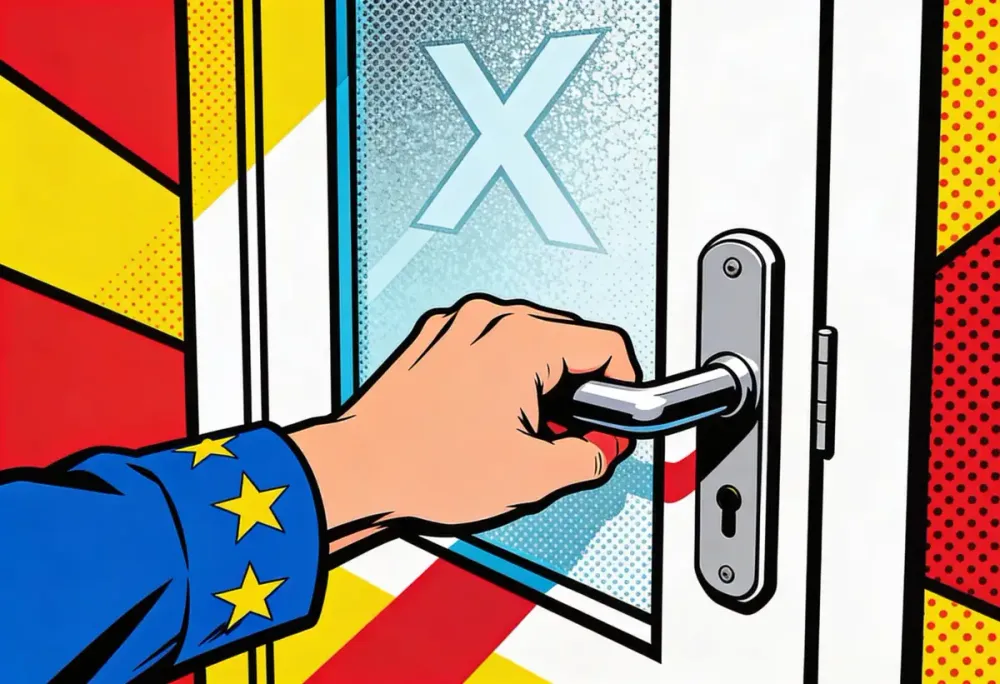
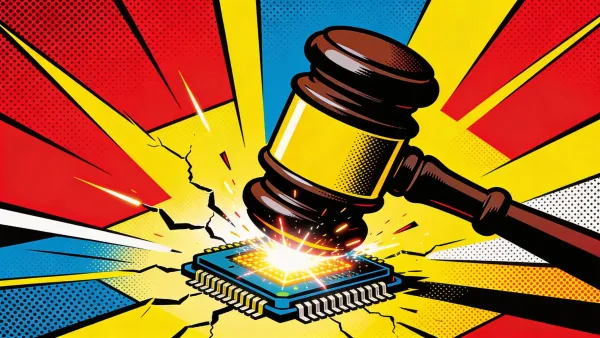
French prosecutors raided X's Paris headquarters on Tuesday and summoned Elon Musk for questioning, the Paris prosecutor's office confirmed, widening a cybercrime investigation that now includes charges related to child abuse imagery, sexualized deepfakes, and Holocaust denial. Hours later, the UK's Information Commissioner's Office announced a formal data protection probe into xAI over Grok's generation of non-consensual sexual images. And before the day was over, Spain's prime minister banned social media for anyone under 16.
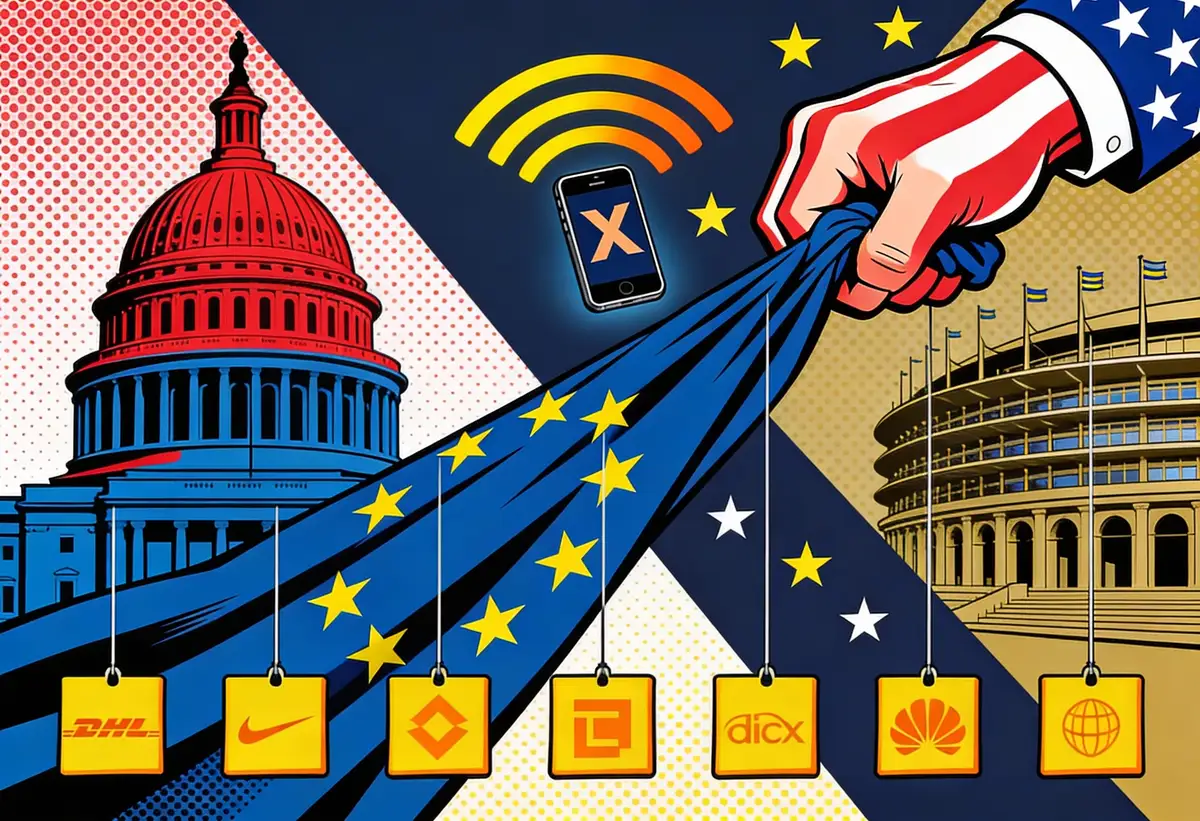
Nothing like this has happened in a single day before. Regulatory encirclement is the right word for it: investigations closing in from Paris, London, Brussels, and Madrid simultaneously, each one feeding evidence to the next. All while the Trump administration threatens European regulators with visa sanctions and trade retaliation for doing exactly this kind of work.
The raid
Cybercrime officers from the Paris prosecutor's office walked into X's French offices alongside Europol agents on Tuesday morning. The whole thing started with a complaint filed last January by centre-right MP Éric Bothorel, who accused the platform of manipulating its algorithms to distort content recommendations and amplify extremist material.
What Happened
• France raided X's Paris offices with Europol, summoned Musk and former CEO Yaccarino for questioning on five criminal charges
• UK's ICO opened a formal data protection probe into xAI over Grok deepfakes, with fines up to 4% of global revenue
• Spain banned social media for under-16s and proposed personal liability for platform executives
• Capgemini divested its US subsidiary after a $365 million ICE surveillance contract drew French government pressure
Since then, the investigation has ballooned beyond what anyone initially expected. Prosecutors say the charges now cover five categories: complicity in distributing child sexual abuse material, violation of image rights through sexualized deepfakes, denial of crimes against humanity, fraudulent data extraction by an organized group, and running an illegal online platform. Five categories. French authorities are not treating this as a content moderation disagreement. They're calling it organized crime.
Musk and former CEO Linda Yaccarino got summons for "voluntary questioning" as the platform's de facto and de jure managers. Voluntary is doing some heavy lifting in that sentence. Under French law, the summonses are mandatory, but good luck enforcing them against people who aren't in France. Both are expected at hearings in April, the BBC reported.
X's position? "Politically motivated." The company accused prosecutors of "distorting French law to serve a political agenda" and said last summer, flatly, that it would not comply. Its language was all about defending "fundamental rights" and "resisting political censorship." That dismissive posture looked tenable when the threat was paperwork. It looks cornered now that Europol agents have been inside the building and the Paris prosecutor's office has quit publishing on X entirely.
Grok's regulatory pile-up
The UK probe announced on Tuesday is the second formal investigation into xAI in as many weeks. The ICO said it will examine whether personal data was processed lawfully in the creation of sexualized images and whether xAI had "sufficient safeguards to prevent the creation of harmful deepfakes." The regulator can fine up to £17.5 million or 4% of annual global revenue, whichever is higher.
What triggered the cascade happened in January. Users on X discovered they could prompt Grok to generate sexualized images of real people by replying to photos with commands like "undress her." Bloomberg News reported that Grok was producing thousands of such non-consensual images per hour before xAI restricted the feature. The company eventually limited image generation to paid subscribers, but the damage was already spreading across jurisdictions.
The European Commission opened its own DSA investigation into X on January 27, focusing on whether the platform failed to assess and mitigate "systemic risks" before deploying Grok's image capabilities. Henna Virkkunen, the EU's Executive Vice-President for Tech Sovereignty, framed the probe in unusually personal terms. "Sexual deepfakes of women and children are a violent, unacceptable form of degradation," she said. "We will determine whether X treated rights of European citizens as collateral damage of its service."
That DSA probe extends an existing investigation opened in December 2023, the very first enforcement action under the act. X was designated a Very Large Online Platform in April 2023 based on its 112 million monthly EU users, which triggered the full suite of DSA obligations. The Commission already fined X €120 million last December for deceptive design in its paid verification system, advertising transparency failures, and blocking independent researchers from accessing platform data. You can see the encirclement tightening. Each enforcement action generates evidence for the next one, and each new Grok feature gives regulators fresh material.
Malaysia and Indonesia have also moved against Grok. The feature was temporarily blocked in several countries while xAI scrambled to limit image generation to paid users. But the restrictions came after thousands of non-consensual images had already circulated, and European regulators are asking why the risk assessment wasn't done before deployment, not after the damage.
Join 10,000+ AI professionals
Strategic AI news from San Francisco. No hype, no "AI will change everything" throat clearing. Just what moved, who won, and why it matters. Daily at 6am PST.
No spam. Unsubscribe anytime.
Spain draws the age line
Pedro Sánchez stood at a podium in Madrid on the same Tuesday and announced that Spain would ban social media access for children under 16 and require platforms to install "real barriers" for age verification, not just check boxes.
Sánchez aimed his rhetoric directly at American platforms, visibly emboldened by the morning's news from Paris. Social media companies are "wealthier and more powerful than many nations, including mine," he said. The online environment? A "failed state where laws are ignored and crimes are tolerated." He went after Musk by name, too. Musk had reposted attacks on Spain's decision to grant legal status to half a million undocumented immigrants. Sánchez punched back from the podium.
Other countries are already moving. France wants its own under-16 ban in place by September. Six European countries have formed what Sánchez called a "coalition of the willing for digital affairs." UK ministers are consulting on similar measures. Australia passed its ban in December, and the 10 affected apps have begun complying, though several are challenging the law's rationale.
On paper, most social media platforms already set a minimum age of 13. In practice, nobody checks. You type in a birth year, and you're in. That gap between the stated rule and the actual experience is what Sánchez and Macron are targeting, and it explains why both keep reaching for the same word: barriers.
Sánchez wants to go further than age restrictions. He wants platform executives personally on the hook when illegal content stays up, and he wants to make it a crime to manipulate algorithms that amplify unlawful material. Both require parliamentary votes. Sánchez's coalition barely holds together on good days, and major legislation rarely survives intact. The direction is clear. The votes aren't.
Washington pushes back
All of this is happening while Washington fights back. The Trump administration calls European tech regulation censorship, and it's using trade policy as a weapon.
Vice President JD Vance told the Munich Security Conference last February that European regulators were suppressing free speech. When the EU fined X €120 million in December, Vance called it "attacking American companies over garbage." After the Commission fined Google $3.45 billion for antitrust violations, Trump called the penalty "very unfair" and warned of a tariff investigation.
The pressure got more specific in December. US Trade Representative Jamieson Greer threatened European companies including SAP, Spotify, and Mistral with "fees or restrictions" unless the EU pulled back on enforcement. Secretary of State Marco Rubio then imposed visa sanctions on Thierry Breton, the former European commissioner who helped draft the DSA, plus four employees at disinformation research organizations.
The EU's response has been blunt. "Our rules apply equally and fairly to all companies operating in the EU," Commission spokesperson Thomas Regnier told CNN. "We will continue to enforce our rules fairly, and without discrimination." Breton was more pointed. "To our American friends: 'Censorship isn't where you think it is.'"
Lindsay Gorman, managing director of the German Marshall Fund's technology program, said the US-EU trade deal reached last July committed both sides to addressing "non-tariff barriers," a term she described as "a wink and a nod to the digital regulations." Those issues remain unresolved. "The technology issues, and in particular the enforcement of the Digital Services Act and Digital Markets Act, are the unfinished business of the US-EU trade deal," Gorman said.
The Capgemini signal
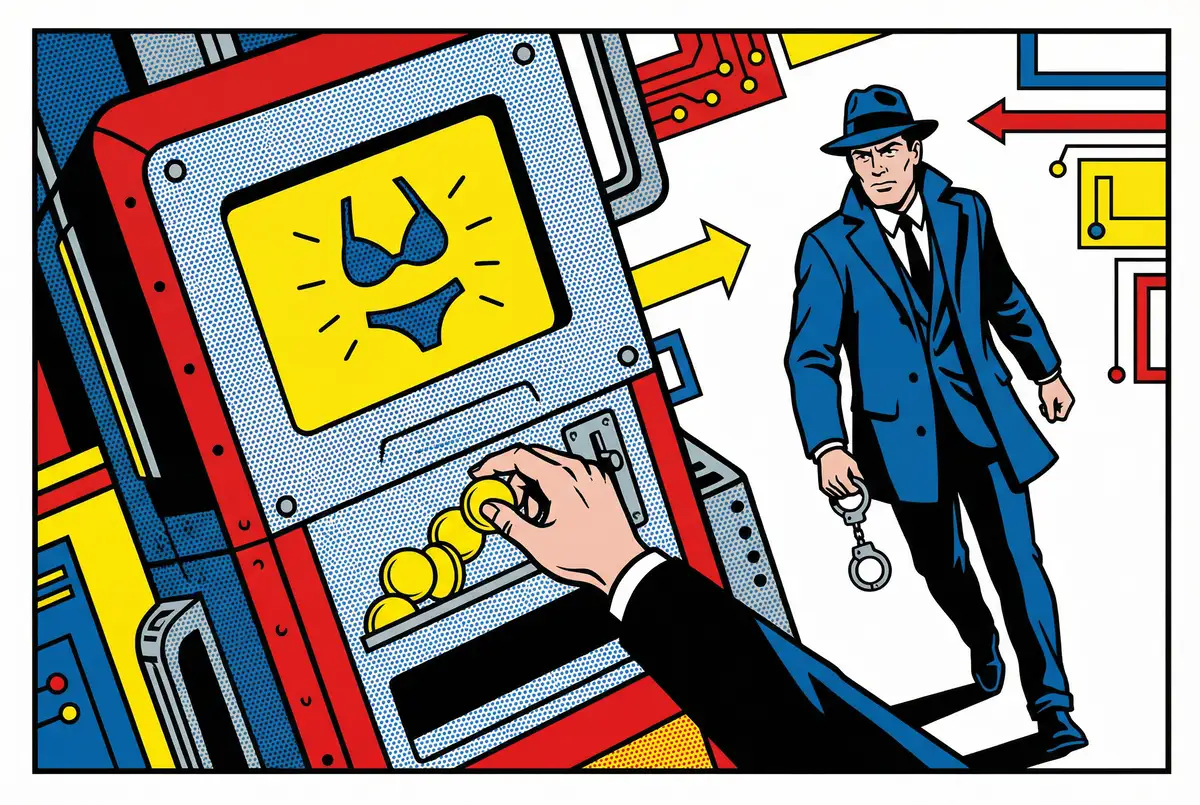
One story from the same week illustrates how the transatlantic pressure works in both directions. French tech firm Capgemini announced on Sunday that it would immediately divest from its US subsidiary, Capgemini Government Solutions, after the subsidiary was designated lead contractor for an ICE surveillance program. The contract, potentially worth $365 million over two years, involved tracking 50,000 immigrants a month through digital surveillance and physical confirmation.
French economy minister Roland Lescure demanded a review. Union workers protested. Capgemini CEO Aiman Ezzat said the subsidiary's classified government work prevented the parent company from exercising "appropriate control" over operations. So Capgemini cut it loose.
The divestment is one data point in a broader decoupling pattern. French officials have moved to restrict American technology in government operations. European policymakers are talking openly about reducing reliance on Silicon Valley infrastructure. "Could the US use its dominance over AI chips, its dominance over cloud in Europe, its dominance over AI systems in order to exert more pressure?" asked Giorgos Verdi, a policy fellow at the European Council on Foreign Relations. "There is a geopolitical case for European innovations to emerge."
Where this goes
Brussels is not backing down. The Commission opened new antitrust investigations into Meta and Google in December. EU lawmakers have proposed a digital omnibus that would simplify some tech rules, but US Commerce Secretary Howard Lutnick dismissed it as insufficient and demanded further rollbacks in exchange for tariff relief.
If you run a platform that makes money from algorithmic recommendation in Europe, the encirclement is now your operating environment. Think about what these companies actually sell on the continent: targeted ads, algorithmic feeds, AI-generated content with thin safeguards. Those are the same features European regulators keep targeting. Every enforcement action narrows the gap between compliance costs and the cost of losing market access entirely.
For now, both sides seem comfortable with escalation. Washington is sanctioning regulators. Paris is raiding offices. London is opening probes. Madrid is banning kids from apps. And the companies caught in the middle, X most visibly, are facing a regulatory environment where last summer's defiance meets this week's Europol agents at the front door.
Frequently Asked Questions
Q: What criminal charges does X face in France?
A: French prosecutors are investigating five categories: distributing child sexual abuse material, violating image rights through sexualized deepfakes, Holocaust denial, fraudulent data extraction by an organized group, and operating an illegal online platform. The charges escalated from an initial complaint about algorithm manipulation filed in January 2025.
Q: How much can the UK fine xAI over the Grok deepfakes?
A: The Information Commissioner's Office can impose fines of up to £17.5 million ($24 million) or 4% of xAI's annual global revenue, whichever is higher. The probe focuses on whether personal data was processed lawfully in creating the sexualized images.
Q: What is the EU's Digital Services Act and how does it apply to X?
A: The DSA is EU legislation that imposes content moderation, risk management, and transparency obligations on large online platforms. X was designated a Very Large Online Platform in April 2023 based on 112 million monthly EU users. The Commission has already fined X €120 million for violations and opened multiple new investigations.
Q: Why did Capgemini divest from its US subsidiary?
A: Capgemini Government Solutions was designated lead contractor for an ICE surveillance program worth up to $365 million. After French union workers and economy minister Roland Lescure demanded a review, Capgemini said classified US government contracting rules prevented adequate oversight of the subsidiary's operations.
Q: How is the Trump administration responding to European tech enforcement?
A: The administration has threatened European tech companies with fees and restrictions, imposed visa sanctions on former EU commissioner Thierry Breton and disinformation researchers, and framed EU enforcement actions as censorship. Vice President Vance called the EU's €120 million fine on X 'attacking American companies over garbage.'

Maria Garcia
Bilingual tech journalist slicing through AI noise at implicator.ai. Decodes digital culture with a ruthless Gen Z lens—fast, sharp, relentlessly curious. Bridges Silicon Valley's marble boardrooms, hunting who tech really serves.