IMPLICATOR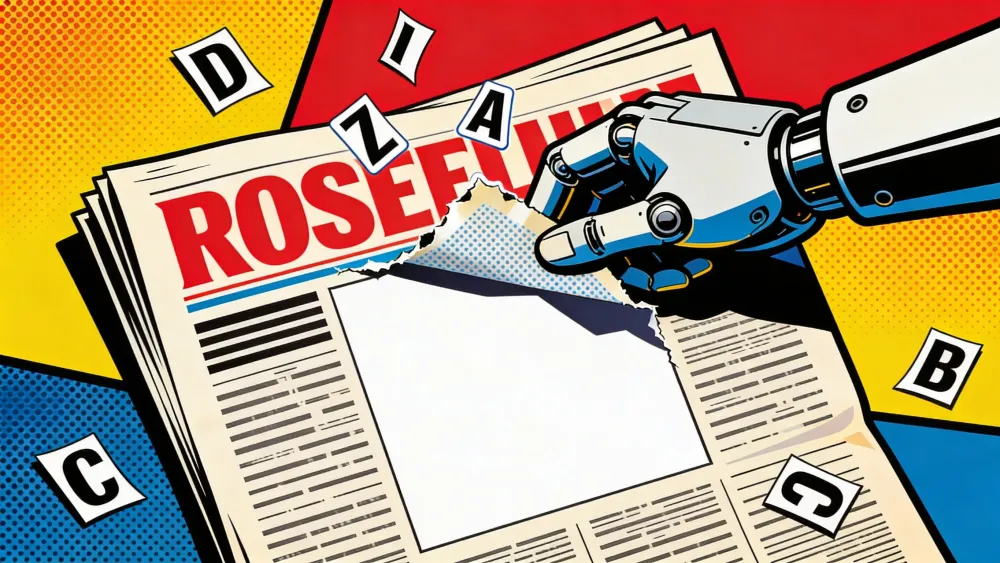
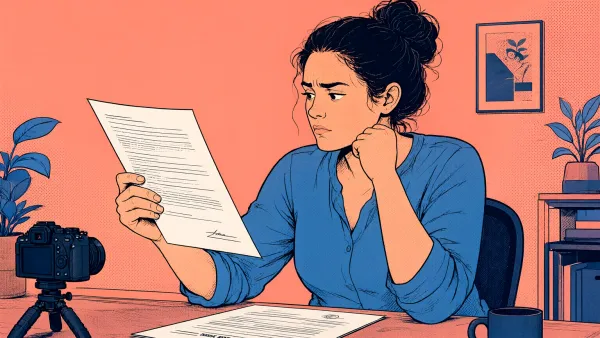
The Verge published a headline last week. "I used the 'cheat on everything' AI tool and it didn't help me cheat on anything." Google's search results showed something different. Five words. "'Cheat on everything' AI tool."
The original was skeptical. A reporter tested an AI product and found it useless. Google's AI stripped the verdict and left something that read like a product listing.
No label warned readers that the headline had been rewritten. No asterisk, no disclosure. Google admitted as much to The Verge. The rewritten version looks identical, same slot and formatting as the publisher's original. Nobody scrolling past would know.
Google calls the rewrite a "small and narrow experiment." That phrase should ring alarm bells. The company used nearly identical language last December when it began rewriting headlines in Google Discover, its mobile content feed. By January, that experiment was reclassified as a permanent feature. The whole cycle took about four weeks.
This follows a two-year pattern, and it keeps accelerating. Every round shifts more editorial control from newsrooms to the company that distributes their work. Google took the traffic first. Now it wants the words.
The Argument
- Google is rewriting publisher headlines in search results with AI, calling it a "small and narrow experiment"
- Identical language preceded Discover's AI headlines, which went from test to permanent in four weeks
- Publishers have already lost 34 percent of Google search referrals; headlines were their last point of editorial control in results
- Each step transfers editorial power from newsrooms to Google's algorithms, with no opt-out and no disclosure
The experiment that always graduates
Google confirmed to The Verge on Thursday that its AI systems are generating alternative headlines in traditional search results. The AI isn't truncating them or pulling different text from the page. It is writing entirely new headlines and displaying them without telling anyone.
The stated goal, per Google, is to "identify content on a page that would be a useful and relevant title to a user's query." In practice, the rewrites have shortened careful headlines into generic phrases and stripped context from critical reporting. In at least one case, Google's AI reversed the meaning of an article entirely. PCMag discovered that Google's AI rewrote its headline about an FCC drone ban to suggest the agency had reversed the ban. The article said the opposite.
Search Engine Journal tracked how the Discover headline test played out. In December, spokespeople called it "a small UI experiment for a subset of Discover users." By January, Google reclassified the feature, citing "user satisfaction" metrics it declined to share publicly. Four weeks from test to permanent default.
Google used that window to revise its Discover guidelines and roll out AI previews. It layered AI-generated summaries into the feed. Each change added another piece of machine-generated content between publishers and their audience. The Search test follows the same playbook. Same language and framing. Same refusal to say how "small" the experiment actually is.
Google had already changed 76 percent of all title tags in search results during the first quarter of 2025, using older rule-based systems that pulled alternative text from on-page elements. That practice has been running for years. The new test is different. In one example spotted by The Verge, Google rewrote a headline about Microsoft Copilot to "Copilot Changes: Marketing Teams at it Again." That phrasing appeared nowhere in the original article. The AI made it up.
Rule-based rewrites are limited by what a publisher put on the page. Generative rewrites are limited by nothing except the model's judgment. And the model's judgment, as the FCC drone example shows, is not reliable.
Stay ahead of AI's impact on media
Strategic AI news from San Francisco. No hype, no "AI will change everything" throat clearing. Just what moved, who won, and why it matters. Daily at 6am PST.
No spam. Unsubscribe anytime.
The traffic they already took
If you've been tracking the collision between Google and the publishing industry, the headline experiment lands on a business already flat on the mat.
SEO firm Growtika analyzed Ahrefs data for ten major tech outlets from early 2024 to early 2026. At their peak, those publications pulled in 112 million monthly visits from Google in the US. By January of this year, that number sat below 50 million. Digital Trends dropped from 8.5 million clicks a month to roughly 265,000. A 97 percent decline. Wired lost 62 percent. The Verge, HowToGeek, and ZDNet each lost more than 85 percent of their US search traffic over the same period.
The damage tracks with size. Chartbeat data published by Axios shows small publishers, those pulling between one thousand and ten thousand daily page views, lost 60 percent of their Google referrals. Medium outlets took a 47 percent hit. Large publishers above 100,000 daily views: 22 percent. Across the industry, Google Search referrals fell 34 percent between December 2024 and December 2025.
Publishers had been quietly shifting their hopes to Google Discover, where referral traffic climbed from 37 percent to roughly 68 percent of all Google-sourced visits. Then Google started rewriting Discover headlines too. Both of the two biggest Google traffic channels now have AI sitting between the publisher and the reader.
Some publishers tried pivoting to chatbot referrals. That bet failed. Chatbot traffic accounts for less than one percent of total page views. When users do click through from a chatbot, they're mostly fact-checking a bad answer. Not reading.
After AI Overviews started answering queries directly on the search page, headlines were one of the last elements publishers still controlled in results. The URL was theirs. The headline was theirs. Google had been generating the snippet for years, but the headline still carried the publisher's voice, their framing, their editorial judgment.
Now Google's AI is speaking for them. And the audience can't tell.
When Google speaks for you
Attribution is the part that should worry publishers most. When you see a headline in Google results, you assume the publication wrote it. If Google's AI made it more provocative than the article delivers, you blame the publisher. If the AI reversed a factual claim, which has already happened with at least two articles, the publisher's reputation absorbs the damage. Google's name never appears next to the rewritten words.
The legal exposure is real and untested. Search engines spent decades as middlemen, pointing users to other people's work. Section 230 covers that arrangement fine. But a headline Google's AI invented from scratch is Google's content, full stop. It just happens to sit under someone else's byline. If that headline defames a person or misrepresents a product, the liability math changes in ways no court has addressed.
Google maintains that any wider launch would not rely on generative AI. The denial arrived in a written statement but did not explain what it would use instead. Nobody has clarified how a non-generative system would produce headlines that don't exist anywhere on the page.
All of this lands during maximum regulatory pressure. A federal court has ruled that Google maintains an illegal monopoly in search. Remedies are still being debated. The DOJ proposed a Chrome divestiture; the judge rejected that but left data-sharing mandates and AI licensing requirements on the table. The EU's Digital Markets Act requires dominant platforms to treat third-party content fairly. The UK's Competition and Markets Authority proposed in January that publishers be allowed to opt out of AI features entirely, citing a 19 percent drop in click-through rates to academic reference services.
Google holds roughly 90 percent of global search. For most publishers, leaving Google's index would mean financial ruin. The company frames the headline test as an experiment that publishers can't participate in and can't escape. When your only alternative to participation is invisibility, the word "experiment" does a lot of heavy lifting.
What publishers can't do about it
The SEO industry feels cornered. Louisa Frahm, ESPN's SEO director, wrote on LinkedIn that headlines are "the most prominent element for attracting readers in timely windows." If Google rewrites them, she warned, "long-term audience trust will be compromised." Sean Hollister at The Verge called it "a bookstore ripping the covers off the books it puts on display and changing their titles."
Publishers feel exposed on two fronts. The traffic is cratering, and the remaining search presence is being rewritten by someone else's AI.
Large outlets are pivoting toward newsletters and direct audiences. The Chartbeat data suggests it's working for them specifically. Overall publisher traffic fell only six percent despite the search collapse. But that number hides a widening gap. Big brands can build subscriber bases from scratch. Smaller publishers depend on search for discovery, and discovery just got harder.
Legal challenges are piling up but won't deliver relief anytime soon. Penske Media, which owns Rolling Stone and Variety, sued Google last September over AI Overviews, citing a one-third decline in affiliate revenue. Advance Publications, McClatchy, and Vox Media each filed separate antitrust suits in January. Google moved to dismiss the Penske case, calling it "legally defective in every way."
Every one of these fights is rearguard. Publishers react to the last change. Google moves on to the next one.
Frequently Asked Questions
Can publishers opt out of Google's headline rewrites?
No. Google offers no opt-out mechanism. Publishers cannot prevent their headlines from being rewritten. The only alternative is removing content from Google's index entirely, which most publishers cannot afford given Google's 90 percent share of global search.
How does Google's AI decide what headline to show?
Google says the goal is to identify content that would be a useful and relevant title to a user's query. In practice, the AI has generated phrasing that appears nowhere in the original article, including one case where PCMag's headline meaning was reversed.
What happened when Google tested AI headlines in Discover?
In December 2024, Google called it a small UI experiment for a subset of Discover users. By January 2025, the feature was reclassified as permanent, citing unspecified user satisfaction metrics. The full cycle took about four weeks.
Are publishers suing Google over AI features?
Several lawsuits are active. Penske Media sued over AI Overviews citing a one-third decline in affiliate revenue. Advance Publications, McClatchy, and Vox Media filed separate antitrust suits in January 2026. No headline-specific litigation has been filed yet.
How much traffic have publishers lost to Google's AI?
Google Search referrals fell 34 percent between December 2024 and December 2025. Digital Trends lost 97 percent of its search traffic. Small publishers lost 60 percent of their Google referrals, while large publishers lost 22 percent.


Marcus Schuler
Editor-in-Chief and founder of Implicator.ai. Former ARD correspondent and senior broadcast journalist with 10+ years covering tech. Writes daily briefings on policy and market developments. Based in San Francisco. E-mail: editor@implicator.ai