IMPLICATOR
San Francisco | Monday, June 1, 2026
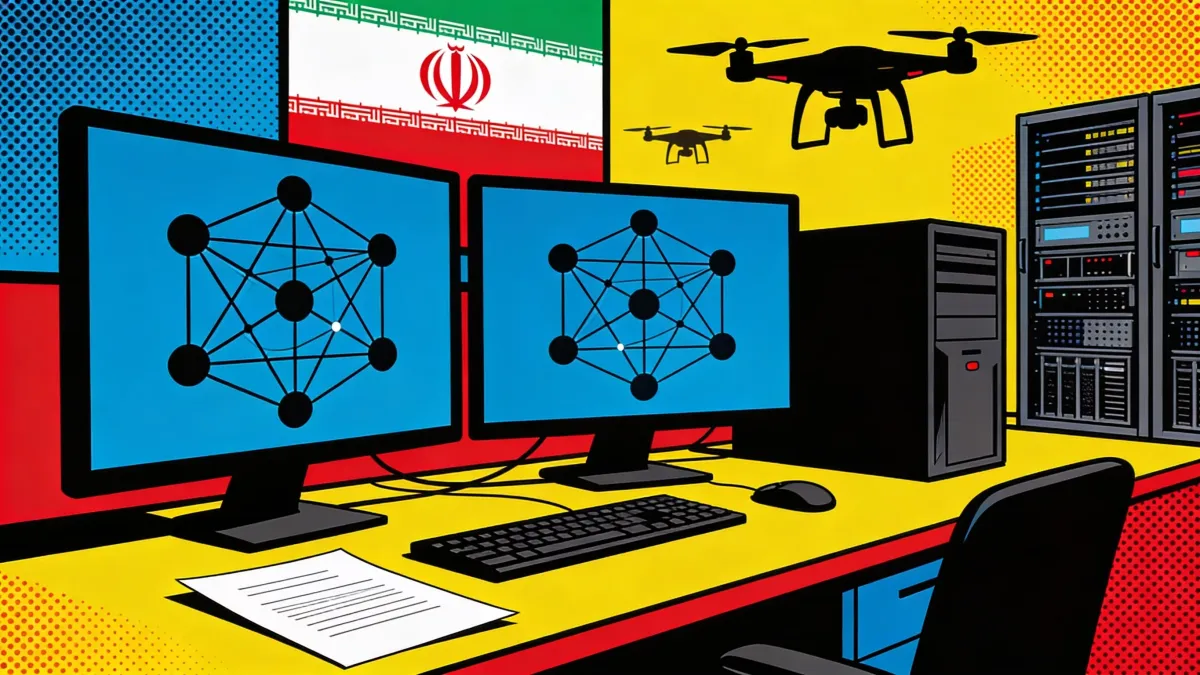
Western AI services now sit inside Iran's cyber and military workflow. The FT says Iranian military and intelligence-linked operators use ChatGPT and Gemini to support phishing and malware work, while Tehran builds a Sharif-linked platform that can run on domestic infrastructure.
OpenAI and Google say the misuse produces productivity gains, with no novel cyber capability observed. Defenders still have to account for translation and code help that make target research faster, a point Iran's drone campaign already makes in hardware.
Down the page, Claude retakes our LLM Meter lead after Anthropic's $65B round. Vast raises nearly $200M for Tripo's 3D assets. Capability is spreading through pipes that enterprises already use.
Stay curious,
Marcus Schuler
Know someone drowning in AI noise? Forward this briefing. They can subscribe free here.
Iran Uses ChatGPT and Gemini to Power Its Cyber Operations

Iranian military and intelligence-linked operators are using ChatGPT and Gemini to support malware work and phishing campaigns, the Financial Times reported May 30, while Tehran builds a domestic AI platform designed to survive on its own national internet.
The FT report puts a narrower frame on it than the word "weapon" suggests. Google said in January that more than 57 state-linked threat actors had used Gemini, with Iranian groups the heaviest users and APT42 accounting for more than 30% of Iranian APT activity. Mandiant assesses that APT42 operates for Iran's IRGC Intelligence Organization, targeting media and civil-society groups through impersonation and credential theft. The UAE reported cyberattacks doubling to more than 500,000 a day since the regional crisis began.
Sharif University, under international sanctions for ties to Iran's defense and missile programs, is building a national AI platform with nearly 100 researchers. "If the internet is cut off, nothing will happen to the platform because we are connected to the national internet," the project's lead told Iran International. The Washington Institute's Farzin Nadimi supplied the military context: Iran launched about 4,400 one-way attack drones before the April 7 ceasefire, roughly 120 a day, and U.S. estimates say as much as 85% of its drone arsenal was damaged or destroyed by strikes that also hit the Sharif data center.
Why This Matters:
- Western AI services reduce the cost of running cyber operations at scale. Quick translation and code help shorten tasks that once took operators hours, giving defenders a broader pool of adversaries to track.
- Iran's national platform closes the loop. If Sharif delivers a domestic AI that survives sanctions and network isolation, Tehran moves from borrowing access to owning the pipeline, and the export-control debate shifts from models already in use to infrastructure not yet built.
Reality Check
What's confirmed: Iranian state-linked operators used ChatGPT and Gemini. Google counted APT42 as the heaviest user. A Sharif-linked national AI platform exists in prototype.
What's implied (not proven): That AI is producing a step-change in Iranian cyber capability. The evidence supports the narrower claim that existing operations are getting cheaper and faster.
What could go wrong: The Sharif platform could be more press release than production system. If hardware and talent constraints keep it at demo scale, the FT story describes familiar behavior, not an inflection.
What to watch next: Whether April airstrikes on the Sharif data center delay or accelerate the platform's full release, which Iran International said was scheduled for March 2026.
The One Number
17 million+ - devices in the proxy botnet Dutch authorities said they dismantled, according to Ars Technica. The figure matters because consumer routers, phones and PCs can become rented infrastructure for phishing, scraping and DDoS traffic long before a company sees the abuse in its own logs.
Source: Ars Technica, May 30, 2026
💰 Fresh Funding
💰 Fresh Funding
XCENA raises $135M for memory-centric AI infrastructure
XCENA said Friday it closed a $135 million Series B co-led by Atinum Investment and IMM Investment, lifting total funding to $185 million at a $570 million valuation. The Samsung and SK Hynix veterans behind XCENA are using computational memory to reduce data movement inside AI systems, with MX1 validation and global customer deployments next.
Visit XCENA →Orbital Industries raises $50M to cool AI data centers
Fortune reported Thursday that Orbital Industries raised a $50 million Series B led by Plural, with Nvidia's NVentures, Radical Ventures, Compound and Fly Ventures participating. The former Orbital Materials plans to scale AI-designed data-center cooling and modular infrastructure, moving away from a licensing-first materials IP business.
Visit Orbital Industries →Gray Swan raises $40M to sell AI red-team security
Gray Swan said Thursday it raised a $40 million Series A co-led by Wing Venture Capital and Madrona, with Obvious Ventures, Snowflake Ventures, Hudson River Trading and Samsung Next participating. The Carnegie Mellon spinout uses a 15,000-person adversarial testing network to pressure-test AI agents and models before enterprises deploy them.
Visit Gray Swan →Claude Retakes LLM Meter Lead on Opus 4.8 and $65 Billion Round

Claude rose to 91 in Implicator's weekly LLM Meter, retaking first place after two weeks behind Google's Gemini. On May 28, Anthropic shipped Opus 4.8 and disclosed a $65 billion Series H that valued the company at $965 billion, making it the most valuable AI lab.
Opus 4.8 scored 69.2% on the SWE-bench Pro coding benchmark, roughly ten points ahead of OpenAI's GPT-5.5, and shipped across the major enterprise cloud platforms on release day. Anthropic's annualized revenue run rate has roughly tripled to about $47 billion since February, when it raised at a $380 billion valuation. Bridgewater Associates told Anthropic the new model flags problems in its own analysis more often before human review.
Gemini dropped to 88 after its flagship 3.5 Pro moved to June, while ChatGPT landed at 84 after losing the most-valuable-lab title. Mistral rose to 73 on a partnership with Airbus across civil aviation and defense units. Grok sits at 30 and DeepSeek at 17 ahead of their June model releases. The next meter publishes June 7.

AI Image of the Day

Prompt: An ultra-minimalist aerial-perspective scene of a narrow white sandbar curving gently through crystal-clear shallow turquoise water. A single dark-framed sun lounger sits alone on the upper-right portion. Flat teal-blue sky with scattered cumulus clouds. Extreme emptiness and solitude. Photorealistic drone-shot perspective. No people.
Vast Raises Nearly $200 Million for Tripo AI 3D Models

Vast raised nearly $200 million and crossed a $1 billion valuation for Tripo AI, a platform that generates production-ready 3D assets from text prompts. The round, led by Ince Capital and a China Life-backed fund, makes the Beijing company China's newest AI unicorn.
Tripo says its P1.0 model generates production-ready polygon meshes in as little as two seconds, trained on roughly 50 million high-quality 3D assets. Founder Simon Song, a Johns Hopkins graduate and former SenseTime and MiniMax executive, says the platform now serves 20 million users. Project Eden, a world model for explorable 3D environments that separates state simulation from visual rendering, could release as soon as this month.
The caution is market-based. Game developers' anti-AI sentiment hit a record high in GDC's 2026 survey, and the gaming industry remains skeptical of AI-generated assets beyond demos. Song himself told 80 Level that teams still need to repair topology and materials before assets enter version control. The harder test is whether studios keep Tripo assets in production after the first trial.

🧰 AI Toolbox
How to Redesign Your Website by Chatting With AI Using Repaint
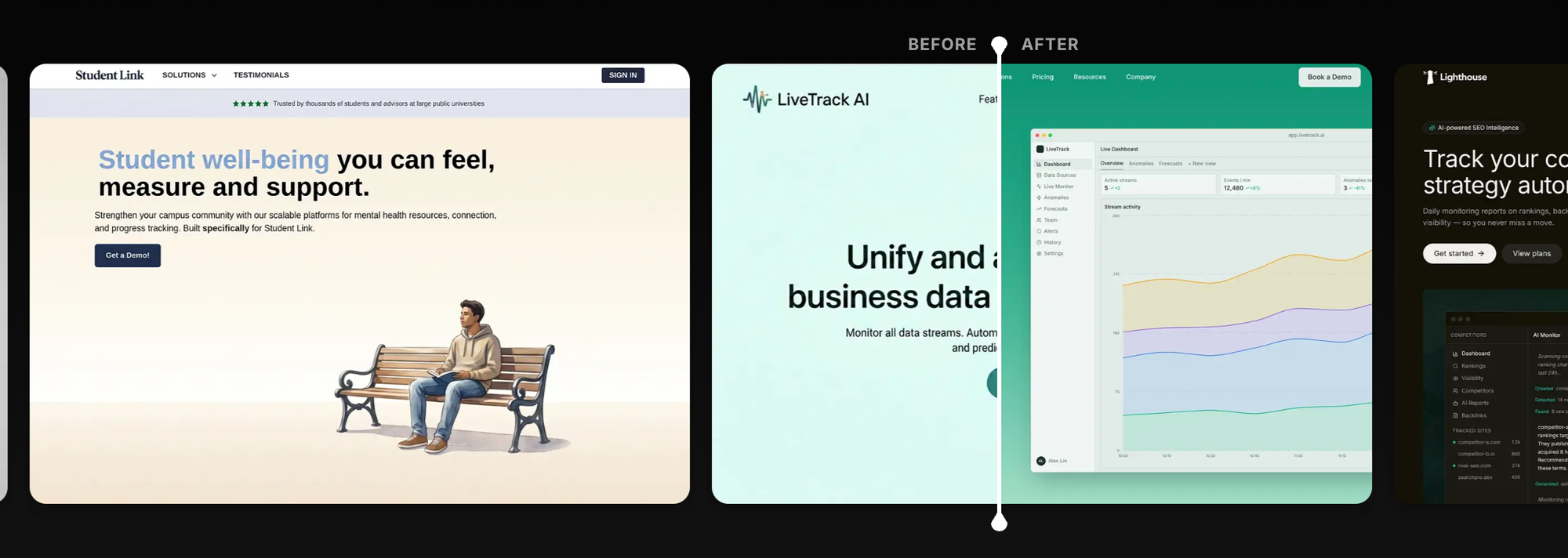
Repaint is an AI website redesign tool: paste the URL of any page you own, describe the look you want, and Repaint rewrites the HTML and CSS with a new design that keeps your content intact. Iterate by chatting ("make the hero bigger", "swap to a darker palette", "add testimonials below pricing") and ship the result as clean code or a hosted preview. Useful for landing pages and personal portfolios where a full redesign would normally take a week. Free tier available.
Tutorial:
- Open repaint.com and paste the URL of the page you want to redesign
- Wait while Repaint imports your existing content, layout, and brand colors
- Pick a starting style from the gallery or describe a direction: "modern SaaS, lots of whitespace, charcoal and amber accents"
- Iterate in the chat: "make the testimonials section more prominent" or "swap to a serif heading font"
- Preview every change live, with a side-by-side diff against the previous version
- Export clean HTML, CSS, and a copy you can drop into Webflow or Framer
- Connect Repaint to your GitHub repo so updates open a pull request your team can review before merging
URL: repaint.com
What To Watch Next
|
||
|
||
|
||
|
||
|
💡 5-Minute Skill
Turn an AI Agent Access Request Into Guardrails Before It Touches Money
Monday, 8:18 a.m. An app now wants to let an AI agent trade, buy things, or both. Before you click connect, make the model write the house rules for the model.
Your raw input:
Tool: AI agent can access a separate brokerage account and a virtual credit card. Goals: monitor semiconductor stocks, buy travel under $600, find restaurant openings. Risks: impulsive trades, hidden fees, fake facts, wrong vendor, private data leakage. Need: rules before I connect anything.
The prompt:
Act like a cautious consumer-finance operations lead. Turn this agent access plan into guardrails I can actually use. Give me allowed actions, banned actions, approval triggers, spending and trading limits, data the agent may never see, a daily review checklist, and one emergency disconnect rule. Separate convenience from financial risk. No investment advice.
The output:
Allowed: price monitoring, watchlist alerts, reservation searches and purchases below the cap. Banned: options, crypto, margin, primary-card access and trades based on unverified social posts. Approval trigger: any trade, any purchase over $150, any new merchant and any request involving personal documents. Emergency rule: disconnect the agent after one unexplained transaction or one fact error tied to money.
Why this works:
Agent access feels safe when every permission is in a separate box. This prompt forces the model to define the boxes before money moves, then gives you a review habit and a disconnect rule.
What to use:
Claude is strongest for turning messy constraints into policy language. ChatGPT is faster for making a checklist you can paste into Notes. Keep the line "no investment advice" in the prompt. Otherwise the model starts auditioning for a brokerage license it does not have.
📖 AI Alphabet
|
R
|
📖 AI Alphabet Retrieval Retrieval is the step where a system finds relevant information before answering a question. It is the backbone of many search tools and RAG pipelines. |
AI & Tech News
China Expands Review Power Over Outbound Tech Investments
China will require tougher approval for outbound investment tied to technology and data starting July 1, Reuters reported. The rule gives regulators a wider veto after scrutiny around Meta's China-linked model work and Manus.
Nvidia Enters the PC Chip Race With RTX Spark
Nvidia and MediaTek unveiled RTX Spark, an Arm-based PC chip family for laptops and desktops. The launch brings Nvidia's AI hardware push closer to consumer machines, where local inference and battery life decide whether AI features become daily tools.
Intel Designs Crescent Island AI GPU Around LPDDR5X
Intel detailed Crescent Island, a data-center GPU for agentic AI inference with up to 480GB of LPDDR5X memory. The design choice aims to route around HBM shortages while giving inference systems more local capacity.
TSMC's Taiwan Rally Narrows the ADR Premium
TSMC's local shares have outpaced its U.S.-listed stock, cutting the ADR premium to 13.7%, Bloomberg reported. The move shows Taiwan investors closing the gap with Wall Street's AI-chip enthusiasm.
Intel Puts 18A Xeon Chips Into Data Centers
Intel launched Xeon 6+ Clearwater Forest, its first 18A-process server CPU family for production data centers, Tom's Hardware reported. Intel says the top Xeon 6990E+ reaches 288 cores and beats AMD's EPYC 9965 by 30% in single-thread performance.
Daloopa Raises $47M for AI Financial Data
Daloopa raised a $47 million Series C led by Brighton Park Capital to expand its AI financial-data platform. The company structures financial disclosures for investment firms that need cleaner model-ready data.
Solstice Raises $21M for Pharma Ad Review
Solstice raised a $21 million Series A for its AI platform that speeds pharmaceutical marketing approvals. The company uses clinical and compliance documents to help drugmakers move ad material through review faster.
AMD Extends AM5 Support Through 2029
AMD used Computex to announce Ryzen 7 7700X3D and AM5 socket support through 2029, The Verge reported. The longer platform pledge gives PC builders more reason to upgrade chips without replacing the motherboard.
Dell Prices Student XPS 13 at $699
Dell introduced a student-focused XPS 13 starting at $699 with 8GB of RAM and a six-core Intel Core 5 chip. The price puts Dell back into the entry laptop fight as AI-era PC refresh cycles begin.
AI ROI May Arrive on a J-Curve
Exponential View argues AI returns may lag spending because adoption follows the same J-curve seen in earlier general-purpose technologies. The piece points to factory electrification as a reminder that process redesign often comes before visible profit.
🚀 AI Profiles: The Companies Defining Tomorrow

SWARM Biotactics is the German defense startup putting edge-AI electronics on live cockroaches for reconnaissance and search-and-rescue work. The company is based in Kassel and sits in the growing European defense-tech market, where cheap sensing platforms have become a procurement priority. 🪲
Founders
Founded by Stefan Wilhelm and a small German team, SWARM Biotactics emerged from European defense-tech accelerators with a thesis that biological platforms can enter spaces where small drones struggle. The company focuses on Madagascar hissing cockroaches because they can move through rubble, narrow openings and signal-poor indoor environments.
Product
SWARM mounts a camera, microphone, edge-AI processor and stimulation electrodes on each insect. Operators can influence direction without replacing the insect's natural locomotion, while the onboard system maps terrain and listens for sound cues. The company pitches two first uses: collapsed-building search after disasters and tactical surveillance where radio signals or drone access are limited.
Competition
The direct research lineage runs through Singapore's NTU cyborg-insect work and DARPA's older HI-MEMS program. The broader budget fight sits against micro-drone suppliers such as AeroVironment, Skydio and European autonomy startups. SWARM claims lower cost and better movement through tight spaces. Buyers still have to accept a living platform inside defense procurement.
Financing 💰
SWARM has raised early-stage capital from European defense-tech investors, with funding still modest compared with U.S. defense-AI peers. Germany's higher defense spending gives the company a better domestic market than it would have had three years ago.
Future ⭐⭐⭐
SWARM scales only if defense ministries or large rescue agencies sign meaningful contracts. Procurement teams will have to judge performance, reliability and the optics of insect-based surveillance before the company moves beyond pilots. A NATO contract would turn the idea into a category. Without one, the technology remains closer to a research program.
🤨 Yeah, But...
The Wall Street Journal reported Wednesday that Robinhood is launching a feature that lets customers connect AI agents such as Claude or Cursor to dedicated investment accounts and virtual Gold credit cards. Executives said agents can trade stocks or make purchases within user-set limits, with options and event contracts planned later.
(Wall Street Journal, May 27, 2026)
Our take: Robinhood has discovered the missing layer between impulse and consequence: a chatbot with permissions. The company that made stock trading feel like checking Instagram now wants software doing the tapping, with a notification afterward so everyone can call it control. Consumer finance loves this magic trick: put the dangerous thing in a separate box and name the box safety. The customer then gets to remember which box the robot is using at 11:47 p.m. The agent may be obedient, but every margin call also began as a perfectly legible rule somebody accepted before it became educational.
Free AI briefing · Weekdays
The AI stories that matter, sourced and explained.
Join the Morning Briefing. It goes out every weekday at 4:45 a.m. Pacific, with later sends for the East Coast, Berlin and Tokyo.
Free when you sign up: The Paperclip Compendium, our tested guide to running AI agents.
Free. Unsubscribe in one click.

Marcus Schuler
Editor-in-Chief and founder of Implicator.ai. Former ARD correspondent and senior broadcast journalist with 10+ years covering tech. Writes daily briefings on policy and market developments. Based in San Francisco. E-mail: editor@implicator.ai