IMPLICATOR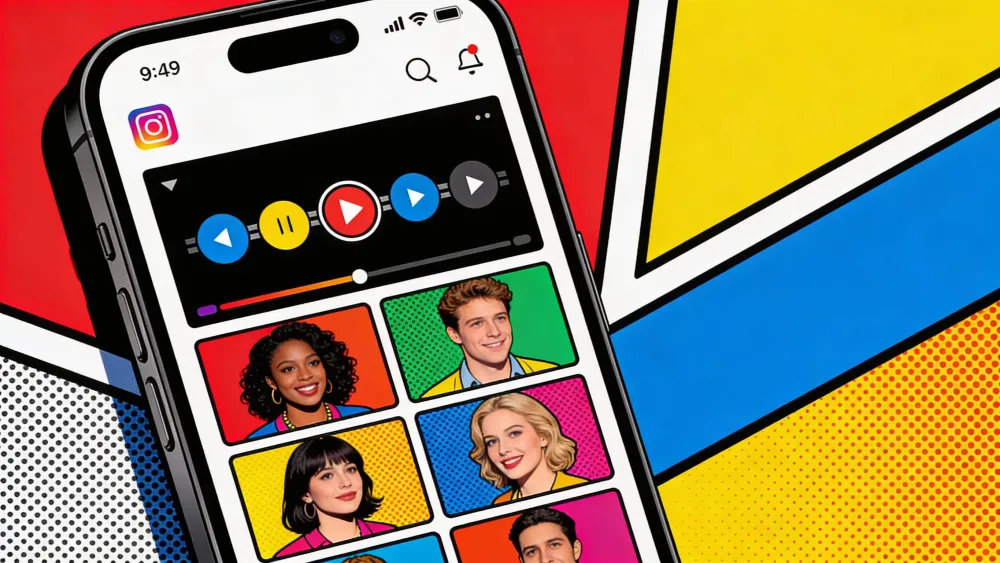
Jack Dorsey's nonprofit And Other Stuff bankrolled the launch of Divine, a six-second looping video app that revives the original Vine platform, on April 29. The app arrived on the Apple App Store and Google Play with roughly 500,000 restored videos drawn from archives preserved by the Internet Archive. Built on the decentralized Nostr protocol, Divine bans AI-generated content and verifies upload authenticity through the C2PA open industry standard. The project is structured as a public benefit corporation with no current revenue model.
Key Takeaways
- Jack Dorsey's nonprofit funded Divine, a Vine revival app, launching April 29 on iOS and Android with 500,000 restored videos.
- The app bans AI-generated content, requiring in-app recording or C2PA-standard verification for all uploads.
- Built on Nostr with AT Protocol and ActivityPub integration planned, Divine is a public benefit corporation with no current revenue model.
- Elon Musk teased a Vine revival from X in August 2025 but never delivered; Dorsey's team shipped first.
AI-generated summary, reviewed by an editor. More on our AI guidelines.
The Archive Restoration
Henshaw-Plath, known online as "Rabble," spent months reconstructing Vine's original archive after discovering that a community group called the Archive Team had preserved the content as 40 to 50 GB binary files before Twitter shut the platform down in January 2017. He wrote big data scripts to decode the files and restore engagement metadata including views, likes, and comments, then rebuilt user profiles, according to the company's launch announcement.
The app initially launched to testers in November 2025 with roughly 100,000 videos, growing to 300,000 by early April and reaching 500,000 at the public launch, drawing on archives preserved by the Internet Archive and covering nearly 100,000 original creators.
No AI Allowed
Unlike major platforms that label or demote AI-generated content, Divine blocks it at upload. The app requires users to record videos directly within the application or submit footage verified through C2PA, a standard developed by the Coalition for Content Provenance and Authenticity that cryptographically traces the origin of digital media, the company's FAQ explains.
Henshaw-Plath told TechCrunch the original Vine community urged the team to delay rather than ship quickly. In an interview, he described the AI filter as a personal preference, stating that synthetic content lacks identifiable provenance and can flood a network at scale. The app ships with a hashtag-based compilation feature for building auto-playing video streams.
Get the latest on AI and social media
Strategic AI news from San Francisco. No hype, no "AI will change everything" throat clearing. Just what moved, who won, and why it matters. Daily at 6am PST.
No spam. Unsubscribe anytime.
Decentralized Infrastructure
Divine operates on Nostr, a protocol that supports user-hosted relays and media servers independent of centralized infrastructure. The development team is testing AT Protocol, the open standard that powers Bluesky, and plans to evaluate ActivityPub integration, the protocol used by Mastodon and available within Meta's Threads. Dorsey seeded And Other Stuff with $10 million, PC Mag reported.
"Nostr is empowering developers to create a new generation of apps without the need for VC-backing, toxic business models or huge teams of engineers," Dorsey wrote in a statement released with the November 2025 beta.
The Musk Factor
Elon Musk, who acquired Twitter and renamed it X, announced in August 2025 that the company had discovered Vine's old archive and teased a revival. X has not released any Vine revival to date. Dorsey said in an April 29 press release: "By bringing back Vine on a decentralized network, they are finally correcting every mistake. It is no secret that we didn't find a business model for Vine."
Vine peaked as the most downloaded iOS app with more than 200 million active users and launched the careers of Lele Pons, Logan Paul, and Liza Koshy before Twitter shut it down in 2017. Several original Viners have returned, including Pons, JimmyHere, MightyDuck, and Jack and Jack. Divine is available as a free download, with access rolling out to waitlist users first and broader availability planned in the coming months.
Frequently Asked Questions
What is Divine?
Divine is a six-second looping video app that revives the original Vine platform, built by former Twitter employee Evan Henshaw-Plath and funded by Jack Dorsey's And Other Stuff nonprofit. It launched publicly April 29, 2026 on iOS and Android.
How many old Vine videos does Divine have?
Divine launched with approximately 500,000 restored videos from nearly 100,000 original creators, recovered from archives preserved by the Archive Team and the Internet Archive. The archive grew from 100,000 videos in the November 2025 beta.
Does Divine allow AI-generated content?
No. Divine bans AI-generated content entirely. Users must record videos directly in the app or verify uploads through the C2PA standard, which cryptographically traces the origin and edit history of digital media, according to the company's FAQ.
Is Divine affiliated with X (Twitter)?
No. Divine is an independent app with no affiliation to X or the original Vine platform. It operates as a public benefit corporation separate from Elon Musk's company, which teased a Vine revival that never materialized.
What technology does Divine run on?
Divine is built on the decentralized Nostr protocol and is experimenting with AT Protocol, which powers Bluesky, and ActivityPub, used by Mastodon. The open-source architecture lets developers run their own hosts, relays, and media servers.
AI-generated summary, reviewed by an editor. More on our AI guidelines.


Marcus Schuler
Editor-in-Chief and founder of Implicator.ai. Former ARD correspondent and senior broadcast journalist with 10+ years covering tech. Writes daily briefings on policy and market developments. Based in San Francisco. E-mail: editor@implicator.ai