IMPLICATOR
EU countries and European Parliament lawmakers failed Tuesday to agree on changes to the AI Act after 12 hours of negotiations. A Cypriot official confirmed there was no agreement with Parliament. Negotiators expect another round in about two weeks, leaving providers of some high-risk AI systems with the current Aug. 2, 2026 compliance date unless the Omnibus rewrite passes first.
Key Takeaways
- EU countries and lawmakers failed to agree after 12 hours, pushing Omnibus talks into May.
- The unresolved split is whether product-regulated industries should be exempted from AI Act obligations.
- Current law keeps many high-risk AI deadlines on Aug. 2, 2026 unless the rewrite passes.
- Industry groups want delay; consumer and rights groups warn the package weakens protections.
AI-generated summary, reviewed by an editor. More on our AI guidelines.
Commission proposal covers AI, data and cybersecurity
The European Commission introduced its Digital Omnibus package in November 2025, covering artificial intelligence, cybersecurity, data rules and European business wallets. The AI proposal would move some high-risk deadlines by up to 16 months and give small mid-cap companies access to some simplified documentation rules.
The Council adopted its mandate on March 13. Its text sets Dec. 2, 2027 for stand-alone high-risk AI systems and Aug. 2, 2028 for high-risk systems embedded in products. A European Parliament research note placed Parliament on the same fixed-date track for delayed high-risk rules.
People with direct knowledge of the talks told Reuters that the open issue was whether industries already covered by sectoral rules, including product safety law, should be exempted from the AI legislation.
Product safety law becomes the dividing line
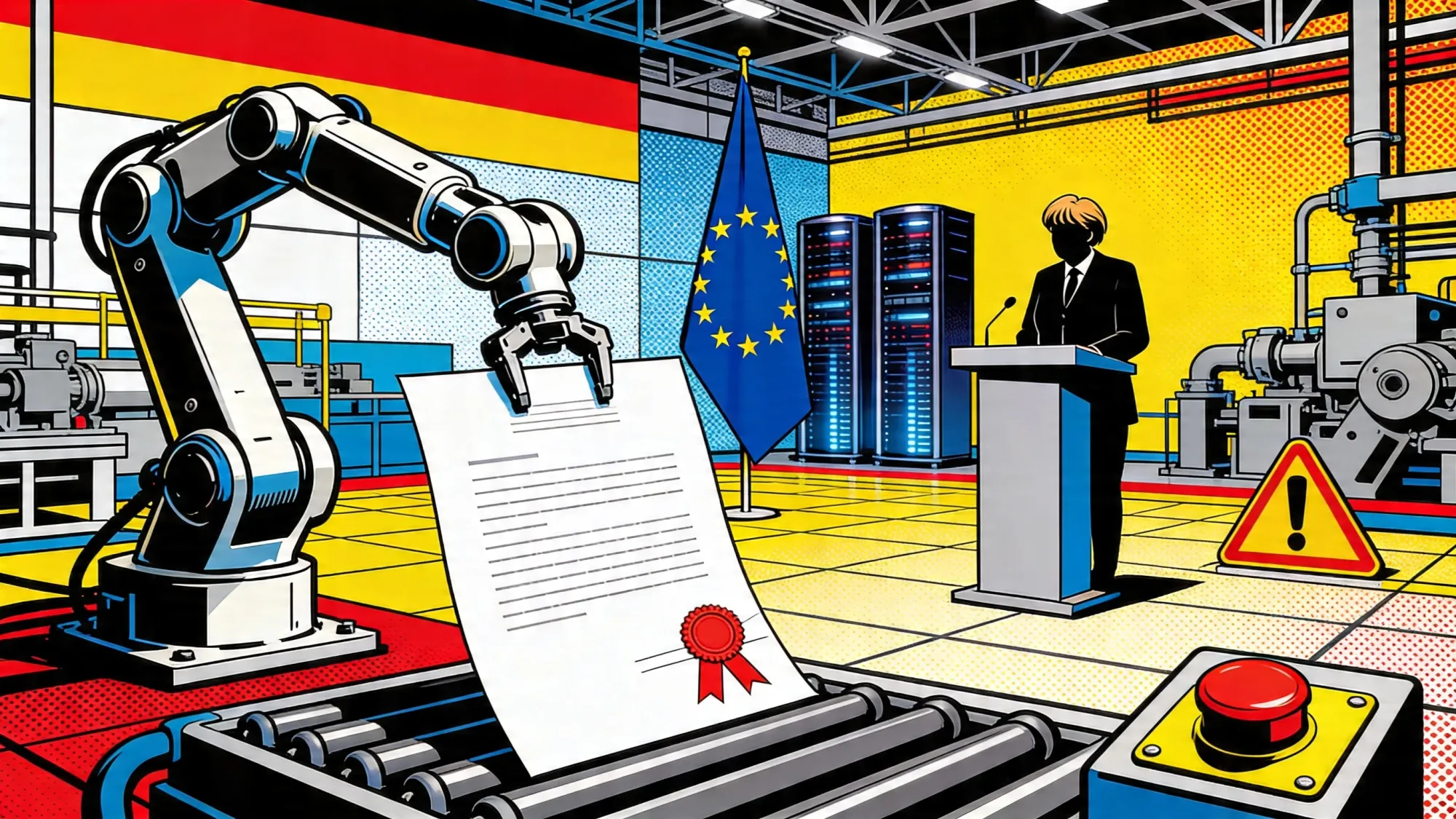
The AI Act treats systems as high-risk when they fall into uses such as biometric identification, utilities supply, health, creditworthiness and law enforcement. Product makers say machinery and medical devices already face sectoral safety rules. Their position is that the AI Act would add a second compliance file to products already reviewed under existing EU regimes.
Implicator reported on April 20 that German Chancellor Friedrich Merz was seeking a factory-floor lane for industrial AI before the AI Act's August deadline. His proposal sits in the same argument now blocking the Brussels talks: faster industrial deployment against broader safety coverage.
For companies, the calendar difference is measurable. Annex III high-risk systems remain tied to August 2026 under current law. The Council and Parliament delay track would give many stand-alone systems about 16 more months, while product-embedded systems would receive two more years.
Follow the AI rulebook fight in Europe
Strategic AI news from San Francisco. No hype, no "AI will change everything" throat clearing. Just what moved, who won, and why it matters. Daily at 6am PST.
No spam. Unsubscribe anytime.
Industry and consumer groups split over delays
CCIA Europe backed the December 2027 and August 2028 delay in March, citing gaps in technical standards and compliance guidance. VDMA, Germany's mechanical-engineering lobby, pushed on April 27 for the AI Omnibus to prevent double regulation for machinery.
BEUC took a different line on April 27: the Omnibus risks exposing consumers to more legal uncertainty. Access Now, EDRi, AlgorithmWatch, Amnesty International and other signatories split from industry in an April 15 letter. They described the text as more than a technical rewrite and warned it would leave people in the EU with less timely protection from high-risk uses such as biometric identification and AI systems in schools.
Reuters published Dutch lawmaker Kim van Sparrentak's reaction to the failed meeting: "Big Tech is probably popping champagne. While European companies that care about safety and did their homework now face regulatory chaos."
Current deadlines remain on company calendars
The AI Act entered into force in August 2024, with obligations applying in stages. The broader Omnibus package also covers the GDPR, the e-Privacy Directive and the Data Act.
Tuesday's failed trilogue kept the product-safety exemption unresolved. The existing AI Act timetable remains in force until EU lawmakers adopt and publish a final Omnibus text.
Frequently Asked Questions
Did EU lawmakers reach a deal on the AI Act changes?
No. Reuters reported that EU countries and Parliament lawmakers failed to agree after 12 hours of talks on Tuesday. Another round is expected in about two weeks.
What was the main sticking point?
People with direct knowledge told Reuters the open issue was whether industries already covered by sectoral rules, including product safety law, should be exempt from the AI Act.
What deadlines would the Council text set?
The Council mandate would set Dec. 2, 2027 for stand-alone high-risk AI systems and Aug. 2, 2028 for high-risk systems embedded in products.
What happens under current law?
The existing AI Act timetable stays in force until EU lawmakers adopt and publish a final Omnibus text. That keeps many high-risk obligations linked to Aug. 2, 2026.
Who supports or opposes the delay?
CCIA Europe and VDMA support more time or relief from double regulation. BEUC, EDRi, Access Now, AlgorithmWatch and Amnesty International warn the package could weaken or delay protections.
AI-generated summary, reviewed by an editor. More on our AI guidelines.
Free AI briefing · Weekdays
The AI stories that matter, sourced and explained.
Join the Morning Briefing. It goes out every weekday at 4:45 a.m. Pacific, with later sends for the East Coast, Berlin and Tokyo.
Free when you sign up: The Paperclip Compendium, our tested guide to running AI agents.
Free. Unsubscribe in one click.

Marcus Schuler
Editor-in-Chief and founder of Implicator.ai. Former ARD correspondent and senior broadcast journalist with 10+ years covering tech. Writes daily briefings on policy and market developments. Based in San Francisco. E-mail: editor@implicator.ai