IMPLICATOR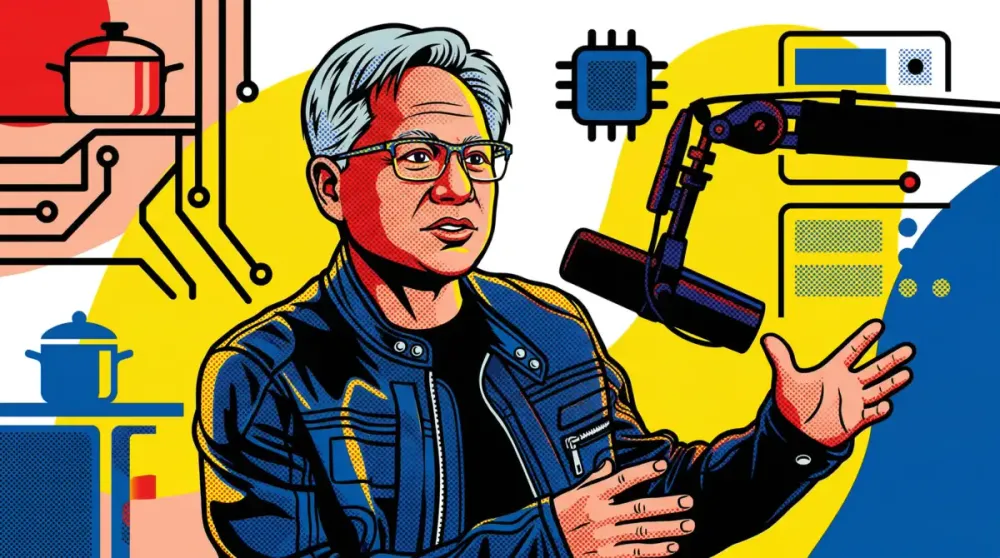
Jensen Huang said Nvidia can keep winning the AI chip race even if Google TPUs gain ground, China builds its own accelerators, and the supply chain strains under trillion-dollar demand. In a wide-ranging interview with Dwarkesh Patel published Wednesday, the Nvidia chief executive framed the company less as a chip vendor than as the switchyard for the AI economy.
That word matters. A switchyard does not need to own every power plant. It routes the current. It decides who gets a connection and which machines can take the load without tripping the breakers. Huang kept returning to that ground: Nvidia sits between electrons and tokens, between TSMC and AI labs, between Washington's anxiety and Beijing's ambition.
The headline from the interview was that Huang still wants America to sell advanced chips to China. The deeper message was stranger and more revealing. Nvidia thinks the future of AI belongs less to whoever designs the cleanest accelerator than to whoever can coordinate fabs, memory, networking, software, energy, developers, cloud buyers, and governments at the same time.
That is where Nvidia is headed. Not just faster GPUs. Control of the switchyard.
Key Takeaways
- Huang framed Nvidia as the switchyard for AI compute, not just a GPU supplier.
- TPU deals prove compute demand is widening faster than any one platform can serve.
- Nvidia's next moat is supply-chain coordination across chips, power, software, and clouds.
- China policy now tests whether ecosystem dependence is safer than denial.
AI-generated summary, reviewed by an editor. More on our AI guidelines.
The moat is no longer just CUDA
For years, Nvidia's cleanest story was software lock-in. CUDA made GPUs useful before AI turned them into strategic assets. Developers learned it. Frameworks targeted it. Labs could trust that their code would run across clouds, clusters, and machines they had not yet bought.
Huang still tells that story, but it no longer carries the whole weight. Patel put the hard version in front of him. The biggest AI labs can write kernels. Google has its own chips. Anthropic trains and runs Claude across several hardware stacks. Matrix multiplication gives custom silicon a fat, obvious target.
Huang did not fight that premise. He moved the fight. AI, he argued, is not only matrix multiplication. It is attention changes, mixture-of-experts routing, reinforcement learning, new kernels, networking, memory movement, and model designs that shift each year. A narrow chip can win a workload. Nvidia wants to win the workload after that.
That is why Anthropic's new TPU agreement matters. The company said this month it signed a multi-gigawatt Google and Broadcom deal for next-generation TPU capacity expected to come online in 2027. It also said Claude runs on AWS Trainium, Google TPUs, and Nvidia GPUs. CNBC reported the Broadcom piece at about 3.5 gigawatts, a scale large enough to make every Nvidia investor read twice.
The easy reading is that Nvidia's moat is cracking. The better reading is that AI compute is becoming too large for any single buyer, chip, or cloud to absorb. Anthropic is not leaving Nvidia. It is buying optionality because the market is getting too hungry for one kitchen.
That should make Nvidia defensive. Instead, Huang sounded emboldened. His argument is that custom silicon proves demand, not defeat. If Google and Broadcom can commit gigawatts to TPUs, the industry is not rejecting accelerated computing. It is admitting that compute has become a utility-scale input.
Scarcity is now a product feature
The most revealing part of the interview came when Patel asked about supply commitments. Nvidia's filings and investor materials show a company tied deeply to foundries, memory vendors, packaging, system builders, cloud buyers, and large customers. Nvidia reported fiscal 2026 revenue of $215.9 billion, up 65 percent from a year earlier. At that size, a chip roadmap is also an industrial policy.
Huang described Nvidia's supply chain as something closer to a mobilized network. He said the company makes explicit and implicit commitments upstream, persuades suppliers to invest before demand fully arrives, and uses downstream demand to make those commitments credible. If the next several years are "a trillion dollars in scale," he said, Nvidia has the supply chain to do it.
That is not a normal vendor claim. It is a claim about power. Nvidia is telling TSMC, SK Hynix, Micron, Samsung, ODMs, optics suppliers, cloud providers, and AI labs that it sees the future before they do. Then it asks them to spend against that forecast.
This is the switchyard again. The company is not merely selling chips into scarcity. It is organizing scarcity, then turning that organization into a reason customers keep buying Nvidia. If you are an AI lab, you do not only need the best accelerator in a benchmark. You need delivery dates, memory, racks, networking, software fixes, field engineers, cloud access, and someone with enough pull to move the next bottleneck forward.
That explains why Huang sounded relaxed about CoWoS, HBM, and even EUV pressure. His view is that chip and packaging bottlenecks can be attacked within two or three years if the demand signal is strong enough. The part that worries him sits downstream: power, construction, energy policy, electricians, plumbers, and the physical build-out of AI factories.
Get the AI power map in your inbox
Strategic AI news from San Francisco. No hype, no "AI will change everything" throat clearing. Just what moved, who won, and why it matters. Daily at 6am PST.
No spam. Unsubscribe anytime.
This is where the AI story is moving. Away from the model leaderboard alone. Toward land, transformers, water, fiber, interconnect, export licenses, purchase orders, and operating skill. If you buy the thesis, Nvidia's next competitor is not just TPU. It is delay.
China is the argument Nvidia cannot make cleanly
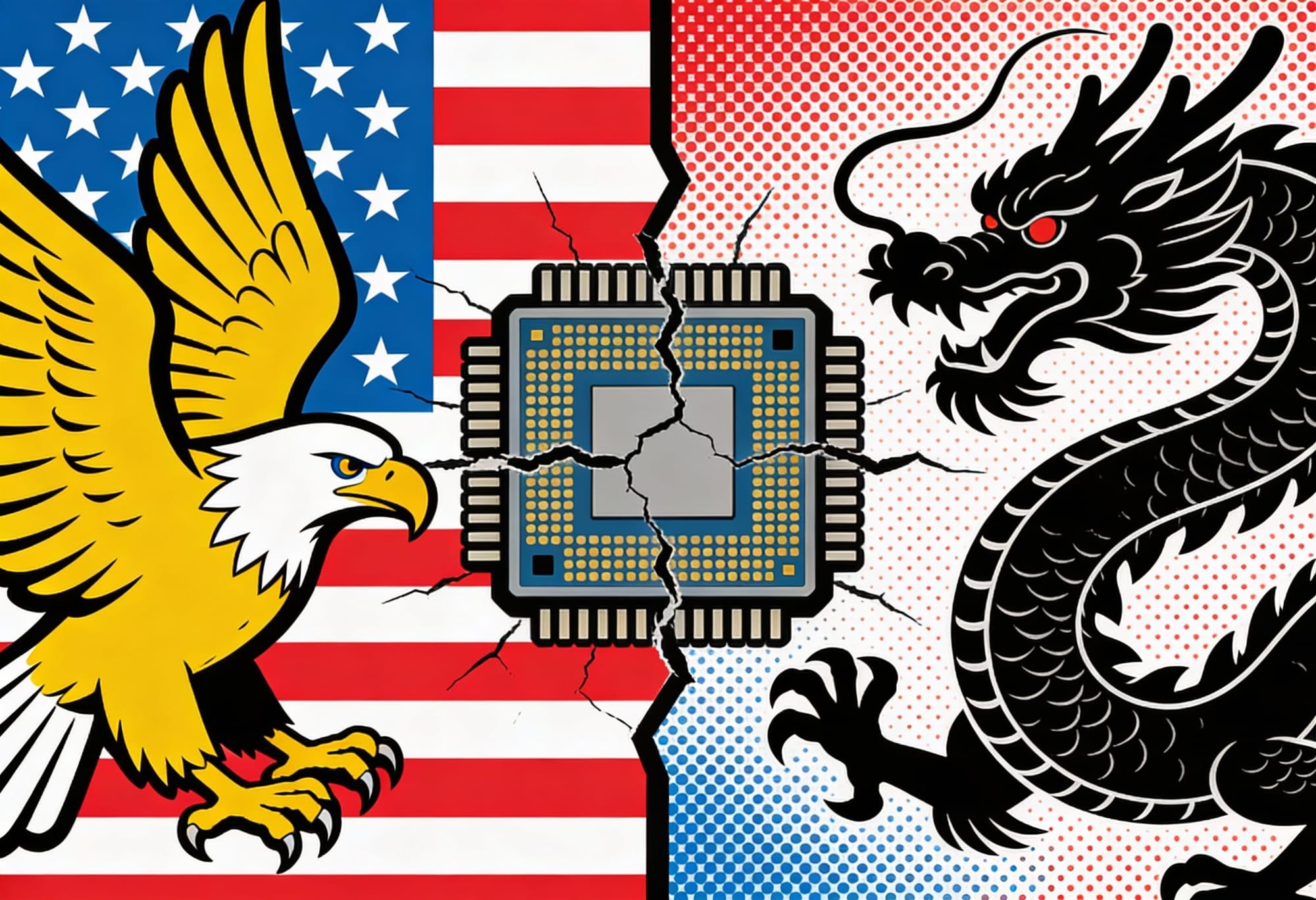
Huang's China position is the most controversial part because it asks Washington to accept a commercial argument as a national-security strategy. He says America should keep Chinese developers inside the U.S. technology stack, not push them toward Huawei and domestic substitutes. If China is going to build AI anyway, Nvidia wants that AI to run on American platforms.
The case has force. Reuters reported in March that Nvidia had won approvals tied to H200 sales and that Huang said the company had purchase orders from Chinese customers, allowing it to restart manufacturing for the chip. Earlier Implicator coverage argued that export controls have often boosted Beijing's chip ambitions by making local substitutes a political and industrial target.
Huang is right that ecosystems are sticky. Computing is not a car that you swap every morning. Toolchains, kernels, inference stacks, developer habits, and cluster operations harden over time. A Chinese lab trained on Nvidia hardware becomes at least partly dependent on Nvidia's pace.
But that is not the whole problem. Anthropic chief executive Dario Amodei has argued the opposite case, writing that export controls are needed because efficiency gains do not end chip demand. They raise the ceiling. In his DeepSeek essay, Amodei argued that cheaper training usually leads labs to spend the savings on stronger models, not fewer chips.
Washington's anxiety comes from that logic. If more compute still means stronger systems, then selling China better chips may narrow the time gap before Chinese labs reach dangerous capabilities. Nvidia's anxiety is different. It fears the cure may train its replacement. Cut China off for long enough, and the buyer you lost may become the supplier you face.
Both fears can be true. That is why Huang's China argument is hard to dismiss and hard to trust. It aligns U.S. ecosystem power with Nvidia revenue. It also asks policymakers to believe that dependence is safer than denial.
The next AI race is an operating race
The question under Patel's interview was not whether TPUs can take share. They can. It was not whether China can build better chips. It will keep trying. It was not whether Nvidia's margins can stay as high as they have been. They probably face more pressure as buyers diversify and custom silicon matures.
The better question is what AI rewards next. Huang's answer is operational depth. Not a single chip. A stack that can absorb new model designs, push bottlenecks backward, find enough power, keep clouds supplied, tune customer workloads, and lower token cost every year.
That is a harder business to copy than CUDA alone. It is also messier. It pulls Nvidia into export politics, energy fights, supplier financing, cloud competition, and customer allocation decisions that look less like product management and more like central planning with a profit motive.
You can see why Nvidia likes that role. You can also see why everyone else should feel uneasy about it. The AI economy is starting to depend on a company that does not own the fabs, does not own the clouds, does not own the labs, and still increasingly tells each of them what tempo the market can sustain.
The test will arrive in 2027. By then, Anthropic's TPU capacity should begin coming online, Nvidia's Rubin cycle should be moving from promise to deployment if the company keeps its roadmap, China will have had another year to harden its domestic chip stack, and customers will know whether token costs really keep falling as fast as Huang says.
If Nvidia still controls the switchyard then, the TPU threat will look less like a breach and more like another line feeding the same grid. If it does not, Huang's interview will read differently. Not as confidence. As the moment Nvidia described the empire it had to become before anyone else finished building around it.
Frequently Asked Questions
What did Jensen Huang say about selling AI chips to China?
Huang argued that America should keep Chinese developers inside the U.S. technology stack rather than push them toward Huawei and local alternatives. The article frames that as Nvidia's strongest commercial argument and Washington's hardest policy dilemma.
Does Anthropic's TPU deal weaken Nvidia?
It weakens the simple CUDA-lock-in story, but not necessarily Nvidia's broader position. The deal suggests frontier labs need many compute sources because demand is becoming too large for one chip supplier or cloud platform.
What is Nvidia's supply-chain moat?
Nvidia can coordinate foundries, memory vendors, packaging firms, cloud buyers, software teams, and AI labs at large scale. Huang argues that downstream demand gives suppliers confidence to invest ahead of bottlenecks.
Why is the article skeptical of export controls?
It does not reject export controls outright. It argues that both sides have real risks: selling chips can speed Chinese AI capability, while cutting China off can accelerate domestic Chinese substitutes.
Where is Nvidia and AI headed next?
The article argues the race is shifting from chip specs alone to operations: power, delivery dates, racks, memory, networking, software tuning, export licenses, and token-cost declines.
AI-generated summary, reviewed by an editor. More on our AI guidelines.


Free AI briefing · Weekdays
The AI stories that matter, sourced and explained.
Join the Morning Briefing. It goes out every weekday at 4:45 a.m. Pacific, with later sends for the East Coast, Berlin and Tokyo.
Free when you sign up: The Paperclip Compendium, our tested guide to running AI agents.
Free. Unsubscribe in one click.

Marcus Schuler
Editor-in-Chief and founder of Implicator.ai. Former ARD correspondent and senior broadcast journalist with 10+ years covering tech. Writes daily briefings on policy and market developments. Based in San Francisco. E-mail: editor@implicator.ai