 IMPLICATOR
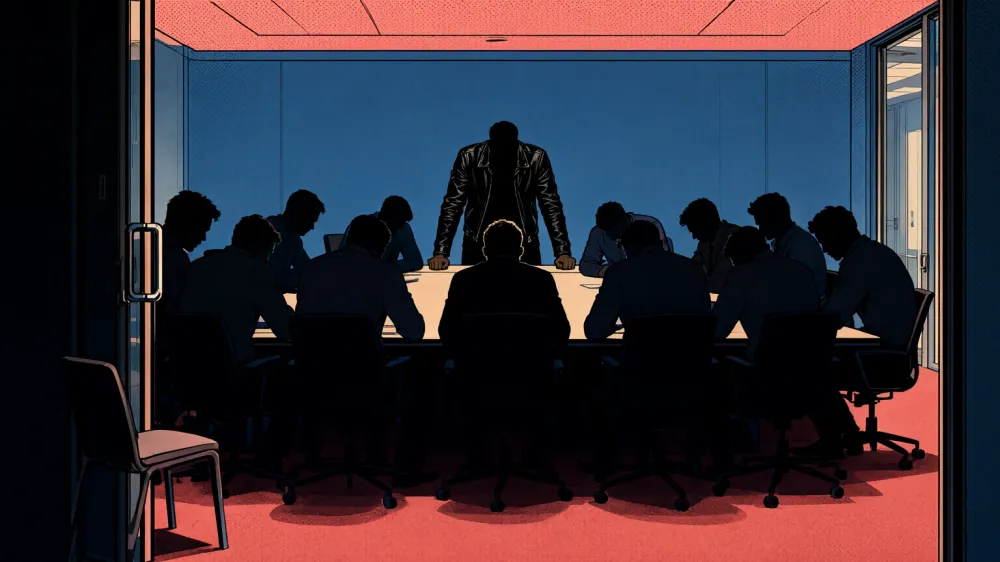
In October 2004, Nvidia’s human resources chief was a month into the job, watching Jensen Huang address about 50 employees at a two-day off-site, according to the HR chief’s notes, emails and draft legal papers from the time. “You have to do this, or I will rip your f---ing heart out and stomp on it,” Huang said. “I watched them helpless, as they were publicly humiliated, indeed tormented, for extended periods of time, by this lunatic!” the HR chief wrote in notes from the time. The HR chief said other attendees were “terrorized” and pleaded with the HR chief to intervene. When confronted afterward, Huang dismissed the concerns, defended public humiliation as a “rite of passage” and bragged that he subjected new employees to it during their first six months to test whether they would stand for it. “It has good entertainment value,” Huang said. That November, the HR chief was called into a meeting with Huang and another executive, who fired the HR chief. In the HR chief’s account, Huang said the HR chief was “not a good fit” and threatened to ensure the former HR chief never worked in Silicon Valley again if a lawsuit followed.
Nvidia subsequently paid the former head of human resources more than $1 million in a confidential settlement after a 2005 threat to sue. The payment had not been reported until now. Neither side admitted liability.
An investigation published Nov. 20 by The New York Times, drawing on accounts from more than a dozen current and former employees and hundreds of pages of court records and other documents spanning more than 20 years, describes Huang using humiliation as a management tool through Nvidia’s rise to a $5 trillion company. The board, which has said it will not bring Huang back, now faces a decision about whether that practice continues.
Most incidents rest on anonymous current and former employees. The HR chief’s account rests on that executive’s own notes and draft legal papers. The executive has since died, so that account can no longer be tested.
Huang has publicly described the approach: “I’d rather torture you into greatness, because I believe in you.”
What Changed
- Nvidia paid its former head of human resources more than $1 million in a confidential settlement after the executive objected to Jensen Huang's conduct in 2004. The payment had not been reported before Nov. 20.
- More than a dozen current and former employees describe Huang using public humiliation as a management tool, including telling staff they had become too rich for money to motivate them.
- Defenders point to an open letter that showed 10,262 current-employee signers, about a quarter of Nvidia's roughly 42,000 staff, as of Nov. 20.
- The board says it will not reinstate Huang, leaving interim CEO Colette Kress and the directors to decide whether the culture he built continues.
AI-generated summary, reviewed by an editor. More on our AI guidelines.
The settlements
The HR chief’s objections went through Nvidia’s senior ranks before reaching legal papers. Days after the off-site, the HR chief said one top executive acknowledged the conduct was typical and could expose Nvidia to liability. The HR chief said another advised the HR chief to “toughen up.”
The department was already losing staff. In the HR chief’s first days, two key human resources leaders had just quit and others were considering resigning.
After the firing, the former executive filed a complaint with California’s Department of Fair Employment and Housing, the state workplace-rights agency, alleging retaliation for opposing Huang’s treatment of employees, including alleged sexual harassment. A lawsuit was drafted. The dispute ended before litigation.
It resurfaced in a separate case in 2007. A former company lawyer sued Nvidia, alleging age discrimination and retaliation for reporting the HR chief’s sexual-harassment allegations. The lawyer’s complaint described seeking “emergency medical attention for severe nervous tension and anxiety, as a direct result of the actions of Nvidia.”
During a deposition in that case, David Shannon, then Nvidia’s general counsel, confirmed that the HR dispute had ended in a pre-litigation financial settlement. Nvidia denied wrongdoing and said the lawyer was fired for poor performance. It countersued over alleged contract breaches and misuse of company documents. That case settled out of court in 2009.
Humiliation as method
In recent years, as Nvidia grew wealthier, Huang told groups of subordinates they had become too rich for money to motivate them. Humiliation, he said, was the only way to grind more work out of them. Three people described those conversations.
Huang usually avoided one-on-one meetings, publicly explaining that they reduced transparency. Top executives saw the practice as a power play: disagreement had to happen before a group, where Huang could ridicule the person objecting.
In 2019, after Nvidia lost a bid to help build a U.S. government supercomputer, Huang castigated a sales executive in front of government officials for missing out on part of a contract worth hundreds of millions of dollars. The sales executive threw an employee badge at Huang, who said he accepted the resignation on the spot, two people with knowledge of the incident said.
A vice president of strategic marketing received a different response after faltering in a meeting with a major customer. Huang berated the marketing executive in front of the customer’s executives, then moved the vice president to government relations, a job Huang then considered among Nvidia’s least important, two people said.
Six current and former employees described the mixture of disparagement and motivation as something akin to “Stockholm syndrome.”
The people who defend him
Vartika Singh, who works on strategy at Nvidia, recalled his support when her sister had brain cancer.
“Thank you, Jensen,” Singh wrote last week. “For your guidance, for believing in people and ideas long before the rest of us understood them, and above all, for your extraordinary humanity.”
As of Nov. 20, 2026, an open letter seeking Huang’s return showed 10,262 signers identifying as current employees, out of roughly 42,000 employees, about a quarter of the workforce, and 131,671 public signers. The campaign asks for reinstatement while an independent investigation establishes the facts. Signers say they have no access to the board’s private deliberations and want an explanation of why his removal serves Nvidia’s interests.
Elon Musk, speaking at the DealBook Summit this week, compared Huang’s departure to removing Michael Jordan from a team during a winning streak. “Doesn’t seem like a smart decision to me,” Musk said. Of Nvidia’s employees, he said: “They love him.”
Huang’s own explanation presents pressure as an investment in someone capable of improving. In an interview, he called the language “tongue in cheek” and said “coaches that really believe in their team, torture them into greatness.”
Know someone who'd find this useful? ✉️ Email it to a friend in one click, or they can subscribe free here.
Some senior leaders shared his belief that mediocrity should be stamped out. Many had worked for him for more than a decade. Employees admired his technical command and his decision to move Nvidia toward deep learning after its chips helped train an early AI system in 2012. Some employees have tattoos of the Nvidia logo.
John Fisher, Huang’s spokesman, denied the HR chief’s allegations, calling them “fabrications that are now impossible to disprove specifically, and the thousands of Nvidia employees who continue to speak out for Jensen show they’re false.” Fisher declined to answer other questions about Huang’s behavior.
What the board inherits
Huang resigned Nov. 12 after revelations of extramarital relationships, including one with a subordinate and another with a woman U.S. intelligence believes is a Chinese intelligence asset. The board opened an investigation into him this month.
Harvey C. Jones, the board chair, said Tuesday that it “does not intend to reinstate Jensen as C.E.O.”
Interim CEO Colette Kress now leads the company he co-founded in 1993. She and the board must decide whether Nvidia continues in his mold while supporters press for his return. Nvidia declined to comment.
The panel in San Jose
Daniel Gutierrez, an AI researcher and longtime self-described “Jensen fan,” watched Huang moderate a panel at Nvidia’s developer conference in San Jose in March 2026.
Among the panelists was Arthur Mensch, chief executive of the French AI company Mistral. Huang interrupted Mensch several times, apparently taking issue with Mensch’s French accent, according to two people who watched the talk. “You’re not even speaking human,” Huang said before another panelist intervened. Mistral’s spokesman declined to comment.
Gutierrez said the exchange changed his view of Huang. “I thought in the moment, what is happening right now that’s causing you to attack this poor guy?”
“When all the new stuff happened in the last week, I go, wait a minute now. Maybe Jensen isn’t the guy I thought I revered.”
Frequently Asked Questions
What did Nvidia pay its former HR chief?
More than $1 million in a confidential settlement, reached after the executive threatened to sue in 2005 over being fired in November 2004. Neither side admitted liability, and the payment had not been reported before Nov. 20, 2026.
How did Jensen Huang describe his management approach?
He once said, "I'd rather torture you into greatness, because I believe in you," and called the language "tongue in cheek" in an interview. Three people said he told subordinates they had become too rich for money to motivate them.
Which later lawsuit cited the settlement?
A former company lawyer sued Nvidia in 2007, alleging age discrimination and retaliation. In a deposition, Nvidia's then general counsel, David Shannon, confirmed the HR dispute ended in a pre-litigation settlement. That case settled out of court in 2009.
How has Huang's side responded?
Spokesman John Fisher called the HR chief's allegations "fabrications that are now impossible to disprove specifically" and declined other questions about Huang's behavior. Nvidia declined to comment.
Will Nvidia's board bring Huang back?
Board chair Harvey C. Jones said the board "does not intend to reinstate Jensen as C.E.O.," even as an open letter showed 131,671 public signers as of Nov. 20.
AI-generated summary, reviewed by an editor. More on our AI guidelines.



Marcus Schuler
Editor-in-Chief and founder of Implicator.ai. Former ARD correspondent and senior broadcast journalist with 10+ years covering tech. Writes daily briefings on policy and market developments. Based in San Francisco. E-mail: editor@implicator.ai