IMPLICATOR
JustPaid co-founder and chief technology officer Vinay Pinnaka told Implicator on Tuesday his seven-agent AI engineering stack has run about $4,000 across the past three weeks, well under the $10,000 to $15,000 monthly figure he gave the Wall Street Journal three weeks earlier. The Mountain View founder said he routed most of the coding work onto several Claude Code Max subscriptions and kept only his OpenClaw orchestrator on pay-as-you-go tokens through AWS Bedrock. That configuration left JustPaid untouched by Anthropic's April 4 decision to block third-party harnesses from Claude subscriptions.
The billing change was supposed to hit exactly this kind of setup. It didn't. "We didn't have to change anything," Pinnaka said.
Key Takeaways
- JustPaid CTO Vinay Pinnaka says his seven-agent coding stack has run about $4,000 across the past three weeks, well below his earlier WSJ figure of $10,000 to $15,000 a month.
- Anthropic's April 4 ban on third-party Claude harnesses did not dent JustPaid's bill, because its OpenClaw instance runs on AWS Bedrock tokens rather than a Claude subscription.
- Pinnaka runs four human engineers and one AI orchestrator he calls Gilfoyle, after the HBO Silicon Valley character. Gilfoyle onboarded JustPaid's newest human hire on its own.
- Pinnaka's bedtime has shifted from 11 p.m. to 2 a.m. since the agents came online. His wife, he said, has begun to complain.
AI-generated summary, reviewed by an editor. More on our AI guidelines.
The math that didn't collapse
Three weeks ago Pinnaka was the Wall Street Journal's poster child for agentic coding economics. Seven Claude Code and OpenClaw agents. Ten major features in a month. Ten-to-fifteen grand in tokens. The number arrived with the implied moral that the $20 all-you-can-code subscription era was over.
Then Anthropic killed subscription access to third-party harnesses the day after the WSJ piece ran. Axios called it the $20 buffet closing. OpenClaw creator Peter Steinberger said he had tried to talk Anthropic out of it and managed to buy a week.
Pinnaka, inconveniently for the narrative, was already running a cheaper rig. The trick is where he parks the work. Claude Code Max subscriptions bill a flat monthly fee, regardless of how many tokens the agent burns inside them. Pinnaka runs several of those side by side and pushes the bulk of the coding, reviewing, and testing onto them. Gilfoyle, his OpenClaw instance named after the HBO Silicon Valley character, sits on AWS Bedrock and gets billed per token. But Gilfoyle mostly delegates. The orchestrator thinks, the subscription-priced agents type, and the expensive metered layer barely touches a keyboard. That isolation made Anthropic’s subscription crackdown a non-event for him. He says the last three weeks of OpenClaw usage came to roughly $4,000.
He also admits most of that spend isn't feature work. It's quality assurance. Visual browser automation, screen by screen, burns more than half his tokens on its own.
A four-engineer team, plus one named Gilfoyle
The WSJ counted nine employees at JustPaid. Pinnaka counts four engineers, himself included. The rest of the company lives in India, Africa and Colombia. And, of course, Gilfoyle.
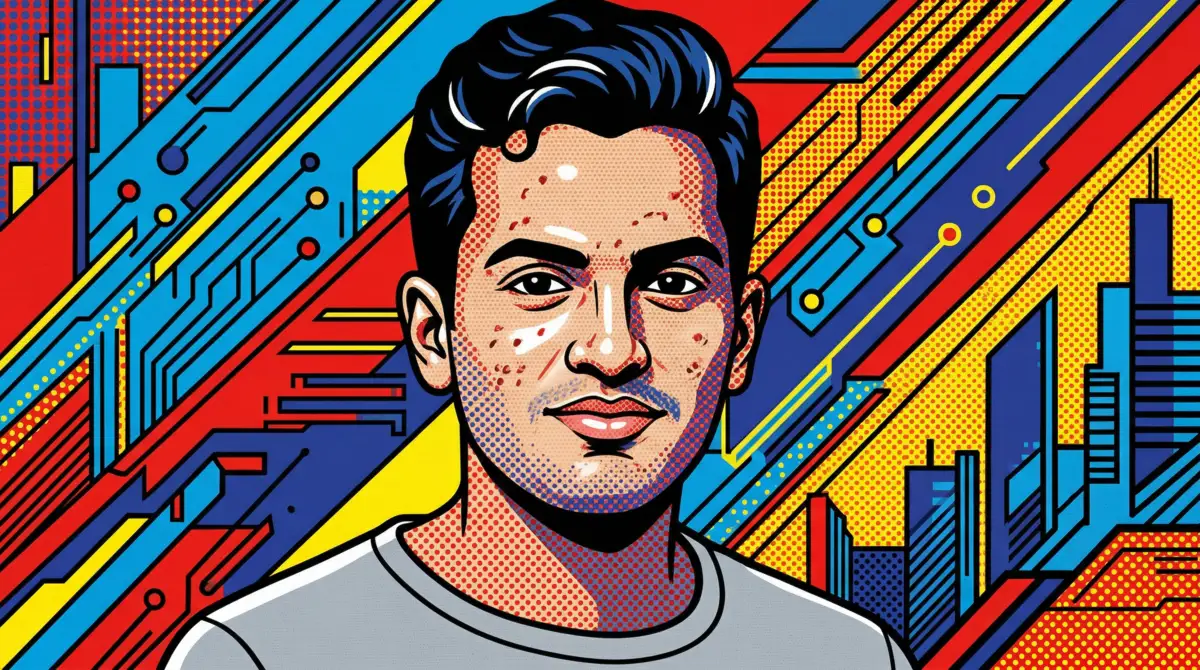
Gilfoyle is where the story turns personal. JustPaid recently hired a new developer. Pinnaka did not introduce him to the team in person. He asked Gilfoyle to handle the introduction, and Gilfoyle did. The agent sent the first Slack message. It walked the new hire through the codebase. It handed over the onboarding guidelines and answered his questions for several days before any of the founders looked in. For a while, the new developer was not entirely sure who he was chatting with. Or what.
Implicator's daily AI brief. For executives who skip the hype.
Strategic AI news from San Francisco. No hype, no "AI will change everything" throat clearing. Just what moved, who won, and why it matters. Daily at 6am PST.
No spam. Unsubscribe anytime.
"He was originally in a confusion," Pinnaka said.
JustPaid has since consolidated from two OpenClaw instances down to one. The experimental one was retired. Knowledge sits better in a single place, Pinnaka said, which is the sort of sentence engineers used to say about databases.
The founder who stopped sleeping at 11
Y Combinator chief executive Garry Tan recently described a 19-hour coding binge as cyber psychosis. Researchers at Boston Consulting Group and UC Riverside have given the cognitive fatigue of overseeing many agents at once a name: AI brain fry. Pinnaka recognizes the diagnosis. He volunteered it.
Before the agents, Pinnaka said, his bedtime was around 11. "Now it's 2 a.m.," he said.
Agents do not get tired. That is famously the selling point. What the pitch skips is that they also never stop generating work for the one human still expected to review it. Pinnaka now captures walking thoughts by voice memo, tags Gilfoyle in Slack, and reads the output later. Every Sunday he asks Gilfoyle to summarize the week back to him and tell him what to ship next. The founder is outsourcing his memory to the agent that is generating the work.
Pinnaka's wife, he said, has begun to notice. Her husband spends more time with Gilfoyle than with her, and she has pointed it out.
Mental health comes up inside the company. The team takes what Pinnaka calls constant vacations.
But the fear of missing out is the part he cannot solve. "If we miss out this opportunity," he said, "we will never get back."
Advice for a 20-year-old in Munich
Asked what he would tell a twenty-year-old engineer in Germany debating whether to still enter the profession in April 2026, Pinnaka did not hesitate. Enter it. Learn different skills.
Interpersonal skills, he said. The ability to read tone in a customer's Slack message. System architecture. Scalability. How revenue works. Taxes. Government regulations. The kind of paperwork that changes every week, which AI can summarize but will not sit down and file. These are the skills Pinnaka regrets not working on earlier. They are also the ones he now tells the next cohort to pick up first.
Writing code, pointedly, is not on his list. Pinnaka said a prospective client this week wants to buy the AI-employee technology rather than JustPaid's billing product. He is thinking about spinning it out. The founder is, in other words, getting ready to sell Gilfoyle.
Frequently Asked Questions
How much does JustPaid spend on AI coding agents?
Co-founder Vinay Pinnaka told Implicator his OpenClaw token bill has been about $4,000 across the past three weeks, well under the $10,000 to $15,000 monthly figure he gave the Wall Street Journal three weeks earlier. He attributes the drop to routing bulk coding work through several Claude Code Max subscriptions, while keeping his OpenClaw orchestrator on AWS Bedrock tokens.
Did Anthropic's ban on third-party harnesses affect JustPaid?
No. On April 4 Anthropic blocked third-party harnesses from Claude subscriptions. Pinnaka said the change did not hit his bill because his OpenClaw instance already ran on AWS Bedrock API tokens, not a Claude subscription. Bulk coding work stays inside separate Claude Code Max accounts, which remain unaffected.
Who is Gilfoyle?
Gilfoyle is the name Pinnaka gave his OpenClaw instance, after the engineer character in the HBO series Silicon Valley. He addresses it by name in Slack, asks it to onboard new hires, and requests weekly summaries of his own work. The developer JustPaid hired most recently was introduced to the company by Gilfoyle rather than by a human founder.
How big is JustPaid's engineering team?
Pinnaka said JustPaid has four engineers including himself, spread across the United States, India, Africa, and Colombia. The Wall Street Journal described the full company as nine employees. Seven AI agents handle writing, reviewing, and quality assurance for the codebase, with Pinnaka supervising their output.
Has agentic coding affected Pinnaka's health?
Pinnaka said his bedtime has moved from 11 p.m. to 2 a.m. since he started overseeing AI agents. He recognized the 'AI brain fry' framing from researchers at Boston Consulting Group and UC Riverside, and the 'cyber psychosis' framing from Y Combinator chief executive Garry Tan. His wife, he said, has begun to notice.
AI-generated summary, reviewed by an editor. More on our AI guidelines.



Marcus Schuler
Editor-in-Chief and founder of Implicator.ai. Former ARD correspondent and senior broadcast journalist with 10+ years covering tech. Writes daily briefings on policy and market developments. Based in San Francisco. E-mail: editor@implicator.ai