 IMPLICATOR

David Mann was in a cab to LaGuardia Airport on July 29 when a caller from Situational Awareness asked whether he wanted a discounted stake in Anthropic. The deal would have to be completed overnight.
"Aschenbrenner was being forced to sell," he told the Wall Street Journal. "He needed the money and was sounding people out."
The quarter that call fell in now has a number. Situational Awareness lost 65% after fees in the third quarter, according to an investor letter seen by the Journal.
The fund is still up 88.5% for the year through September.
Leopold Aschenbrenner, the fund's 25-year-old manager and a former OpenAI researcher, used the same letter to tell clients that today's opportunities "are the highest potential return we have seen in the lifetime of the fund." The figures are the fund's own, and they stop at Sept. 30.
What Changed
- Situational Awareness lost 65% after fees in the third quarter, according to an investor letter.
- The fund is still up 88.5% for the year through September, after being up 439% through June.
- Leopold Aschenbrenner blamed the leverage that turned a sharp AI drawdown into a wipeout and said he has restructured the portfolio.
- The portfolio is now roughly 70% public stocks and 30% private companies, following the IPO of Anthropic, its largest private position.
AI-generated summary, reviewed by an editor. More on our AI guidelines.
The arithmetic
Both numbers fit because of the first half. The fund was up 439% through June. Put differently, $100 at the start of the year turned into roughly $539 by the end of June. A 65% loss in the third quarter leaves about $189.
Most of the damage landed in a few weeks. The fund had already told investors it lost an estimated 67% in July alone, which leaves August and September roughly 6% higher.
Its public filings show the same collapse from another angle. The fund reported $1.58 billion of 13F positions at Sept. 30, down from $20.24 billion at June 30.
The leverage
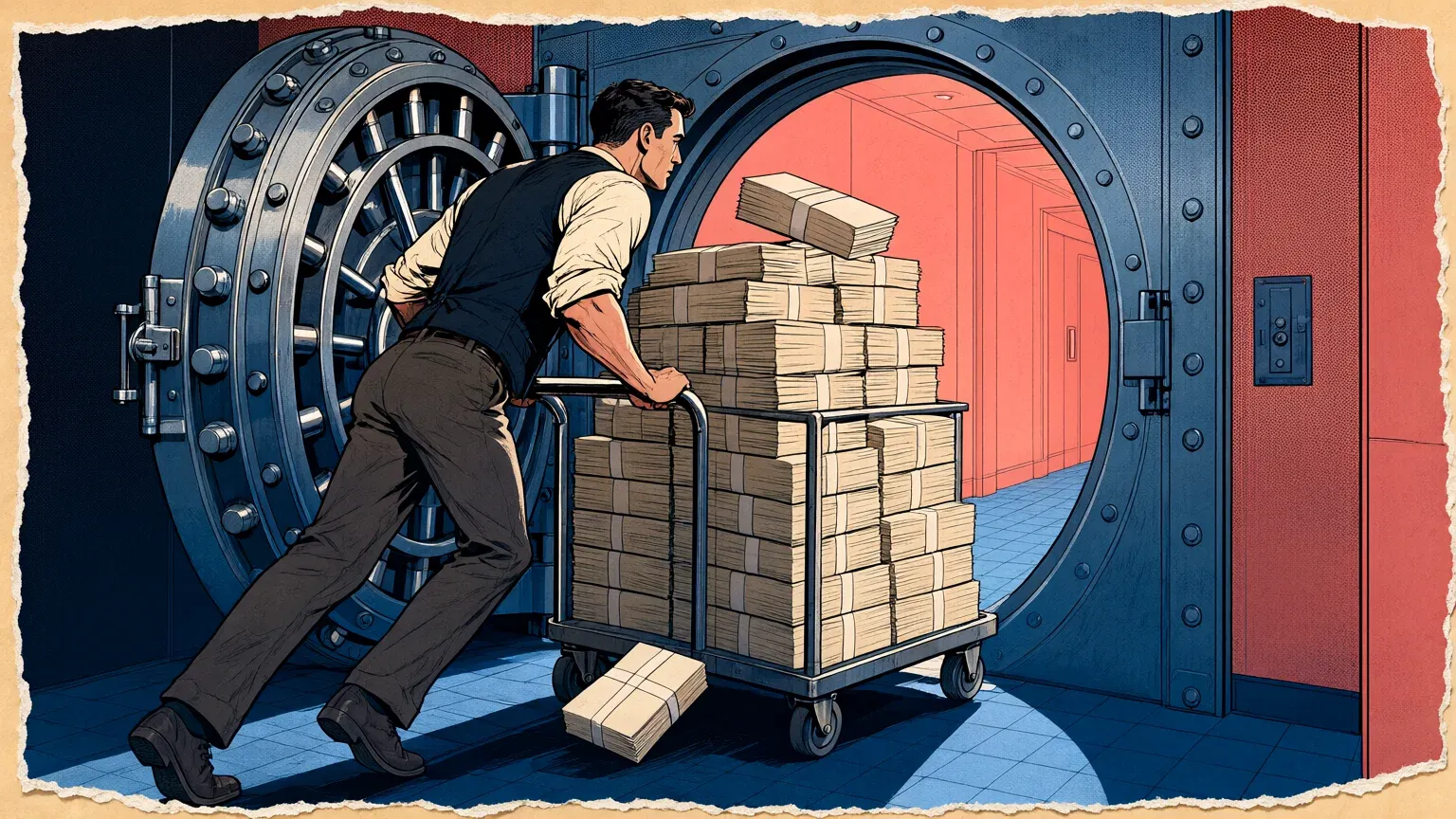
In July, Sandisk and other data-center-related stocks started to fall, and the fund's brokers started issuing margin calls. Aschenbrenner kept the Anthropic stake.
Rich Falk-Wallace, a former portfolio manager at Citadel who now runs a software company called Arcana, later reconstructed the portfolio from public filings, Aschenbrenner's statements and a little guesswork. He found an excellent stock picker. He also found more risk than he had seen at any hedge fund.
"He wasn't truly hedged at all," Falk-Wallace said.
The new letter makes a similar diagnosis. Aschenbrenner blamed the leverage that turned a sharp AI drawdown into a wipeout and said he has restructured the portfolio. Many of the fund's predictions came true, he wrote. "And yet we also learned how wrong we could be, and how merciless the market is when we are."
His new rule: "Volatility, yes; existential risk, even if we are totally wrong, never."
Know someone who'd find this useful? ✉️ Email it to a friend in one click, or they can subscribe free here.
The stake he kept
The portfolio is now roughly 70% public stocks and 30% private companies, following the IPO of Anthropic, its largest private position. Anthropic priced at $83 on Nov. 18 and closed its debut at $97.17.
The letter says the fund may trim the stake "as it would with any stock." It also says the fund remains "highly bullish at the IPO price."
The pitch, again
The bullish call has a precedent. The July 24 letter, sent days before the fund imploded, invited clients to send fresh cash on Aug. 1. Its postscript flagged "a particularly good time to add funds, if you have been waiting for one."
The third quarter ended on Sept. 30, just before the AI trade cracked again, so its figures leave out October. The Nasdaq is down more than 20% since early October.
The fund has added staff since the summer. Headcount is up to about 30 from eight in June, and the fund is hiring a chief risk officer. The Financial Times has reported that Aschenbrenner is plotting a Situational Awareness 2.0, with a return to leveraged trading and fresh outside capital in the new year.
One investor who recently spoke to management told the FT that the firm's risk management "needs a little more fine tuning." Another put it more bluntly: "It's bad form to blow up repeatedly."
Aschenbrenner's confidence in his central ideas was unshaken when he spoke to the New Yorker after his honeymoon. He said his 2024 essay was wrong in a number of respects. "But, uniformly, when I was wrong, it was because things have gone faster than I expected."
Frequently Asked Questions
How much did Situational Awareness lose in the third quarter?
The fund lost 65% after fees in the third quarter, according to an investor letter. It had already told investors it lost an estimated 67% in July alone.
How can the fund still be up for the year?
The fund was up 439% through June. A $100 stake at the start of the year grew to roughly $539 by the end of June, and a 65% loss leaves about $189, which matches the 88.5% gain through September.
What went wrong in July?
Sandisk and other data-center-related stocks fell, and the fund's brokers issued margin calls. Aschenbrenner kept the Anthropic stake.
What does the fund hold now?
Roughly 70% public stocks and 30% private companies, following the IPO of Anthropic, its largest private position. The letter says the fund remains highly bullish at the IPO price.
Does the letter cover October?
No. The third quarter ended on Sept. 30, just before the AI trade cracked again, so its figures leave out October.
AI-generated summary, reviewed by an editor. More on our AI guidelines.


Marcus Schuler
Editor-in-Chief and founder of Implicator.ai. Former ARD correspondent and senior broadcast journalist with 10+ years covering tech. Writes daily briefings on policy and market developments. Based in San Francisco. E-mail: editor@implicator.ai