 IMPLICATOR
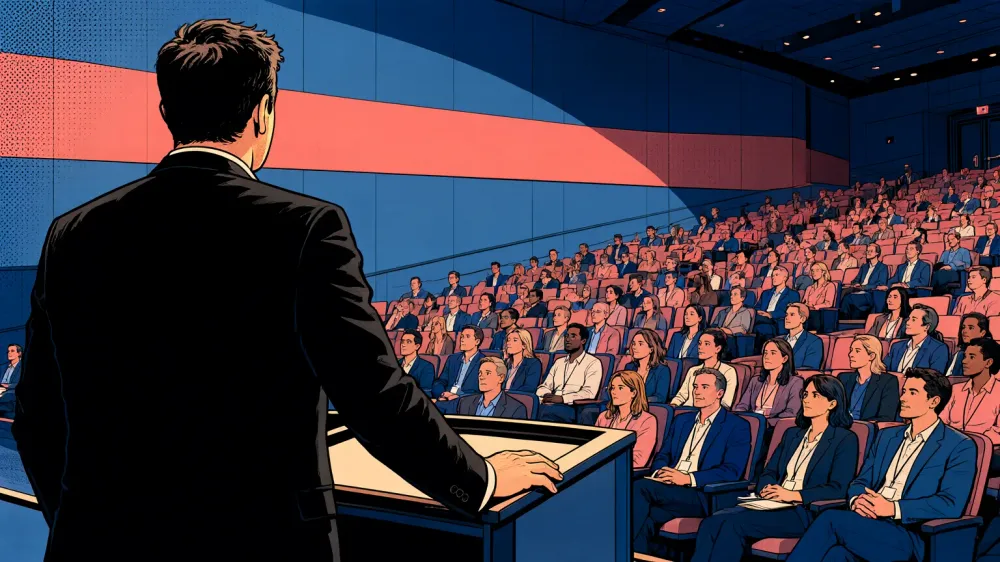
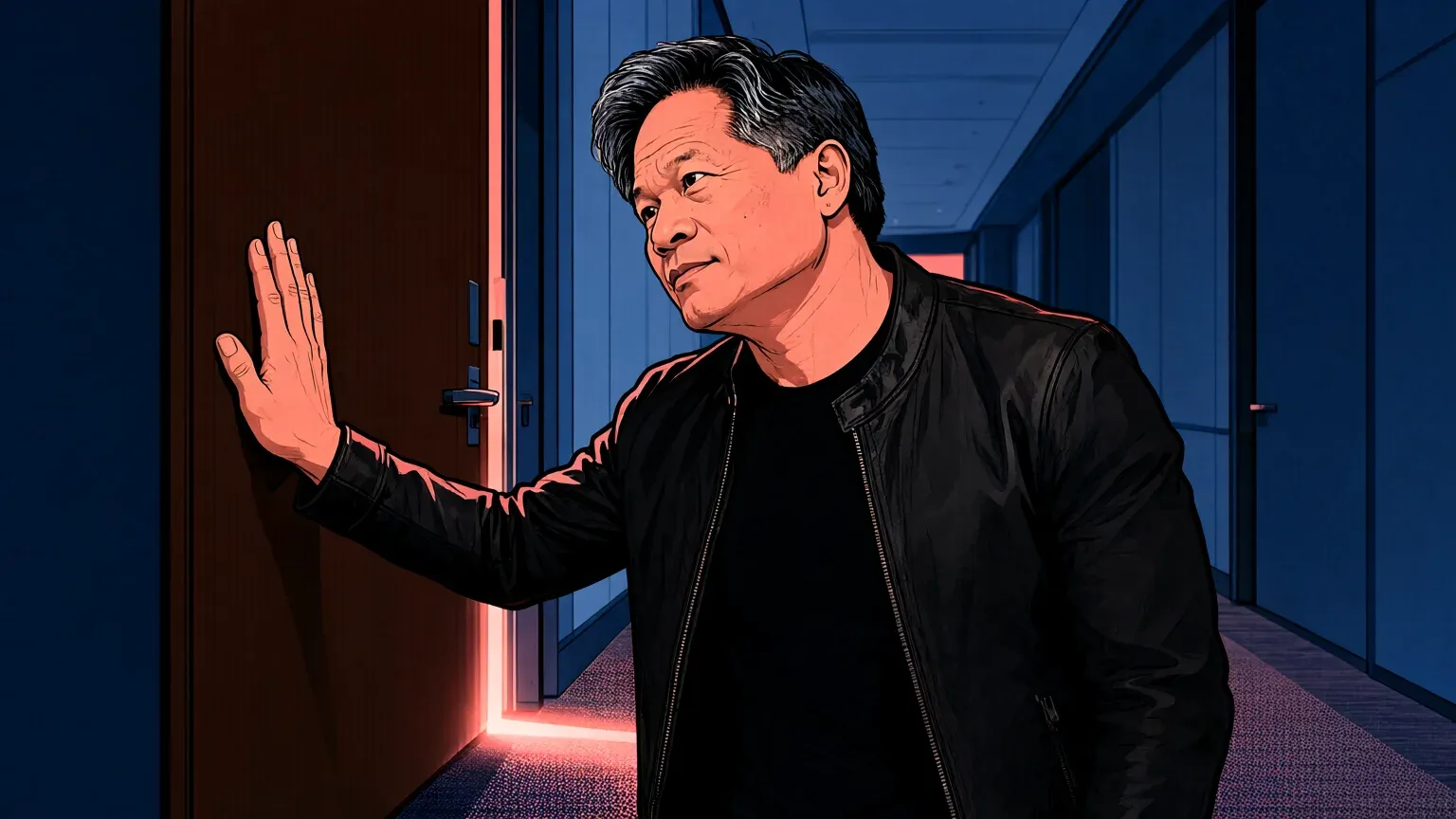
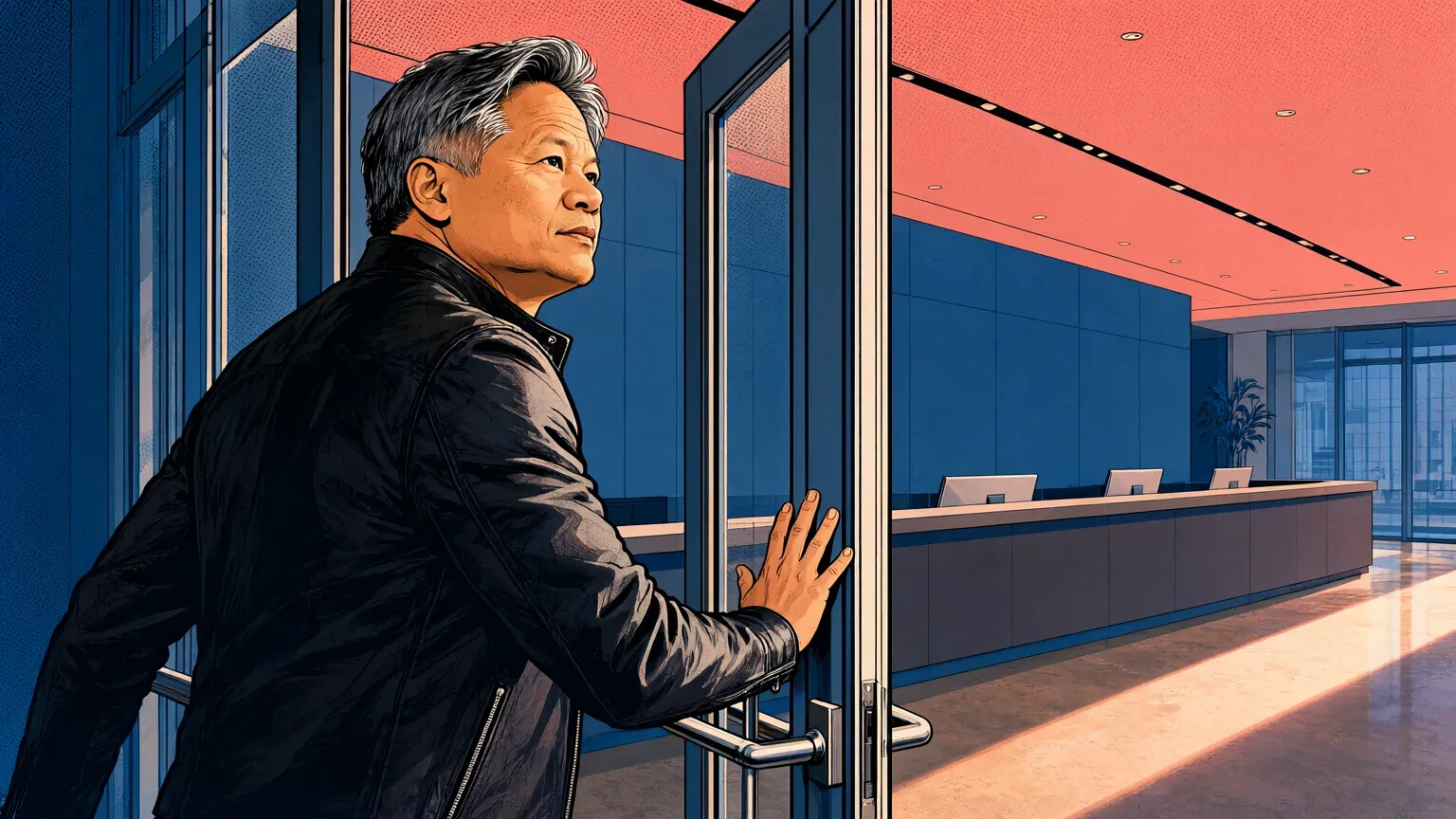
Jensen Huang rejected the suggestion that being a “tech bro” explained his return as he addressed employees at Nvidia headquarters on Tuesday. At his first all-hands since returning, he apologized and acknowledged violating the company’s code of conduct. He insisted the directors had made their own decision.
On Monday, President Donald Trump had claimed credit for his return.
Nvidia’s board voted Nov. 22 to restore Huang as CEO, president and director after chair Harvey Jones said on Nov. 17 that directors did not intend to reinstate him. A private campaign by Silicon Valley investors and executives had helped bring his case to the White House before Monday’s announcement. Tuesday’s meeting came with a customer investigation and shareholder suits unresolved, as law enforcement officials declined to explain parts of the administration’s assurances and congressional Democrats sought records of its intervention.
What Changed
- Jensen Huang apologized at his first staff meeting since returning and said Nvidia's directors had made their own decision.
- Marc Andreessen was among the Silicon Valley figures identified as backing Huang. Investors Gavin Baker and Brad Gerstner appealed publicly, and Vice President JD Vance worked to obtain assurances for Nvidia's board.
- Donald Trump took credit for the reinstatement. Attorney General Todd Blanche declined to discuss his communications with the president when asked about an investigation.
- The Megaspeed investigation, California's inquiry, two shareholder suits and Nvidia's internal review remain open.
AI-generated summary, reviewed by an editor. More on our AI guidelines.
The private campaign
The effort began while Nvidia was preparing to operate without its founder. Directors accepted Huang’s resignation on Nov. 11 and disclosed it the following day.
Gavin Baker and Brad Gerstner, the two investors who signed an open letter to directors, sought to keep that choice available. Within a day of the resignation’s disclosure, they publicly urged the board to consider every option, including Huang’s return.
A Financial Times report identified Marc Andreessen, Uber founder Travis Kalanick and Goldman Sachs executive John Underwood among those mobilizing alongside Baker and Gerstner, citing people familiar with the effort. Andreessen declined comment. The account did not identify a particular contact he made.
The same report described an unnamed ally arranging a 45-minute call between Huang and Vice President JD Vance. Huang defended his positions on semiconductor export restrictions and remote access to chips, along with his dealings with Megaspeed, the Singapore customer under criminal investigation.
Before entering politics, Vance worked as a venture capitalist and was mentored by Peter Thiel. Trump assigned him to speak to Huang and work with the board. People familiar with the discussions described Vance working to obtain government assurances about national security risk and whether Huang was facing charges. The campaign account placed Colette Kress outside the weekend board talks, based on unnamed participants.
Elon Musk and David Sacks, a co-chair of the President’s Council of Advisors on Science and Technology, also maintained that Nvidia had moved too quickly in ousting Huang. Supporters pointed to the absence of a defensive intelligence briefing warning him that he could be a foreign intelligence target.
U.S. officials separately described Vance’s interest in Huang as a champion of open-weight AI models, whose underlying numerical settings are available for others to adapt. They presented Nvidia’s position in competition with China as a reason to restore him.
Baker publicly celebrated the outcome on Monday, describing Huang’s story as possible only in America.
Huang had also contacted industry leaders himself. In the days after he resigned, he spoke with OpenAI CEO Sam Altman, OpenAI president Greg Brockman and Musk, a source familiar with Huang’s outreach said.
Huang had publicly offered to return on Nov. 17 if directors judged it best for the company and America. In a separate interview on Nov. 23, Trump said the slide in Nvidia’s shares made it a better time to intervene and pointed to the subsequent rally as evidence that the decision had been right. In his CNBC interview, he claimed his intervention had been decisive. “I convinced them,” he said.
Huang and the board
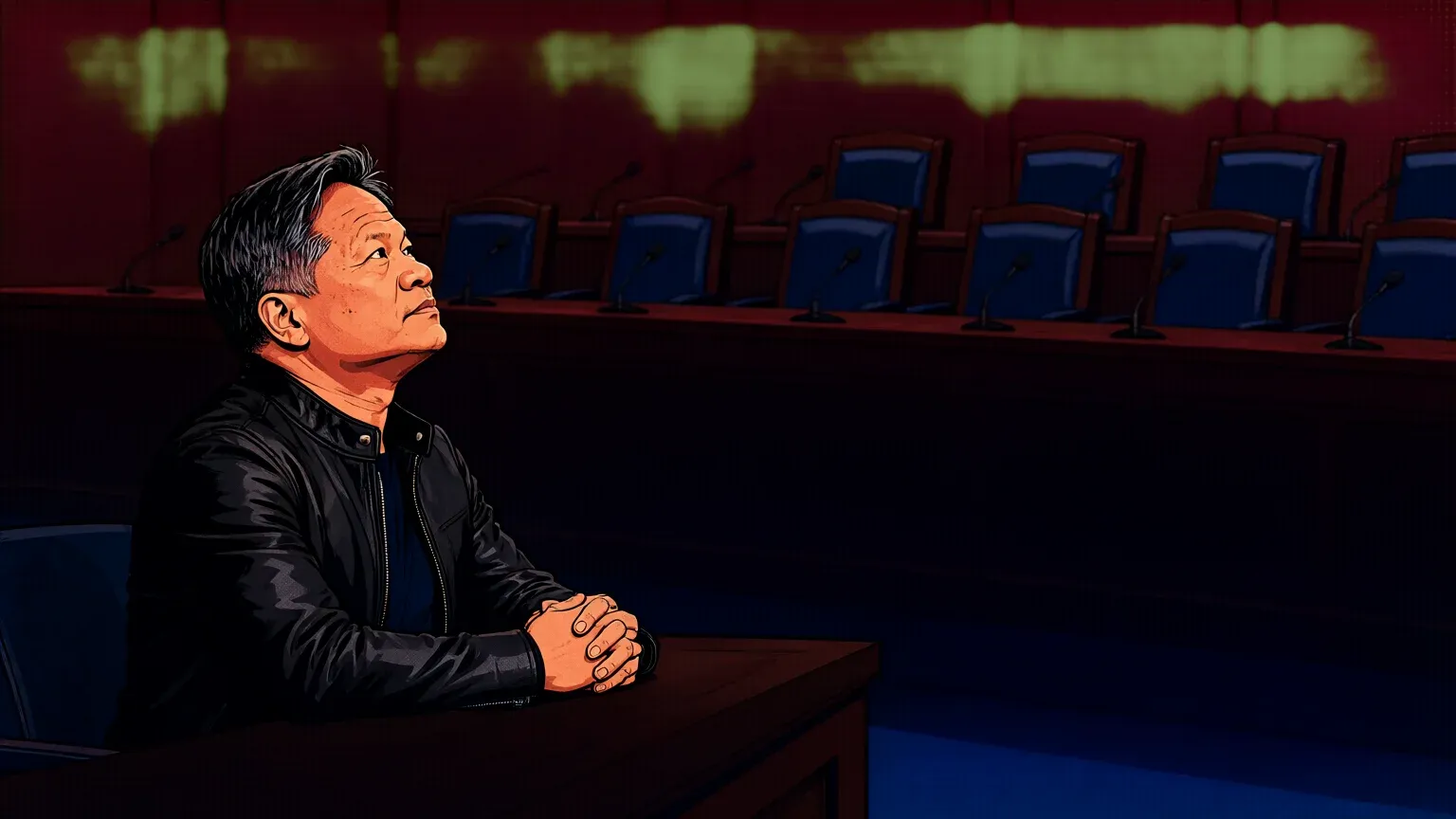
Huang’s Tuesday defense addressed the suggestion that those connections put him above company rules. He said violations still required judgment about the person and circumstances, and did not automatically require dismissal. He credited directors with gathering facts and deciding that another chance served Nvidia’s interests.
He praised Trump’s affection for Nvidia while rejecting the claim that pressure from the highest levels of government had returned him to office. He also promised to help the president make informed decisions, saying he would do the same for a future president. No questions were taken at the meeting.
Huang also defended his management structure. Roughly 60 executives reported directly to him and ran different parts of Nvidia, he said, providing a pool from which a leader could emerge. He called conventional understandings of succession planning flawed because they elevated some executives above others.
The board had appointed Kress interim CEO and retained executive search firm Heidrick & Struggles to seek a permanent replacement. Arm chief Rene Haas emerged as a contender, with discussions progressing, people familiar with the search said.
Kress continued holding the finance job while managing Nvidia and presenting its Nov. 17 results.
Those results showed quarterly revenue of $115.8 billion, up 103% from a year earlier. The quarter ended Oct. 25, before her interim appointment. Trump subsequently said, “I thought she was very good, but she’s not a chip person.” Huang thanked Kress and the executive team for their leadership.
The board’s reinstatement statement said discussions had satisfied directors about Huang’s candor and ability to lead. Senior government input gave them confidence that his return posed no national security risk. The securities filing dates the decision and its immediate effect to Nov. 22, ahead of Monday’s announcement.
Jones, a director since 1993 and a former Synopsys chief executive, remains chair. His board kept its independent investigation and outside counsel in place. A separate committee oversees national security and export controls, and Nvidia will seek a chief compliance officer reporting to the nominating and governance committee.
Daniel Kinderman, a University of Delaware professor of political science and international relations, challenged the independence of that process. A board’s responsibility to the company and its shareholders loses force when a sitting president effectively directs it, he said.
The assurances and their limits
Trump had earlier claimed nobody in his government had told him about intelligence identifying Alice Huang as a Chinese asset. She is a former executive of Nvidia customer Megaspeed with whom Jensen Huang acknowledged an affair. Officials with direct knowledge of the briefings said advisers had raised the concerns at least twice. The president later acknowledged they could have been mentioned but had made little impression on him, a response cited in the House Democrats’ Nov. 24 release.
Trump’s public account said Attorney General Todd Blanche had confirmed the government possessed no evidence that Huang had engaged in unlawful conduct. U.S. officials described Blanche privately telling Trump and Vance that Huang was neither a target nor a subject of a Justice Department investigation.
On Tuesday, Blanche declined to discuss his communications with Trump when asked about an investigation and its results. He called Nvidia a good corporate citizen. FBI Director Kash Patel did not answer whether the bureau had spoken with Huang or knew of the intelligence assessment concerning Alice Huang.
Those responses supplied no public account of what investigators had examined before the president promoted Huang’s return. An absence of evidence of unlawful conduct does not conclude the separate company, state and civil inquiries.
Know someone who'd find this useful? ✉️ Email it to a friend in one click, or they can subscribe free here.
People familiar with U.S. intelligence reports described Alice Huang maintaining contact with a Chinese intelligence officer during her relationship with Jensen Huang. The reporting does not establish that Jensen Huang passed information. Nvidia’s independent directors are investigating whether he was targeted by foreign intelligence.
The export investigation
The joint Justice and Commerce statement issued Nov. 17 describes an investigation that began in 2024. Commerce began examining Megaspeed after detecting suspicious activity involving possible diversion of sensitive semiconductors.
In May 2025, investigators requested Nvidia’s records of direct or indirect sales to Megaspeed. Nvidia placed the customer on its no-sell list the next month. Commerce agents and Singapore authorities then conducted an on-site check at Megaspeed in June and interviewed Alice Huang, its CEO at the time.
Justice subsequently took the lead in the criminal investigation of Megaspeed. Investigators are examining suspected diversion of chips in violation of export controls, the rules restricting where sensitive technology can be sold.
Megaspeed has said it complies with the law and hired outside counsel to examine the allegations. Nvidia has pledged continued cooperation with government investigations. Its directors’ decision to restore Huang did not close the customer investigation.
California Attorney General Rob Bonta has a separate investigative subpoena seeking information about whether advanced chips or confidential information reached China and whether Nvidia misled investors or the public. On Tuesday, he said Trump’s intervention did not bode well for federal enforcement without favoritism. His office’s inquiry covers disclosures as well as the possible transfer of technology or information.
The shareholder cases
Two federal lawsuits test different duties. The proposed shareholder class action Kistenmacher v. Nvidia, filed Nov. 9 and amended Nov. 13, accuses Nvidia and Huang of misleading investors about the customer relationship and associated risks. It seeks damages for investors who bought or acquired shares during the alleged period of misleading disclosures.
The amended complaint challenges company assurances about export compliance and its descriptions of Huang’s interactions with Alice Huang.
Flor Angela Vanegas’s Nov. 11 derivative complaint, Vanegas v. Huang, was filed on Nvidia’s behalf against Huang and other executives and directors. It alleges they failed to respond to warnings and oversee risks, breached duties to the company and allowed misleading statements. Vanegas seeks recovery for Nvidia and changes to its governance.
A board vote restoring the CEO resolves neither case.
The next records
Huang has agreed to a transcribed congressional interview on Dec. 1. General counsel Tim Teter is scheduled for Dec. 2.
On Tuesday, four Democratic committee ranking members requested communications involving Trump, Vance and other senior officials with Nvidia’s board during the resignation and reinstatement period. Their letter also asks when Trump first learned that Huang was in a relationship with a suspected Chinese agent and who informed him. It asks what action, if any, he took after being informed to limit risks to America’s economic and national security.
Frequently Asked Questions
What role did Marc Andreessen play?
The Financial Times identified Andreessen as one of several Silicon Valley figures who backed Huang's return, citing people familiar with the effort. The report did not identify a specific contact he made. Andreessen declined to comment.
What did Huang tell Nvidia employees about succession?
Huang argued that Nvidia had about 60 executives who ran different parts of the company and could be considered for the top job. He said conventional succession planning would elevate some executives above others.
What is the federal Megaspeed investigation about?
The Justice and Commerce departments say they are investigating possible diversion of advanced chips by Megaspeed, a Singapore-based Nvidia customer. Justice took the lead on the criminal investigation after an on-site check in June 2025.
What do the shareholder lawsuits seek?
The proposed Kistenmacher class action seeks damages for investors who say they were misled. The Vanegas derivative complaint seeks remedies on behalf of Nvidia over alleged failures by Huang and other company officials.
What has Congress asked for?
Four House Democratic ranking members requested communications between senior administration officials and Nvidia's board about Huang's return. Huang is scheduled for a transcribed congressional interview Dec. 1 and Nvidia general counsel Tim Teter is scheduled for Dec. 2.
AI-generated summary, reviewed by an editor. More on our AI guidelines.

Marcus Schuler
Editor-in-Chief and founder of Implicator.ai. Former ARD correspondent and senior broadcast journalist with 10+ years covering tech. Writes daily briefings on policy and market developments. Based in San Francisco. E-mail: editor@implicator.ai