Implicator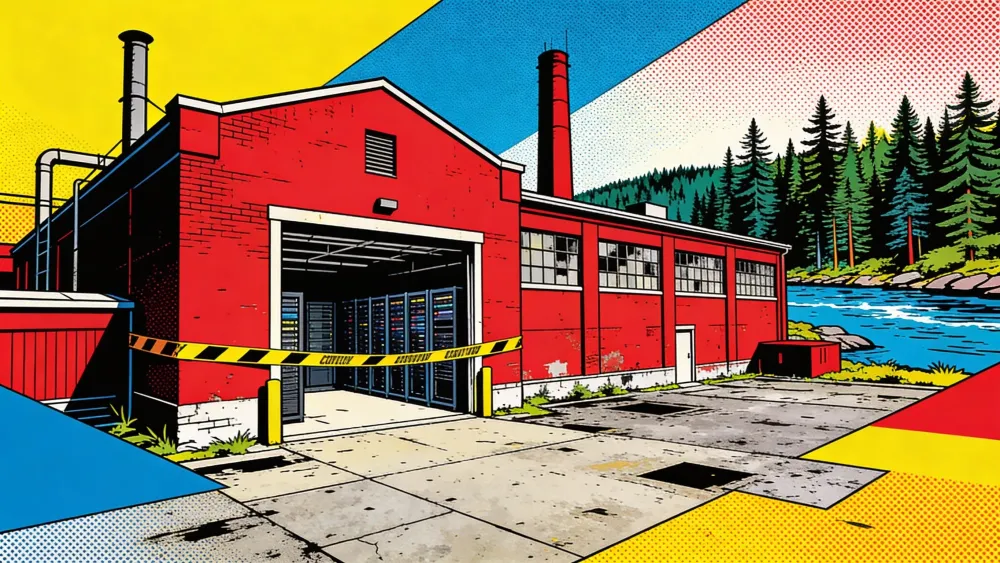
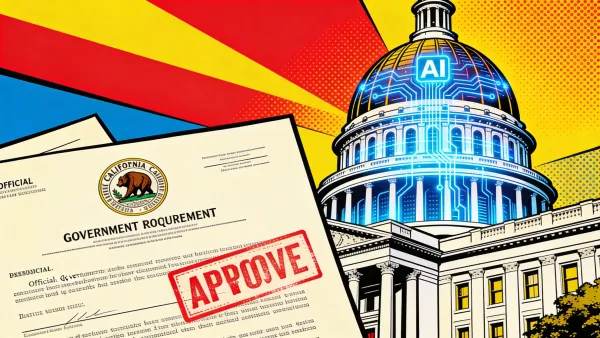
Maine's legislature moved this spring to block permitting for new data center projects drawing more than 20 megawatts of power, according to Maine Public. The bill, LD 307, would freeze construction approvals through approximately October 2027 while a newly created Data Center Coordination Council studies the effects on the electric grid, ratepayers, and the environment. Lawmakers in at least 11 other states have introduced moratorium legislation this session, according to the watchdog group Good Jobs First, turning Maine into a test case for the growing national revolt against AI infrastructure.
Key Takeaways
- Maine's LD 307 would freeze data center permits above 20 megawatts through October 2027, the first state-level ban.
- Three Maine towns rejected data center proposals in 2025, driven by electricity costs and minimal public notice.
- A $550 million Jay mill project and $300 million Sanford development face collapse under the moratorium.
- Lawmakers in 11 other states introduced similar bans; Sanders and Ocasio-Cortez want a national freeze.
AI-generated summary, reviewed by an editor. More on our AI guidelines.
What LD 307 actually does
Rep. Melanie Sachs (D-Freeport), the bill's sponsor, told reporters the measure puts local residents ahead of out-of-state corporations. "These data centers could have serious potential impacts on Maine ratepayers, our electric grid and our environment," Sachs said at a March press conference, according to Maine Morning Star.
The Energy, Utilities and Technology Committee advanced the bill 8-5 on party lines in early March, Maine Public reported. The full House passed it. Several Republicans voted yes. That surprised people in Augusta, where this fight had split on strict party lines at the committee level. The Senate, where Democrats hold the floor, looks like an easier pass.
A companion bill would strip data centers of eligibility for two state tax incentive programs. No property tax exemptions. No capital investment credits. Sen. Nicole Grohoski (D-Ellsworth) argued the Business Equipment Tax Exemption and Dirigo incentives were "designed with a certain type of business in mind, one that makes deep capital investments and generates long-term quality employment," she told the Taxation Committee. Data centers, she said, do not qualify. The legislature seems to agree.
Why three towns revolted
Three communities got to this conclusion before Augusta did.
Wiscasset came first. In November 2025, residents of the coastal town, population roughly 4,000, pressured their selectboard to shelve talks about a proposed $5 billion data center on a parcel along the Back River. Richard Davis lives a mile and a half from the proposed site. He started Protect Wiscasset and told the Daily Yonder that town officials "had not really taken a look at the potential downsides."
A month later, Lewiston's city council voted unanimously to reject a $300 million AI data center after the proposal surfaced with minimal public notice. "When community members do find out about these projects, they have really serious concerns," Dana Colihan, co-executive director of the environmental justice group Slingshot, told the Daily Yonder.
The fear isn't abstract if you pay a Maine electric bill. Rates jumped 10.6 percent in the twelve months ending November 2025, according to Choose Energy. That was the sharpest annual spike in the country. Every New England state sits in the top ten nationally for residential electricity costs, and Maine's grid is aging faster than the region's.
Stay ahead of the AI infrastructure debate
Strategic AI news from San Francisco. No hype, no "AI will change everything" throat clearing. Just what moved, who won, and why it matters. Daily at 6am PST.
No spam. Unsubscribe anytime.
A $550 million project left waiting
The moratorium's most visible casualty would be a planned data center at the former Androscoggin Mill in Jay. JGT2 Redevelopment signed a deal with Sentinel Data Centers for 1 million square feet inside the former International Paper facility, which employed more than a thousand people before it closed in 2023, the Bangor Daily News reported.
"The moratorium would be disastrous for us," developer Tony McDonald told the paper. The project was set to break ground in July, with demolition of old paper equipment already under way. McDonald estimated 800 to 1,000 construction workers during the build-out and 125 permanent operations jobs afterward.
That prospect drew organized resistance of its own. The law firm Preti Flaherty launched a social media campaign called "Next Century Maine," targeting legislators in 28 districts with ads urging carveouts for projects already underway, the Maine Monitor reported. Rep. Walter Runte (D-York), one of the targeted lawmakers, was not persuaded. He called it "a pseudo advocacy group created by a lobbyist law firm to benefit two of its clients."
The backlash crosses party lines
This is not a progressive project alone. Florida Gov. Ron DeSantis told an AI roundtable in February that he doubted "very many people who want to have higher energy bills just so some chatbot can corrupt some 13-year-old kid online," WIRED reported. Hawley and Blumenthal took a different angle at the federal level, co-authoring legislation to insulate ratepayers from energy cost spikes driven by data center loads.
Sanders and Ocasio-Cortez want something bigger. Their bill, the Artificial Intelligence Data Center Moratorium Act, would stop all new construction cold. It stays frozen until Congress passes AI safety rules and consumer protections, Roll Call reported. Nobody in Washington expects that to happen before the midterms. In an NBC News poll from late February, 57 percent of registered voters said AI's risks outweigh whatever benefits it brings. You do not need to be progressive to worry about your electric bill doubling.
Industry leaders have called the movement economically self-defeating. The Data Center Coalition warned a moratorium "would limit internet capacity, slow critical services, eliminate hundreds of thousands of high-wage jobs," according to WIRED. But $98 billion in U.S. data center projects were stalled or canceled in Q2 2025 alone due to community opposition.
The lobbying campaigns keep running. The concrete keeps not getting poured.
Frequently Asked Questions
What is Maine's LD 307?
A bill that would block permitting for new data center projects above 20 megawatts through approximately October 2027. It also creates a Data Center Coordination Council to study environmental, grid, and ratepayer impacts before the state lifts the freeze.
Why are Maine residents opposing data centers?
Communities in Wiscasset, Lewiston, and Sanford pushed back after proposals appeared with minimal public notice. Maine already has some of the highest residential electricity rates in the country, with a 10.6 percent spike in the twelve months ending November 2025.
What happened to the Jay mill data center project?
JGT2 Redevelopment planned a 1-million-square-foot data center at the former Androscoggin Mill with Sentinel Data Centers. Developer Tony McDonald says the moratorium would kill the project before its July groundbreaking.
Are other states considering similar data center bans?
Lawmakers in at least 11 states introduced moratorium legislation this session. Cities and counties in Indiana, Georgia, and Missouri already enacted local bans. Sanders and Ocasio-Cortez proposed a federal moratorium.
Is the data center backlash bipartisan?
Yes. Republican governors like Ron DeSantis criticized data centers' energy costs. Senators Hawley and Blumenthal introduced a bill to shield consumers from rate hikes. An NBC News poll found 57 percent of voters believe AI risks outweigh its benefits.
AI-generated summary, reviewed by an editor. More on our AI guidelines.



Marcus Schuler
Tech translator with German roots who fled to Silicon Valley chaos. Decodes startup noise from San Francisco. Launched implicator.ai to slice through AI's daily madness—crisp, clear, with Teutonic precision and sarcasm. E-Mail: [email protected]