
Microsoft published its Global AI Adoption 2025 report on January 8th. Within 72 hours, scrolling LinkedIn felt like walking through a house where every room had the same poster on the wall. Brad Smith's headshot appeared three times in two thumb-scrolls. The same statistics—"one in six," "Global North versus South," "UAE leads at 64%"—surfaced in post after post, wrapped in the same blue-tinted repost cards, the same Microsoft corporate imagery. The feed had a texture: glossy, insistent, uniform.
The pattern looked like coordinated amplification—because it was. But the mechanism was hiding in plain sight.
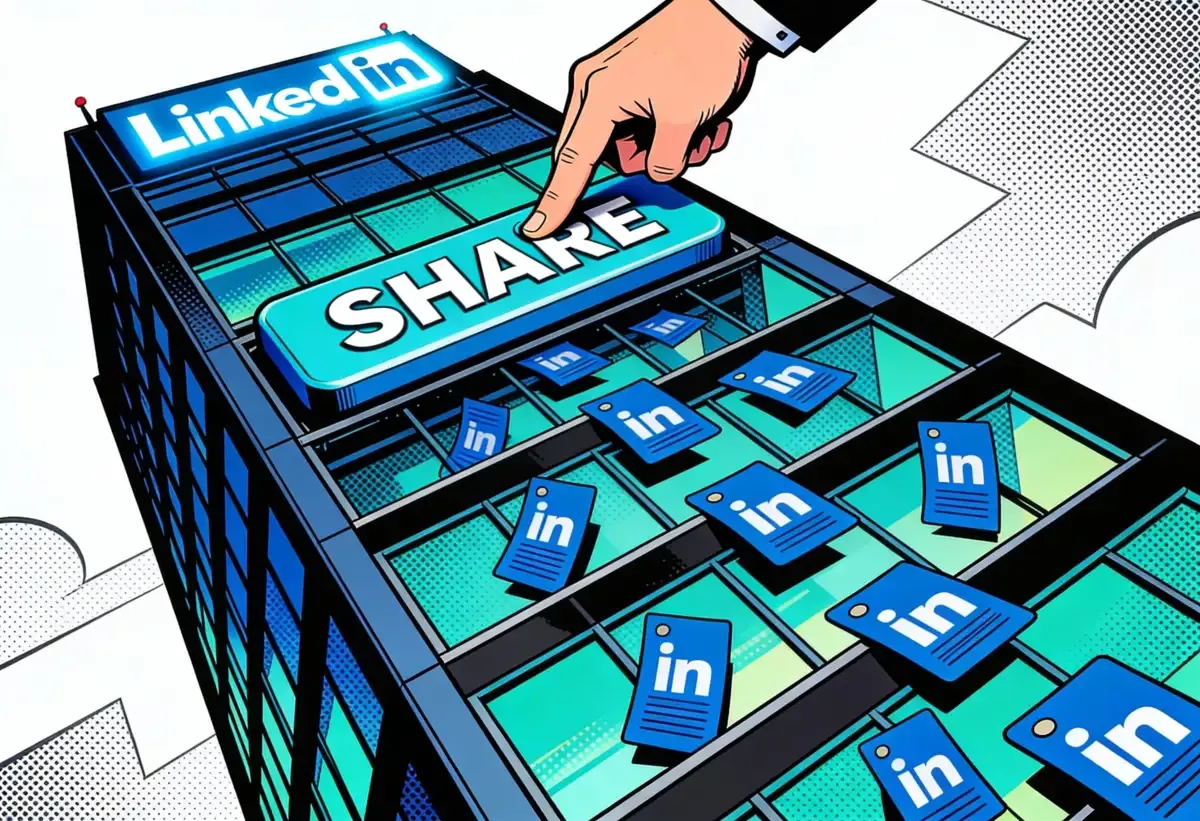
Microsoft didn't need to distribute internal talking points. The company built something simpler: a set of share-ready source texts, a launch post from President Brad Smith designed for resharing, and a Share button pointing directly to LinkedIn. The coordination wasn't secret. It was architectural. And it helps when you own the building.
The Breakdown
• Microsoft published share-ready content across three channels with identical statistics, then pointed a Share button at LinkedIn—a platform it bought for $26.2 billion
• Brad Smith's launch post was designed for resharing; LinkedIn's repost mechanic reproduced his words verbatim across hundreds of executive feeds
• The timing matters: the report landed after a year of skeptical AI coverage and declining enterprise adoption metrics
• Microsoft's methodology measures AI adoption using clicks on Microsoft services—higher adoption always means more Microsoft usage
The landlord advantage
Most companies run coordinated launches on LinkedIn. Salesforce does it. IBM does it. Every consulting firm does it. They're all guests in someone else's house, hoping the algorithm treats them well.
Microsoft bought the house in 2016 for $26.2 billion. When Microsoft wants to move a narrative from corporate blog to professional feed, it's not sending a package across town. It's moving furniture between rooms it owns.
This article continues below.
Sign up once, read everything for free. No algorithms, no fluff—just the AI intel that actually matters for your work.
Get free access →